Nobody Wants to Feel Like a Walking Credit Card
You've seen it happen. A client comes in for a simple HydraFacial, they're relaxed, they're glowing, and then — right at checkout — someone nervously stammers, "Sooo… we also have this vitamin C add-on for just $45 more…" The client smiles politely, says no thanks, and leaves feeling vaguely like they just survived a timeshare presentation.
Here's the uncomfortable truth: most med spa clients want to know about add-on treatments. They're already invested in their appearance and wellness — that's why they're at your spa in the first place. The problem isn't the upsell itself. The problem is the timing, framing, and delivery. When add-ons are presented as a natural extension of care rather than a last-minute revenue grab, conversion rates go up, client satisfaction goes up, and nobody feels weird about it.
This post is here to help you close that gap — so your team can confidently recommend the right services at the right moment, and your clients walk out feeling genuinely cared for (and maybe a little more glowing than expected).
The Psychology Behind Why Clients Say No
Before we can fix the pitch, we need to understand why clients resist in the first place. Spoiler: it's rarely about the money.
They Didn't See It Coming
When a client books a lip filler appointment and hears about a "perfect pairing" microneedling package for the first time while lying flat on a treatment table, their guard goes up immediately. It's not that they're uninterested — it's that they feel ambushed. Humans are remarkably resistant to decisions they weren't given time to consider. A 2019 study by Salesforce found that 79% of customers say the experience a company provides is as important as its products or services. Surprising someone with a sales pitch mid-treatment is, to put it diplomatically, not a great experience.
The fix is simple in theory: introduce add-ons before the appointment, not during or after. Whether that's through a pre-visit email, a check-in conversation, or a welcoming interaction when they first walk in the door, early exposure gives clients time to warm up to the idea on their own terms.
It Sounds Like a Script — Because It Is One
Clients can smell a rehearsed upsell from approximately 50 feet away. When every provider says the same line in the same flat tone at the same moment in the appointment, it stops feeling like a recommendation and starts feeling like a quota. The solution isn't to eliminate structure — it's to make the recommendation feel specific to that client. Instead of "We also offer LED therapy as an add-on," try "Given that you mentioned your skin has been extra reactive lately, I'd actually love to add LED therapy to today's treatment — it would really help calm things down." Same service. Completely different impact.
They Don't Understand the Value
A client who doesn't understand why an add-on matters is almost guaranteed to say no. Price alone rarely persuades — but outcomes do. When your team can clearly articulate what the treatment does, why it pairs well with what the client is already receiving, and what the client will feel or see differently as a result, the add-on transforms from an optional expense into an obvious choice. Train your providers to lead with outcomes, not features. "This adds 20 minutes" is a feature. "This will extend your results by about two weeks" is an outcome.
How Stella Can Set the Stage Before Your Team Ever Walks In
One of the biggest advantages med spas have in the add-on conversation is that it doesn't have to start with a human. Stella, the AI robot employee and phone receptionist, can introduce add-on options naturally during client interactions — whether someone is calling to book an appointment or walking into your lobby for check-in. Stella can greet walk-in clients warmly, mention current specials and complementary treatments, and get clients curious and thinking before they even sit down in a treatment room.
On the phone side, Stella answers calls 24/7 and can mention relevant add-ons or promotions during the booking conversation — not as a hard sell, but as helpful context. "Just so you know, we're currently offering a discounted dermaplane add-on with any facial this month" lands completely differently when it's presented during booking rather than at checkout. By the time the client arrives, the idea has already had time to marinate. That's not manipulation — that's just smart timing.
Practical Techniques That Actually Work
Now for the part your team will actually use. These aren't abstract principles — they're conversation techniques that med spa providers and front desk staff can implement starting tomorrow.
The Consultation Embed
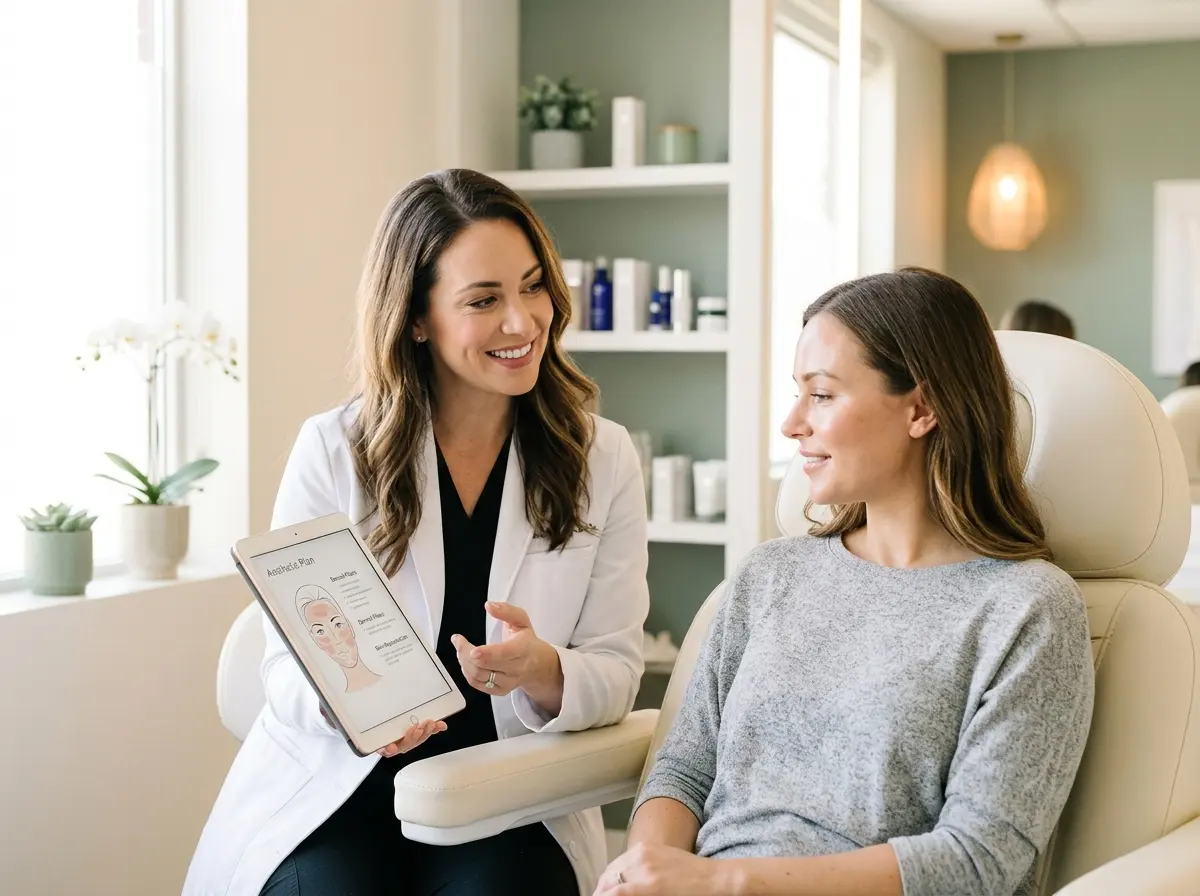
The single best time to introduce an add-on is during the pre-treatment consultation, not after. When a provider is already asking about skin concerns, lifestyle habits, and treatment goals, weaving in a relevant add-on feels completely natural. "One thing I'm noticing is that you mentioned dealing with hyperpigmentation — we actually have a brightening booster that works really well alongside your peel today. Want me to include it?" The client is already in information-gathering mode. They're open. They're engaged. Strike while the iron is warm, not after it's cooled down at the checkout counter.
This technique works especially well when providers are genuinely knowledgeable about the synergy between services. Consider building a simple internal reference guide that maps your core treatments to their best add-on pairings, with one or two outcome-focused talking points for each. Give your team the language, and they'll use it.
The "I Was Thinking About You" Follow-Up
Not every add-on sale happens in the same visit. Sometimes a client needs a little more time — and that's perfectly fine. A personalized follow-up message that references something specific from their last appointment ("You mentioned wanting to address the fine lines around your eyes — we just added a new peptide eye treatment that I think would be a great next step for you") is remarkably effective. It shows attentiveness, builds loyalty, and keeps your service menu top of mind between visits. This is retention strategy and upselling wrapped in one thoughtful message.
Let Results Do the Talking
If you have before-and-after examples, client testimonials, or even just a tablet with photos near the check-in area, use them. When a client can see what a lip hydration add-on does for someone with a similar concern, the conversation becomes much easier. Visual proof shifts the dynamic from "you're trying to sell me something" to "this is real and it works." Consider creating a short, laminated one-pager for each of your top add-ons that shows results and explains the treatment in plain language. Leave them in the waiting area, in treatment rooms, and yes — near the checkout counter where they'll catch the eye of someone reconsidering.
Quick Reminder About Stella
Stella is an AI robot employee and phone receptionist built for businesses like yours — she greets clients in person, answers calls around the clock, promotes your services and specials, and keeps things running smoothly without breaks, bad days, or turnover. At just $99/month with no upfront hardware costs, she's the front desk presence that never calls in sick and never forgets to mention the add-on special.
Start Small, Stay Consistent, Watch It Compound
Here's the thing about improving how your team presents add-on treatments: you don't need a complete overhaul. You need a few deliberate changes applied consistently over time. Start with these steps:
- Audit your current process. At what point in the client journey are add-ons being mentioned? Is it too late? Is it awkward? Have an honest conversation with your team about what's actually happening on the floor.
- Build your pairing guide. Map your top five core treatments to their most natural add-on companions, and write two or three outcome-focused talking points for each pairing.
- Move the conversation earlier. Coach your providers to introduce relevant add-ons during the consultation, not at the end. Practice the language until it feels natural.
- Use every touchpoint. From your booking process to your in-person check-in to follow-up messages, look for moments where an add-on can be mentioned helpfully and contextually.
- Track what's working. Monitor which add-ons convert most often, which providers present them most effectively, and which timing approaches get the best responses. Refine accordingly.
When you approach add-on recommendations as a genuine extension of your clinical care — because, let's be honest, many of them truly are — your team's confidence will rise, your clients' trust will deepen, and your revenue will follow. That's not a sales pitch. That's just what happens when you get the experience right.