You Had One Job: Sell the Personal Training Package
New member orientation is your gym's golden window — a captive audience, fresh motivation, and someone who just handed you their credit card information. Yet somehow, gyms across the country are watching this prime real estate slip through their fingers like a poorly chalked barbell. The pitch lands flat, the staff member is distracted, and the new member walks out with a keycard and absolutely nothing else.
If your personal training upsell is consistently missing the mark during new member orientations, the problem probably isn't your trainers. It's the system around them — or more accurately, the lack of one. Let's talk about why this keeps happening and what you can actually do to fix it.
The Real Reasons Your Personal Training Pitch Is Falling Flat
Your Staff Is Spread Too Thin to Sell Anything
Here's a scene that probably sounds familiar: your front desk employee is simultaneously checking in members, answering the phone, handling a billing question, and trying to conduct a new member orientation. By the time they get to the personal training pitch, they're mentally somewhere around their third task and emotionally somewhere around their lunch break. New members can feel that energy — or lack thereof — and it kills the sale before it starts.
Effective upselling requires presence, enthusiasm, and genuine engagement. When your team is overloaded, none of those things are available in sufficient quantity. The pitch becomes rote and mechanical: "We also offer personal training, here's a brochure." Riveting stuff. Truly. No wonder conversion rates are low.
The fix isn't necessarily hiring more people — it's restructuring who handles what so that the person conducting the orientation is actually focused on the orientation.
The Pitch Isn't Personalized — And New Members Know It
Today's fitness consumer is savvy. They've watched hundreds of workout videos, compared a dozen gym memberships online, and have a very specific vision of what they want from their fitness journey. A one-size-fits-all personal training pitch that doesn't connect to their goals, their concerns, or their current fitness level is easy to dismiss.
When someone walks in wanting to train for their first 5K and you immediately launch into a generic spiel about strength and conditioning packages, you've already lost the thread. The most effective personal training pitches feel like recommendations, not sales scripts. They reference what the new member actually said during intake — their goals, their schedule, their experience level — and connect those dots to a specific trainer or program.
This is why intake information is so valuable, and why it needs to be collected and actually used before the orientation conversation begins, not handed off on a clipboard and filed away forever.
Timing and Follow-Up Are an Afterthought
Even when the orientation pitch goes reasonably well, many gyms make the fatal mistake of treating it as a one-shot opportunity. If the member says "let me think about it," the follow-up is... nothing. Maybe a generic email blast three weeks later that has nothing to do with personal training.
Research consistently shows that most purchasing decisions require multiple touchpoints — some estimates suggest between five and eight interactions before a sale is made. A single mention during orientation followed by silence is not a sales strategy. It's a suggestion. There's a meaningful difference.
Gyms that convert new members into personal training clients typically have a structured follow-up sequence: a check-in message within 48 hours, a specific trainer recommendation, and an easy path to schedule a complimentary session. The ones that don't? They're leaving significant recurring revenue on the table every single month.
How the Right Tools Can Close the Gap
Freeing Up Staff — and Capturing Better Intake Data
One of the simplest ways to immediately improve your orientation experience is to offload the routine tasks that steal your team's attention. Stella, an AI robot employee and phone receptionist, can greet incoming members at your front entrance, answer common questions about hours, pricing, amenities, and current promotions — and even collect intake information through conversational forms right at the kiosk before a staff member ever steps in.
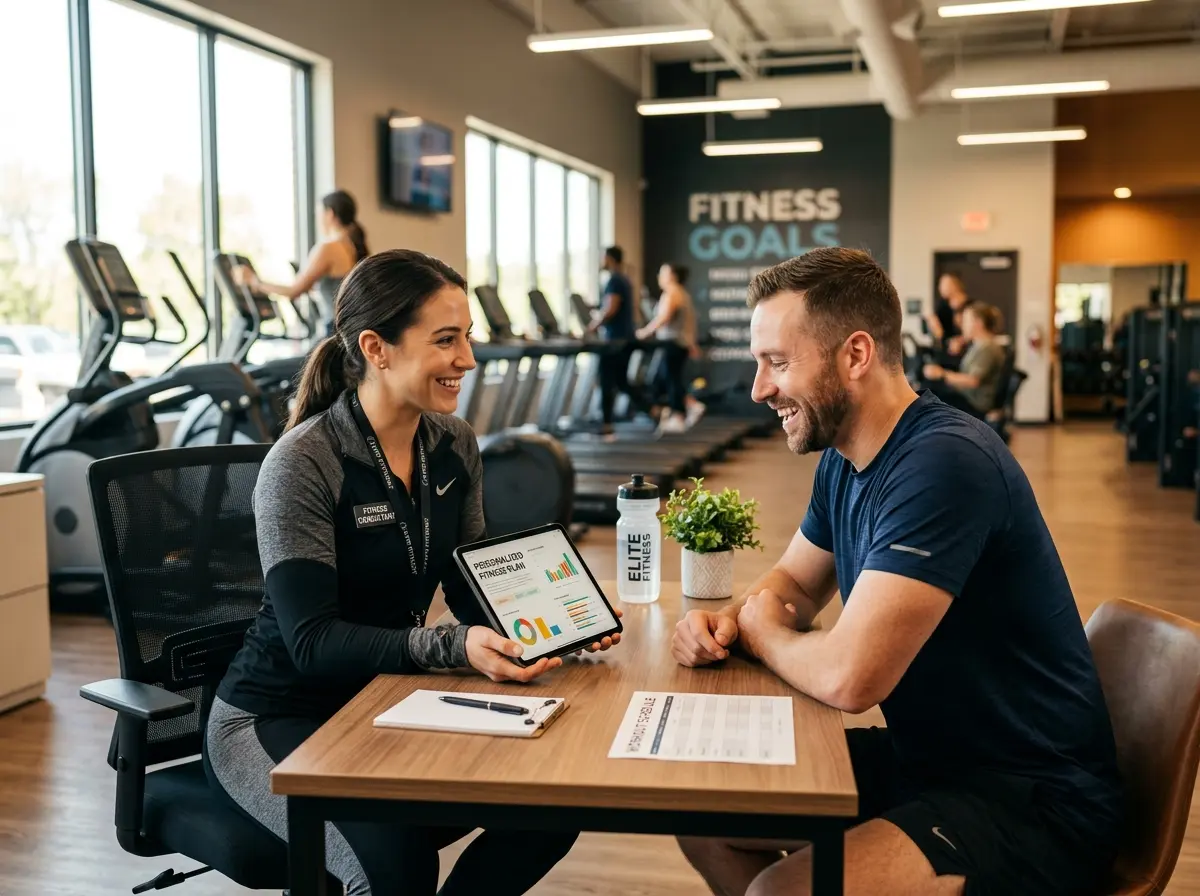
That means by the time your team sits down with a new member for orientation, they already have structured intake data — goals, fitness background, schedule preferences — in front of them. That's the raw material for a personalized, compelling personal training pitch. Stella also handles incoming phone calls 24/7, so your front desk staff isn't getting pulled away mid-orientation to answer whether the pool is open on Sundays. That level of operational breathing room makes a real difference in the quality of your member-facing interactions.
Building a Personal Training Pitch That Actually Converts
Lead With Their Goals, Not Your Packages
The single most effective change you can make to your orientation pitch is flipping the order of operations. Instead of presenting your personal training tiers and hoping one resonates, start by referencing what the new member told you they want to achieve. "You mentioned you're trying to lose about 20 pounds before your daughter's wedding in September — we actually have a trainer, Marcus, who specializes in exactly that kind of focused, time-bound program."
That sentence does more work than a laminated pricing sheet ever will. It demonstrates that you listened, that your gym has tailored solutions, and that there's a real human being — not just a service category — waiting to help them. The more specific you can be, the more credible the recommendation feels, and credibility is what converts skeptical new members into paying personal training clients.
Offer a Low-Risk Entry Point
Asking a brand-new member to commit to a multi-month personal training package on day one is a big ask. They don't know your trainers yet. They don't know if they'll even enjoy the gym. They're still figuring out where the locker rooms are. A complimentary or heavily discounted first session removes that risk and lets the trainer do what trainers do best: demonstrate their value in person.
Consider structuring your offer around a single "goal-setting session" rather than a full training package. It's easier to say yes to, it gets the new member in front of a trainer quickly, and — when the session is delivered well — the upsell to a package practically handles itself. You're not selling personal training in the orientation; you're selling the first step toward personal training.
Build a Simple, Automated Follow-Up Sequence
Your gym's CRM — or whatever system you use to track member data — should be triggering follow-up communications automatically after every new member orientation. A 48-hour check-in, a trainer spotlight email, a text message nudge about booking that complimentary session — none of this needs to be done manually, and all of it compounds over time into meaningfully higher conversion rates.
Be specific in your follow-ups. Reference the member's stated goals. Name the trainer you recommended. Include a direct booking link. Every layer of friction you remove between "thinking about it" and "scheduled," the higher your close rate will be. Generic follow-up emails get ignored. Personalized, goal-oriented ones get clicks.
Quick Reminder About Stella
Stella is an AI robot employee and phone receptionist that works inside your gym location as a kiosk and answers phone calls around the clock — so your staff can focus on high-value conversations like new member orientations without constant interruptions. At just $99/month with no upfront hardware costs, she's the kind of operational upgrade that pays for itself the moment your team closes one extra personal training package because they weren't pulled away to answer a phone call.
Turn Orientation Into a Revenue Engine
Your new member orientation is one of the highest-leverage moments in your entire member relationship. That person is motivated, they're present, and they've already demonstrated a willingness to invest in their fitness by signing up. The personal training pitch isn't an awkward add-on — it's a genuine service recommendation that, when delivered well, actually helps members achieve better results and stick around longer.
Here's what to take action on this week:
- Audit your current orientation flow. Time it, record it (with permission), and honestly evaluate whether the personal training pitch feels like a recommendation or a script.
- Fix your intake process. Make sure the information collected before orientation is actually available to and used by the person conducting it.
- Train your team to lead with member goals — not package features — and practice specific, name-dropping pitches that connect real trainers to real goals.
- Create a complimentary session offer that reduces commitment friction and gets new members in front of a trainer within their first two weeks.
- Automate follow-up so that every new member who doesn't commit on day one receives a structured, personalized sequence over the following two weeks.
The revenue potential sitting inside your new member pipeline isn't a mystery — it's a process problem. Fix the process, and the numbers follow. Your trainers are good at what they do. Give them the setup they need to prove it.