The Clock Is Ticking — And So Are Your Competitors
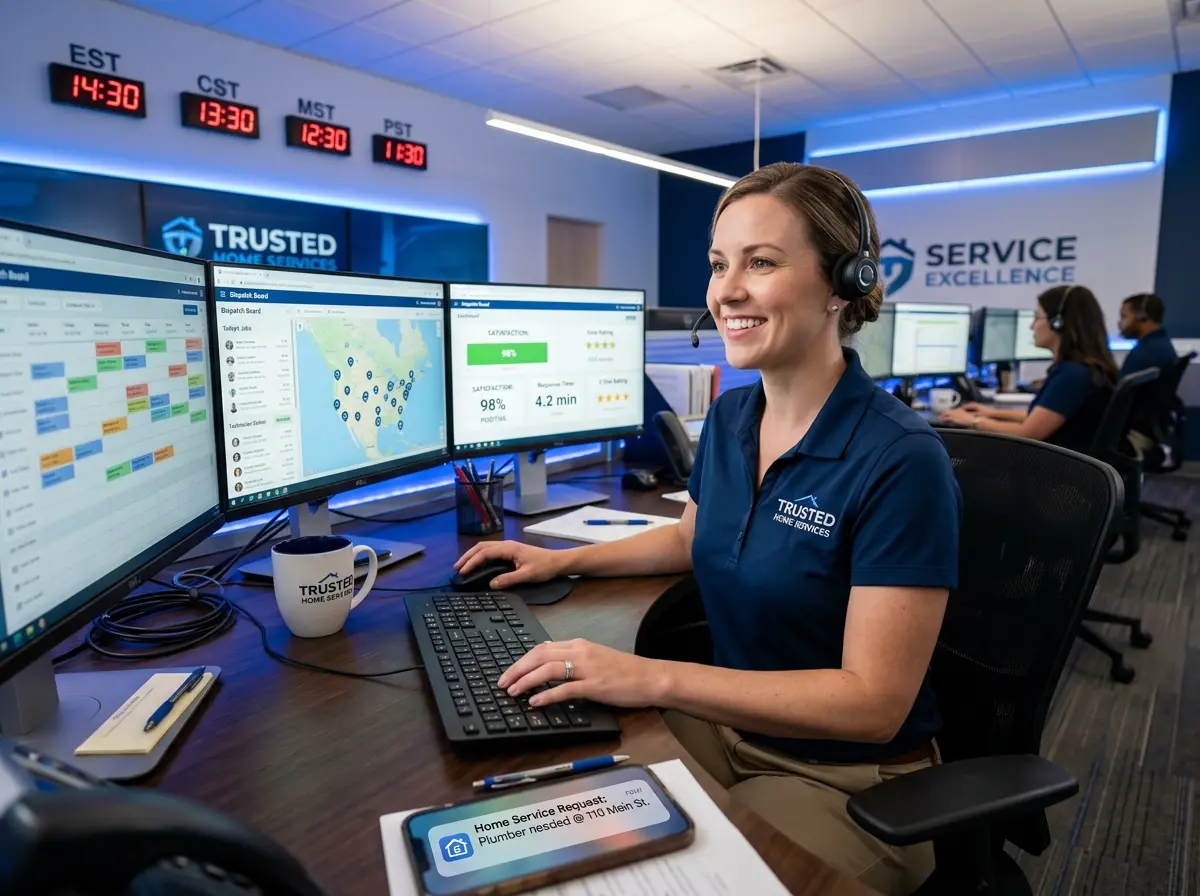
Picture this: It's 9:47 PM on a Tuesday. A homeowner just noticed a suspicious wet spot on their ceiling, and they're already catastrophizing about mold, structural damage, and the vacation fund they're mentally kissing goodbye. They grab their phone, search for a local water damage restoration company, and start calling. The first business that picks up — or at least responds meaningfully — gets the job. The rest? They get a mental note that sounds a lot like "never mind, I'll try someone else."
If your home services company doesn't have a 24-hour response guarantee, you're not just missing calls. You're handing paying customers directly to your competitors with a bow on top. In an industry where emergencies don't respect business hours and homeowners expect instant reassurance, being unreachable is a business model — just not a profitable one.
The good news? You don't need to hire a night-shift receptionist or chain yourself to your phone to fix this. You just need the right strategy — and the right tools.
Why Response Time Is a Make-or-Break Factor in Home Services
The Data Doesn't Lie (And It's a Little Alarming)
Speed-to-response is one of the most decisive factors in whether a home services company wins or loses a job. Studies from the Harvard Business Review found that companies responding to leads within one hour are seven times more likely to qualify that lead than those who wait even 60 minutes. Now extrapolate that to the businesses that respond the next morning — or, bless their hearts, two days later.
In home services specifically, the stakes are even higher. Customers dealing with HVAC failures, plumbing emergencies, roof leaks, or pest infestations aren't browsing casually. They're stressed, they're motivated, and they will hire whoever makes them feel helped first. That emotional urgency means the first credible, responsive company often wins — regardless of whether they're the cheapest or the most decorated.
What "24-Hour Response" Actually Means (Hint: It's Not Just Picking Up the Phone)
A true 24-hour response guarantee isn't just about answering calls. It's a commitment to acknowledging every inbound inquiry — phone call, website form, or voicemail — within a defined window, 365 days a year. That means evenings, weekends, holidays, and yes, even during the big game.
Implementing this guarantee means your business communicates professionalism and reliability before a technician ever sets foot on a customer's property. It tells potential clients: we take your problem seriously, even when it's inconvenient for us. And in home services, that trust is worth its weight in five-star reviews.
The Hidden Cost of Missed Calls
Most home services business owners underestimate just how many calls go unanswered. Industry research suggests that up to 62% of calls to small businesses go unanswered — a staggering number when you consider that each missed call in a high-ticket trade like HVAC or roofing could represent hundreds or thousands of dollars in lost revenue. Multiply that across a month, and the math gets uncomfortable fast. A 24-hour response guarantee forces the operational discipline to actually capture that revenue instead of letting it evaporate into voicemail oblivion.
How Technology Can Close the Gap (Without Burning Out Your Team)
Let Smart Tools Handle After-Hours Inquiries
The biggest objection to a 24-hour response guarantee is always the same: "I can't have someone manning the phones around the clock." Fair point — but the assumption that a human has to do it is outdated. Stella, an AI robot employee and phone receptionist, answers every inbound call 24/7 with the same knowledge, professionalism, and warmth your best human receptionist would bring — without the overtime pay or the Sunday morning mood swings. She can handle questions about your services, collect customer intake information conversationally, take detailed voicemails with AI-generated summaries, and push instant notifications to your team so no lead goes cold overnight.
Stella also works as a physical in-store kiosk for businesses with a showroom or office presence, greeting walk-in customers and proactively engaging them about services, promotions, and scheduling. Whether your home services business has a storefront or operates entirely by phone, Stella keeps your communication loop closed around the clock — and her built-in CRM automatically builds customer profiles from every interaction, so your team walks into every follow-up fully informed.
Building a 24-Hour Response System That Actually Works
Set the Standard With a Written Guarantee
The first step is committing publicly. Put a 24-hour response guarantee on your website, in your email signature, and in your marketing materials. This isn't just a customer promise — it's an internal accountability mechanism. Once it's public, your team (and your tools) have to honor it. Consider language like: "We guarantee a response to every inquiry within 24 hours, any day of the year." Simple, clear, and immediately differentiating in a market full of businesses that still let calls go to a generic voicemail.
To make this stick operationally, define what "response" means internally. Does a callback count? A text acknowledgment? A booked appointment? Clarity prevents the guarantee from becoming a vague promise that erodes customer trust when it isn't honored consistently.
Create a Tiered Response Protocol for Different Inquiry Types
Not every inbound inquiry carries the same urgency, and your response system should reflect that. A homeowner with a burst pipe at midnight needs a different response than someone requesting a quote for a kitchen renovation next spring. Building a tiered protocol helps your team prioritize without dropping any balls:
- Tier 1 — Emergency: Active water damage, gas concerns, complete HVAC failure in extreme weather. Response within 1 hour, with on-call routing to a live technician or dispatcher.
- Tier 2 — Urgent Non-Emergency: Functional issues that need prompt scheduling. AI or after-hours intake collects details; human follow-up within 2-4 hours during business hours.
- Tier 3 — Standard Inquiry: Quotes, general questions, seasonal services. Acknowledged immediately via automated or AI response; human follow-up within 24 hours.
This structure allows you to confidently promise 24-hour response across the board while making sure your most urgent customers never feel like they're stuck in a queue.
Turn Your Response Guarantee Into a Marketing Advantage
Once your system is in place, don't be shy about it. A 24-hour response guarantee is a genuine competitive differentiator in an industry plagued by poor communication. Use it in your Google Business Profile, on service pages, in paid ads, and in follow-up review request emails. Encourage happy customers to specifically mention your responsiveness in reviews — because "they answered right away and had someone out the next morning" is exactly the kind of social proof that converts a fence-sitter into a booked job.
You can also use response time as a soft upsell opportunity. Customers who reach you in a moment of stress are often more receptive to add-on services, maintenance plans, or service agreements when they feel heard and taken care of. Fast response isn't just about booking the immediate job — it's the beginning of a long-term customer relationship built on reliability.
A Quick Reminder About Stella
Stella is an AI robot employee and phone receptionist designed to help businesses of all sizes — including home services companies — stay responsive and professional around the clock. She answers calls, greets customers, collects information, manages a built-in CRM, and keeps your team notified in real time, all for just $99 per month with no upfront hardware costs. If a 24-hour response guarantee sounds great in theory but impossible to staff, Stella is the practical solution that bridges that gap.
Start Responding Faster — Before Someone Else Does
The home services industry is competitive, and the businesses winning the most jobs aren't always the most experienced or the most affordable — they're often simply the most responsive. A 24-hour response guarantee positions your company as professional, reliable, and customer-focused before the first tool comes out of the truck.
Here's how to get started today:
- Audit your current response times. Pull your call logs and form submissions from the last 30 days. How long did it actually take your team to respond? The answer may be humbling, but it's the baseline you need.
- Define your guarantee. Write it out clearly, set internal definitions for what qualifies as a "response," and get your team aligned before you publish anything publicly.
- Implement tools to cover gaps. Identify your weakest windows — after hours, weekends, holidays — and put systems in place to ensure no inquiry falls through the cracks.
- Publicize the guarantee. Update your website, Google profile, and marketing materials. Let it become part of your brand identity.
- Measure and improve. Track response times monthly, collect customer feedback about communication, and keep refining your process.
The homeowner with the wet ceiling isn't going to wait around. But if you can be the company that answers — calmly, professionally, and immediately — they'll remember that long after the drywall is replaced. And they'll call you again next time, too.