So You're Thinking About Hiring a Receptionist Who Never Calls in Sick
Let's paint a familiar picture: it's a busy Tuesday morning. Your phone is ringing, a customer just walked in with a question about your return policy, your actual human employee is elbow-deep in a task that cannot be interrupted, and you — the business owner who definitely planned to delegate more this year — are doing all three things at once while your coffee goes cold. Again.
The promise of AI receptionists has never been more tempting. No PTO requests, no "I'll be five minutes late" texts, no awkward performance reviews. Just reliable, professional customer interactions around the clock. But before you hand over the keys to your front desk (literally or figuratively), it's worth understanding what AI receptionists are genuinely good at, where their limitations live, and how to set realistic expectations so you're not disappointed — or worse, oversold.
This guide breaks it all down honestly, with a little humor and zero fluff, so you can make a smart decision for your business.
What AI Receptionists Actually Do Well
Let's start with the good news, because there's plenty of it. AI receptionists have matured significantly in the past few years, and the list of things they handle genuinely well is long and growing.
They Show Up. Every Single Time.
This sounds simple, but the business impact is enormous. Studies suggest that roughly 62% of calls to small businesses go unanswered, and missed calls have a direct correlation to missed revenue. An AI receptionist doesn't have a lunch break. It doesn't get flustered during the holiday rush. It doesn't quit two weeks before your busiest season.
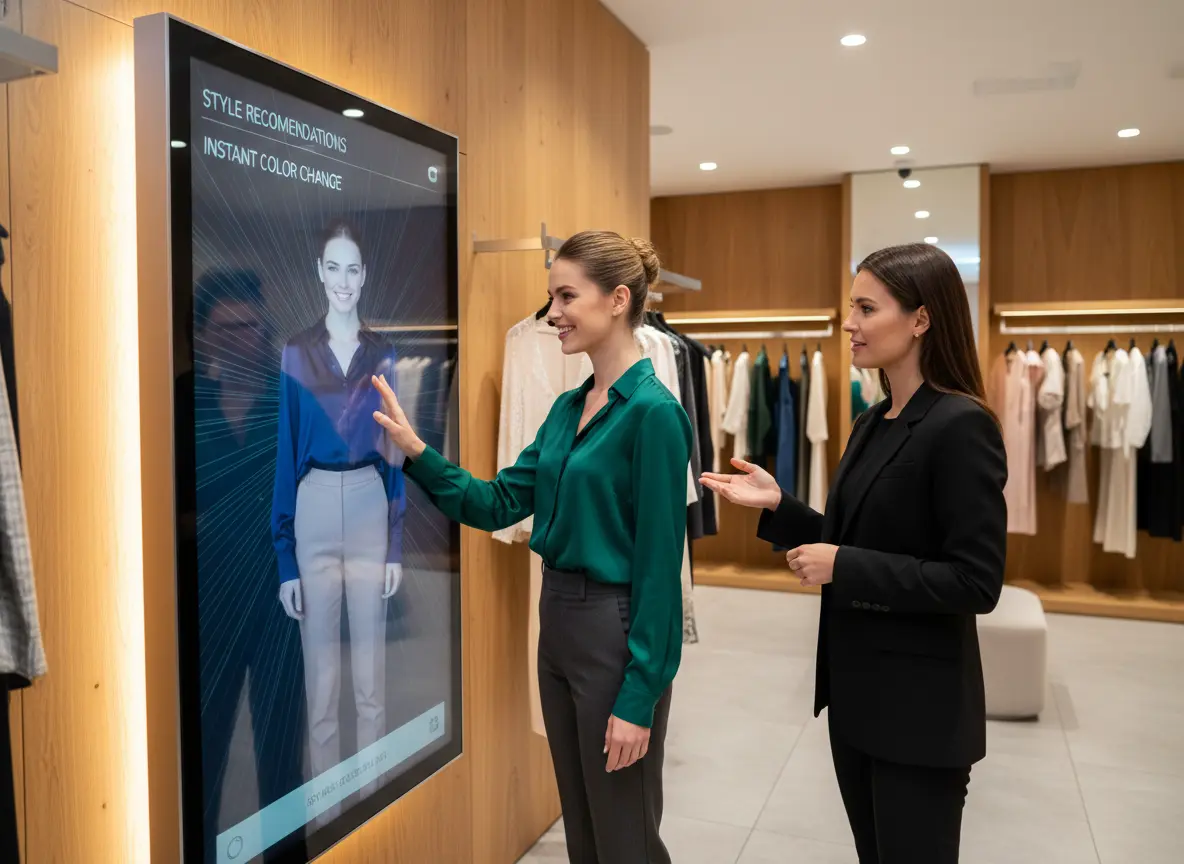
For businesses with physical locations, this reliability extends to the floor as well. An in-store AI kiosk can greet every single customer who walks through the door — or even past the window — with a warm, consistent welcome and proactive engagement. No more customers wandering around looking lost while your team is occupied. That kind of consistent presence builds trust and keeps the customer experience tight.
They Know Your Business Inside and Out (Because You Tell Them)
One of the most underrated strengths of a well-configured AI receptionist is knowledge retention. You train it once with your products, services, pricing, hours, policies, and current promotions — and it remembers all of it, perfectly, every time. It won't accidentally quote last season's pricing. It won't forget to mention the lunch special. It won't shrug and say "I'm not sure, let me find someone."
This makes AI receptionists particularly valuable for businesses with complex offerings — think medical offices with multiple service lines, auto shops with a wide range of services, or gyms with tiered membership plans. Customers get accurate answers fast, and your staff gets fewer interruptions for questions they've answered five hundred times already.
Upselling Without the Awkwardness
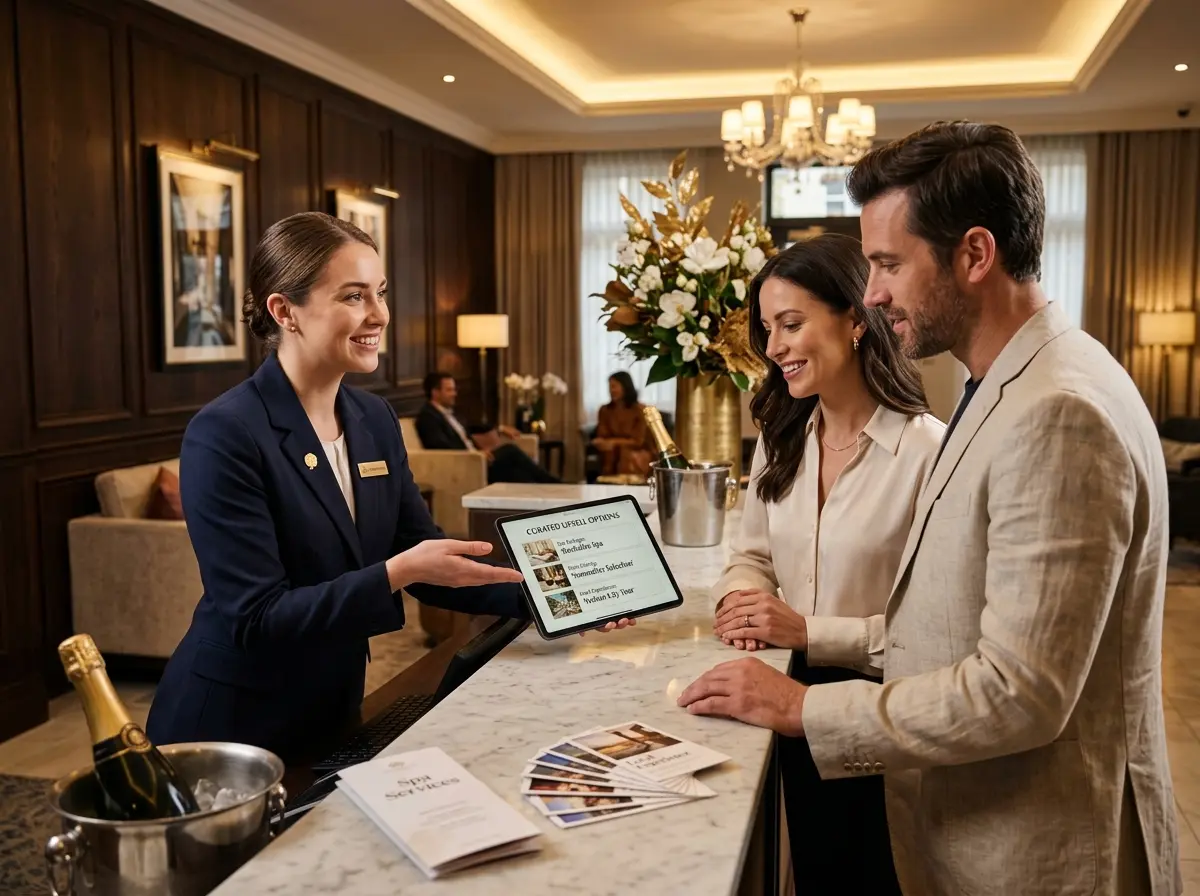
Here's something humans are often surprisingly bad at: recommending additional products or services without feeling pushy or forgetting to do it entirely. AI receptionists can be configured to naturally weave in upsells and cross-sells based on the conversation — suggesting a complementary service, highlighting an ongoing promotion, or pointing out that the deluxe package is only a little more than the standard one. Consistently. Every time. Without the nervous energy.
How Tools Like Stella Fit Into the Picture
Stella is worth mentioning here because she represents a practical, accessible entry point into AI receptionist technology for small and mid-sized businesses. She operates both as a human-sized in-store kiosk — greeting customers, answering questions, and promoting deals on the floor — and as a full-featured phone receptionist available 24/7.
What makes Stella particularly useful for business owners thinking about customer management is that she doesn't just handle conversations — she captures them. Her built-in CRM allows you to store customer contacts with custom fields, tags, and AI-generated profiles, while her conversational intake forms can collect customer information naturally during a phone call, at the kiosk, or on the web. At $99/month with no upfront hardware costs, she's designed to be a realistic option rather than an enterprise-only luxury.
What AI Receptionists Can't Do (Yet)
Now for the honest part — because any vendor who tells you AI handles everything perfectly in every situation is either confused or selling something harder than they should be. Managing expectations here isn't pessimism; it's just good business planning.
Complex Problem-Solving and Emotional Nuance
AI receptionists are excellent at handling well-defined scenarios, but they have real limits when conversations go sideways in unexpected ways. An angry customer with a complicated multi-part complaint that doesn't fit any established category? A deeply emotional caller navigating a difficult situation? These are moments where human judgment, empathy, and creativity genuinely matter — and a good AI receptionist should recognize that and route the call to a human staff member rather than fumbling through it.
The key is configuring your AI receptionist to know its own limits. Smart escalation — where the AI handles what it can and transfers what it shouldn't — is the hallmark of a well-deployed system. Think of it as the difference between a capable front desk assistant and a customer service director. Both valuable. Very different roles.
Replacing Human Relationships in Relationship-Driven Businesses
If your business runs on personal connections — a boutique law firm where clients expect to hear from their attorney, a high-end salon where regulars have a relationship with a specific stylist, a financial advisory practice where trust is everything — AI can support those relationships, but it can't replace them. What it can do is handle the administrative and informational layer so that your humans have more time and energy for the relationship work that actually matters.
The mistake business owners sometimes make is framing AI as a replacement for human connection rather than a support structure that protects and amplifies it. The best deployments use AI to handle the volume so that people can handle the depth.
Improvising Beyond Its Training
An AI receptionist works from what it knows. If you open a new service line and don't update your AI's knowledge base, it won't invent accurate answers — or at least, it shouldn't. This means that maintaining your AI receptionist requires some ongoing attention: keeping information current, refining responses based on what you're hearing from customers, and staying involved in how it represents your business. It's far less maintenance than a human employee, but it's not zero maintenance. Set that expectation with yourself early and you'll be much happier with the results.
Quick Reminder About Stella
Stella is an AI robot employee and phone receptionist designed for businesses of all types — whether you have a physical storefront or operate entirely online. She greets in-store customers, answers calls around the clock, forwards to human staff when needed, and helps collect and manage customer information through her built-in CRM. At $99/month with no hardware costs and a straightforward setup, she's built to be practical for real small business budgets.
Making It Work: How to Actually Deploy an AI Receptionist Successfully
Buying or subscribing to an AI receptionist is the easy part. Getting real business value out of it requires a little strategic thinking upfront. Here's how to do it right.
Start With a Clear Scope
Before you flip the switch, decide exactly what you want your AI receptionist to handle. Map out your most common customer questions and interactions — these are your AI's bread and butter. Then map out the scenarios where you always want a human involved. Build your escalation rules around that second list. The clearer your scope at the start, the fewer surprises you'll encounter once it's live.
For example, a medical office might configure their AI to answer questions about hours, insurance accepted, and appointment availability — while routing all calls involving symptoms, prescription questions, or patient complaints directly to a staff member. That's a clean, sensible deployment that adds genuine value without overreaching.
Treat the Setup Like an Onboarding Process
Think of configuring your AI receptionist the same way you'd onboard a new employee. The more thoroughly you train it — accurate product and service details, current pricing, your tone and brand voice, your most frequently asked questions — the better it performs. A poorly configured AI receptionist reflects poorly on your business just like a poorly trained human one would. Put in the time upfront, and the return on that investment compounds quickly.
Measure What Matters and Adjust
One significant advantage AI receptionists have over human ones is data. Every interaction can be logged, summarized, and analyzed. Use that. Pay attention to which questions come up most often — that's a signal about gaps in your marketing or website. Track which promotions customers are responding to. Notice where calls are getting escalated and ask whether that's a training gap or an appropriate boundary. The businesses that get the most from AI receptionists treat them as an ongoing system to optimize, not a one-time setup to forget.
The Bottom Line: A Powerful Tool for the Right Expectations
AI receptionists aren't magic, but they're also not gimmicks. For small business owners dealing with limited staff, high call volumes, inconsistent customer experiences, or simply the relentless demand of being available to customers 24 hours a day — they represent a genuine, practical solution to real problems.
The secret is going in with clear eyes. Deploy your AI receptionist for what it does brilliantly: consistent availability, accurate information, proactive engagement, and reliable data capture. Preserve your human team for what they do brilliantly: nuanced judgment, emotional intelligence, and relationship depth. When those two work in concert, the result is a customer experience that's both efficient and genuinely human where it counts.
If you're ready to stop letting calls go to voicemail and start giving every customer — on the phone or in the store — a professional, informed first impression, it's worth taking a serious look at what AI receptionist technology can do for your specific business. Your cold coffee can finally wait.