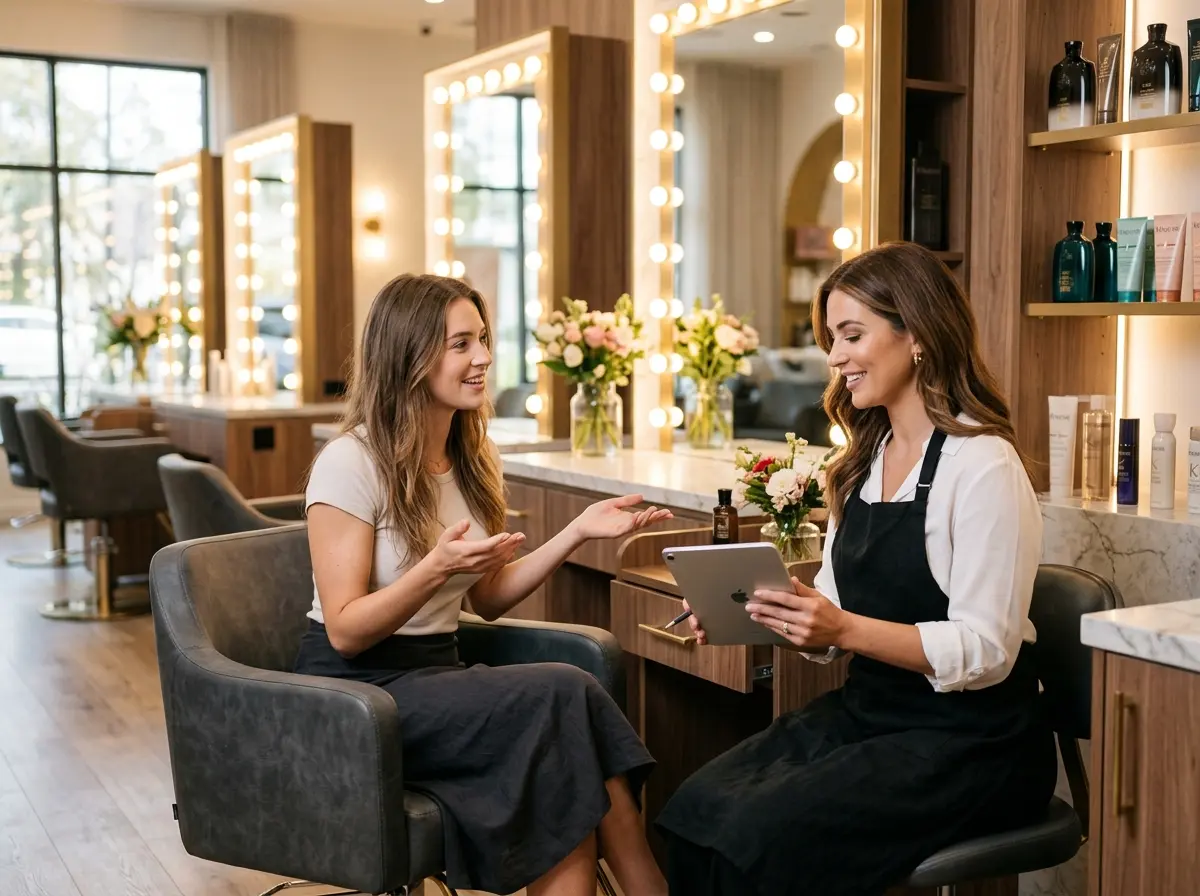
You're Losing Money Every Time a Client Sits Down Without Talking First
Picture this: A client walks into your salon, sits down in the chair, and says, "Just a trim." You give them a trim. They leave. Two weeks later, they leave a three-star review saying they wish you had told them about the deep conditioning treatment their hair clearly needed. Meanwhile, you had absolutely no idea they were struggling with breakage — because nobody asked.
Sound familiar? It should, because it happens in salons every single day. The consultation that happens in the chair is reactive. By then, you're already behind. The stylist is mentally calculating time, the client is already half-committed to their expectations, and the opportunity to truly understand what that person came in to achieve has quietly slipped out the back door.
A pre-consultation form — one that collects client goals, concerns, and preferences before they ever sit down — is one of the most underrated tools in your salon business. It's not paperwork for paperwork's sake. It's intelligence. It's preparation. And frankly, it's the difference between a stylist who guesses and a stylist who delivers.
Why the "We'll Talk When You Get Here" Approach Is Costing You
The Hidden Cost of In-Chair Surprises
Let's be honest: the chair consultation is rushed. There's a client before and a client after, the shampoo bowl is calling, and somehow you're expected to extract years of hair history, current goals, lifestyle factors, and product preferences in about four minutes while someone is already draped in a cape. That's not a consultation — that's a speed round of a game show nobody signed up for.
When stylists don't have information ahead of time, they default to playing it safe. Safe means conservative. Conservative means the client doesn't get the transformation they actually wanted, the stylist doesn't get the chance to upsell appropriate services, and everyone walks away mildly underwhelmed. According to a study by McKinsey & Company, businesses that prioritize understanding customer intent before service delivery see measurably higher satisfaction scores and repeat purchase rates. Salons are no exception.
Client Goals Are More Than Just "What Are We Doing Today?"
A client's goal isn't just a haircut description. It's a combination of lifestyle, budget, maintenance tolerance, upcoming events, emotional state, and past experiences — some of them traumatic (every colorist knows the look). A pre-consultation form gives you the space to ask the questions that would feel rushed or awkward in person. Things like:
- What's your biggest frustration with your hair right now?
- How much time do you realistically spend on styling each morning?
- Are you open to product recommendations?
- Is there a specific look or outcome you're hoping to achieve today?
- Have you had any chemical services in the last six months?
These answers transform a guessing game into a game plan. And when your stylists walk into an appointment already knowing what a client wants to achieve — and what they're worried about — they show up prepared, confident, and positioned to recommend services that actually make sense. That's not just good customer service. That's revenue.
Pre-Consultation Forms Build Trust Before the First Snip
There's a psychological element to this that gets overlooked. When a client fills out a form ahead of their appointment and the stylist references it during the visit, the client feels seen. They didn't just make an appointment at a salon — they started a relationship with a professional who was paying attention. That emotional connection is what turns one-time visitors into fiercely loyal regulars. And loyal regulars are worth significantly more than their individual ticket prices when you factor in referrals, retail purchases, and lifetime value.
Automating Intake So Your Team Can Focus on What They Do Best
Let Technology Handle the Paperwork (So Your Stylists Don't Have To)
Collecting client goals doesn't have to mean chasing people down with clipboard forms or relying on a front desk that's already juggling five other things. Stella, the AI robot employee and phone receptionist, is built for exactly this kind of intake work. She can greet walk-in clients at your kiosk, walk them through a conversational pre-consultation questionnaire, and save everything directly to a client profile — all before a stylist says a single word. For clients booking over the phone, Stella handles the call, collects the same intake information conversationally, and logs it in her built-in CRM with AI-generated summaries and custom fields your team can reference at a glance.
This means your stylists walk into every appointment with context. No more starting from zero. No more vague "she said she wanted it a little shorter" handoff notes. Just clean, organized client data that makes the whole appointment run smoother — and makes upselling feel helpful rather than pushy.
Designing a Pre-Consultation Form That Actually Gets Results
Keep It Short, Specific, and Strategically Ordered
The biggest mistake salons make when creating intake forms is designing them like medical questionnaires. Nobody wants to fill out seventeen fields before a blowout. The sweet spot is five to eight focused questions that surface the most valuable information without making clients feel like they're applying for a mortgage.
Order matters too. Start with something easy and goal-oriented — "What are you hoping to achieve at today's appointment?" — before you move into more detailed questions about hair history or product preferences. You're warming them up, not interrogating them. End with an open field for anything else they want you to know. You'll be surprised what people volunteer when given the space.
Turn Form Data Into Service Recommendations
The form is only valuable if your team actually uses it. Build a simple process: before each appointment, the assigned stylist reviews the pre-consultation responses and prepares two or three tailored service recommendations based on what the client said. If a client mentions they struggle with frizz, the stylist walks in ready to discuss a smoothing treatment. If they mentioned an upcoming wedding, the stylist knows this isn't the time for a dramatic change — unless they specifically asked for one.
This preparation also makes upselling far less awkward. You're not throwing add-ons at someone who didn't ask. You're presenting solutions to problems they already told you they have. The conversion rate difference is significant, and clients appreciate the personalized attention rather than feeling sold to.
Use the Data Over Time to Improve Your Business
Pre-consultation forms aren't just useful for individual appointments — they're a goldmine of aggregate business intelligence. If eighty percent of your clients are listing "damage and breakage" as their top concern, that's a signal to rethink your retail offerings, your service menu, or your stylist education priorities. If a large portion of your clients say they don't have time to style in the mornings, maybe it's time to add a "low-maintenance looks" specialty or promote your smoothing service more aggressively.
When this data lives in a CRM, tagged and organized, patterns become visible. And when you can see patterns, you can make smarter decisions about everything from hiring to promotions to product purchasing. Most salons are sitting on a pile of untapped client insight — they just don't have a system to capture it.
A Quick Reminder About Stella
Stella is an AI robot employee and phone receptionist available for just $99/month with no upfront hardware costs. She greets clients at your kiosk, answers calls 24/7, collects intake information conversationally, manages client profiles in a built-in CRM, and helps your team stay organized and prepared — without breaks, burnout, or bad days. She's the front desk upgrade your salon has been waiting for.
Start Collecting Goals Before the Cape Goes On
The pre-consultation form isn't a bureaucratic hurdle — it's a competitive advantage. Salons that know what their clients want before they arrive deliver better results, earn stronger reviews, generate more referrals, and build the kind of loyal client base that doesn't shop around every time a Groupon shows up. That's not a small thing. That's the entire foundation of a sustainable salon business.
Here's what you can do this week to get started:
- Draft your form. Write five to eight questions focused on client goals, concerns, lifestyle, and openness to recommendations. Keep it conversational and warm.
- Choose your delivery method. Decide whether clients fill it out via text link before arrival, through a kiosk when they walk in, or during the booking call. Ideally, all three.
- Build a review ritual. Have stylists spend two minutes reviewing responses before each appointment. Make it part of the workflow, not an afterthought.
- Tag and track in a CRM. Store responses in a system that lets you build client profiles over time, not just for a single visit.
- Revisit quarterly. Analyze patterns in the data and let them inform your service menu, marketing, and retail strategy.
Your clients are telling you exactly what they need — they just need a place to say it. Give them that place before they sit down, and watch what happens to your retention numbers, your average ticket size, and your reputation. The chair will still be there when they arrive. The conversation just doesn't have to start there.