Your Front Desk Is Costing You Members — And You Don't Even Know It
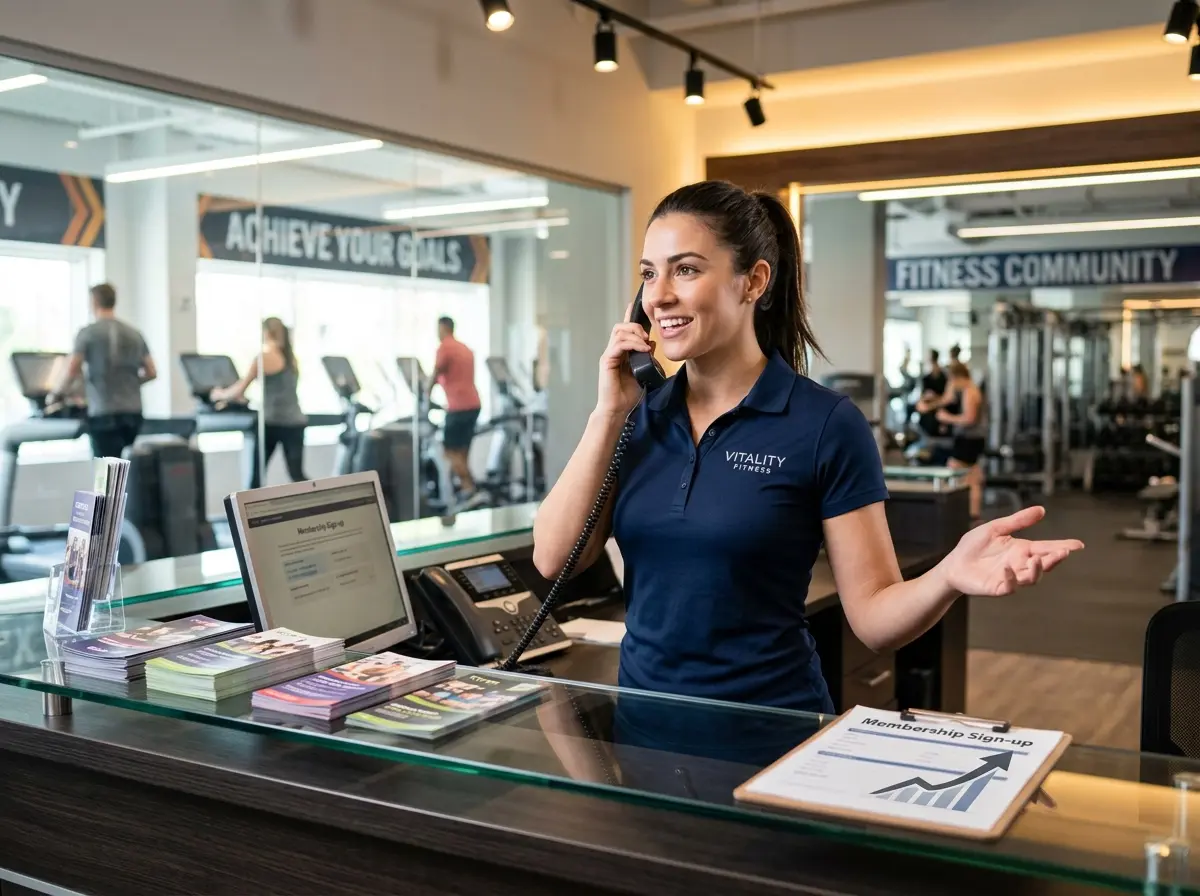
Picture this: A potential new member calls your gym on a Tuesday afternoon. They're motivated, they've been meaning to "get serious about fitness" since January, and they are finally ready to commit. The phone rings. Your front desk staff member — lovely person, great with check-ins — answers and says, "Hi, thanks for calling, our memberships start at $39 a month, you can come in anytime to sign up, okay bye." Click.
That caller? Gone. Probably joined the gym down the street that actually talked to them.
Here's the uncomfortable truth most gym owners don't want to hear: your front desk team is probably excellent at customer service and terrible at phone sales. And no, those are not the same thing. Not even close. Customer service training teaches your staff to be helpful, friendly, and reactive. Phone sales training teaches them to be persuasive, proactive, and — critically — to actually close. If your team doesn't know the difference, your membership numbers are suffering for it.
Let's break down why this gap exists, what it's actually costing you, and how to fix it before another interested caller becomes someone else's paying member.
The Real Difference Between Customer Service and Phone Sales
Customer Service Is Reactive — Sales Is Proactive
Customer service is fundamentally about responding to needs. A customer has a problem, a question, or a complaint, and your team resolves it. That's valuable — genuinely important — but it's reactive by nature. The customer leads, and your staff follows. Phone sales flips the entire dynamic. When a prospective member calls to ask about pricing, the wrong response is to rattle off a price list and wait. The right response is to ask questions, uncover that person's goals, build a connection, and guide the conversation toward a next step — ideally, a scheduled tour or a same-day visit.
If your front desk team has only ever been trained on customer service, they're bringing a butter knife to a sword fight every time a sales call comes in. They're not being unhelpful on purpose — they literally haven't been given the tools to do anything else.
Phone Sales Requires a Framework — Not Just Friendliness
Friendliness is table stakes. Every gym in your city has friendly front desk staff (or at least tries to). What separates high-converting gyms from the rest is a repeatable phone sales framework that every team member uses on every inbound inquiry call. This includes:
- A strong opening that builds rapport within the first 30 seconds
- Discovery questions that uncover the caller's goals, pain points, and timeline
- A tailored pitch that connects your gym's offerings directly to what the caller just told you they need
- Objection handling for the classics: "I need to think about it," "It's a little expensive," and "I'll call back later" (spoiler: they won't)
- A clear call to action — booking a tour, starting a free trial, or signing up on the spot
Without this framework, every phone call is basically improvised. And improv is great for comedy. It is not great for closing membership sales.
The Numbers Don't Lie
Industry data suggests that gyms typically convert only about 20–30% of inbound phone inquiries into actual members — and that's being generous for most independent gyms. High-performing fitness businesses, particularly those with dedicated sales training, can push that number well above 50%. That gap isn't marketing spend, location, or equipment. It's sales skill. Every percentage point of improved phone conversion is money sitting on the table that you've been accidentally leaving there every single month.
How Technology Can Plug the Gaps (And Stop the Bleeding After Hours)
The After-Hours Problem Is Silently Killing Your Lead Pipeline
Even if you train your team to be phone sales machines during business hours, what happens when someone calls at 8 PM on a Sunday because they just watched a fitness documentary and are feeling inspired? Most gyms either let it ring to voicemail (where leads go to die) or have no system at all. Stella, the AI robot employee and phone receptionist, solves exactly this problem. She answers calls 24/7 with the same knowledge and consistency your best team member would use during peak hours — no bad days, no forgetting to mention the current promotion, no awkward silences. For gyms with a physical location, Stella also operates as a friendly in-store kiosk, greeting walk-ins and engaging them proactively about memberships, classes, and current deals before a human staff member even gets involved.
And because Stella includes a built-in CRM with AI-generated profiles, custom fields, tags, and intake form capabilities, every caller's information and conversation details are captured automatically — so your sales team can follow up with actual context instead of starting cold. That's not just convenient; it's a genuine competitive advantage at $99 a month.
Building a Phone Sales Culture at Your Gym
Start With a Script — Then Train Off of It
The word "script" makes some gym owners nervous because it sounds robotic. But here's the thing: every great salesperson has a script. They've just internalized it so thoroughly that it sounds natural. Start by writing out your ideal phone sales call from beginning to end. Map out the questions you want asked, the benefits you want highlighted, and the exact language you want used when handling common objections. Then train your team on it relentlessly. Role-play it. Record practice calls. Review real calls together. The goal isn't to produce robots reading from a page — it's to give your team such a solid foundation that they can improvise confidently within a proven structure.
A good script also ensures consistency across your team. Your most enthusiastic staff member shouldn't be the only one closing calls while everyone else is accidentally letting leads slip away.
Make Follow-Up Non-Negotiable
Most gyms treat follow-up as optional. It is not optional. Research consistently shows that it takes five to eight touchpoints before a prospect makes a purchasing decision — and the vast majority of salespeople give up after one or two attempts. If someone calls, expresses interest, and doesn't sign up on the spot, they should be entering a follow-up sequence immediately: a same-day callback, an email with more information, a check-in a few days later. This is not being pushy. This is being professional. Train your team to treat every interested caller as an open opportunity until that person either joins or explicitly says they're not interested.
Track, Measure, and Improve Consistently
You can't improve what you don't measure. Start tracking inbound call volume, how many of those calls are inquiries versus existing member questions, how many inquiry calls result in a scheduled visit, and how many scheduled visits convert to memberships. Once you have that data, you can identify exactly where in the process you're losing people — and fix it specifically rather than guessing. Monthly team reviews of call performance, combined with ongoing training, will compound significantly over time. A team that improves their phone conversion rate by even 10% over six months is a team that's generating meaningfully more revenue without spending a single extra dollar on advertising.
Quick Reminder About Stella
Stella is an AI robot employee and phone receptionist designed to work around the clock so your gym never misses an inquiry, a lead, or an opportunity to make a great first impression. She handles phone calls with consistency and professionalism, greets walk-ins at her in-store kiosk, and captures contact information through conversational intake forms — all feeding directly into her built-in CRM. At $99 a month with no upfront hardware costs, she's the easiest hire you'll ever make.
Stop Leaving Memberships on the Table
The gap between a great customer service team and a great phone sales team is real, it's measurable, and it's costing your gym money every single month. The good news is that it's entirely fixable. Here's where to start:
- Audit your current phone process. Have someone call your gym as a mystery shopper and record what happens. Be honest about what you hear.
- Write a phone sales script tailored to your gym's membership offerings and your target member's most common goals and objections.
- Train your team consistently — not once at onboarding, but on an ongoing basis with role-play, call reviews, and regular feedback sessions.
- Implement a follow-up system so no interested caller is ever forgotten after the first call.
- Track your numbers so you can see what's working, what isn't, and where to focus next.
Your front desk team works hard. They deserve the training that actually matches the job they're being asked to do. Because answering a phone and selling on a phone are two entirely different skills — and once your team has both, the difference in your membership growth will speak for itself.