Your Window Display Is Either Working Hard or Hardly Working
Let's be honest — when was the last time you walked past a store window and thought, "Wow, that display really speaks to my soul"? Probably not recently. And if your own window display hasn't been updated since that promotion you ran three seasons ago, there's a solid chance your sidewalk traffic is doing exactly what sidewalk traffic does best: walking right on by.
Here's the thing. In an era where consumers can scroll through thousands of products before finishing their morning coffee, your physical storefront has exactly a few seconds to interrupt someone's autopilot walk to the coffee shop. Window displays aren't just decoration — they're your first sales pitch, your silent greeter, and your brand's first impression all rolled into one plate of glass.
The good news? Stopping foot traffic doesn't require a Hollywood set designer or a bottomless budget. It requires strategy, psychology, and a willingness to actually change that display more than twice a year. Let's talk about how to turn your window into a genuine customer magnet.
The Psychology Behind a Display That Actually Works
Before you rearrange your mannequins or hot-glue another seasonal prop to a foam board, it helps to understand why certain displays stop people and others get completely ignored. Spoiler: it's not random.
The Three-Second Rule (and How to Win It)
Research in retail consumer behavior consistently shows that a passerby makes a judgment about your store in under three seconds. That's not a lot of runway. In that time, your window needs to communicate who you are, what you sell, and — most importantly — why they should care right now. Cluttered displays with too many messages fail this test every time because the brain, faced with too much visual noise, simply moves on.
The most effective displays follow a clear visual hierarchy: one dominant focal point, a supporting element or two, and a single clear message. Think of it like a billboard, not a brochure. If someone has to squint and read three paragraphs of signage to understand what you're offering, you've already lost them.
Emotion, Story, and the Power of "I Want That Life"
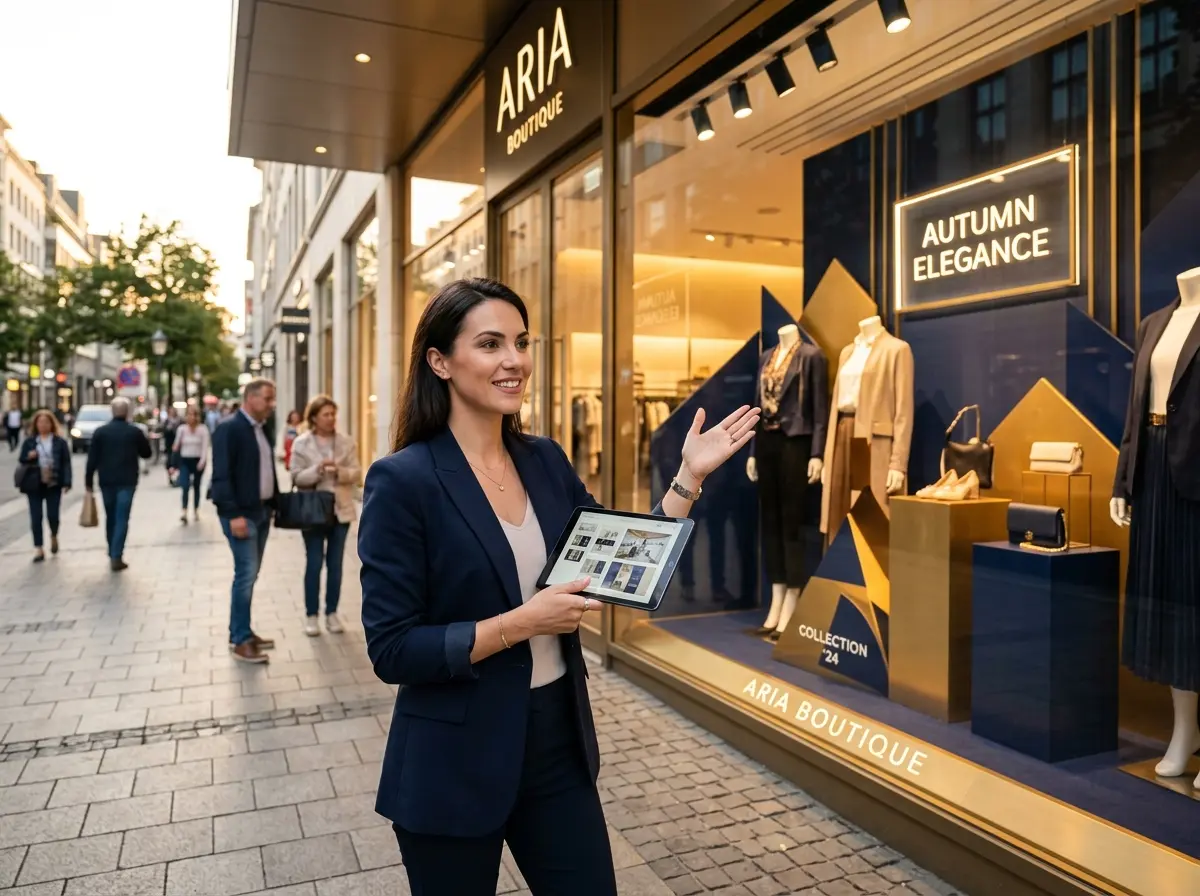
The best window displays don't just show products — they sell a feeling. A well-styled display at a clothing boutique doesn't just show a jacket; it shows a complete outfit, styled for a specific occasion, worn by someone living a version of life the viewer finds appealing. A spa's window shouldn't just list services — it should evoke calm, luxury, and the very specific relief of finally having an hour to yourself.
Ask yourself: what emotion do I want someone to feel when they look at my window? Then build backward from that answer. Use props, lighting, color, and messaging that all reinforce the same emotional note. Consistency of feeling is what transforms a window from a product shelf to a genuine invitation.
Seasonal Relevance and the Urgency Factor
Nothing kills a display's effectiveness faster than irrelevance. A Valentine's Day theme in March signals one thing loudly: nobody's paying attention around here. Keeping your display seasonally current isn't just about aesthetics — it signals to potential customers that your business is active, engaged, and worth checking out.
Beyond seasons, consider building urgency directly into your displays. Limited-time offers, countdown elements, or "while supplies last" messaging give passersby a reason to act today rather than "sometime." Urgency paired with a visually compelling display is a powerful combination that independent retailers often underutilize.
Getting People Through the Door Once You've Got Their Attention
A great window display gets people to stop. But stopping and entering are two very different things, and the gap between them is where a lot of potential revenue disappears. Once someone's curiosity is piqued, what happens next matters enormously.
The Transition from Outside to Inside
The experience between the window and your first interior touchpoint needs to feel seamless. If your window promises an upscale, curated experience and the first thing customers see when they walk in is a disorganized sale rack, the spell is broken. Think of your window display and your store entrance as one continuous experience — they should feel like chapters in the same story, not two completely different books.
Consider placing your featured window products near the entrance, so customers can immediately interact with what drew them in. Use similar styling, color, or messaging cues inside to create visual continuity. This isn't just good design — it builds trust and confirms that your brand delivers on its promises.
Let Technology Do Some of the Heavy Lifting
Here's where a smart business owner gets a little creative. Your window display stops people physically, but what about engaging them once they're inside — or catching the ones who walk by after hours? Stella, the AI robot employee and phone receptionist, can extend the reach of your window display by proactively greeting every customer who walks through the door, highlighting the same promotions and specials that drew them in from the sidewalk. She stands inside your store, talks naturally with customers about your products and current deals, and ensures no interested visitor goes unacknowledged — even during your busiest hours when your staff is stretched thin.
And because Stella also answers phone calls 24/7, the customer who saw your window display on their lunch break but couldn't stop in can call after hours and still get a knowledgeable, friendly answer about what they saw. That's a lead that would otherwise evaporate.
Practical Display Strategies Worth Stealing From the Pros
You don't need to be a national retail chain to execute displays that genuinely compete. Some of the most effective window strategies are surprisingly accessible for small and mid-sized businesses.
The Power of the Focal Point — and Why Less Is More
Professional visual merchandisers follow a principle called the "rule of three" — grouping items in odd numbers, particularly threes, creates natural visual tension that the eye finds more interesting than even groupings. Beyond that, ruthless editing is your best friend. Choose your hero product or theme, feature it boldly, and remove everything that doesn't directly support that story. A single, impeccably styled vignette will outperform a crowded showcase every single time.
Lighting deserves its own mention here. According to the Retail Design Institute, proper lighting can increase the attention a display receives by up to 30%. Directed spotlights on your focal point, warm color temperatures for inviting environments, and ensuring your display is visible at night can all dramatically increase the effectiveness of your setup without changing a single product in the window.
Incorporating Interactive and Digital Elements
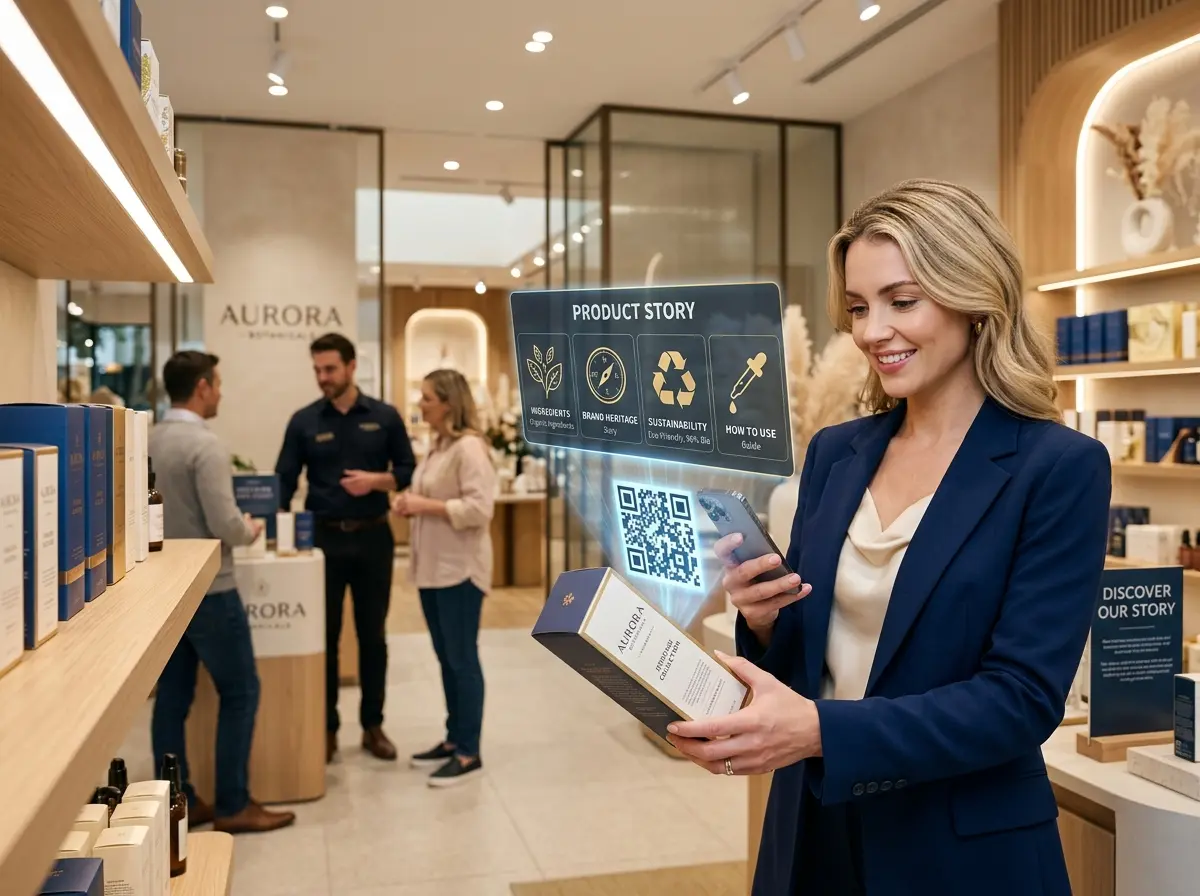
Modern window displays increasingly incorporate digital screens, QR codes, and interactive elements — and for good reason. A QR code that links to a video demonstration, an exclusive promotion, or an easy way to book an appointment transforms a passive display into an active conversion tool. Customers who engage digitally with your display before entering are already warmer prospects by the time they walk through the door.
Digital signage inside your window allows for real-time updates without the labor of a full redesign. Flash a daily special, rotate featured products, or display social proof like customer reviews — all without touching a prop. For businesses with seasonal or frequently changing promotions, the flexibility is invaluable.
Measuring What's Actually Working
Here's the part most business owners skip: tracking whether their display changes actually move the needle. You don't need a sophisticated analytics platform to do this. Note your foot traffic and conversion rates before and after a display change. Track whether specific promotions featured in your window drive measurable sales increases. Ask customers directly — "Did you notice our window?" is a perfectly reasonable question and often yields surprisingly candid answers.
If you're running time-sensitive promotions through your display, track redemption rates. If you feature a specific product prominently, monitor whether it sells faster during that period. Data-informed display decisions compound over time — you'll quickly learn what your specific customer base responds to, which is far more valuable than any general best practice.
A Quick Reminder About Stella
Stella is the AI robot employee and phone receptionist designed for businesses like yours — she greets customers in-store, promotes your deals, answers questions about products and services, and handles phone calls around the clock, all for $99/month with no upfront hardware costs. Whether your business has a storefront or operates entirely over the phone, she shows up consistently, professionally, and without ever calling in sick. If you're investing effort into getting people through your door, she's the logical next step for making sure they're welcomed when they arrive.
Time to Make Your Window Work as Hard as You Do
Your window display is not a "set it and forget it" fixture — it's a living, evolving sales tool that deserves real strategic attention. The businesses that treat their storefronts as an extension of their marketing strategy, rather than an afterthought, consistently outperform those that don't. The investment in time and creativity pays dividends in foot traffic, brand perception, and ultimately, revenue.
Here's your actionable checklist to get started:
- Audit your current display today. Is it seasonally relevant? Does it have a clear focal point? Could a passerby understand your offer in three seconds?
- Identify one emotion you want your window to evoke and redesign around it.
- Simplify aggressively. Remove at least 30% of what's currently in your display and see how it looks.
- Add a sense of urgency with a time-limited promotion or exclusive offer.
- Update your lighting — even a small investment here has outsized visual impact.
- Create continuity between your window display and your store entrance experience.
- Track your results — set a baseline now so you can measure improvement after your next refresh.
Your sidewalk traffic isn't going to stop itself. But with the right display strategy — and the right tools working alongside it — you'll find that getting people through the door becomes a whole lot less accidental and a whole lot more intentional. Now go update that window.