You Didn't Open a Restaurant to Work 80 Hours a Week (And Yet, Here You Are)
Let's be honest. You opened your restaurant because you love food, hospitality, and the idea of building something that's truly yours. You did not open it to become a full-time line cook, part-time phone operator, occasional therapist for stressed-out servers, and perpetual fixer of things that should not need fixing at 11 PM on a Tuesday.
And yet — here we are.
Independent restaurant owners are, statistically speaking, some of the hardest-working people in business. According to the National Restaurant Association, the average independent restaurant operator works over 60 hours per week, and nearly 60% of restaurants fail within their first year. The ones that survive long-term aren't just better cooks — they're better operators. They've figured out the profitability formula that most owners miss entirely: it's not about working more, it's about working smarter and protecting your margins with ruthless intentionality.
This post is about that formula. Not theory — practical, actionable strategies that independent restaurant owners can start using today to stop bleeding money, reclaim their time, and actually enjoy the business they sacrificed so much to build.
Where the Money Actually Goes (And Why You Probably Don't Know)
The Three Margin Killers You're Probably Ignoring
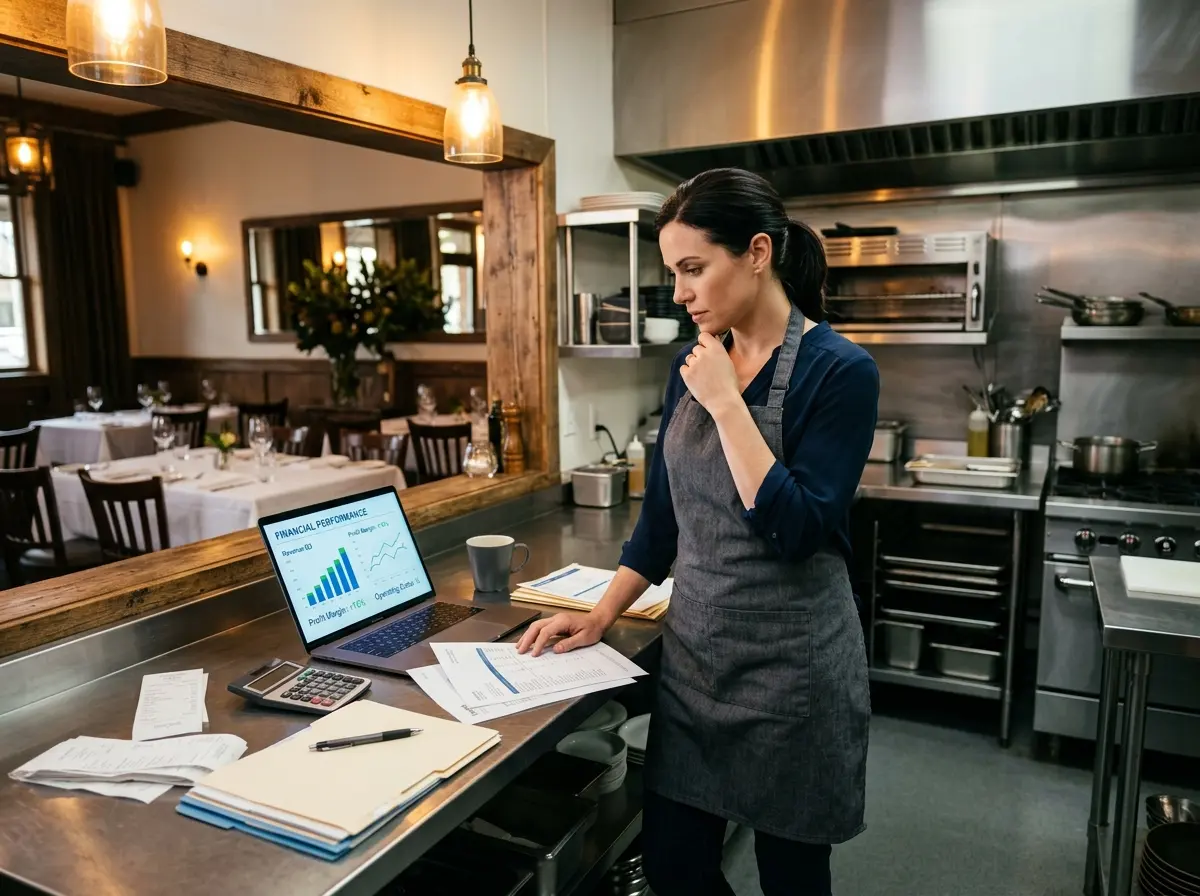
Most restaurant owners have a vague sense that food costs are "a little high" or labor is "getting expensive." But vague senses don't build profitable businesses — numbers do. The three most common margin killers in independent restaurants are food cost percentage creeping above 30%, labor cost exceeding 35% of revenue, and overhead costs that have never been seriously audited since opening day.
Here's what's insidious about these three: they erode profitability slowly. A quarter-point rise in food costs here, an extra hour of overtime there, a forgotten software subscription somewhere — and before you know it, your 15% net margin has quietly become 4%. The restaurant industry average net profit margin sits between 3% and 9%, which means there is very little room for waste. Every dollar of unnecessary cost is magnified painfully at that margin level.
Start by pulling your actual numbers and comparing your food cost percentage, labor cost percentage, and overhead as a share of revenue. If you don't have easy access to those numbers, that's the first problem to solve — because you can't fix what you can't see.
Menu Engineering: Your Most Underused Profit Lever
Menu engineering sounds like a buzzword, but it's genuinely one of the highest-ROI activities an independent restaurant owner can undertake. The concept is simple: categorize every menu item by its profitability and its popularity, then make strategic decisions based on that matrix.
Items that are both popular and highly profitable are your Stars — protect them, promote them, never mess with them. Items that are popular but low-margin are your Plowhorses — look at whether you can raise prices slightly or reduce portion cost without affecting perceived value. Items that are high-margin but rarely ordered are your Puzzles — they need better positioning, description rewrites, or staff promotion. Items that are neither profitable nor popular are your Dogs — cut them without sentiment.
A well-engineered menu can realistically improve your average check size by 10–15% without adding a single new customer. That's pure margin improvement, achieved by rearranging and repricing what you already have.
Technology That Actually Earns Its Keep
Letting the Right Tools Handle What Humans Shouldn't Have to
There's a persistent myth in the independent restaurant world that technology is either too expensive or too complicated to be worth the hassle. That myth is costing owners real money. The right technology doesn't just save time — it actively generates revenue, reduces errors, and creates a more consistent customer experience without requiring your personal involvement every five minutes.
One of the most overlooked areas where restaurants lose both money and customer goodwill is the front-of-house experience and phone management. Missed calls mean missed reservations, missed catering inquiries, and missed opportunities. A ringing phone during a lunch rush is the enemy of every server trying to turn tables efficiently — and yet, customers expect it to be answered promptly and professionally every time.
This is exactly where Stella, the AI robot employee and phone receptionist, becomes genuinely useful for restaurant owners. Stella can stand inside your restaurant as a friendly, human-sized kiosk — greeting walk-in customers, promoting daily specials, answering questions about your menu and hours, and handling upsell conversations so your staff can focus on delivering great food. At the same time, she answers your phones 24/7 with the same knowledge she uses in person, handles after-hours inquiries, takes messages with AI-generated summaries, and forwards calls to human staff when the situation genuinely requires it. For a flat $99/month with no upfront hardware costs, she pays for herself the moment she saves your team from a handful of interruptions per shift.
Building Profitability Into Your Operations, Not Just Your Hopes
Labor Scheduling as a Profit Strategy
Labor is typically a restaurant's largest controllable cost, and "controllable" is the key word. Unlike rent, which is fixed, labor can be optimized — and most independent restaurants are leaving significant money on the table by scheduling based on habit rather than data.
The solution is to schedule based on projected revenue by daypart, not simply by the number of reservations or a rough sense of how busy Tuesday nights tend to be. Pull your POS data, identify your actual peak and slow periods by day and hour, and staff accordingly. Cross-train your team so that slower periods don't require a full complement just because everyone only knows one role. Implement a cut system so that labor hours flex down as the shift slows, rather than paying three servers to stand around during the last hour of service.
Reducing labor cost from 38% to 33% of revenue on a restaurant doing $1 million annually translates to $50,000 in recovered profit. That's not a rounding error — that's a life-changing number for an independent operator.
The Reservation and No-Show Problem (And What To Do About It)
No-shows are quietly one of the most damaging profitability problems independent restaurants face, particularly those with smaller dining rooms where a table of four sitting empty represents a meaningful percentage of a night's revenue. The industry standard no-show rate for restaurants that don't take deposits or send reminders hovers around 20%.
The fix is not complicated, but it does require process. First, implement a confirmation system — an automated text or email reminder sent 24 and 48 hours before the reservation. Second, consider requiring a credit card to hold larger party bookings, with a clearly communicated cancellation policy. Third, build a waitlist culture so that when cancellations do happen, you're filling the table rather than staring at it. These three changes alone can meaningfully reduce your no-show rate and recover thousands of dollars in annual revenue that currently just evaporates.
Turning Regulars Into a Revenue Engine
Independent restaurants have a significant competitive advantage over chains that they systematically fail to exploit: the ability to build genuine relationships with repeat customers. A loyal regular who visits twice a month is worth more than a one-time visitor spending three times as much. Regulars refer friends, leave reviews, are more forgiving of occasional service hiccups, and spend more per visit over time as their comfort with your menu grows.
Capturing repeat customer value requires intentional effort: a simple loyalty mechanism, personalized outreach around birthdays or anniversaries, and genuine recognition when regulars walk through the door. You don't need an expensive CRM platform to start — even a well-maintained simple contact list with notes about customer preferences is dramatically better than nothing. The goal is to make your regulars feel seen, because in a world full of forgettable dining experiences, that feeling alone is a powerful competitive differentiator.
A Quick Reminder About Stella
Stella is an AI robot employee and phone receptionist designed to work in your business without breaks, turnover, or the occasional bad attitude. She greets customers in person, promotes your specials, answers your phones around the clock, and keeps your staff focused on the work that actually requires a human being. At $99/month with no upfront hardware costs, she's built for independent business owners who want professional, consistent support without the overhead of another full-time hire.
Stop Grinding Harder. Start Operating Smarter.
The profitability formula for independent restaurants isn't a secret, but it does require honesty, discipline, and a willingness to treat your restaurant like a business rather than a labor of love that happens to have a cash register. Here's the short version of everything we've covered:
- Know your numbers. Food cost, labor cost, and overhead should be on your radar every single week — not as a quarterly surprise.
- Engineer your menu. Stop letting low-margin, low-popularity items steal real estate from items that actually make you money.
- Use technology that earns its keep. The right tools — like AI-powered front-of-house and phone support — free up your team and create a better customer experience simultaneously.
- Schedule with data, not habit. Let your POS tell you how to staff, and watch your labor cost percentage come down meaningfully.
- Protect your reservations. Confirmation systems and cancellation policies exist for a reason. Use them.
- Invest in your regulars. They are your most valuable asset and the most underutilized growth engine most independent restaurants have.
You built something worth protecting. Give it the operational discipline it deserves — and maybe, just maybe, you'll get to take a Sunday off for the first time in six months. You've earned it.