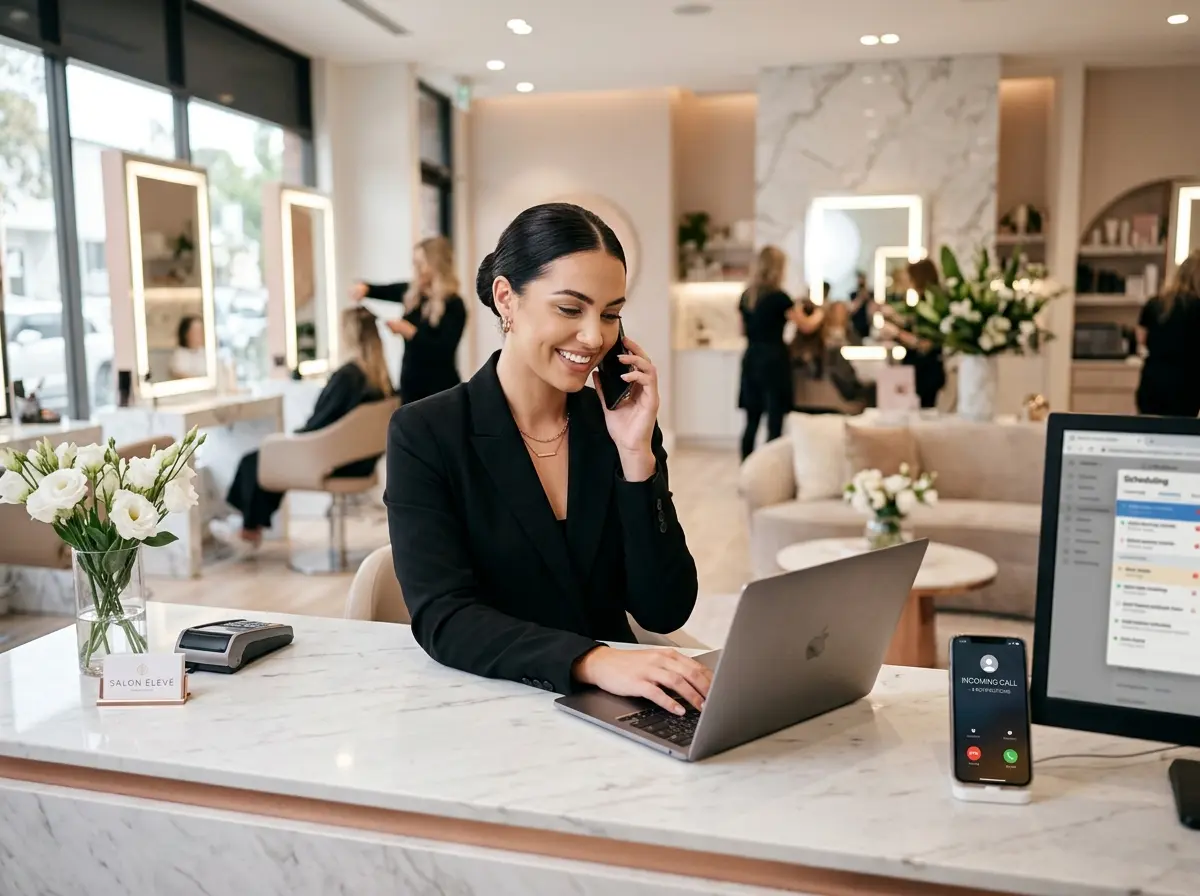
Your Salon Is Busy. Your Staff Is Not Amused.
Picture this: It's a packed Saturday morning at your salon. Every chair is full, the blow dryers are roaring, and your front desk person — bless their heart — is simultaneously checking in a walk-in, ringing up a product sale, and trying to answer the phone while mouthing "I'm so sorry" to the person standing in front of them. Sound familiar?
The good news: your salon is busy. The less-good news: a ringing phone that nobody answers is quietly costing you money. Studies show that 85% of callers who don't reach a business on the first try will not call back. They'll just book with your competitor down the street — who, coincidentally, also has a ringing phone problem but answered it by sheer luck today.
Here's the thing: hiring another full-time receptionist to handle call volume feels like overkill (and your P&L agrees). So what do you do? You get smarter about your systems. This post breaks down exactly how to manage high call volume at your salon without burning out your team or blowing your budget on another salary.
Why Salon Phones Ring So Much (And Why It Matters)
The Nature of the Beauty Business
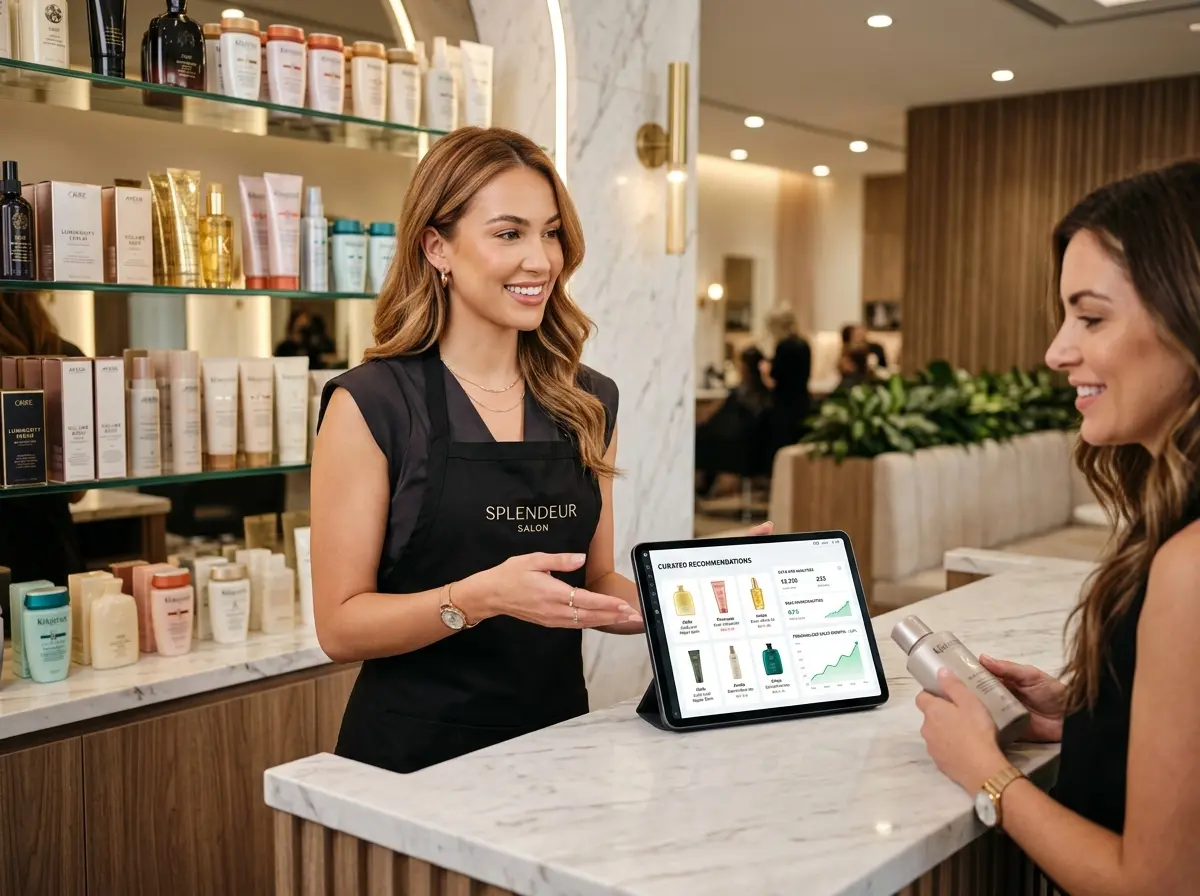
Salons, by design, are high-touch, appointment-driven businesses. Unlike a retail shop where a customer can just walk in and browse, your clients want to talk to someone before they commit. They want to know if Maria is available on Thursday. They want to know if you carry Olaplex. They want to know your hours, your pricing, whether you do balayage, and if there's parking. These are all reasonable questions. They're also questions that pull your stylists — who should be focused on the client in the chair — away from the work that actually generates revenue.
The result is a chaotic loop: phone rings, stylist stops mid-highlight to answer, client in chair feels neglected, caller gets a rushed response, and nobody wins. Multiply that by a dozen calls a day, and you're looking at a meaningful amount of lost productivity and missed revenue.
The Hidden Cost of a Missed Call
Let's talk numbers for a second. If your average service ticket is $80 and you're missing even five bookings a week due to unanswered or mishandled calls, that's $400 a week — or roughly $20,000 a year walking out the door. And that doesn't even account for the retail upsells, rebooking opportunities, or the lifetime value of a loyal client who would have come back quarterly for years.
Phone calls in a salon aren't an inconvenience. They're a revenue stream. Treating them as such changes how you approach the problem entirely.
Smart Systems That Handle the Volume
Structured Call Handling With AI
One of the most practical ways to manage call volume without adding headcount is to let technology handle the front line. This is exactly where Stella comes in. Stella is an AI receptionist that answers your salon's phone calls 24/7 — not with a clunky phone tree that makes your clients want to throw their phone across the room, but with a natural, conversational experience that actually answers their questions.
Stella knows your services, your pricing, your hours, your policies, and your current promotions. She can handle the "Do you do keratin treatments?" and "What are your Saturday hours?" calls entirely on her own, freeing your human staff to focus on the clients in front of them. For calls that genuinely need a human — a complex complaint, a VIP client with a specific request — Stella can forward those based on conditions you configure. Everything else? She handles it, takes a voicemail if needed, generates an AI summary, and pushes a notification to you. No missed calls. No chaos.
And it doesn't stop at the phone. If your salon has a physical location, Stella also operates as an in-store kiosk — greeting customers who walk by, engaging them proactively, and answering questions so your staff doesn't have to stop mid-service every time someone walks through the door. Her built-in CRM also lets you collect client intake information conversationally — whether over the phone, on the web, or at the kiosk — and build detailed customer profiles with notes, tags, and custom fields. For a salon that lives and dies by client relationships, that kind of organized data is genuinely valuable.
Training Your Team to Triage, Not Panic
Define What Deserves a Human Response
Not every call is equal, and your team needs a clear framework for knowing when to pick up, when to let the system handle it, and when to escalate. Start by categorizing your common call types: booking and scheduling questions, product inquiries, pricing questions, complaints, and calls from VIP or high-value clients. The first three categories? Those can almost always be handled without a human. The last two deserve personal attention.
When your team knows they don't have to scramble for every ring, the whole energy of your salon floor changes. They're no longer reactive. They're focused. And your clients — both on the phone and in the chair — get a better experience because of it.
Build a Simple After-Hours Protocol
Your salon closes. Your clients' curiosity does not. A significant percentage of booking inquiries happen outside of business hours — evenings, weekends, that weird window between midnight and 2 a.m. when someone is suddenly very motivated to fix their split ends. Without a system in place, those inquiries evaporate.
Set up a clear after-hours protocol that includes an AI or automated response, a way to capture the caller's information, and a commitment to follow up within a specific timeframe. Clients don't expect you to answer at 11 p.m. They do expect you to acknowledge them and follow through. A voicemail system with an AI-generated summary delivered straight to your phone means you wake up in the morning already knowing who called, why, and what they need — before you've even had your coffee.
Turning Call Volume Into a Competitive Advantage
Use Every Call as a Data Point
Most salon owners think of phone calls as a task to complete. The sharp ones think of them as intelligence. Every call tells you something: What services are people asking about? What objections come up repeatedly? Are people asking about a promotion you ran three months ago, or one you just launched? That information, when aggregated, becomes a roadmap for your marketing, your service menu, and your staffing decisions.
When your call handling system tracks and summarizes interactions, you stop flying blind. You can see which promotions are driving inquiries, which questions your team fields most often (hint: those are your FAQ page priorities), and where your clients are getting confused or frustrated. That's the kind of insight that takes a chaotic phone line and turns it into a strategic asset.
Use Calls to Drive Upsells and Rebooking
A phone call is a warm lead with a heartbeat. When someone calls to ask about a haircut, they are already mentally in your chair. That is the single best moment to mention that you're currently running a deal on a deep conditioning treatment, or that your colorist has a rare opening next Friday. A well-trained human — or a well-configured AI — can plant that seed in under 30 seconds without being pushy.
The businesses that are winning at this aren't high-pressure sales machines. They're just consistent. Every caller hears about the current special. Every caller is invited to rebook. Every caller leaves the conversation feeling taken care of. That consistency compounds over time into meaningfully higher revenue per client — and it all starts with how you answer the phone.
A Quick Reminder About Stella
Stella is an AI robot employee and phone receptionist built for businesses like yours. She answers calls 24/7, greets walk-in customers at her in-store kiosk, promotes your deals, handles intake forms, and manages client data through a built-in CRM — all for $99/month with no upfront hardware costs. She doesn't take breaks, doesn't call in sick, and never puts a client on hold to go ask someone else. For a salon trying to grow without adding headcount, she's worth a very serious look.
What to Do Starting This Week
You don't need to overhaul everything overnight. Start with an honest audit: How many calls is your salon receiving each day? How many are going unanswered or mishandled? What are the top five questions your team answers repeatedly? Those answers will tell you exactly where your biggest opportunities are.
From there, build a tiered response system. Automate the routine. Empower your team with clear protocols for when human engagement is actually needed. Set up an after-hours solution so no inquiry disappears into the void. And start treating every caller — answered or not — as a data point that can make your business smarter.
The salons that thrive aren't necessarily the ones with the most staff. They're the ones with the best systems. Your phone is ringing. Make sure something — or someone — is ready to answer it in a way that actually moves your business forward.