So, Your Staff Is Leaving Money on the Table (Let's Fix That)
Here's a fun little exercise: think about the last ten customers who walked out of your store. How many of them bought exactly what they came in for — nothing more, nothing less? If your honest answer is "most of them," congratulations, you have officially identified one of the most common and quietly painful revenue leaks in retail.
The upsell. The cross-sell. The "have you considered adding this to your order?" moment. These interactions are not manipulative, they're not pushy, and they are absolutely not optional if you're serious about growing your business without spending a fortune on new customer acquisition. Research from McKinsey suggests that upselling and cross-selling can increase revenue by 10–30% — and yet, most retail staff either don't do it consistently or do it so awkwardly that customers practically sprint for the exit.
The good news? This is a training problem, not a people problem. With the right frameworks, scripts, and a little confidence-building, your team can increase average transaction value (ATV) naturally, conversationally, and without anyone feeling like they're being sold to. Let's get into it.
The Psychology Behind Why Upselling Works (And Why Your Staff Avoids It)
Customers Actually Want Recommendations
There's a persistent myth in retail that customers resent being offered additional products. In reality, the opposite is often true. A well-timed, relevant recommendation feels like service, not a sales pitch. Think about the last time a knowledgeable salesperson told you that the product you were buying pairs perfectly with something else — and they were right. It felt helpful. It felt like they were paying attention. That's what great upselling looks like.
The key word is relevant. Customers don't mind being offered something extra. They mind being offered something random. "Would you like to add a phone case to your new laptop?" lands very differently than "Would you like to add a bag of fertilizer to your new laptop?" Train your staff to think of upselling as a form of personalized service — because when it's done right, that's exactly what it is.
Why Staff Hesitate (And What to Do About It)
Most retail employees avoid upselling not because they're lazy, but because they're uncomfortable. They worry about seeming pushy, they fear rejection, or they simply haven't been given a clear framework for when and how to do it. If your training consists of "try to sell more stuff," you're not going to see results. You need to give your team specific, practiced language and the confidence to use it.
Start by reframing the goal internally. Upselling isn't about squeezing money out of customers — it's about making sure they leave with everything they need to have the best possible experience with their purchase. When your staff genuinely believes that, the delivery becomes natural. Role-play common scenarios during team meetings, celebrate wins publicly, and make it clear that a declined upsell is not a failure — it's just part of the conversation.
Timing Is Everything
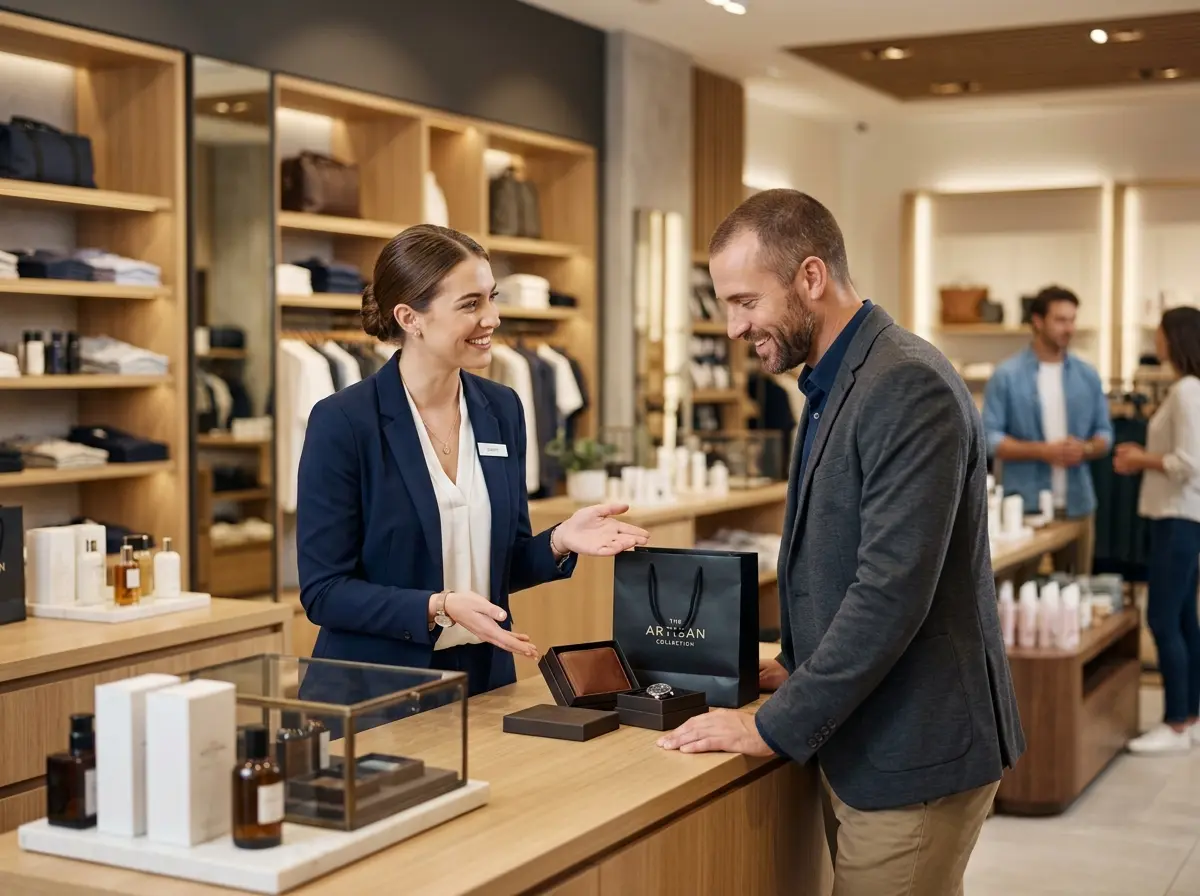
One of the most overlooked aspects of effective upselling is timing. Offering an add-on before the customer has committed to their primary purchase can create friction and even derail the original sale. The sweet spot is typically right after the customer has made their decision but before they've paid — that moment when their brain has already shifted into "yes" mode. This is when a natural, low-pressure suggestion lands best. Train your staff to recognize that window and use it intentionally.
Building Upsell Skills Into Your Team's DNA
Create a Product Knowledge Foundation
Your staff cannot confidently recommend what they don't understand. Before you train anyone on upsell scripts, invest time in genuine product education. Which items pair naturally together? What accessories or add-ons are commonly underestimated by customers? What upgrades deliver meaningfully better experiences? When your team knows the answers to these questions without hesitating, upselling stops feeling like a sales tactic and starts feeling like expertise.
Consider building a simple internal reference — a one-page cheat sheet per product category showing natural pairings and quick talking points. Update it seasonally as inventory changes. It sounds unglamorous, but it works.
Scripts, Practice, and the Art of Sounding Human
Scripts are not the enemy of authenticity — they're the foundation of it. When your staff has internalized a few natural-sounding phrases, they stop fumbling through the interaction and can actually be present with the customer. The goal is for the script to disappear into the background, leaving only a genuine conversation.
A few proven approaches worth building into your training include the "completion" frame ("A lot of customers also grab X with this — it makes a big difference"), the "upgrade" frame ("For just a bit more, the premium version gives you Y"), and the simple curiosity question ("Are you aware we also carry Z? It works really well with what you're getting"). Practice these in pairs during team huddles until they feel effortless.
Where Technology Can Give Your Team a Boost
Let Automation Handle the Consistent Part
Even the best-trained staff will have off days. They'll get busy, distracted, or simply forget to mention the add-on during a rush. That's where smart technology can quietly carry some of the load. Stella, the AI robot employee and phone receptionist, is designed to do exactly this — consistently, tirelessly, and without ever having a bad shift.
In-store, Stella greets customers proactively, answers questions about products and services, highlights current promotions, and recommends related items as part of a natural conversation. She never forgets to mention the upsell. She never gets too busy to engage. For businesses that also receive inbound calls, she handles phone inquiries 24/7 with the same product knowledge she uses on the floor — meaning a customer calling after hours gets the same quality of engagement as one standing in your store. It's the kind of consistent, professional presence that actually moves the needle on average transaction value without requiring your human staff to be perfect every moment of every shift.
Measuring, Motivating, and Making It Stick
Track the Right Numbers
If you're not measuring average transaction value, you're flying blind. Set a baseline, then track it weekly — broken down by staff member if possible. This isn't about putting anyone on the spot; it's about creating visibility. When people can see the number, they start thinking about the number. Run a friendly competition, set small team targets, and celebrate meaningful improvements. The data also tells you which products are being successfully upsold and which pairings aren't resonating, so you can refine your training accordingly.
Incentivize Smart Selling, Not Just Volume
Commission structures and spiff programs can be effective, but they can also backfire if poorly designed — pushing staff toward aggressive behavior that tanks the customer experience. A better approach ties incentives to customer satisfaction alongside transaction value. When your team knows that a pushy upsell that leads to a return or a bad review doesn't count as a win, they naturally gravitate toward the kind of thoughtful recommendations that actually build loyalty. Happy customers come back. Customers who felt pressured do not.
Keep the Culture Alive With Ongoing Coaching
Training is not a one-time event. Skills fade, new staff join, and inventory changes. Build a rhythm of short, regular coaching conversations into your management routine — a five-minute debrief after a busy shift, a monthly role-play session, a quick shoutout when someone lands a great upsell. The businesses that see lasting improvement in ATV are the ones that treat upselling as a living skill rather than a box to check during onboarding.
A Quick Reminder About Stella
Stella is a human-sized AI robot kiosk and phone receptionist built for businesses of all types — retail, restaurants, gyms, salons, service providers, and more. She greets customers in-store, answers calls around the clock, promotes deals, recommends products, and provides a reliable professional presence without breaks, bad days, or turnover. At $99/month with no upfront hardware costs, she's the kind of team member who consistently shows up and does the job.
Put It Into Practice Starting This Week
Growing your average transaction value doesn't require a major overhaul, a new product line, or a miracle. It requires consistent, well-trained human interactions — and smart systems to fill in the gaps. Here's a practical starting point for this week:
- Audit your current ATV and set a realistic target for improvement over the next 30 days.
- Build a product pairing guide for your top 10 selling items and share it with your team.
- Run one role-play session focused on the three upsell frames mentioned above — completion, upgrade, and curiosity.
- Create a simple incentive tied to both transaction value and customer experience metrics.
- Evaluate where automation can help — whether that's in-store engagement, phone interactions, or both.
The art of the upsell is not really about selling at all. It's about knowing your products deeply, caring about your customers genuinely, and having the confidence to make a useful recommendation at the right moment. Train your team to do that consistently, support them with the right tools, and watch what happens to your bottom line. It's almost unfair how well it works.