Welcome to the Most Regulated Industry You Could Have Chosen
Congratulations on entering the cannabis industry — where the product is popular, the customers are enthusiastic, and the compliance requirements make running a hospital look like operating a lemonade stand. If you're a cannabis dispensary owner, you already know that seed-to-sale tracking isn't just a best practice. It's a legal mandate that follows your product from the moment a seed hits soil to the second a customer walks out your door with a bag of gummies.
The good news? Modern tools and systems have made compliance dramatically more manageable than it was even five years ago. The less-good news? You still have to actually use them — correctly, consistently, and with zero tolerance for shortcuts. Regulators are not known for their sense of humor when it comes to missing inventory records.
This guide is designed to help dispensary owners understand seed-to-sale tracking, navigate the most common compliance pitfalls, and set up systems that keep your operation running smoothly — so that your biggest daily worry is which strain to feature on the chalkboard, not whether your state is about to audit you into oblivion.
Understanding Seed-to-Sale Tracking
What It Is and Why It Exists
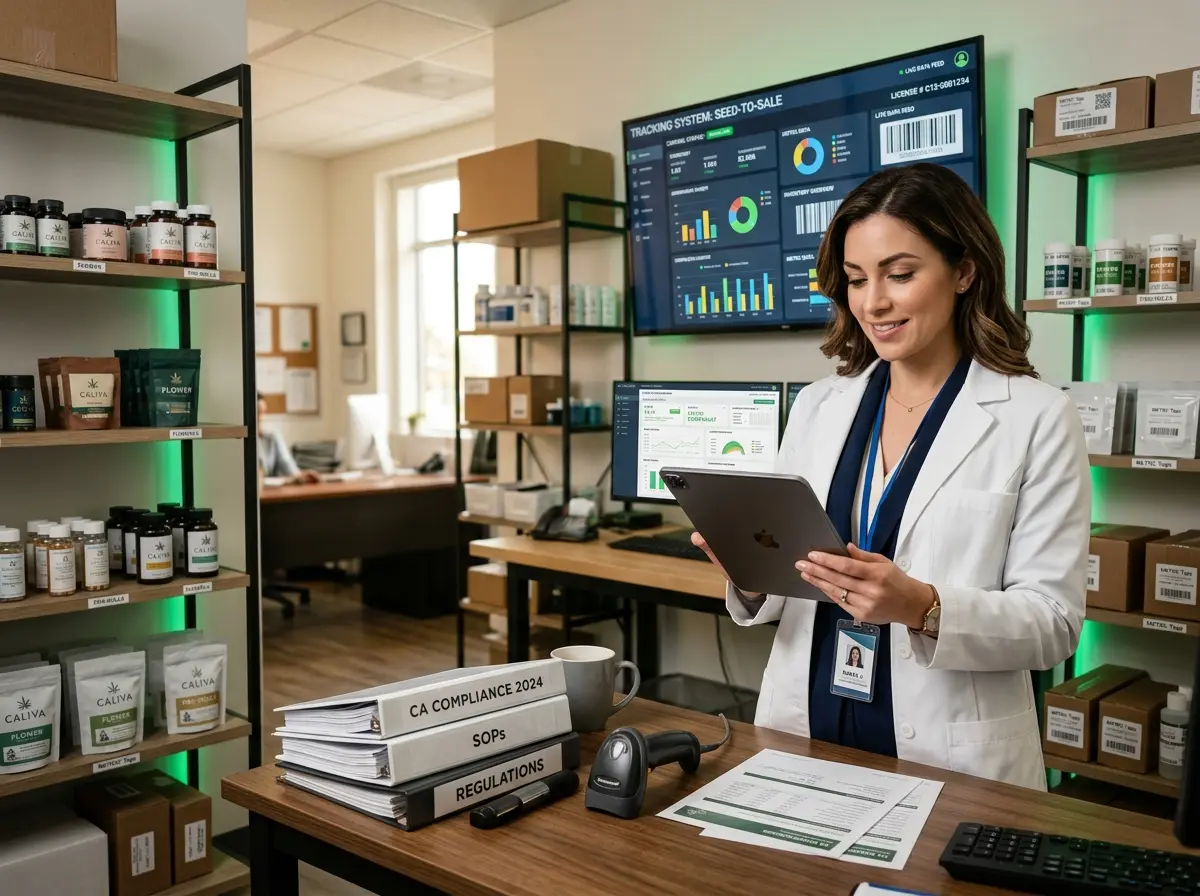
Seed-to-sale tracking is a regulatory framework that requires cannabis businesses to document every step in a product's lifecycle — from cultivation through processing, distribution, and final retail sale. Every plant, every gram, every package gets a unique identifier that moves with it through the supply chain. The goal is straightforward: prevent diversion of cannabis into illegal markets, ensure product safety, and give regulators a complete picture of what's happening inside licensed facilities.
Most states that have legalized cannabis — whether medical, recreational, or both — use a government-mandated tracking platform. METRC (Marijuana Enforcement Tracking Reporting Compliance) is the most widely used, operating in over 20 states. Others use BioTrackTHC, MJ Freeway, or proprietary state systems. Regardless of the platform, the underlying principle is the same: if it's cannabis and it's in your facility, it needs to be tracked.
The Key Touchpoints Every Dispensary Must Track
For retail dispensaries specifically, your seed-to-sale obligations typically begin at the point of receiving inventory from a licensed cultivator or distributor. Here's what you're generally required to track at the retail level:
- Incoming transfers: Every shipment received must be reconciled against the manifest in your state's system before products can be sold.
- Inventory adjustments: Spoilage, returned products, and damaged goods must be properly documented and reported.
- Point-of-sale data: Each retail transaction must be recorded and synced with the state tracking system in near real-time or within a defined reporting window.
- Waste disposal: Unusable or expired cannabis can't simply go in the dumpster — it must be logged, rendered unusable, and reported.
Missing any of these touchpoints is where dispensaries get into trouble. And trouble in this industry doesn't mean a strongly worded letter — it can mean license suspension or revocation.
Choosing the Right Point-of-Sale System
Your point-of-sale (POS) system is the backbone of your retail compliance. It needs to integrate directly with your state's tracking platform so that every transaction automatically updates your inventory records. Popular cannabis-specific POS platforms like Dutchie, Flowhub, Treez, and Cova are built with this integration in mind. Generic retail POS systems — no matter how well they work for, say, a clothing boutique — are simply not equipped for cannabis compliance.
When evaluating a POS system, look for automatic METRC (or equivalent) syncing, real-time inventory updates, built-in purchase limit enforcement, and detailed reporting features. The upfront investment in the right system pays for itself the first time it prevents a compliance violation that could have cost you a five-figure fine.
How Technology Can Lighten Your Operational Load
Letting Automation Handle the Repetitive Stuff
Compliance is non-negotiable, but customer experience is what actually drives revenue. The challenge many dispensary owners face is that staff who are busy fielding phone calls about hours, product availability, and parking validation are staff who are not helping customers on the floor — and definitely not focused on compliance tasks. This is one place where smart automation makes a measurable difference.
Stella, the AI robot employee and phone receptionist, can step in on both fronts. As a friendly, human-sized kiosk stationed inside your dispensary, Stella greets every customer who walks in, answers common questions about products and promotions, and promotes current deals — freeing your budtenders to focus on meaningful consultations and accurate point-of-sale transactions. She also answers phone calls 24/7, handling questions about hours, parking, menus, and policies without pulling a single staff member away from the floor. For a high-traffic dispensary where the phone never seems to stop ringing, that's not a minor convenience — it's a genuine operational upgrade.
Common Compliance Pitfalls and How to Avoid Them
Inventory Discrepancies: The Silent License Killer
Inventory discrepancies are the single most common compliance issue dispensaries face, and they're almost always the result of process failures rather than intentional wrongdoing. A package scanned incorrectly, a return processed outside the POS system, a sample logged manually and never entered — these small errors accumulate quietly until your physical count doesn't match your state system, and suddenly you have a very uncomfortable audit on your hands.
The fix is deceptively simple but requires genuine discipline: conduct regular cycle counts rather than waiting for your annual full inventory audit. Many successful dispensaries perform rolling counts on a weekly basis, checking a portion of their inventory each week so that discrepancies are caught and corrected before they grow into reportable gaps. Pair this with strict process enforcement — every transfer, adjustment, and sale goes through the POS system, no exceptions, no workarounds.
Purchase Limits and Customer Verification
State law caps how much cannabis a customer can purchase in a single transaction or a single day. Enforcing these limits is a legal requirement, and a good cannabis POS system will flag a transaction automatically when a customer is approaching or has exceeded their limit. However, the system can only do this correctly if customer IDs are scanned accurately and consistently for every transaction.
Train your staff to treat ID verification as sacred — not as a formality that gets skipped during a rush. Beyond the compliance angle, robust customer verification also creates a record that protects your dispensary in the event of any regulatory inquiry. Most cannabis POS platforms maintain a customer database with purchase history precisely for this reason.
Staff Training: Your Most Underrated Compliance Tool
Regulations change. State agencies issue new guidance. Your POS platform releases an update that changes how adjustments are processed. None of that matters if your staff doesn't know about it. A culture of ongoing compliance education is what separates dispensaries that sail through inspections from those that get caught off guard.
Consider scheduling brief monthly compliance check-ins with your team — 15 to 20 minutes reviewing any regulatory changes, going over common mistakes caught during cycle counts, and reinforcing correct procedures. Document these sessions. If a regulator ever asks whether your staff has been trained on a particular requirement, you want to be able to hand them a training log rather than offer a vague nod of confidence. Keep written SOPs (standard operating procedures) for every compliance-sensitive process, update them regularly, and make them easily accessible to all employees.
A Quick Reminder About Stella
Stella is an AI robot employee and phone receptionist that works inside your dispensary as a kiosk and answers your phones around the clock — so your human staff can stay focused on compliance-critical tasks and high-quality customer interactions. She runs on an affordable $99/month subscription with no upfront hardware costs and is easy to set up. In an industry where every staff minute counts, having a reliable, tireless front-of-house presence is a simple win.
Running a Compliant Dispensary Without Losing Your Mind
Seed-to-sale compliance isn't a burden you endure — it's the foundation your business is built on. The dispensaries that thrive long-term are the ones that treat compliance as a core operational function, not an afterthought that gets attention when an audit is looming. Here's a practical checklist to keep your operation on solid ground:
- Invest in a cannabis-specific POS system with direct integration to your state tracking platform.
- Perform weekly cycle counts and resolve discrepancies immediately.
- Enforce ID scanning and purchase limit compliance on every transaction, no exceptions.
- Hold regular staff training sessions and document them.
- Maintain written SOPs for every compliance-sensitive process and update them when regulations change.
- Review your state agency's compliance bulletins and newsletters — they're not exciting reading, but they're essential.
- Automate where you can — let technology handle repetitive tasks so your people can focus on what matters.
The cannabis industry is still young, still evolving, and still proving itself to regulators, lawmakers, and the public. Every dispensary that operates with integrity and precision makes the industry stronger. And every dispensary that cuts corners on compliance makes life harder for everyone around them.
You've built something real. Protect it with systems, processes, and the right technology — so the most stressful part of your week is deciding which new product to put on display, not explaining a compliance gap to a state inspector. Now go count your inventory.