Why Your Furniture Showroom Is Losing Sales to a JPEG
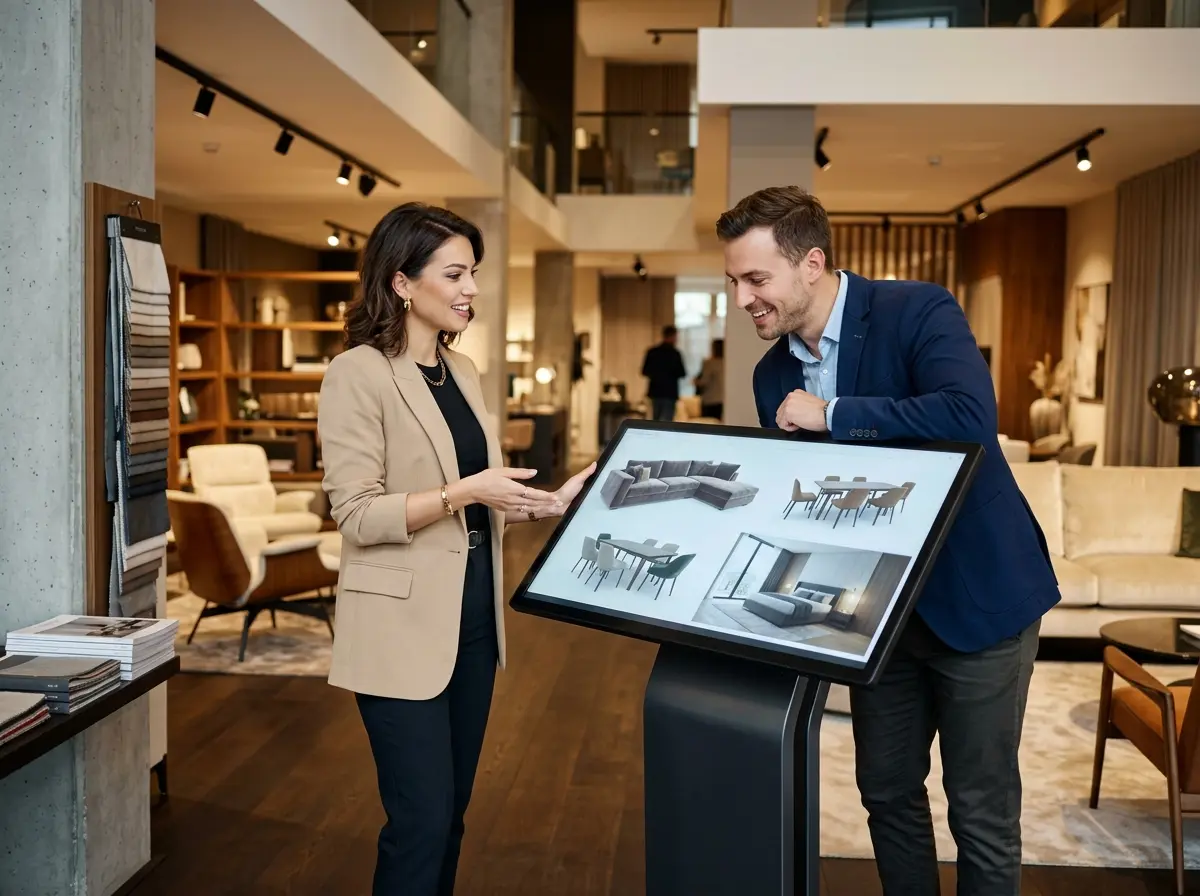
This is the quiet tragedy of furniture retail in the digital age. You have a stunning showroom, expertly curated room displays, and knowledgeable staff ready to help customers find exactly what they need. But between your website and your front door, there's a gap — and flat, uninspiring product imagery is one of the biggest culprits. The good news? 3D models are closing that gap, and forward-thinking furniture retailers are using them not just to showcase products online, but to actively drive foot traffic into their stores.
The Case for 3D Models: More Than Just a Pretty Picture
What 3D Models Actually Do for Shoppers
According to Shopify, products with 3D content see a 94% higher conversion rate compared to those without. Meanwhile, IKEA reported that its AR app reduced product returns because customers could better visualize items in their actual space before purchasing. That's not a gimmick — that's a fundamentally better shopping experience. And a better shopping experience breeds confidence, which breeds decisions, which eventually breeds customers walking through your door.
The "See It Online, Experience It In Person" Bridge
Here's the strategic insight that separates smart furniture retailers from the rest: the goal of your website isn't necessarily to close the sale online — it's to close enough of the mental gap that a customer feels compelled to visit your showroom to seal the deal.
3D models accomplish this beautifully. A customer who has already rotated a dining table 360 degrees, viewed it in three wood finishes, and placed it virtually in their dining room using their phone camera is invested. They're not window shopping anymore — they're already imagining ownership. Now they want to sit in it, knock on the wood, feel the texture of the upholstery. Your showroom is no longer a maybe; it's the logical next step.
Embed strong calls to action alongside your 3D viewers: "Love this piece? Come see it in person — visit us at [location] or book a design consultation." Give them a reason to make the trip.
Room Scenes and Configuration Tools: Going Beyond the Single Product
The psychology here is no accident. Once a customer has spent 20 minutes building their dream living room on your website, they have a vision. They feel ownership over that design. And the only place to make that vision real? Your showroom. Consider promoting these tools prominently on your homepage and in your email campaigns — not as a novelty, but as a genuine service that helps customers shop smarter.
Turning Website Visitors into Showroom Visitors: The Conversion Mechanics
Pairing 3D Experiences with Smart Lead Capture
After a visitor interacts with your 3D room configurator, prompt them to save their design by entering their name and email. Not only does this give you a warm lead, but you now know exactly what furniture they're interested in, which your sales team can reference when they call or visit. Many furniture retailers also offer incentives — "Save your room design and get 10% off your first in-store purchase" — to make the exchange feel worthwhile for the customer.
This is also a great area where Stella, the AI robot employee and phone receptionist, can complement your digital efforts. When those leads call your store with questions — and they will — Stella answers every call 24/7, greets walk-in customers inside the showroom, and can handle intake conversations that gather customer preferences and contact details, all feeding neatly into her built-in CRM. No more lost sticky notes. No more "I'll have someone call you back" that never quite happens.
Optimizing Your 3D Strategy for Maximum Impact
Technical Best Practices That Actually Matter
A stunning 3D viewer that takes 15 seconds to load is worse than no 3D viewer at all. Page speed is critical — not just for user experience, but for SEO. Use compressed, web-optimized 3D file formats like glTF or WebGL, and choose a 3D viewer platform that prioritizes fast rendering. Test your pages on mobile devices religiously; most of your customers are browsing on their phones, and a sluggish mobile experience will send them straight to a competitor.
Also consider the user interface around your 3D models. Clear instructions like "Drag to rotate | Pinch to zoom | Tap to change color" remove friction and encourage engagement. The less someone has to think about how to use your tool, the more time they spend actually using it.
SEO and Content Opportunities You Shouldn't Ignore
Every 3D product page is an SEO opportunity. Write rich, detailed product descriptions that incorporate long-tail keywords your customers are actually searching for — think "mid-century modern sectional sofa in gray fabric" rather than just "sectional sofa." Add alt text to all associated images, use structured data markup for products, and create supporting blog content (like room design guides, furniture care tips, or style inspiration posts) that links back to your 3D product pages.
Measuring What's Working and Iterating
A Quick Reminder About Stella
While you're busy building out your 3D website experience, don't let the in-store and phone experience fall behind. Stella is a human-sized AI robot kiosk and phone receptionist that greets every customer who walks into your showroom, answers calls around the clock, promotes current deals, and manages customer information through a built-in CRM — all for $99/month with no upfront hardware costs. Think of her as the team member who never calls in sick and never forgets a customer's name.
Bringing It All Together: Your Action Plan
Here's a simple action plan to get started:
- Choose a 3D/AR platform that integrates with your existing website and product catalog. Options like Roomvo, Marxent, or Cylindo are popular in the furniture space.
- Start with your top 20 best-selling products and get those modeled first. Don't try to boil the ocean — build momentum with your most popular SKUs.
- Add a room configurator experience and promote it prominently on your homepage and in email marketing.
- Build lead capture into the 3D experience with a compelling incentive to save designs and share contact information.
- Measure, iterate, and expand based on what the data tells you is working.