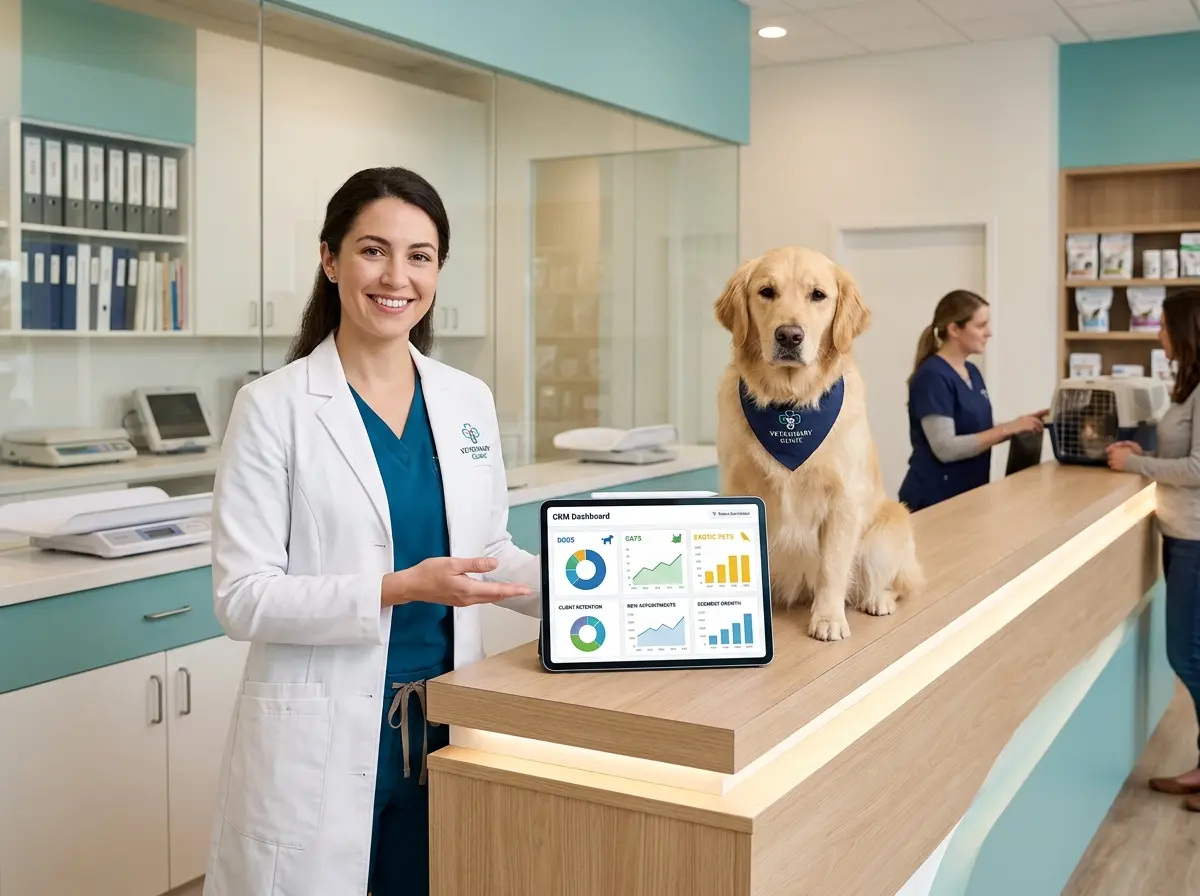
Introduction: Because "Dog Owner" and "Exotic Reptile Enthusiast" Are Not the Same Customer
If you run a veterinary clinic, you already know that the owner of a three-legged rescue greyhound and the owner of a blue-tongued skink live in completely different worlds — different needs, different spending habits, different reasons to pick up the phone at 7 PM in a panic. Yet somehow, many clinics still send the same generic newsletter to everyone on their list and wonder why open rates look like a participation trophy.
The good news? There's a smarter way to run your client communications, and it starts with something deceptively simple: CRM tagging by pet type. This strategy lets you speak directly to the people most likely to respond — and spend. A clinic that implements even basic client segmentation can see meaningful improvements in appointment bookings, retail product sales, and service upgrades without dramatically increasing its marketing budget. According to Mailchimp, segmented email campaigns see 14.3% higher open rates and 100.95% higher click-through rates than non-segmented campaigns. That's not a rounding error. That's real money left on the table.
This post walks through exactly how a veterinary clinic used CRM tagging to segment clients by pet type, what revenue opportunities opened up as a result, and how you can replicate the same approach — whether you're running a multi-doctor practice or a solo mobile vet operation.
Building the Foundation: How the Clinic Set Up Its Tagging System
Starting with the Right Data Collection Strategy
The clinic in question — a mid-sized mixed-practice veterinary office seeing roughly 800 active clients — had been using a basic CRM for years, primarily to store contact information and appointment history. The problem wasn't the tool; it was that nobody had set up a consistent method for capturing and tagging pet type at intake. Client records existed, but they were a chaotic mix of free-text notes, incomplete fields, and staff shorthand that made segmentation nearly impossible.
The fix started at the front end: intake forms. Every new client — whether calling in, walking in, or filling out a form online — was asked a simple set of questions: pet name, species, breed, and approximate age. These answers fed directly into the CRM as structured data rather than buried notes. Existing clients were updated gradually, with tags added whenever a client called, came in for an appointment, or responded to a re-engagement campaign.
Choosing the Right Tag Categories
Not all tags are created equal. The clinic resisted the urge to over-engineer the system and settled on a clean, practical taxonomy. Primary tags focused on species: Dog, Cat, Rabbit/Small Mammal, Bird/Avian, and Exotic/Reptile. Secondary tags captured life stage — Puppy/Kitten, Adult, Senior — and service history flags like Dental Due, Vaccine Overdue, and Wellness Plan Member.
The rule was simplicity: if a tag couldn't be applied consistently by every staff member in under five seconds, it didn't belong in the system. This discipline paid off quickly, because tags only have value when they're reliable enough to act on at scale.
The Tagging Workflow in Practice
Staff were trained to apply tags at three key moments: new client intake, post-appointment updates, and inbound calls. A dog owner calling about flea prevention? Tag confirmed or added. A cat owner purchasing a new food brand? Tag updated. A first-time exotic pet owner asking about reptile wellness exams? Tagged as Exotic/Reptile and flagged for a follow-up educational email series. Within six months, over 85% of active client records had at least one clean, actionable species tag — enough critical mass to start running real campaigns.
How Stella Can Help Veterinary Clinics Capture and Manage Client Data
Collecting Pet Information Without Adding to Staff Workload
One of the biggest barriers to this kind of tagging initiative is bandwidth. Front desk staff at a busy veterinary clinic are already juggling check-ins, phone calls, scared animals, and the occasional surprise emergency. Asking them to manually collect and enter structured intake data on top of everything else is a recipe for inconsistency.
This is where Stella — the AI robot employee and phone receptionist — genuinely earns her keep. In the lobby, Stella can greet clients as they arrive and walk them through a conversational intake process, collecting pet name, species, breed, and reason for visit in a friendly, low-pressure way. Over the phone, she handles the same intake process for new clients calling to book an appointment, capturing all the right fields and pushing them directly into the CRM — complete with tags, AI-generated contact profiles, and notes for the clinical team to review before the appointment even begins. No extra work for staff, no missed fields, and no sticky notes that disappear into the void.
Turning Tags into Revenue: The Campaign Strategy That Actually Worked
Species-Specific Promotions That Felt Personal
Once the tagging system was reliable, the clinic's office manager began building out targeted campaigns that would have been impossible to run before. The first test was a dental health promotion — a natural fit, since dental disease is one of the most underdiagnosed and undertreated conditions across all pet types. Instead of sending one generic "February is Dental Month!" email to the entire list, they sent three distinct versions.
Dog owners received messaging focused on breed-specific dental risks and a promotion on professional cleanings paired with a take-home enzymatic toothpaste kit. Cat owners got a version that leaned into the statistic that over 70% of cats show signs of dental disease by age three — a number that tends to get attention from cat parents who pride themselves on being proactive. The exotic pet segment received a more educational angle, since many reptile and small mammal owners don't realize dental and oral health applies to their animals too. Each version drove separately tracked click-throughs and booking links. The segmented campaign generated 34% more appointments over the same four-week window compared to the previous year's blanket dental promotion.
Life Stage Tags and Retail Upsell Opportunities
The second major revenue unlock came from combining species tags with life stage tags. Puppy and kitten clients are high-engagement, high-purchase-frequency customers who are actively seeking guidance — and they're remarkably receptive to product recommendations when those recommendations feel tailored rather than generic. The clinic began sending new puppy and new kitten welcome sequences that included recommended vaccine timelines, nutrition guidance specific to size and breed category, and curated product suggestions from their in-clinic retail selection.
Senior pet tags unlocked a different opportunity: proactive outreach about wellness screenings, joint supplements, and prescription diet options. These clients were often the least likely to initiate contact on their own but among the most willing to invest in their pet's health when given clear, caring guidance. Targeted senior pet campaigns drove a measurable uptick in senior wellness exam bookings and a noticeable increase in prescription diet sales — two revenue streams that had previously relied almost entirely on exam-room recommendations.
Reactivating Lapsed Clients with Precision
Perhaps the most underrated use of the tagging system was in win-back campaigns for lapsed clients — defined as any active record with no appointment in the past 14 months. Previously, these clients received the same generic "We miss you!" email that fooled no one. With species and life stage tags applied, the clinic could send genuinely relevant messages: a reminder about age-appropriate screening for a senior dog, a note about the upcoming flea and tick season for outdoor cat owners, or a low-key check-in for exotic pet owners who often go longer between visits but still need periodic care. Reactivation rates on these segmented campaigns ran nearly double the clinic's previous average.
Quick Reminder About Stella
Stella is an AI robot employee and phone receptionist who works 24/7 without breaks, complaints, or sick days. She greets clients in your lobby, answers calls after hours, collects intake information, manages your CRM contacts with tags and AI profiles, and promotes your services — all for $99 per month with no upfront hardware costs. For a veterinary clinic trying to run a leaner front desk without sacrificing the client experience, she's worth a serious look.
Conclusion: Your Tags Are Waiting — Go Use Them
The veterinary clinic in this example didn't implement a complicated, expensive overhaul. They made one disciplined decision — collect pet type at intake, tag it consistently, and act on it — and let compounding results do the rest. Segmented campaigns outperformed generic ones in bookings, retail sales, and reactivation. Staff felt less overwhelmed because outreach was targeted rather than scattershot. And clients responded better because the communication actually felt relevant to them and their animals.
Here's what you can do this week to start moving in the same direction:
- Audit your current CRM. How many active records have clean, usable pet type data? Be honest. The gap between what you think you know and what's actually structured will surprise you.
- Define your tag taxonomy. Keep it simple: species, life stage, and one or two service-history flags to start. Resist complexity until consistency is established.
- Fix your intake process. Whether that's retraining staff, updating your digital forms, or adding a tool like Stella to handle data collection conversationally — make sure every new client enters the system with the right tags from day one.
- Run one segmented campaign this month. Pick one species group, one relevant topic, and one clear call to action. Track your results against your baseline and let the data make the argument for you.
Your clients are not a monolith. A ferret owner and a Great Dane owner are not the same person, do not have the same concerns, and are not going to respond to the same email. The clinics that figure this out early — and build the systems to act on it — are the ones that win the long game. The rest are still sending the same newsletter to everyone and wondering why the phone isn't ringing.