So You Want Google to Actually Notice You Exist
Here's a fun scenario: a homeowner's pipe just burst. Water is spraying everywhere. Their dog is panicking. Their spouse is yelling. They grab their phone and frantically search "emergency plumber near me." And whose name pops up first? Not yours. Some other plumber — one who has never even unclogged a drain as impressively as you have — is sitting right there at the top of the results, raking in that panicked, high-value call.
Ouch.
The good news is that Local SEO (Search Engine Optimization) is your ticket to fixing that. And unlike an actual burst pipe, this is something you can absolutely get under control. Local SEO is the practice of optimizing your online presence so that when people in your area search for a plumber — or any service you offer — Google serves up your business first. It's not magic. It's not complicated. But it does require some intentional effort, and most plumbers are leaving serious money on the table by ignoring it.
This guide will walk you through exactly what you need to do to start dominating local search results, get more calls, and turn searchers into paying customers — all without needing a computer science degree or a marketing agency that charges more per hour than you do.
The Foundations of Local SEO Every Plumber Needs
Claim and Optimize Your Google Business Profile
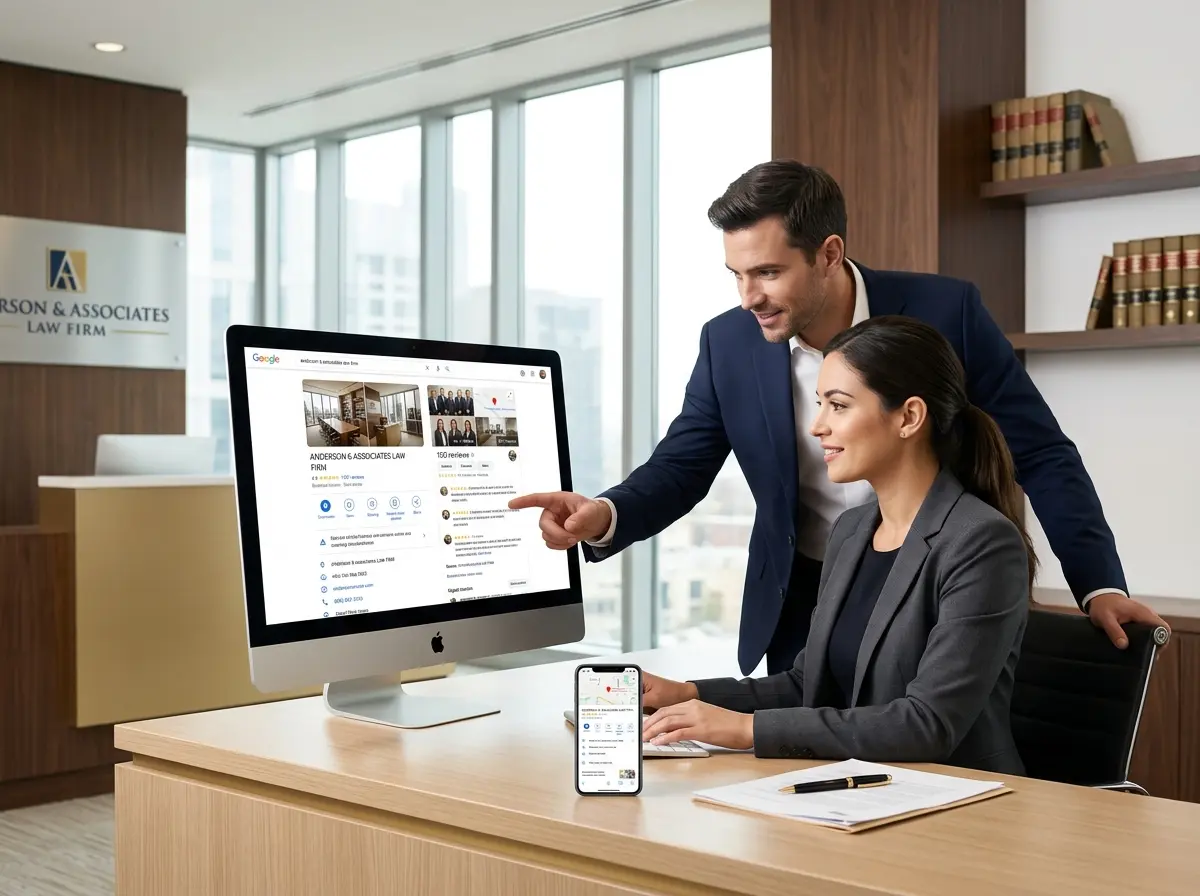
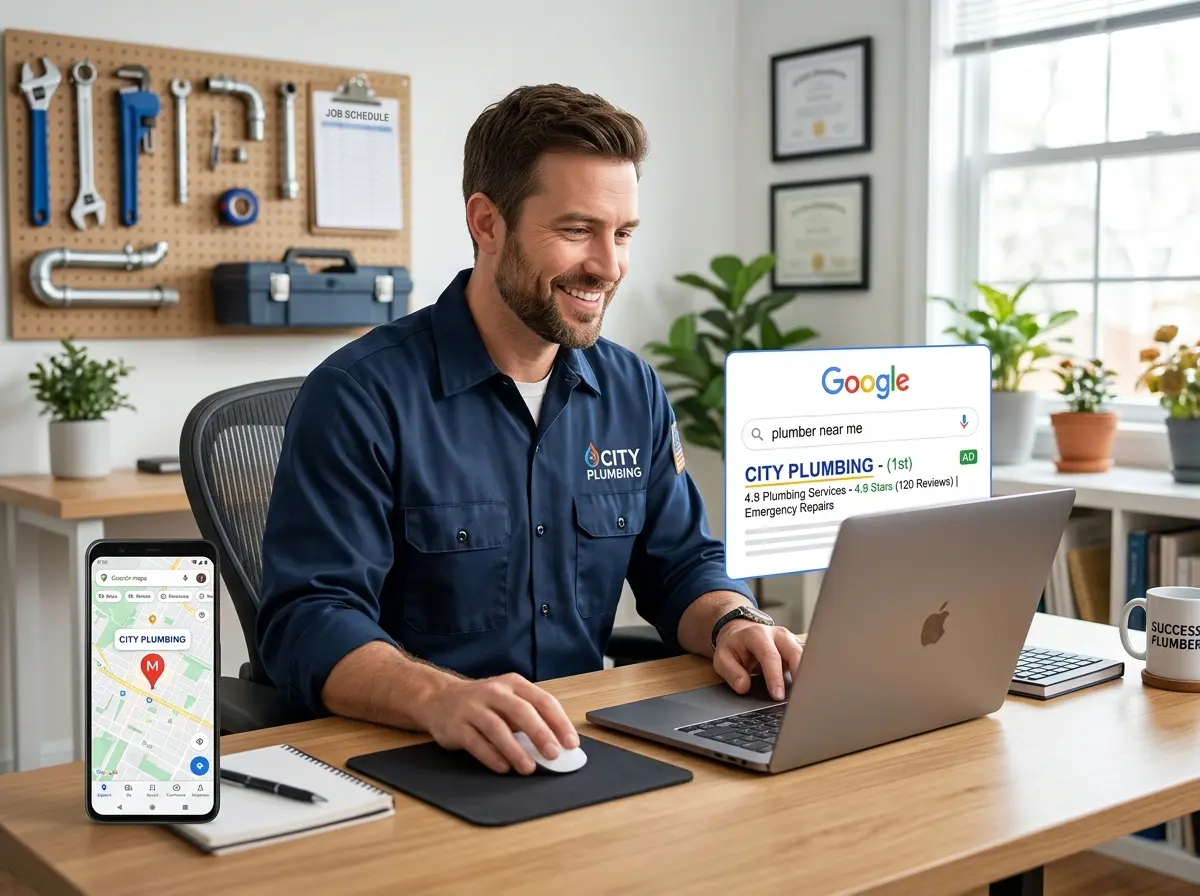
If you haven't claimed your Google Business Profile (formerly Google My Business), stop reading this right now and go do that. We'll wait. Back? Great. Your Google Business Profile is essentially your digital storefront on Google, and it's the single most powerful free tool available for local visibility. When someone searches for a plumber nearby, Google displays a map pack — those three business listings that appear with a map — right at the top of the results page. Getting into that map pack is the goal, and your Google Business Profile is how you get there.
To optimize your profile effectively, make sure every field is completely filled out: business name, address, phone number, hours of operation, service areas, and business category. Use "Plumber" as your primary category, and add secondary categories like "Drainage Service" or "Water Heater Installation Service" if applicable. Upload high-quality photos of your team, your truck, your work, and even your office. Businesses with photos receive 42% more requests for directions and 35% more clicks to their websites, according to Google's own data. Don't leave that on the table.
NAP Consistency: The Boring but Critical Detail
NAP stands for Name, Address, and Phone Number — and Google takes consistency across the web very seriously. If your business name is "Johnson Plumbing LLC" on your website but "Johnson Plumbing" on Yelp and "Johnson's Plumbing" on a local directory, Google gets confused. A confused Google is not a Google that ranks you highly. Go through every directory listing, social media profile, and website mention and make sure your NAP is identical everywhere.
This includes major directories like Yelp, Angi, HomeAdvisor, the Better Business Bureau, and your local Chamber of Commerce. There are tools like BrightLocal or Moz Local that can help you audit and manage these listings at scale. Yes, it's tedious. So is snaking a clogged drain, and you do that with a smile. You've got this.
Reviews: Your Digital Word-of-Mouth
Let's be honest — people trust other people more than they trust any business. According to BrightLocal's Local Consumer Review Survey, 98% of consumers read online reviews for local businesses, and 49% trust them as much as personal recommendations. Reviews are not optional. They are essential. Google also uses review quantity, quality, and recency as ranking signals, so a steady stream of fresh five-star reviews will meaningfully boost your visibility.
The simplest strategy: after every successful job, ask the customer to leave a review. Send a follow-up text or email with a direct link to your Google review page. Make it effortless for them. And when reviews come in — good or bad — respond to every single one. Responding to negative reviews professionally shows prospective customers that you're accountable. It can actually turn a bad review into a trust-builder.
How to Keep Leads from Slipping Through the Cracks
Never Miss the Call That Could Be Your Next Big Job
Here's the thing about Local SEO working — it brings in more calls. That's great, right? Absolutely. Until you're elbow-deep in a water heater installation and your phone rings, rings, and rings until it goes to voicemail. Studies suggest that 85% of callers who don't reach a business on the first try will not call back. That's a lead you just paid to attract — through all your hard SEO work — walking straight to your competitor.
This is where Stella becomes genuinely useful for a plumbing business. Stella is an AI phone receptionist that answers every call, 24 hours a day, seven days a week, with real conversational intelligence. She can answer questions about your services, collect customer information through conversational intake forms, and forward urgent calls to your team based on conditions you set. For an emergency plumber, having someone — or something — always available to capture that panicked 2 a.m. pipe-burst call is not a luxury. It's a competitive advantage. At $99/month with no upfront hardware costs, it's also a remarkably affordable one.
Your Website and Content: Doing the Heavy Lifting for You
Build Location-Specific Service Pages
Your website needs to speak Google's language, and in local SEO, that language involves specific geographic signals. Rather than having a single generic "Services" page, create dedicated pages for each core service combined with each city or neighborhood you serve. Think: "Drain Cleaning in Scottsdale, AZ" or "Water Heater Repair in Tempe, AZ." Each page should include your target location naturally throughout the content, your NAP information, a relevant call to action, and ideally a Google Map embed.
This approach, often called a "service area page" strategy, signals to Google exactly what you do and exactly where you do it. A plumber in Phoenix who has thirty well-written, locally-targeted service pages is going to dramatically outperform a plumber with a single homepage that says "We serve the greater Phoenix area." Specificity wins.
Write Content That Actually Helps People
Starting a blog might sound like the last thing a busy plumber wants to do, and that's fair. But even publishing one helpful article per month can make a significant difference over time. Content like "How to Shut Off Your Home's Water Main in an Emergency" or "5 Signs You Need to Replace Your Water Heater" targets informational searches that homeowners make before they're even ready to call a plumber — and it keeps your website active and authoritative in Google's eyes.
Think about the questions customers ask you all the time. Those questions are search queries. Answer them in writing on your website, and you're doing Local SEO content marketing without having to take a single course on it. Practical, helpful content builds trust, attracts organic traffic, and positions you as the expert in your area.
Technical Basics You Shouldn't Ignore
You don't need to be a web developer, but a few technical fundamentals matter enormously. First, your website must be mobile-friendly — over 60% of local searches happen on mobile devices, and Google uses mobile-first indexing. Second, your site needs to load fast. A page that takes more than three seconds to load loses roughly 53% of mobile visitors, according to Google research. Use a tool like Google PageSpeed Insights to check your site's performance and get specific recommendations.
Finally, make sure your website includes your city and service area information in your page titles, meta descriptions, and heading tags — not stuffed awkwardly, but naturally integrated. Your homepage title might read: "Licensed Plumber in Denver, CO | Johnson Plumbing LLC." Simple, descriptive, and geographically specific.
Quick Reminder About Stella
Stella is an AI robot employee and phone receptionist built for businesses exactly like yours. She answers phone calls around the clock with real business knowledge, handles customer intake, promotes your services, and makes sure no lead goes unanswered — even when you're on the job. For plumbers who work hard to get the phone ringing through Local SEO, Stella makes sure someone's always there to pick up.
Start Ranking, Start Growing
Local SEO is not a one-time project — it's an ongoing process. But the businesses that commit to it consistently are the ones that show up first when it counts most. Here's a practical action plan to get started:
- Claim and fully optimize your Google Business Profile today if you haven't already. Add photos, fill out every field, and select the right categories.
- Audit your NAP consistency across all major directories and fix any discrepancies you find.
- Build a review collection system — a simple follow-up text after each job goes a long way.
- Create location-specific service pages on your website for each major service and each area you serve.
- Publish one helpful blog article per month targeting common questions your customers ask.
- Check your website's mobile performance and load speed using free tools like Google PageSpeed Insights.
You've built a business by being reliable, skilled, and showing up when people need you most. Local SEO is just about making sure Google can tell everyone that. Put in the groundwork now, and you'll be the name at the top of the results the next time someone's pipe bursts at midnight — and that is a very good place to be.