Your Bar Is a Business Within a Business — Treat It That Way
Let's be honest: if your restaurant has a bar and your entire marketing strategy is "we have drinks," you're leaving serious money on the table. We're talking craft cocktails gathering dust, a wine list that nobody knows exists, and a happy hour that only your most loyal regulars know about — because you mentioned it once on Instagram in 2022.
Your bar program isn't just an add-on to your food menu. It's a revenue engine, a brand differentiator, and — when marketed correctly — a reason people choose your restaurant over the one across the street. The problem is that most restaurant owners pour all their marketing energy into food photography and dinner specials, while their bar quietly underperforms in the background like a forgotten line item on the P&L.
The good news? Fixing this doesn't require a massive budget or a dedicated marketing team. It requires intentionality, a clear strategy, and a willingness to actually talk about what you're serving. Let's break it down.
Building a Bar Marketing Identity That Actually Works
A bar program without its own identity is just a shelf of bottles with a price list. The restaurants that generate serious bar revenue — think destination cocktail bars, award-winning wine programs, or that neighborhood spot with the legendary margarita — all have one thing in common: they've given their bar a distinct voice and story.
Define What Makes Your Bar Program Unique
Before you can market your bar, you need to know what you're marketing. Ask yourself: Is your program built around local craft spirits? A hyper-seasonal cocktail menu that changes every eight weeks? An approachable natural wine list curated by your chef? A legendary house-infused tequila that takes six weeks to make?
Whatever it is, name it, own it, and repeat it everywhere. Your bar's identity should be immediately recognizable across your social media, your menu descriptions, your staff's verbal recommendations, and even how you answer the phone when someone asks what kind of drinks you serve. According to a National Restaurant Association report, alcoholic beverages carry some of the highest profit margins in the industry — often 70–80% — so a compelling bar identity isn't just branding fluff; it's a direct revenue strategy.
Separate Your Bar Content from Your Food Content
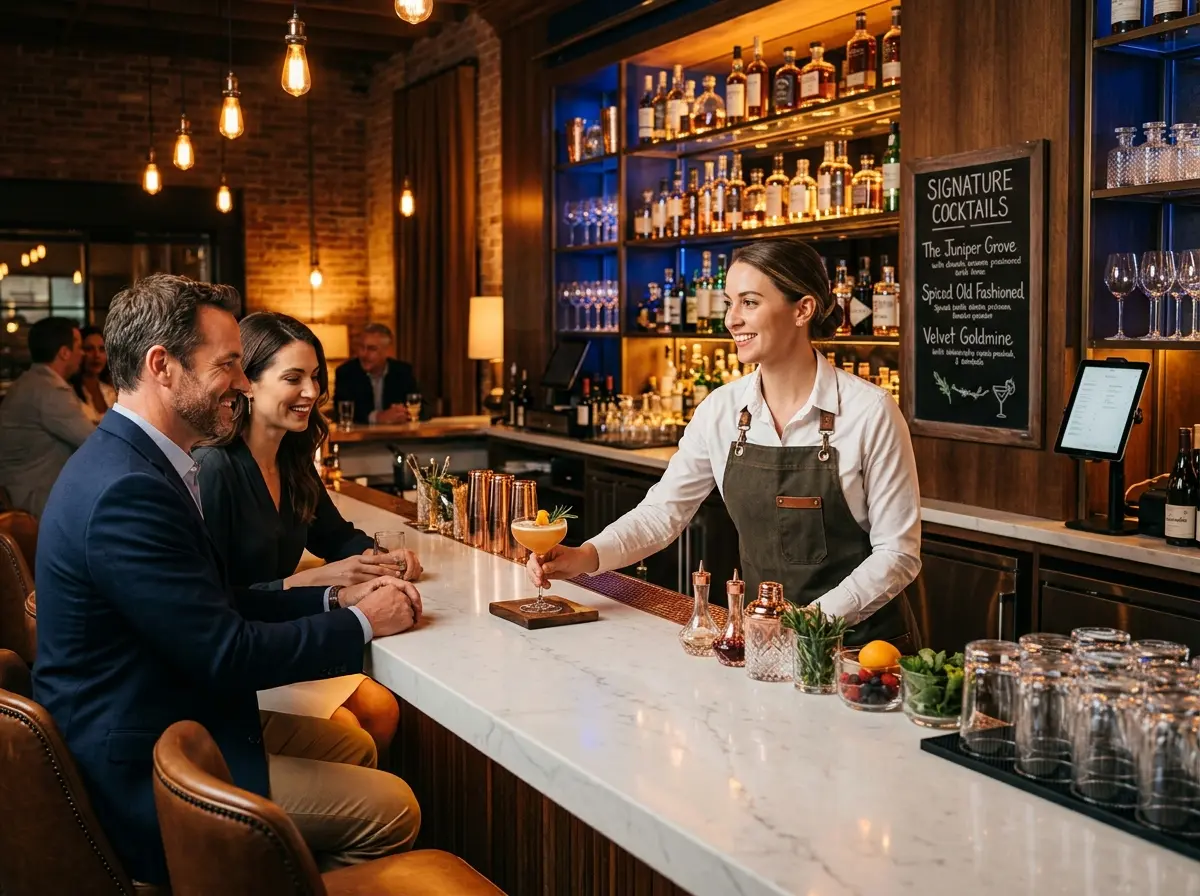
Most restaurants make the mistake of treating bar content as an afterthought — a photo of a cocktail sandwiched between two food posts, captioned with something vague like "come visit us!" Your bar program deserves dedicated content: its own Instagram stories, its own email section, its own table tents, and yes, its own promotional calendar.
Think about creating a "Cocktail of the Month" feature, a bartender spotlight series, or a behind-the-scenes look at how your signature drinks are made. These are content formats that perform exceptionally well because they're inherently visual, personal, and shareable — and they give people a reason to come in specifically for the bar experience, not just as an afterthought to dinner.
Promoting Your Bar Program at Every Touchpoint
Here's where many restaurants drop the ball: they build a great bar program, create decent content, and then completely fail to promote it consistently at the moments that matter most — when customers are already engaging with the business. This is exactly where technology can fill the gap.
Use Every Customer Interaction as a Promotional Opportunity
Stella, the AI robot employee and phone receptionist, is built for exactly this kind of consistent, proactive promotion. As an in-store kiosk, she greets customers as they walk in and can proactively mention your current bar specials, seasonal cocktails, or happy hour details — without relying on a busy host or server to remember to bring it up. She never forgets, never gets too slammed during a rush to mention the drink special, and never has an off night.
On the phone side, Stella answers calls 24/7 and can inform callers about your bar program, current promotions, and featured offerings the moment they reach out — long before they walk through the door. That first impression matters, and having a knowledgeable, enthusiastic voice mention your bar's signature cocktail during a reservation call is a subtle but powerful upsell opportunity most restaurants are completely missing.
Strategies That Turn Bar Awareness Into Bar Revenue
Awareness is great, but the goal is always conversion — getting people to actually order from the bar, spend more per visit, and come back specifically for the bar experience. Here's how to bridge that gap with practical, proven strategies.
Build a Happy Hour Worth Talking About
Happy hour isn't just a discount mechanism — it's a traffic driver that fills seats during your slowest hours and introduces new customers to your bar program at a lower barrier to entry. But the restaurants winning at happy hour aren't just discounting well drinks. They're offering a curated selection of two or three cocktails at a reduced price, creating a sense of exclusivity and occasion around the time slot.
Promote it aggressively. Put it on Google, your website, your social bio, your email footer, and your voicemail. Partner with local offices for after-work events. Run a "Bring a Friend" promotion where regulars get a free drink when they introduce someone new. According to Toast's Restaurant Trends Report, restaurants with structured happy hour programs see an average 20–30% increase in bar revenue during those hours compared to locations without one. That's not a rounding error — that's a strategy.
Train Your Team to Sell the Bar, Not Just Take Orders
Your front-of-house staff are your most powerful marketing channel, and yet most restaurants treat cocktail upselling as optional. It isn't. Build product knowledge into your onboarding, run monthly tastings so your servers actually know what they're recommending, and create simple incentive structures around bar sales — even something as informal as a staff competition for most cocktails sold in a week.
The difference between a server who says "Can I get you something to drink?" and one who says "Our bartender just launched a smoked rosemary bourbon sour for fall — it's been really popular" is not a small difference. The second approach creates curiosity, communicates expertise, and makes the customer feel like they're getting insider information. That's exactly the kind of experience that generates word-of-mouth.
Leverage Events to Create Bar-First Experiences
Cocktail classes, wine pairing dinners, "Meet the Distiller" evenings, and seasonal tasting events are all formats that put your bar program front and center while creating memorable, shareable experiences. These events don't need to be elaborate or expensive — a 90-minute cocktail tutorial with your head bartender, limited to 16 guests at $45 a head, covers your costs, fills otherwise slow inventory hours, and gives you marketing content for weeks. The guests who attend become ambassadors. The photos they post become organic reach you didn't have to pay for.
Quick Reminder About Stella
Stella is an AI robot employee and phone receptionist that works both as a physical in-store kiosk and as a 24/7 phone answering solution — all for $99/month with no upfront hardware costs. She's always on, always professional, and always ready to tell your next customer about tonight's cocktail special before they've even taken their coat off.
Start Treating Your Bar Like the Asset It Is
Your bar program has the potential to be one of the most profitable and differentiating parts of your entire restaurant operation. But potential doesn't pay invoices — execution does. Here are your actionable next steps to get started:
- Define your bar identity this week. Write two or three sentences that describe what makes your bar program unique. Use that language everywhere.
- Create a dedicated bar content calendar for the next 30 days — at least two bar-specific posts per week, separate from your food content.
- Audit your customer touchpoints. Are you promoting your bar program when customers call? When they walk in? Review your phone greeting, your host's script, and your table merchandising.
- Launch or refresh your happy hour with a curated, promotable format — and actually market it this time.
- Plan one bar-focused event for next month. Start small, but start.
The restaurants that build loyal, profitable bar programs aren't doing anything magical. They're just being intentional about something most of their competitors are ignoring. That's genuinely great news for you — because the bar (pun very much intended) is not that high. Clear your competition, pour something worth talking about, and then actually tell people about it.