Your Salon Closes at 7 PM. Your Leads Don't.
Here's a scenario that probably sounds familiar: It's 9:47 PM on a Tuesday. Someone is scrolling through their phone, desperately trying to book a balayage appointment before a big event this weekend. They find your salon, they're excited, they're ready to spend money — and then they hit a wall. Your phone goes to a generic voicemail. Your website has a "contact us" form that screams "we'll get back to you eventually." And just like that, they book with the salon down the street.
This is not a small problem. Studies suggest that 78% of customers buy from the business that responds to them first — not the most convenient, not the cheapest, not even the best-reviewed. The first responder wins. And if your salon is closed, you're never going to be first.
The good news? You don't have to hire a night-shift receptionist or chain yourself to your phone at 10 PM. A text-based intake system — one that captures lead information automatically after hours — can close that gap completely. Let's talk about how busy salons are actually doing this.
Why After-Hours Lead Capture Is a Revenue Problem, Not Just an Inconvenience
The Cost of Missed Connections
Salon owners tend to think of missed after-hours calls as a minor annoyance. "They'll call back in the morning," you tell yourself, optimistically. But here's the hard truth: most of them won't. Consumer behavior has shifted dramatically. People book on impulse, often late in the evening when they're finally sitting down after a long day and have a moment to think about themselves. If you can't capture that moment, it evaporates.
Consider the math. If your average service ticket is $120 and you're missing even five potential bookings per week after hours, that's $600 weekly in missed revenue — roughly $31,000 a year. For an independently owned salon, that's not a rounding error. That's a staff member's salary, a major equipment upgrade, or a very nice vacation.
Why Voicemail Isn't Cutting It Anymore
Traditional voicemail had a good run. It's over. Younger clients — who make up an increasingly large share of salon revenue — often refuse to leave voicemails altogether. They'd rather send a text, fill out a form, or move on to a competitor with a more responsive system. Even older clients are increasingly accustomed to the immediacy of digital communication and find voicemail cumbersome.
Beyond client preference, voicemail creates operational headaches on your end. Staff have to listen to every message, manually transcribe appointment details, call people back (who then don't answer), and play phone tag for days. A structured text-based intake system skips all of that by collecting information in an organized, actionable format the moment the client reaches out.
What "Text-Based Intake" Actually Means in Practice
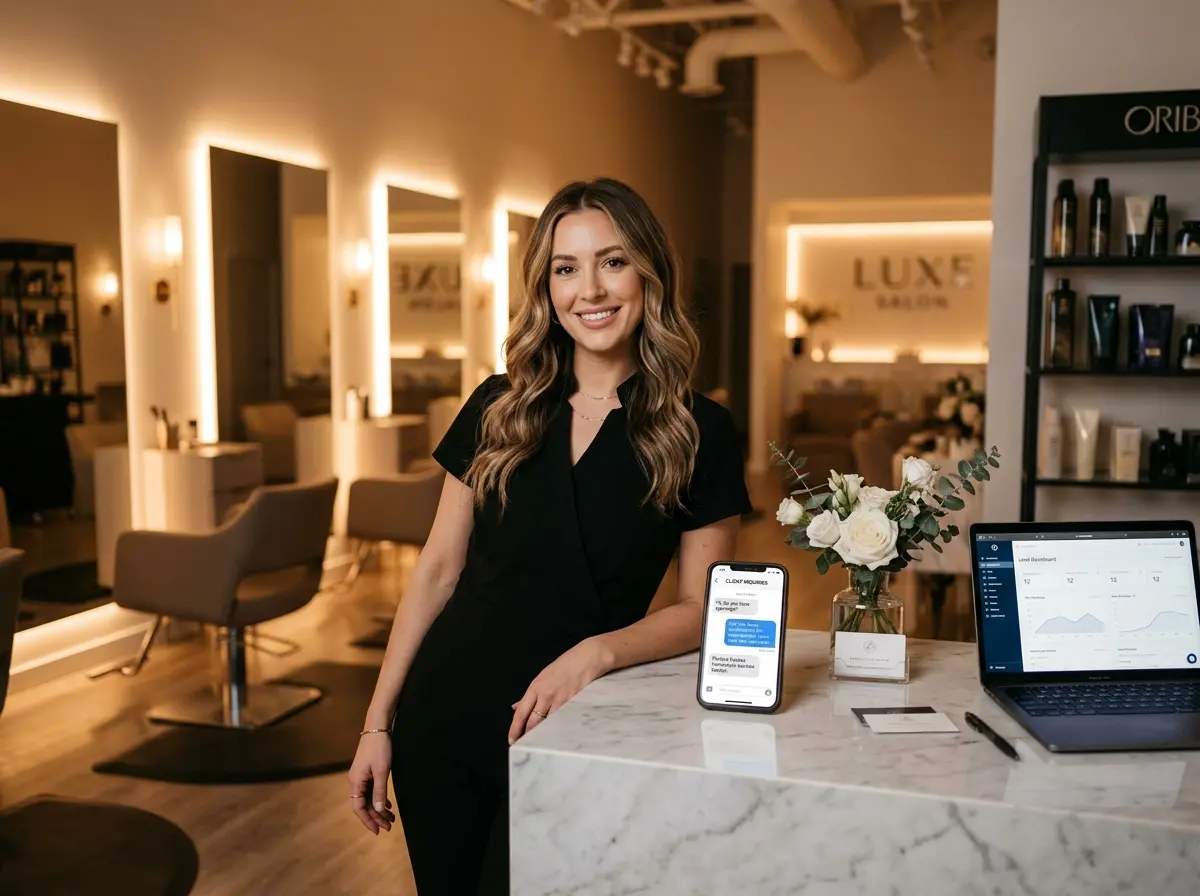
A text-based intake system, in the salon context, typically refers to a conversational flow — either via SMS, a web chat widget, or a phone call that transitions into a structured data-collection experience — that gathers the key information you need to follow up effectively. Name, phone number, preferred service, preferred stylist, desired appointment window, and any relevant notes. Instead of a vague voicemail saying "Hi, um, I wanted to maybe book something, call me back," you get a clean lead record ready for action. That's the difference between chasing down a ghost and starting your morning with a confirmed callback list.
How Tools Like Stella Are Handling This for Salons Right Now
AI-Powered Intake That Works While You Sleep
Stella is an AI robot employee and phone receptionist designed to handle exactly this kind of after-hours chaos — professionally, consistently, and without complaining about the hours. When a client calls your salon after closing, Stella answers the phone, engages them in natural conversation, and walks them through a structured intake process to collect their contact information, service preferences, and scheduling needs. No voicemail black hole. No missed opportunity.
For salons with a physical location, Stella also operates as a human-sized in-store kiosk, greeting walk-in clients, answering questions about services and pricing, and promoting current specials — all without pulling your stylists away from their chairs. Her built-in CRM automatically organizes every lead she captures, complete with AI-generated client profiles, custom tags, and push notifications to managers when something needs attention. It's the kind of system that makes Monday morning feel less like triage and more like a plan.
Setting Up an Effective After-Hours Text Intake System for Your Salon
Decide What Information You Actually Need
The temptation when designing any intake system is to ask for everything. Resist this. A bloated intake form — even a conversational one — creates friction and increases drop-off. For a salon, the essential fields are straightforward: client name, best callback number, the service they're interested in, their preferred stylist (if they have one), and two or three windows of availability. That's it. Everything else can be gathered when you confirm the appointment.
Keep the experience feeling like a conversation, not a government form. If your system asks twelve questions before acknowledging that the client exists as a human being, you've already lost the plot. The goal is to collect enough information to make a fast, personalized follow-up possible — not to conduct an intake interview worthy of a medical practice.
Set Up Automatic Lead Notifications and a Follow-Up Protocol
Capturing the lead is only half the job. The other half is actually following up before your competitor does. Your intake system should push an immediate notification to whoever handles bookings — whether that's you, your front desk coordinator, or a designated staff member — the moment a lead comes in, even at 11 PM. You don't have to respond at 11 PM (please don't; that's weird), but you should have a clear protocol to respond by 9 AM the next morning at the absolute latest.
Ideally, your system also sends an automatic acknowledgment to the client right away — something simple like confirming their information was received and letting them know when to expect a call. This small touch does a lot of heavy lifting. It signals professionalism, keeps the lead warm, and drastically reduces the chance they'll book elsewhere overnight.
Review and Refine Based on What You're Seeing
After a few weeks of running an after-hours intake system, you'll start to notice patterns. Are most after-hours leads coming in between 8 PM and 10 PM? Are clients consistently asking about a service you haven't been promoting heavily? Are there common questions your intake flow isn't addressing? Use this data to refine your approach — adjust your intake questions, update your promotional messaging, or even reconsider your operating hours if the volume justifies it. The intake system isn't just a lead-capture tool; it's a window into what your clients actually want when they think you're not watching.
Quick Reminder About Stella
Stella is an AI robot employee and phone receptionist that answers calls 24/7, runs conversational intake forms, manages leads through a built-in CRM, and — for physical locations — engages customers directly as an in-store kiosk. She's available for $99 per month with no upfront hardware costs, and she never calls in sick the day before a holiday weekend.
Stop Letting After-Hours Calls Become Missed Revenue
The salons that are growing consistently right now aren't necessarily the ones with the most Instagram followers or the trendiest service menus. They're the ones that respond faster, follow up better, and make it easy for clients to connect at any hour. An after-hours text-based intake system is one of the highest-leverage operational improvements a salon owner can make — and it doesn't require a massive technology budget or a complete overhaul of how you work.
Here's what to do next:
- Audit your current after-hours experience. Call your own salon at 8 PM tonight. What happens? Be honest about what you find.
- Define your must-have intake fields. Name, number, service, stylist preference, availability. Keep it lean.
- Set up automatic lead notifications so your team sees every after-hours inquiry the moment it comes in.
- Create a follow-up SLA. Decide exactly who responds to after-hours leads, using what channel, within how many hours — and hold the team to it.
- Explore AI-powered tools that can handle the entire intake conversation automatically, so no lead slips through because it arrived at an inconvenient time.
Your salon's best clients might be reaching out right now, after hours, hoping someone — or something — picks up. Make sure something does.