If You're Not Managing Client Relationships, You're Just Washing Dogs
Let's be honest — you didn't open a dog grooming shop just to chase down appointment no-shows, forget which Labradoodle is terrified of blow dryers, or watch loyal clients quietly disappear to the competitor down the street who sends a birthday text to their schnauzer. You opened it because you love animals, you're great at what you do, and somewhere in the back of your mind, you had a vision of a thriving, fully-booked shop with clients who return like clockwork.
The gap between that vision and reality? More often than not, it comes down to how you manage — or don't manage — your client relationships after they walk out the door.
A well-built CRM (Customer Relationship Management) workflow isn't just corporate jargon borrowed from Fortune 500 companies. For a dog grooming shop, it's the difference between a one-time visitor and a client who books every six weeks, refers their neighbor, and leaves you a glowing five-star review mentioning your name specifically. That kind of loyalty doesn't happen by accident. It happens by design.
This guide will walk you through building a CRM workflow that actually works for a grooming shop — practical, actionable, and scaled for the reality of running a small business where you're probably also the groomer, the scheduler, and occasionally the person mopping up after a nervous Golden Retriever.
Building the Foundation: What Your CRM Actually Needs to Track
Before you can automate anything or send a single follow-up message, you need clean, useful data. Most grooming shops collect the bare minimum — a name, a phone number, maybe a pet's name — and then wonder why their outreach feels generic and falls flat. A real CRM workflow starts with richer information, collected consistently from the very first interaction.
The Essential Client and Pet Profile
Your CRM records should go beyond basic contact info. For each client, you want to capture the pet's name, breed, age, coat type, and any behavioral notes (anxious around other dogs, hates ear cleaning, only tolerates one groomer). These details transform a routine appointment into a personalized experience — and personalization is what turns a first-time visitor into a regular.
On the business side, track appointment history, service preferences, average spend per visit, and how the client originally found you. Over time, this data tells you who your most valuable clients are, which services are most popular, and where your marketing dollars are actually working. You'd be surprised how many shop owners are investing in Instagram ads when their best clients all came from a neighborhood Facebook group.
Custom Tags and Segmentation: Your Secret Weapon
Not all clients are the same, and your CRM shouldn't treat them like they are. Use tags to segment your client list in ways that are meaningful to your business. Consider tags like "long-coat maintenance," "senior pet," "referred by [client name]," or "due for flea treatment add-on." These segments let you send targeted messages — a reminder about summer shave-downs to your long-coat clients, or a gentle nudge about nail trims to clients who are overdue.
Segmentation also helps you identify your VIPs. If someone visits every six weeks and spends $80 per visit, they deserve different treatment than a client who came in once two years ago. Knowing the difference lets you prioritize your attention and your loyalty perks appropriately.
Notes, History, and the Art of Remembering Everything
One of the most powerful things you can do in a client relationship is remember details without being reminded. When a client mentions their dog just had surgery, log it. When a new puppy comes in for their first groom, note how it went. When someone says they're moving out of the area, flag the record. These notes don't just make clients feel valued — they protect you legally and operationally when things go sideways, which in a grooming environment, occasionally they do.
Automating the Follow-Up: From Appointment to Loyalty Loop
Here's where a lot of grooming shops leave serious money on the table. The appointment ends, the dog goes home smelling like a cloud, and the shop does absolutely nothing until the client decides — on their own timeline — to book again. That's a passive strategy in a competitive market, and it's costing you repeat business every single week.
The Post-Appointment Sequence That Actually Works
A simple, well-timed follow-up sequence can dramatically improve your rebooking rate. Start with a thank-you message sent within a few hours of the appointment — something brief, warm, and personal that mentions the pet by name. Two or three days later, send a check-in asking how the pet is adjusting to their new 'do. This isn't just good customer service; it's an opportunity to address any concerns before they become a negative review.
Then, based on the typical grooming interval for that pet's coat type, set an automated reminder at the four- or five-week mark encouraging them to book before your schedule fills up. Urgency is real — most groomers do fill up quickly — and clients who feel like insiders with early access are more likely to commit. According to industry data, businesses that implement consistent follow-up automation see rebooking rates increase by 20–30% within the first few months.
How Stella Fits Into Your CRM Workflow
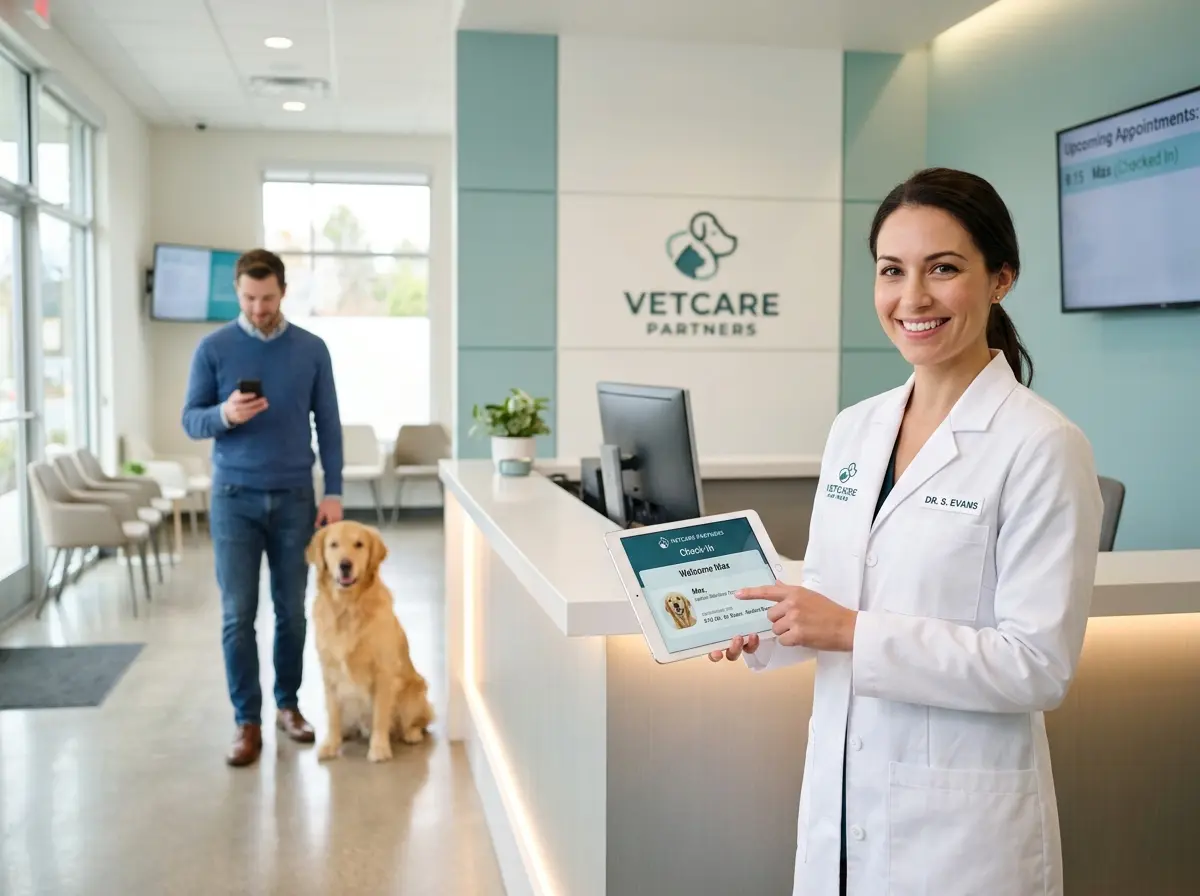
If you're already investing in a CRM strategy, the last thing you want is client data falling through the cracks because your front desk was slammed during the afternoon rush or a call came in after hours. Stella, the AI robot employee and phone receptionist, solves exactly that problem. She answers every phone call 24/7, collects client and pet information through conversational intake forms, and feeds that data directly into her built-in CRM — complete with custom fields, tags, notes, and AI-generated client profiles. For shops with a physical location, she also stands at the kiosk and greets walk-ins, capturing intake information from new clients before they even sit down. No dropped calls, no forgotten details, no "I'll write that down later" that never happens.
Turning Regulars into Advocates: Referrals, Reviews, and Retention
Getting a client to come back is great. Getting them to bring three friends is a business model. The most successful grooming shops aren't just focused on retention — they're systematically turning satisfied clients into active advocates, and their CRM is the engine that makes it possible.
Building a Referral Loop That Runs Itself
A referral program doesn't have to be complicated. What it does have to be is consistent. Use your CRM to identify clients who have visited three or more times — these are your warm advocates — and trigger an outreach message that thanks them for their loyalty and introduces a simple referral incentive. A discount on their next visit for every new client they send your way is a classic for a reason: it works.
The key is using your CRM to close the loop. When a new client mentions a referral source during intake, log it immediately and make sure the referring client gets their credit. Nothing kills word-of-mouth faster than a referral program that forgets to follow through. Tag referring clients in your CRM and treat them as VIPs — because they are. They're doing your marketing for free.
Review Requests: Timing Is Everything
Asking for reviews is awkward when done in person, often forgotten when left to chance, and wildly effective when automated at the right moment. The sweet spot for a review request is 24 to 48 hours after a great appointment — long enough for the client to have noticed how good their dog looks, short enough that the experience is still fresh.
Use your CRM to trigger these requests automatically, and make it dead simple — a direct link to your Google or Yelp page with a one-line ask. Keep the message warm and personal, referencing the pet's name and the service they received. Response rates on personalized review requests are significantly higher than generic blasts, and each new five-star review is essentially a piece of evergreen marketing content that works around the clock.
Seasonal Campaigns and Re-Engagement for Lapsed Clients
Your CRM should also be working to win back the clients who've gone quiet. Filter for anyone who hasn't booked in 90 days or more, and send a re-engagement campaign — maybe a limited-time offer or simply a friendly "we miss [pet's name]" message. You'll be surprised how many lapsed clients respond to a well-timed, personal nudge. For seasonal campaigns — summer de-shedding packages, holiday booking reminders, spring coat treatments — your segmented client list lets you speak directly to the clients most likely to say yes, rather than blasting everyone with the same generic promotion.
Quick Reminder About Stella
Stella is an AI robot employee and phone receptionist built for businesses like yours — she greets clients in-store from her kiosk, answers phone calls around the clock, collects intake information, manages your CRM, and promotes your services without ever calling in sick or forgetting to follow up. At $99/month with no hardware costs upfront, she's the kind of team member that actually pays for herself. Worth knowing about if you're building systems designed to run without you holding everything together by hand.
Your CRM Workflow Starts Today, Not Someday
The grooming shops that build lasting, loyal client bases aren't necessarily the ones with the fanciest equipment or the lowest prices — they're the ones that treat every client interaction as a data point, every follow-up as an investment, and every satisfied pet owner as a potential ambassador. A well-structured CRM workflow makes all of that possible without requiring you to remember everything yourself or add three hours of admin work to your already full day.
Here's where to start: audit what you're currently collecting at intake and close any gaps. Set up basic tags and segments so your client list becomes searchable and actionable. Build out a simple post-appointment follow-up sequence — even two or three automated messages will outperform doing nothing. And identify your top 20% of clients by visit frequency and spend, then make sure they know you value them.
You don't need a perfect system on day one. You need a better system than yesterday's, running consistently, with room to improve over time. Your regulars aren't born — they're built, one intentional touchpoint at a time. Start building.