So, Your Client Sits Down and Says "Just Do Whatever You Think"
Ah yes. Four of the most terrifying words in the English language — at least for a stylist holding a pair of scissors. You smile, nod, and proceed to make your best educated guess about what "whatever you think" actually means to this specific human sitting in your chair. Sometimes it works out beautifully. Sometimes they cry in the parking lot.
Here's the thing: that scenario is entirely preventable. Not with telepathy, and not with years of experience alone — but with something as simple as a pre-consultation form that collects client goals before they ever sit down. It sounds almost too straightforward, and yet the majority of salons still skip it entirely, relying instead on a rushed two-minute chat while the client is already draped and ready.
Pre-consultation forms aren't just a formality. They're a strategic tool that protects your stylists, elevates the client experience, and — this is the part people forget — actually increases your average ticket value. When you understand what a client wants, you can better recommend the services and products that will get them there. That's not upselling. That's just good service.
Let's talk about why this matters, what to include, and how to make it work without adding a pile of paperwork to your already busy day.
The Real Cost of Skipping the Pre-Consultation
It's Not Just About Avoiding Bad Haircuts
Yes, miscommunication leads to bad results. But the cost of skipping a proper pre-consultation goes much deeper than the occasional color correction appointment (though those are their own special kind of expensive). When you don't collect client goals upfront, you're essentially flying blind — and blind flights tend to get turbulent.
Consider this: studies in the beauty industry consistently show that client retention is the single biggest driver of revenue for salons. It costs significantly more to acquire a new client than to keep an existing one, and the number one reason clients don't return after a first visit is that they felt misunderstood or their expectations weren't met. Not that the service was technically bad — just that there was a disconnect between what they envisioned and what they received.
A pre-consultation form bridges that gap before it ever becomes a canyon. When a client articulates their goals in advance — even in broad terms — your stylist can walk into that appointment armed with context. Is this client maintenance-focused or transformation-hungry? Do they have 45 minutes in the morning or 10? Are they growing out a pixie or trying to finally commit to going platinum? These details change everything about how you approach the service.
The Hidden Revenue You're Leaving in the Shampoo Bowl
Here's where it gets interesting from a business perspective. Pre-consultation forms don't just prevent problems — they create opportunities. When a client tells you upfront that their goal is to have shinier, healthier hair, you now have a natural, non-pushy opening to recommend a gloss treatment or a professional conditioning service. When someone mentions they're prepping for a wedding in six months, you have a roadmap for a multi-appointment plan that keeps them coming back and increases their lifetime value as a client.
This isn't manipulation. It's alignment. You're simply using the information a client voluntarily shares to offer them services that genuinely serve their goals. The result? Higher average tickets, more rebooking, and clients who feel like you actually listened to them — because you did, before they even arrived.
How Stella Can Help You Collect This Information Effortlessly
Intake Forms That Work Around the Clock
Collecting pre-consultation information only helps if it actually gets collected — and if you're relying on a front desk team member to ask the right questions during a hectic Saturday morning, things slip through the cracks. This is where Stella, the AI robot employee and phone receptionist, genuinely earns her keep.
Stella can collect client information through conversational intake forms — whether that's during a phone booking, through a web interaction, or right at her in-store kiosk as a client walks in. Imagine a client calling to book an appointment at 9 PM on a Tuesday. Instead of hitting voicemail and hoping someone calls back, they speak with Stella, book their time, and answer a handful of pre-consultation questions naturally, as part of the conversation. By the time that client arrives at your salon, their goals, preferences, and any relevant notes are already waiting in Stella's built-in CRM — tagged, organized, and ready for your stylist to review.
For salons with a physical location, Stella's in-store kiosk presence means arriving clients can be greeted, checked in, and prompted to complete or confirm their pre-consultation details without pulling anyone off the floor. It keeps the experience smooth, professional, and consistent — even on your busiest days.
What to Actually Include in Your Pre-Consultation Form
The Essential Questions Every Salon Should Ask
A good pre-consultation form doesn't need to be a novel. It needs to be focused, purposeful, and easy enough that clients actually complete it. Aim for a form that takes under three minutes to fill out and covers the following ground:
- What is your primary goal for today's appointment? (Maintenance, transformation, color, treatment, etc.)
- What's your daily styling routine like? (This tells you a lot about lifestyle and maintenance expectations.)
- Are there any services or products you've tried before that didn't work for you?
- Do you have any upcoming events or milestones we should know about?
- How would you describe your hair health right now?
- What's your budget range for today's visit? (Yes, ask this. It saves everyone time and discomfort.)
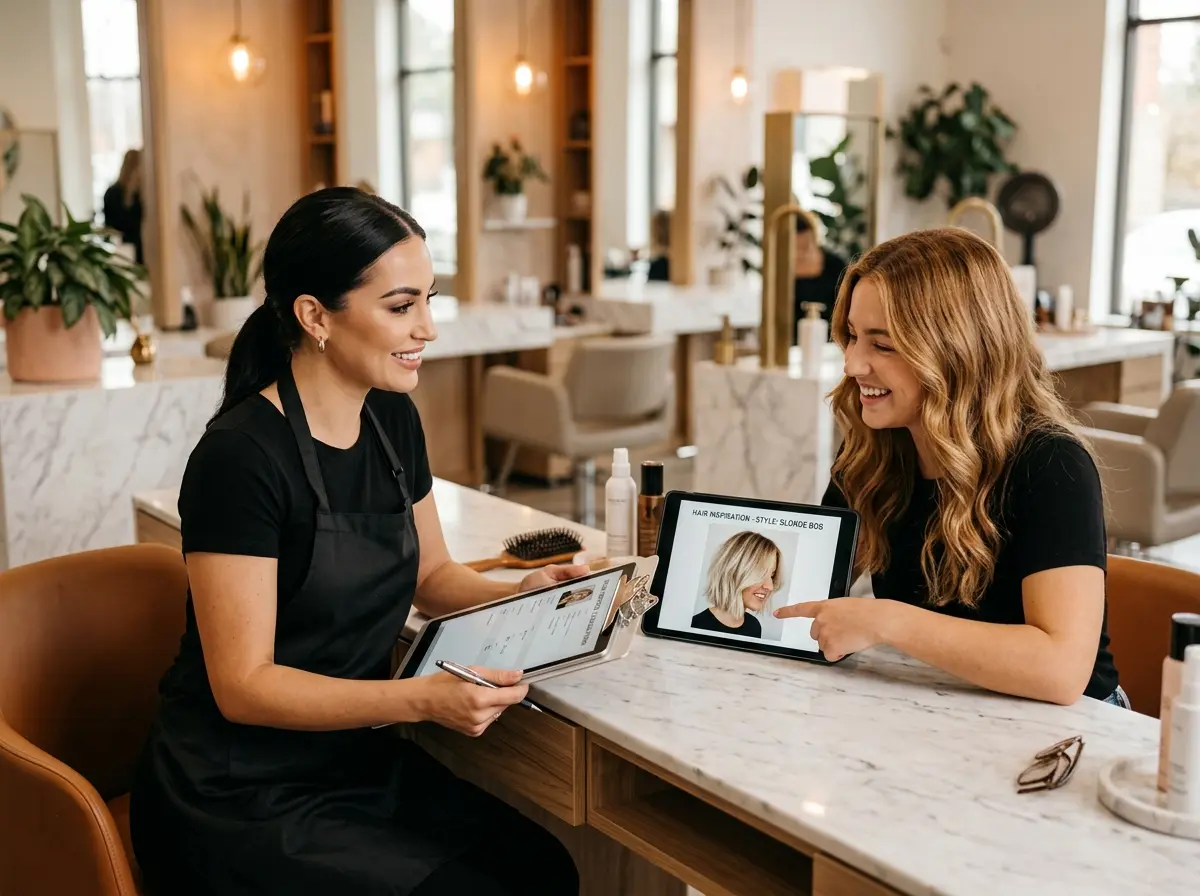
- Are there any photos or inspiration images you'd like to share?
These questions give your stylists context without overwhelming the client. They also signal to the client, before they even walk through your door, that your salon is thoughtful, professional, and genuinely interested in their experience. That alone sets you apart from the shop down the street.
Making the Form Part of Your Booking Workflow
The best pre-consultation form in the world is useless if it's sitting in a Google Drive folder nobody looks at. Integration is everything. Your form should be triggered automatically as part of the booking confirmation process — whether that's via email, text, your booking platform, or through a conversational AI interaction at the time of scheduling.
Once collected, that information needs to actually reach your stylists before the appointment, not during it. Build a simple internal process: form responses feed into your client records, stylists review them during any downtime before the appointment, and they walk into each service with a clear picture of what success looks like for that specific client. Consistency here is what turns a one-time visitor into a loyal regular.
Keeping It Fresh for Returning Clients
Pre-consultation forms aren't just for new clients. Returning clients' goals evolve — someone who was growing out their hair six months ago might be ready for a dramatic change now. A quick, abbreviated version of your intake form sent before every appointment (or even just a "has anything changed since your last visit?" prompt) keeps your records current and shows clients that you're paying attention over time, not just during the appointment itself.
This kind of longitudinal client knowledge is what separates good salons from great ones. When a stylist can reference that a client mentioned wanting to go lighter "eventually" at their appointment last spring, and follows up on that this visit, the client feels seen in a way that earns genuine loyalty.
Quick Reminder About Stella
Stella is an AI robot employee and phone receptionist designed to help businesses like yours run more smoothly — whether she's greeting clients at a physical kiosk, answering phone calls 24/7, or collecting intake information through conversational forms. She stores everything in a built-in CRM with custom fields, tags, and AI-generated client profiles, so your team always has the context they need. At just $99/month with no upfront hardware costs, she's one of the more practical investments you can make in your front-of-house operation.
Start Simple, Start Now
You don't need to overhaul your entire booking system this week. Start with a simple five-question form, attach it to your booking confirmation email, and make a habit of reviewing responses before each appointment. That alone will change the quality of your consultations, reduce miscommunication, and give your stylists the confidence to walk into each service with a plan.
From there, think about how you're collecting that information. If your front desk is inconsistent, if calls go unanswered after hours, or if clients are slipping through without completing their intake — those are workflow problems worth solving. Whether you address them with better systems, better staffing, or tools like an AI receptionist that never goes on break, the goal is the same: every client should feel known before they sit down in your chair.
Pre-consultation forms aren't glamorous. They don't have the excitement of a new color line launch or a rebrand. But done well, they quietly and consistently improve every single service you deliver — and that compounds over time into something very glamorous indeed: a thriving, full-books salon with clients who keep coming back.
Now go build that form. Your stylists will thank you. Your clients definitely will. And whoever was crying in the parking lot? Maybe they won't have to anymore.