Introduction: The Silent Revenue Killer Hiding in Plain Sight
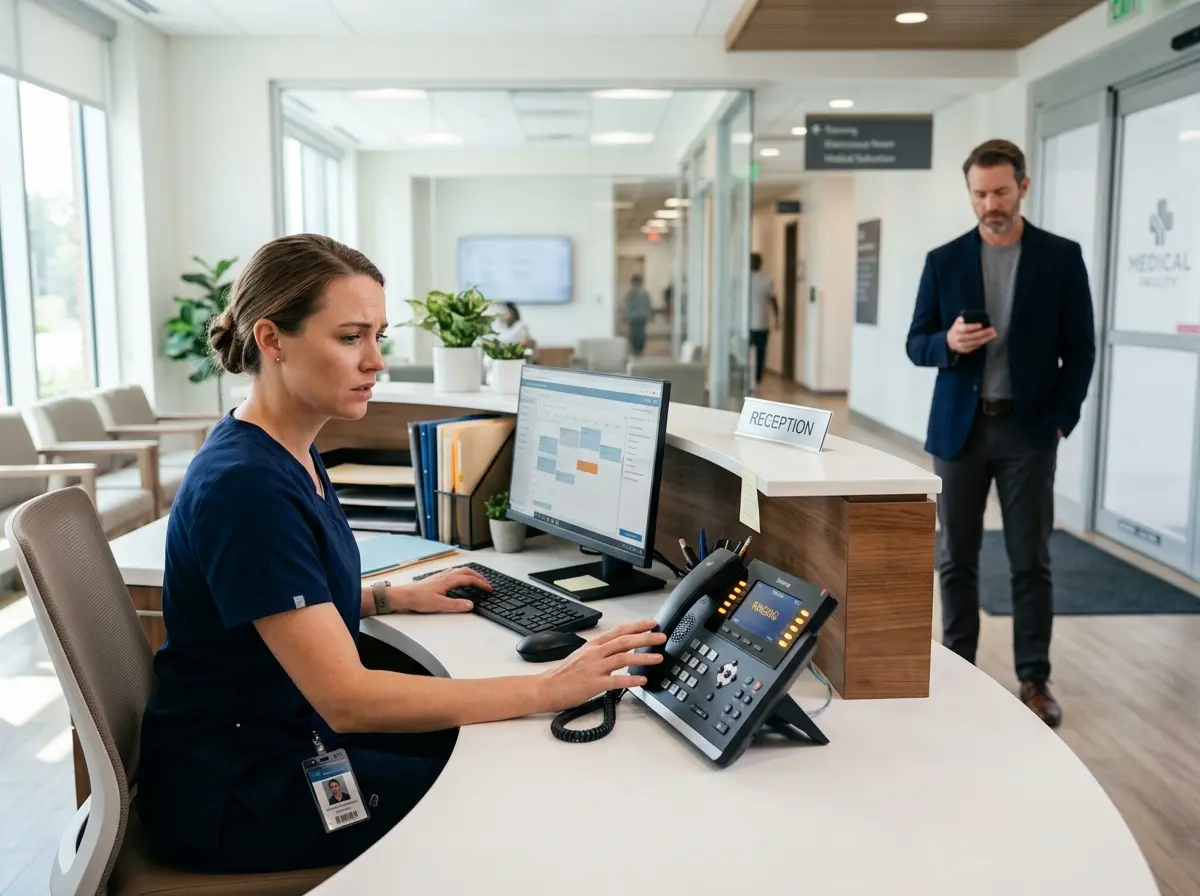
Picture this: a potential patient calls your medical office with a toothache, a concerning mole, or a persistent cough. Your front desk staff is juggling three other patients, the phone rings four times, and — silence. The caller hangs up. Maybe they leave a voicemail. Probably they don't. Almost certainly, they call the next office on Google's list within the next 60 seconds.
Congratulations. You just lost a patient you never knew you had.
This isn't a rare edge case. According to research from the Medical Group Management Association, nearly 20% of patients who can't reach a medical office by phone will simply move on to a competitor. And with the average new patient value ranging from hundreds to thousands of dollars in lifetime revenue — depending on your specialty — a handful of missed calls per week adds up to a genuinely painful number by year's end. The irony? Most medical offices invest heavily in marketing to attract new patients, then lose them at the very first point of contact.
Phone management in a medical office isn't glamorous. It doesn't come up at conferences or in strategy meetings. But it is, without exaggeration, one of the most impactful operational levers you can pull. This guide will walk you through why missed calls happen, what they actually cost you, and — most importantly — what you can do about it today.
Why Medical Offices Drop the Ball on Phone Management
The Front Desk Is Already Doing Five Jobs
Let's be honest about the reality of a busy medical office: your front desk staff is remarkable. They're checking patients in, verifying insurance, handling copays, managing appointment schedules, answering questions from patients in the waiting room, and navigating the emotional complexity of healthcare interactions — all simultaneously. Answering every phone call with warmth, accuracy, and professionalism under those conditions isn't a training problem. It's a capacity problem.
When the phones are ringing off the hook between 8:00 and 9:30 AM — because, of course, every patient in your city apparently decided to call at the same moment — something has to give. Unfortunately, that something is often the caller on hold or the call that goes unanswered entirely. No amount of motivational posters about "excellent patient experience" will fix a staffing bottleneck.
After-Hours Calls Are a Black Hole
Modern patients expect to interact with healthcare providers on their schedule, not yours. That means evenings, weekends, and holidays. A patient researching a new primary care physician at 9:30 PM on a Tuesday isn't going to leave a voicemail and patiently wait for a callback the next morning. They're going to book an appointment with the practice that made it easy — and that practice has a significant competitive advantage over the one with a static voicemail greeting that hasn't been updated since 2019.
Even when after-hours voicemails are dutifully checked each morning, the follow-up process is often inconsistent. Messages get missed, callbacks happen late, and the patient — who has now been seen by another provider — is long gone.
Inconsistent Intake Creates Downstream Problems
There's another, subtler issue that often gets overlooked: the quality of information collected during phone interactions. When intake is handled informally — a staff member scribbling notes on a sticky pad, or typing something vague into the system — you end up with incomplete patient records, scheduling errors, and frustrated new patients who have to repeat themselves three times before their first appointment. Consistent, structured intake during the initial phone call isn't just good practice. It directly affects the quality of care and the efficiency of every downstream touchpoint in the patient journey.
How Technology Can Plug the Gaps (Without Replacing Your Team)
AI Receptionists Are No Longer Science Fiction
The good news is that solving the missed-call problem no longer requires hiring two additional front desk staff members at full salary and benefits. Stella, an AI robot employee and phone receptionist, is purpose-built for exactly this kind of challenge. She answers calls 24/7, handles common patient inquiries about services, hours, insurance, and policies, and can collect structured intake information through natural, conversational interaction — the kind that actually feels like talking to a knowledgeable receptionist, not navigating a phone tree from 2003.
For medical offices with a physical location, Stella also operates as a friendly in-person kiosk presence, greeting patients as they arrive and answering questions so your staff can stay focused. She's available at $99/month with no upfront hardware costs — which, for context, is considerably less than a single missed new patient appointment in most specialties.
Stella's built-in CRM captures caller information, generates AI-powered patient profiles, and sends push notifications to managers when a voicemail comes in — complete with an AI-generated summary so your team knows exactly what the call was about before they even listen to it. Paired with configurable call forwarding, she handles routine calls independently and routes urgent or complex situations to a human staff member. It's not about replacing your team. It's about making sure every call gets a professional, informed response — every single time.
Best Practices for Medical Office Phone Management
Define a Clear Call Routing Protocol
One of the fastest improvements any medical office can make is simply documenting and implementing a consistent call routing protocol. Who answers first? What happens when that person is unavailable? How many rings before a call is considered missed? What's the escalation path for urgent calls versus appointment requests versus billing questions?
These questions sound obvious, but the majority of small and mid-sized medical practices have never formally answered them. The result is an informal, inconsistent system that relies entirely on whoever happens to be available — which is a fragile foundation for patient experience. Map it out, train your team on it, and review it quarterly. Small process improvements compound quickly.
Set Up Intelligent After-Hours Coverage
After-hours coverage doesn't have to mean an answering service that costs a fortune and reads from a generic script. At minimum, your after-hours experience should accomplish a few things: acknowledge the caller warmly, provide useful information (hours, location, whether urgent care is appropriate), and offer a reliable path to follow-up. If your system can collect caller information and flag the inquiry for next-morning review, even better.
Practices that implement structured after-hours response — rather than a generic "we're closed" voicemail — consistently report higher new patient conversion rates from after-hours inquiries. The bar is low, and the upside is real.
Track Your Call Metrics Like You Track Clinical Outcomes
You wouldn't manage a chronic condition without data. Don't manage your phone system without it either. Key metrics every medical office should monitor include:
- Call abandonment rate — how often callers hang up before being answered
- Average hold time — how long patients wait before reaching a person or resolution
- Missed call rate by time of day — identifying your highest-risk windows
- First-call resolution rate — how often a patient's need is handled in a single interaction
- New patient conversion from phone inquiries — arguably the most important number of all
Many modern phone systems provide basic analytics. If yours doesn't, it may be time for an upgrade. Understanding where calls are falling through the cracks is the prerequisite to fixing it — and the data often reveals patterns that are both surprising and immediately actionable.
Quick Reminder About Stella
Stella is an AI robot employee and phone receptionist that answers calls around the clock, greets patients in person at your front desk kiosk, and manages intake, follow-up, and CRM — all for $99/month with no hardware costs required. She doesn't take lunch breaks, doesn't call in sick, and never puts a new patient on indefinite hold. For medical offices serious about fixing their phone management, she's worth a very close look.
Conclusion: Stop Losing Patients at Hello
The missed call problem in medical offices is real, it's expensive, and it's almost entirely preventable. The solution isn't asking your already-stretched front desk team to somehow do more. It's building systems — staffing protocols, after-hours coverage, data tracking, and smart automation — that ensure every patient who reaches out gets a response worthy of the care you actually deliver.
Here's where to start this week:
- Audit your current missed call rate. Pull your phone system data or simply track calls manually for one week. The number will probably surprise you.
- Document your call routing protocol. If it doesn't exist on paper, it doesn't really exist at all.
- Address your after-hours gap. Evaluate whether your current solution is actually converting after-hours inquiries — or just logging them into a voicemail nobody checks promptly.
- Explore AI receptionist options. The technology has matured dramatically, the cost is accessible, and the ROI from even a modest improvement in call answer rates is significant.
Your clinical team works hard to deliver excellent care. Make sure patients actually get the chance to experience it — starting with the very first call they make to your office.