Why Your Clippers Are Doing All the Work While Your Shelves Collect Dust
Let's paint a familiar picture: You've got a beautifully stocked retail shelf — pomades, beard oils, shampoos, styling creams — products you personally vetted, ordered in bulk, and arranged with the care of a museum curator. And yet, somehow, your clients walk right past them every single visit, sit down in your chair, and leave with nothing but a fresh fade and a fistful of loyalty points. Meanwhile, those products just sit there, quietly judging you.
Here's the uncomfortable truth: most barbershops are sitting on a legitimate retail revenue stream that they're almost completely ignoring. According to industry research, retail product sales can account for up to 20–30% of a barbershop's total revenue — but only when they're actively promoted. The key word there is actively. Passive shelves don't sell. People do. And the good news is, you don't have to transform your barbers into pushy salespeople to make it work. You just have to be a little smarter about how and when products enter the conversation.
This guide is your roadmap to selling grooming products in a way that feels natural, helpful, and — dare we say it — actually welcomed by your clients.
The Art of the Soft Sell: Making Products Part of the Experience
Timing Is Everything (And Most Barbers Get It Wrong)
The single biggest mistake barbers make when trying to sell products is picking the wrong moment. Awkwardly mentioning a pomade as a client is paying and heading for the door isn't a sales strategy — it's a goodbye gift nobody asked for. The right time to introduce a product is during the service, when the client is relaxed, in your chair, and already paying attention to how their hair looks and feels.
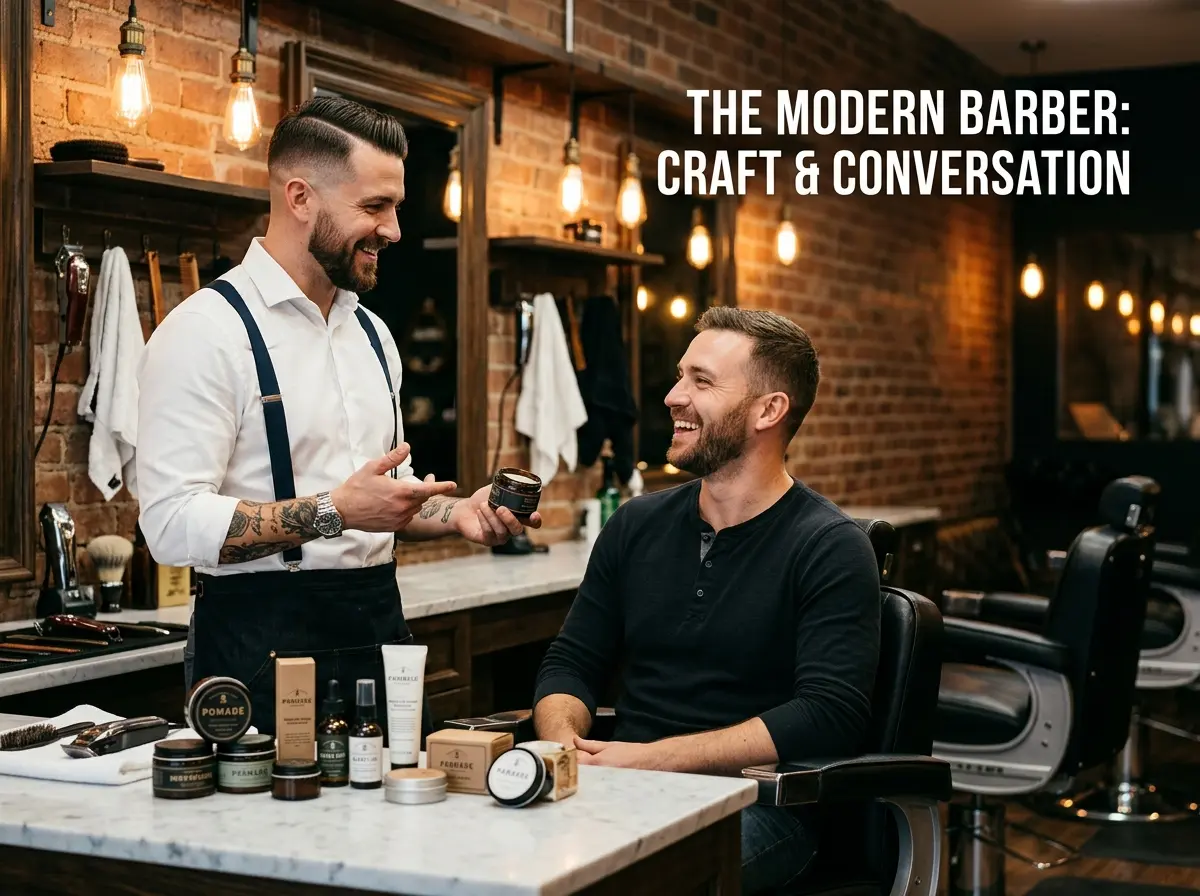
When you reach for a product to finish a cut, say something. Not a sales pitch — just a natural observation. "I'm using this matte clay on you today — it's going to hold without making your hair look greasy, which works really well with your texture." That's it. You've just made a product recommendation in the most organic way possible, mid-service, while the client can literally feel the difference. You're not selling — you're explaining what you're already doing. There's a massive psychological difference between the two, and your clients feel it.
Use Your Expertise as the Selling Point
Clients come to you because you know hair. That expertise is your greatest retail asset. When a client complains about frizz, dryness, or a style that never holds at home, that's not just small talk — that's a buying signal wrapped in a complaint. Treat it like one.
The most effective retail conversations in a barbershop don't sound like sales at all. They sound like advice. "That sounds like a moisture issue — have you tried a leave-in conditioner? I actually carry one that works really well for coarser textures." You've just positioned yourself as a trusted advisor, recommended a specific product, and created a reason for the client to look at your shelf before they leave. No pressure. No awkwardness. Just expertise doing what it's supposed to do.
Train your barbers to listen for these moments. Make it part of your shop culture. The consultation before the cut is prime real estate for this kind of organic product discovery — and most shops completely waste it.
The Power of the Demo: Let the Product Speak for Itself
People buy what they've already experienced. If a client leaves your chair with their hair smelling incredible and holding perfectly, and they know exactly which product made that happen, selling them a bottle to take home is barely even a transaction — it's a convenience. You're not asking them to take a chance on something unknown. You're offering them the ability to recreate an experience they just had.
Make it a standard practice to name the products you use during every service. Keep retail-sized versions of those same products visible and accessible near your station. When clients can see the product, touch the bottle, and connect it to how their hair currently looks and feels, the barrier to purchase drops dramatically. A simple "That's the same pomade — I've got it on the shelf if you want to grab one on your way out" is genuinely all it takes.
How Smart Tools Can Give Your Retail Strategy a Boost
Letting Technology Handle the Moments Between Cuts
Your barbers are talented professionals, and their attention belongs on their clients. But retail promotion doesn't have to stop when someone is in the chair — or when the shop is closed. This is where Stella, the AI robot employee and phone receptionist, can quietly fill in the gaps without pulling anyone away from their work.
In-shop, Stella stands as a physical kiosk presence that greets walk-ins, answers questions about your products and services, and proactively highlights current promotions — all without your staff having to stop what they're doing. She can mention that you're running a deal on beard oil this week, explain the difference between two styling products, or simply engage a waiting client in a way that keeps your retail offerings front of mind. And when the phone rings after hours? She's there too, answering calls with full knowledge of your shop's products, services, and specials — so a curious caller at 9 PM doesn't just hit a voicemail and forget to call back.
Building Retail Into Your Shop's Culture (Not Just Your Shelves)
Train Your Team to Think Like Consultants
There's a reason high-end salons consistently outperform barbershops in retail revenue despite having comparable product selections: their staff is trained to recommend, not just cut. Retail education should be a regular part of your team meetings, not a one-time onboarding checkbox. Make sure every barber in your shop knows your product lineup well enough to recommend it confidently without sounding like they're reading from a brochure.
Consider setting up simple internal challenges — not aggressive commission structures that make everyone feel like a car salesman, but friendly monthly goals that celebrate wins and build momentum. Even something as low-key as tracking which barber recommended the most products in a month, with a small reward attached, can meaningfully shift behavior. Culture is built in the small repeated moments, and retail habits are no different.
Curate Intentionally — Less Is More
One of the fastest ways to kill retail sales in a barbershop is to overload the shelf. When clients see twenty different pomades, they don't feel excited — they feel overwhelmed, and overwhelmed people don't buy. They nod, say "I'll look into it," and then Google a product at home later. You've done all the work and Amazon got the sale. Congratulations to them.
Instead, curate a tight, intentional selection of products you genuinely use and believe in. Three to five strong products per category is more than enough. When your selection is focused, your recommendations become more confident, your shelf looks cleaner and more premium, and clients have an easier time making decisions. A well-edited product wall says "we know what works" far more effectively than a shelf that looks like a beauty supply store exploded.
Turn Your Retail Shelf Into a Content Strategy
Your clients are on Instagram. Your products are photogenic. These two facts should be doing more work for you than they currently are. A quick before-and-after post using a specific product, a short reel showing how you apply a beard balm during a service, or a simple product-of-the-week story can drive both in-person and online awareness without requiring a marketing degree or a film crew.
User-generated content works even better. Encourage clients to tag your shop when they recreate a look at home using your products. It's free advertising with built-in social proof, and it creates a feedback loop that makes clients feel more connected to your brand. The barbershop that becomes part of someone's daily grooming routine — through the products on their bathroom shelf — is the barbershop they never stop coming back to.
Quick Reminder About Stella
Stella is an AI robot employee and phone receptionist built for businesses like yours. She stands inside your shop as a physical kiosk, greeting customers and promoting your products and specials, while also answering every phone call — day or night — with the same expertise and professionalism you'd expect from your best staff member. At $99/month with no upfront hardware costs, she's one of the easiest ways to extend your shop's reach without adding to your payroll.
Stop Leaving Money on the Shelf
Retail isn't a side hustle for barbershops — it's a legitimate revenue channel that most shops are dramatically underutilizing simply because nobody made it a priority. The good news is that you don't need a sales training program, a new hire, or a radical overhaul of how you run your shop. You need better timing, a little more intentionality, and a team culture that treats product knowledge as part of the craft.
Here's where to start this week:
- Audit your current product shelf. Cut it down to your most-used, most-recommended items. Clear the clutter.
- Brief your barbers on the top three products you want to push this month and make sure they know how to talk about them naturally during services.
- Name every product you use on every client, every service. Make it a habit, not an afterthought.
- Post one piece of product-related content this week — even a simple photo will do.
- Let technology help. Tools like Stella can promote your products and answer questions while your team stays focused on delivering great cuts.
Your shelves are full of potential revenue. It's time to give them a little of the same attention you give your clients' hairlines.