When "Welcome to the Neighborhood" Actually Works
Most marketing advice for pediatric dentists sounds something like: "Post more on Instagram! Run Google Ads! Build your personal brand!" And while none of that is terrible advice, it often overlooks something refreshingly old-school — the fact that new families moving into your area are actively looking for a pediatric dentist right now. They don't have one yet. They're essentially pre-qualified leads who just need someone to say hello first.
That's exactly the insight that drove Dr. Melissa Hartwell, a pediatric dentist in a mid-sized suburb of Charlotte, NC, to launch a hyper-targeted "Welcome, New Neighbor" direct mail campaign. The result? A 20% practice growth in just 12 months — not through a viral TikTok or a complicated funnel, but through a well-timed postcard and a little strategic follow-through. No smoke and mirrors. Just smart, local marketing done right.
If you're a pediatric dentist (or honestly, any local business owner) wondering whether direct mail is "still a thing," buckle up — because this story might change your mind.
The Strategy: What the "Welcome, New Neighbor" Campaign Actually Looked Like
Targeting New Movers Before the Competition Does
The foundation of Dr. Hartwell's campaign was timing. She partnered with a new mover data service — companies like Moving Targets or USPS's Every Door Direct Mail (EDDM) program can provide this — to identify families who had recently relocated within a 5-mile radius of her practice. These weren't cold leads. These were families who had just uprooted their lives, were settling into a new home, and had an ever-growing mental checklist that almost certainly included "find a dentist for the kids."
Research backs this up. According to the USPS, new movers spend significantly more in their first six months after relocating than established residents — they're in active "setup mode," making decisions quickly and forming brand loyalties that can last years. Getting your name in front of them before they've Googled their way to a competitor is a meaningful competitive advantage.
The Postcard That Actually Got Opened (Because It Was Already Open)
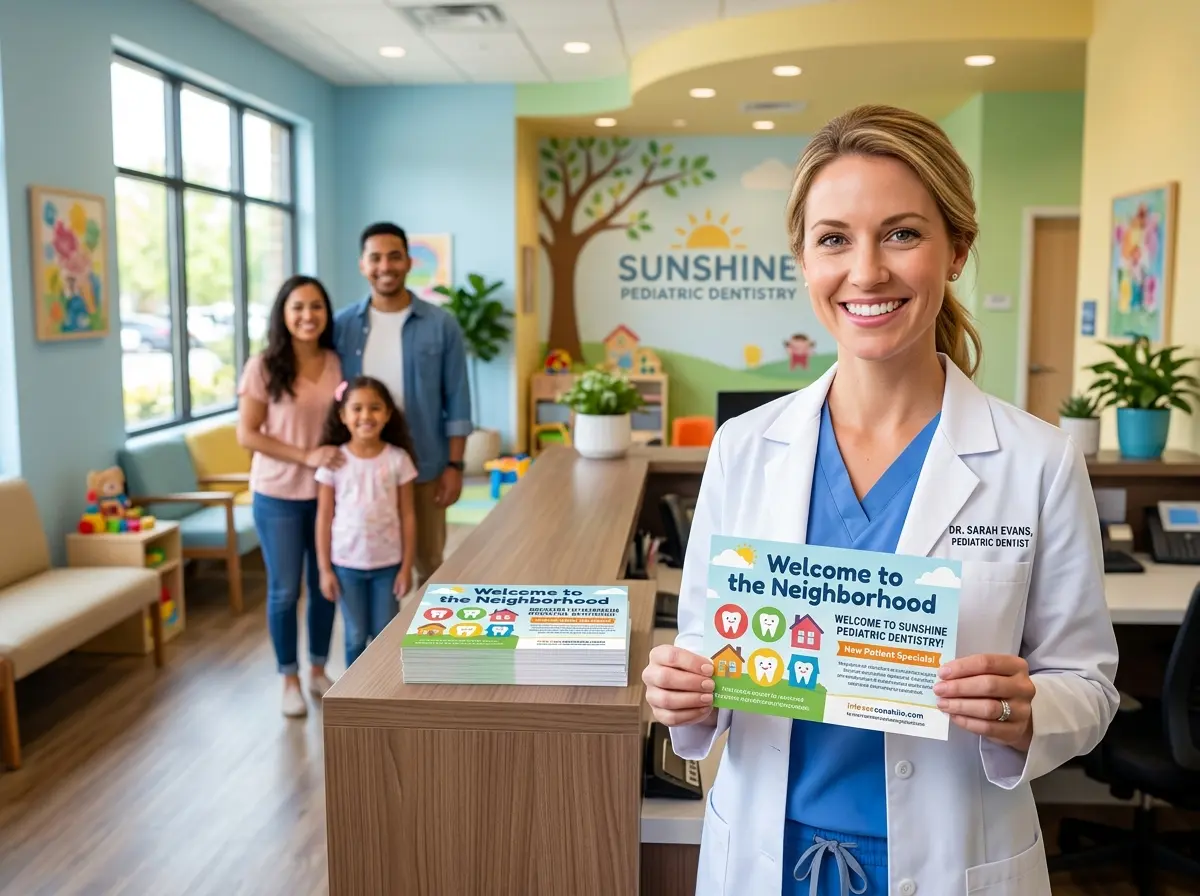
Dr. Hartwell didn't send a brochure stuffed in an envelope that would get mistaken for a credit card offer. She sent a well-designed, full-color postcard — the kind that gets read whether the recipient wants to or not, because there's nothing to open. The design was warm, friendly, and distinctly not clinical. Think bright colors, a smiling cartoon tooth (yes, really), and a headline that read: "Hey neighbor — your kids' smiles are in good hands."
The postcard included a genuine welcome message, a brief introduction to the practice and Dr. Hartwell's philosophy, and — critically — a specific new patient offer: a complimentary first exam for children under 12, no strings attached. It also listed the practice's phone number, website, and a QR code linking to an online booking page. Simple, clean, and actionable.
Consistency Over One-and-Done
Here's where most direct mail campaigns fall flat: they send one mailer and then wonder why it didn't work. Dr. Hartwell's campaign ran on a 90-day drip sequence. New movers in her target radius received three touchpoints over three months — a welcome postcard, a follow-up card highlighting patient reviews and the practice's kid-friendly environment, and a final reminder about the new patient offer with a gentle expiration nudge.
By the third touchpoint, name recognition had been established. Families who hadn't called after the first card often called after the third. The campaign cost approximately $1,800 over the year in postcard design, printing, and mailing list fees — and generated well over $60,000 in new patient revenue based on average lifetime patient value. That's not a bad return on a stack of postcards.
How Technology Kept the New Patients From Slipping Through the Cracks
The Phone Problem Nobody Talks About
Here's an uncomfortable truth: you can run a flawless direct mail campaign and still lose patients if no one answers the phone. New movers — busy, overwhelmed, and operating on a tight schedule — are not going to leave three voicemails. They're going to call once, maybe twice, and then call the next dentist on their list.
Dr. Hartwell recognized this early and implemented Stella, an AI robot employee and phone receptionist, to ensure every incoming call was answered — 24 hours a day, 7 days a week. Whether a parent called at 7 PM after putting the kids to bed or during a busy Tuesday afternoon when the front desk was juggling three things at once, Stella answered professionally, answered common questions about the practice, and collected new patient intake information conversationally — no hold music, no voicemail black hole. Stella's built-in CRM automatically logged each caller's information, tagged them as new patient leads, and sent push notifications to the office manager so no one was forgotten. For a campaign designed to attract new families, having a reliable first point of contact wasn't a luxury — it was essential.
Making the In-Office Experience Match the Promise of the Postcard
First Impressions Are Make-or-Break for Pediatric Practices
A great marketing campaign gets families in the door. What keeps them — and gets them to refer their friends — is the experience that follows. For a pediatric dental practice, this is doubly important because you're not just winning over a parent; you're winning over a small, opinionated human who may have opinions about strangers poking around in their mouth.
Dr. Hartwell invested in her waiting room environment, trained her staff on a structured new patient welcome protocol, and made sure every family who came in from the campaign received a personal acknowledgment: "We're so glad you found us — welcome to the neighborhood!" It sounds small, but it closed the loop on the postcard's promise in a way that felt genuine rather than transactional.
Turning New Patients Into Referral Sources
The smartest thing Dr. Hartwell did after acquiring a new patient? She asked for referrals — but tastefully, and at the right moment. After a child's first successful visit, when the parent was visibly relieved and the child was happily clutching a new toothbrush and a sticker, the front desk would say: "We're still welcoming new neighbors to the practice — if you know any families who just moved in nearby, we'd love to meet them." A simple referral card was handed over, offering the same complimentary exam to any referred family.
New movers, it turns out, are also actively building their social networks in a new city. They talk to other new movers. They post in neighborhood Facebook groups. They ask their new colleagues for recommendations. By positioning the practice as the friendly, welcoming dental home for newly arrived families, Dr. Hartwell tapped into a referral network that essentially ran itself.
Tracking What Actually Worked
No campaign is complete without measurement. Dr. Hartwell used a dedicated phone number on her postcards (trackable through a simple call tracking service) and a unique QR code so she could attribute new bookings directly to the campaign. She tracked new patient acquisition monthly, monitored which postcard in the drip sequence drove the most calls, and adjusted her offer slightly in month six based on what she learned. This kind of iterative improvement is what separates a campaign that works once from a system that keeps working.
Quick Reminder About Stella
Stella is an AI robot employee and phone receptionist built for businesses of all kinds — including pediatric dental practices navigating busy front desks and after-hours call volume. She answers phones 24/7, handles intake forms conversationally, manages a built-in CRM, and can even greet patients in person as a friendly kiosk presence in your waiting room. At $99/month with no upfront hardware costs, she's the kind of team member who never calls in sick and never misses a new patient inquiry.
Your Next Steps: Borrowing This Playbook
Whether you're a pediatric dentist, a family chiropractor, a kids' hair salon, or any local business that thrives on family relationships, the "Welcome, New Neighbor" framework is replicable and scalable. Here's how to get started:
- Identify your new mover data source. Look into USPS EDDM, Melissa Data, or new mover list providers like New Mover Marketing or Moving Targets. Most offer targeting by zip code, radius, and household demographics.
- Design a postcard worth keeping. Warm, clear, and visually distinct. Lead with a benefit, include a real offer, and make it easy to take the next step.
- Build a drip sequence, not a one-shot. Three touchpoints over 90 days is a proven cadence. Don't expect one postcard to do all the heavy lifting.
- Make sure your phone is answered. Every time. This is non-negotiable when you're actively driving inbound inquiries.
- Track everything. Use a dedicated phone number and QR code. Know your cost per acquired patient. Improve the campaign each quarter.
- Close the loop in person. The postcard gets them in. Your team — and your referral ask — keeps them coming back.
Dr. Hartwell's 20% growth didn't come from doing one big, flashy thing. It came from doing several smart, consistent things in the right order, aimed at the right people, at exactly the right moment in their lives. New movers are out there right now, in your neighborhood, looking for exactly what you offer. The only question is whether they'll find you — or your competitor — first.
Send the postcard. Answer the phone. Welcome them home.