Introduction: The Check-In Chaos No One Warned You About
Picture this: It's 7 AM. You've got back-to-back training sessions lined up, a client asking about their macros, another one texting about rescheduling, and somewhere in between all of that, you're supposed to be — oh right — actually training people. Welcome to the glamorous life of a personal trainer, where half your job somehow became administrative work and nobody sent you the memo.
Client check-ins are one of those things that sound simple in theory. "Just send a quick message and see how they're doing!" Sure. Multiply that by 20 clients, add follow-up reminders for the ones who don't respond, factor in logging their responses, updating their progress notes, and flagging anyone who's struggling — and suddenly you've lost an entire morning without touching a single dumbbell.
The good news? Automation has officially entered the building, and it's not as complicated or expensive as you might think. In this post, we'll walk through exactly how one personal trainer restructured her check-in process, clawed back five hours every single week, and actually started enjoying the admin side of her business. Yes, really.
The Check-In Problem: Why Manual Follow-Ups Are Quietly Killing Your Productivity
The Hidden Time Tax on Every Client Relationship
Most fitness professionals dramatically underestimate how much time goes into client communication. A quick check-in text doesn't take two minutes — it takes two minutes to write, then five minutes to wait and wonder if they'll respond, then another few minutes to log the response somewhere useful, and then a reminder to circle back if they don't answer. Repeat that across your entire client roster, several times a week, and you've got yourself a substantial and deeply unsexy time commitment.
Research consistently shows that small business owners spend anywhere from 15 to 25 percent of their workweek on repetitive administrative tasks. For a solo personal trainer, that number can climb even higher because there's no team to delegate to. Every check-in, every follow-up, every "just wanted to see how you're feeling after Monday's session!" lives entirely on your shoulders.
The Inconsistency Problem
Here's the thing about doing check-ins manually: you're human, which means some clients get thorough, thoughtful follow-ups and others get a thumbs-up emoji at 11 PM when you finally remember they exist. It's not a character flaw — it's just the natural result of trying to juggle too many things at once.
But inconsistent check-ins lead to inconsistent client results, and inconsistent results lead to clients quietly drifting away. They don't fire you dramatically. They just... stop renewing. Automation solves this elegantly by treating every client with the same attentiveness, whether they signed up last week or three years ago.
Meet the Trainer Who Fixed It
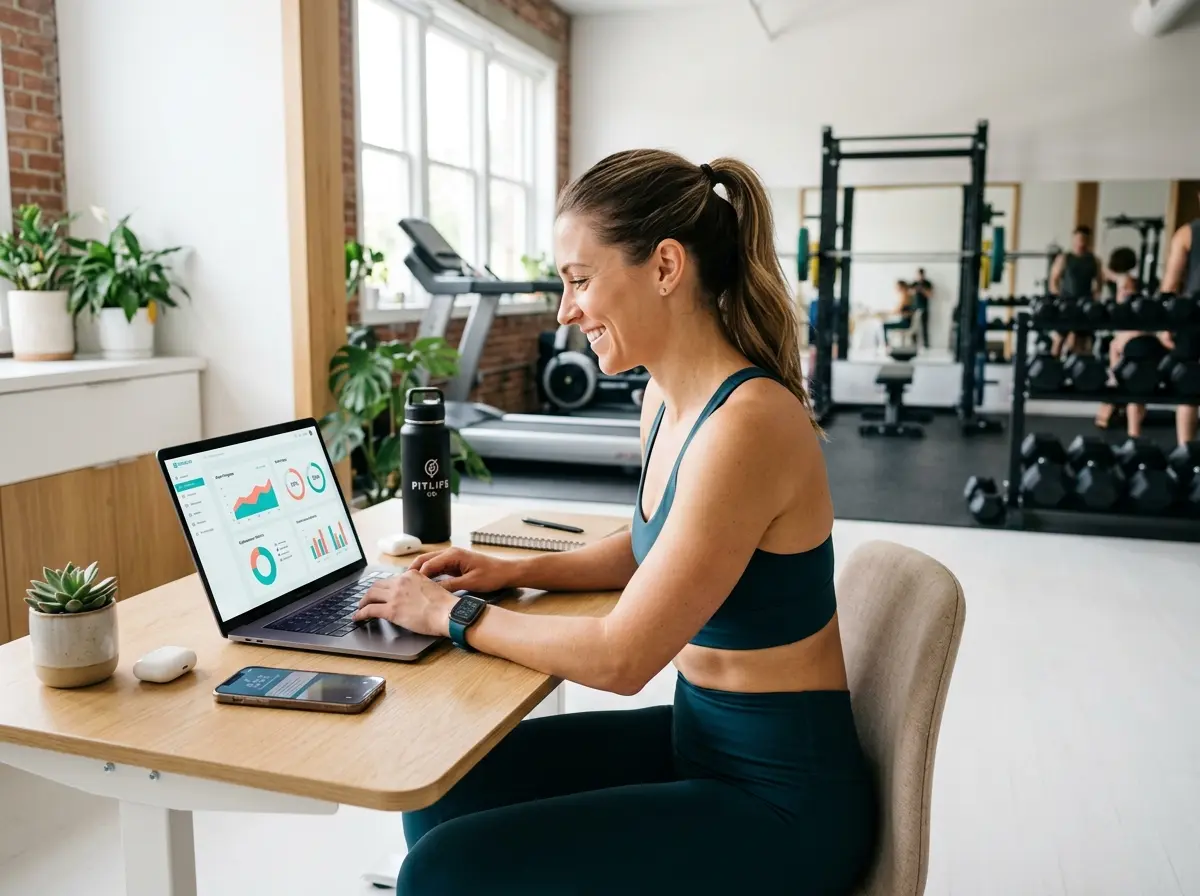
Jessica runs a hybrid personal training business — some in-person sessions at a local gym, some remote clients she coaches via video calls and app-based programming. She had 24 active clients and was spending roughly five hours a week on check-ins, follow-ups, and progress note updates. She wasn't burned out yet, but she could see it on the horizon, waving at her from about three months away.
After mapping out exactly where her time was going, she realized that the vast majority of her check-in work was completely predictable and repeatable. Same questions, same cadence, same logging process. That's the sweet spot for automation — and once she saw it clearly, the fix was surprisingly straightforward.
How Automation Tools Can Help You Reclaim Your Week
Streamlining the Check-In Workflow from Start to Finish
For fitness professionals specifically, the automation stack doesn't need to be elaborate. Jessica's setup involved three core components: a scheduling tool that triggered check-in messages automatically based on session timing, a simple intake form that clients filled out in response, and a CRM that logged everything without her lifting a finger. The check-in itself became a short, structured form — not a text thread that could spiral into a 20-message conversation at the worst possible time.
This is where tools like Stella become genuinely useful for business owners in service industries. Stella's built-in CRM and conversational intake forms let you collect structured client information — whether over the phone, through a web form, or at an in-person kiosk — and store it automatically with AI-generated profiles, custom fields, and tags. For a personal trainer who also takes new client inquiries by phone, Stella's AI phone receptionist can handle those calls 24/7, gather intake information from prospective clients, and push everything directly into the CRM. No more scribbling notes on your hand between sets.
What to Actually Automate (and What to Keep Human)
Not everything should be automated, and knowing the difference matters. Routine weekly check-ins, progress logging prompts, appointment reminders, and new client intake forms are all excellent candidates. What should stay human? The moments that require genuine empathy — a client who's going through something difficult, a conversation about a plateau that's getting in their head, or any interaction where someone needs to feel truly seen rather than efficiently processed. Automation handles the volume; you handle the heart.
Building Your Automation System Step by Step
Step 1 — Map Your Current Process Before You Touch Any Tools
Before downloading a single app, spend 30 minutes writing down exactly what your check-in process looks like right now. What questions do you ask? How often? How do you log responses? Where do things fall through the cracks? This exercise tends to be mildly horrifying and extremely illuminating. Jessica discovered she was asking slightly different questions to different clients, making it nearly impossible to track progress in any consistent way. Standardizing the questions was actually the most impactful change she made — the automation just made that consistency effortless to maintain.
Step 2 — Choose the Right Tools for Your Business Size
You don't need enterprise software. For most personal trainers, a combination of a client management platform (like TrueCoach, MyPTHub, or even a well-configured Notion workspace), a form tool, and an automated messaging system covers the essentials. The key is choosing tools that talk to each other — either natively or through a simple integration like Zapier — so data flows automatically rather than requiring you to copy things between platforms manually, which defeats the entire point.
Start small. Automate one thing first, run it for two weeks, then layer in the next piece. Trying to overhaul everything at once is a reliable recipe for abandoning the whole project after day three.
Step 3 — Track the Time You're Saving (Seriously, Do This)
Jessica tracked her time for two weeks before implementing automation and two weeks after. The before: 4.8 hours per week on check-ins and follow-ups. The after: just under an hour, mostly reviewing flagged responses that needed personal attention. That's nearly four hours returned to her schedule every single week — time she now uses for a combination of business development, additional clients, and, occasionally, a lunch break like a normal person.
Tracking the saved time does two things: it validates that the effort of setting up the system was worth it, and it helps you identify the next area worth automating. Consider it your ROI in hours rather than dollars — though the dollars tend to follow fairly quickly once your capacity opens up.
Quick Reminder About Stella
Stella is an AI robot employee and phone receptionist designed to help businesses like yours run more smoothly. Whether she's greeting walk-in clients at your facility as a human-sized kiosk or answering phone calls 24/7 with complete business knowledge, Stella handles the front-end communication so you can stay focused on delivering results. At just $99 per month with no upfront hardware costs, she's a practical upgrade worth looking into.
Conclusion: Five Hours a Week Is Not a Small Thing
Five hours a week is 20 hours a month. That's half a workweek returned to you, every single month, just by removing yourself from tasks that a well-configured system can handle just as well — and honestly, more consistently. For a personal trainer, that time can mean two or three additional clients, a better work-life balance, or simply the mental breathing room to actually enjoy the business you built.
Here's where to start this week:
- Audit your current check-in process — write it all down and estimate how long it actually takes.
- Standardize your check-in questions — create one clear, consistent form you'd want every client to complete.
- Pick one tool and automate that form — get it triggering automatically based on session cadence before adding anything else.
- Track your time for two weeks — then celebrate aggressively when you see the difference.
The clients you serve deserve consistent, attentive follow-up. And you deserve a schedule that doesn't make you want to retire by Thursday. Automation isn't about removing the human element from your coaching — it's about protecting your energy so the human element you bring to every session is actually your best one.
Now go build the system, and then go enjoy the hours it gives you back.