So You Want to Turn Your Nutrition Knowledge Into Cold, Hard Cash
Let's be honest — you became a personal trainer because you love helping people transform their lives, not because you were thrilled about the prospect of trading hours for dollars until your knees give out. And yet, here you are, booking back-to-back one-on-one sessions like a fitness vending machine, wondering why your income plateaus just as reliably as a client who won't stop eating gas station sushi.
Here's a truth the fitness industry doesn't always shout loudly enough: your expertise extends well beyond the gym floor, and your clients are desperate for guidance on what to eat, when to eat it, and why their post-workout "protein shake" loaded with three bananas and almond butter isn't quite the diet hack they think it is. Nutrition workshops are one of the most natural, scalable, and genuinely rewarding revenue streams a personal trainer can add — and they don't require you to get a second job, clone yourself, or sacrifice any more of your precious recovery days.
This guide walks you through exactly how to build, launch, and grow nutrition workshops that your clients will actually pay for — and keep coming back to. Whether you're working out of a boutique gym, a commercial facility, or your garage (no judgment), there's a workshop model that fits your business.
Building a Workshop That People Actually Want to Attend
Know Your Audience Before You Plan a Single Slide
The number one mistake trainers make when launching a nutrition workshop is building the curriculum they want to teach rather than the one their clients are begging to learn. Yes, you might be fascinated by the intricacies of mitochondrial biogenesis and its relationship to fasted cardio. Your clients, however, want to know why they're still tired even though they're "eating clean," and whether carbs are actually evil or just misunderstood.
Start by surveying your existing client base. A quick Google Form or even a casual conversation during training sessions can reveal enormous insights. Common themes you'll likely uncover include meal prepping for busy schedules, understanding macros without a math degree, navigating nutrition for fat loss versus muscle gain, and what to actually eat before and after workouts. These are your workshop titles. These are your sellable topics.
Niching down is your friend here. A workshop called "Nutrition for Busy Moms Who Train" will outsell a generic "Healthy Eating 101" every single time, because specificity signals relevance, and relevance sells.
Structure Your Workshop for Value and Repeatability
A great nutrition workshop isn't a lecture — it's an experience. Aim for a 90-minute format that balances education with interaction. A solid structure might look like this: 20 minutes of foundational content, 30 minutes of practical application (think: building a sample meal plan together, reading nutrition labels, or debunking popular myths), 20 minutes of Q&A, and a final 20 minutes for a wrap-up, handouts, and your next offer.
The magic word here is repeatability. Design your workshops so that the core content can be delivered multiple times to different audiences with minimal reinvention. Create a series — perhaps a three-part "Nutrition Reset" program — so that attendees who complete one workshop are naturally funneled into the next. This is how you build recurring revenue instead of one-time transactions.
Price your workshops thoughtfully. A single 90-minute session priced between $35–$75 per person is both accessible and profitable, especially when you fill a room of 10–20 attendees. A three-session series can command $99–$199, and when bundled with a follow-up coaching package, your average transaction value climbs significantly. According to the International Association of Personal Trainers, group fitness and nutrition programming can increase a trainer's annual revenue by 20–40% without adding a single new one-on-one client.
Handling the "But I'm Not a Dietitian" Concern
Almost every trainer hits this wall, and it's a fair one to think about. Here's the distinction that matters: you are not diagnosing, treating, or prescribing medical nutrition therapy. You are educating, coaching, and empowering. Workshops focused on general wellness nutrition, behavior change, hydration, meal timing, and food literacy fall well within the scope of most certified personal trainers — especially those with additional nutrition certifications from organizations like Precision Nutrition, NASM, or ISSA.
That said, always be transparent about your credentials, stay within your scope of practice, and recommend clients with specific medical conditions consult a registered dietitian. This isn't just legal protection — it's professional integrity, and your clients will respect you more for it, not less.
Streamlining the Business Side So You Can Focus on the Teaching
Don't Let Admin Work Kill Your Momentum
You've designed a brilliant workshop. People are interested. And then... you spend three hours playing phone tag trying to register attendees, answer the same five questions about what the workshop covers, and manually follow up with people who expressed interest two weeks ago and went cold. This is the part nobody warns you about.
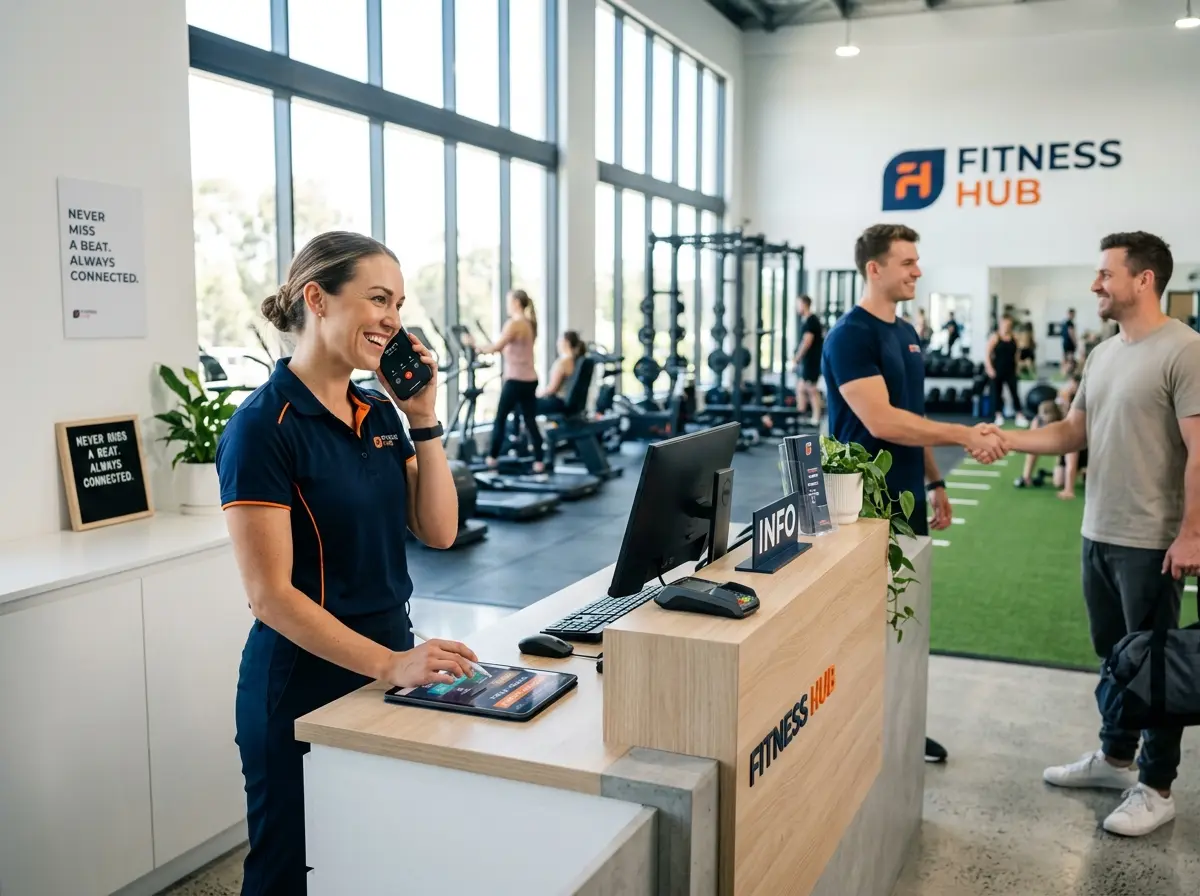
This is where Stella — the AI robot employee and phone receptionist — quietly becomes one of your most useful business assets. If your gym or training studio has a physical location, Stella operates as a human-sized kiosk that proactively greets visitors and can tell them all about your upcoming workshops, current promotions, and registration options. On the phone side, she answers calls 24/7, which means a prospective workshop attendee calling at 9 PM on a Sunday gets real, accurate information instead of voicemail purgatory. She can collect intake information conversationally, handle frequently asked questions, and even upsell a follow-up coaching package to someone who just registered for your workshop — all without interrupting your actual training sessions.
Marketing Your Workshop Without Feeling Like a Used Car Salesman
Leverage What You Already Have
Your existing clients are your most powerful marketing channel, and they cost exactly nothing to reach. Before you invest a single dollar in paid advertising, announce your workshop during training sessions, via your email list, and across your social media channels with enough lead time to build anticipation. Create a simple event page — on your website, Mindbody, Eventbrite, or even a Facebook Event — and make registration effortless.
Word of mouth in fitness communities is remarkably powerful. Offer a small incentive for referrals: "Bring a friend and you both save $10" is a classic for a reason. You're not cheapening your offer — you're lowering the barrier to entry for people who are interested but need a nudge. Research from Nielsen consistently shows that 92% of consumers trust recommendations from people they know over any other form of advertising. Your clients talking about your workshop to their gym friends is worth more than any Instagram ad.
Build a Follow-Up Funnel That Converts Attendees Into Ongoing Clients
The workshop itself should never be the end of the relationship — it should be the beginning of a deeper one. Before attendees leave, give them a clear next step: a discount on your next workshop series, a complimentary nutrition strategy call, or a special offer on a coaching package that includes nutrition support. Follow up with an email within 48 hours that recaps key takeaways, provides your promised handout or resource, and includes your call to action.
Track your conversion rates. If 20 people attend a workshop and two of them convert to ongoing coaching clients, you've potentially added thousands of dollars in annual recurring revenue from a single 90-minute event. Multiply that across monthly workshops and you'll quickly understand why this revenue stream deserves your full attention. Businesses that implement structured follow-up processes see conversion rates increase by as much as 70% compared to those with no follow-up strategy at all.
Partner With Local Businesses for Expanded Reach
Think beyond your own four walls. Wellness-oriented local businesses — yoga studios, health food stores, chiropractic offices, corporate wellness programs — are often looking for exactly the kind of expert content you can provide. Approach them with a co-hosted workshop proposal where you share promotion duties, split the space, and potentially split the revenue. These partnerships put you in front of entirely new audiences who are already primed for your message and dramatically reduce your marketing workload.
Corporate wellness is particularly lucrative. Many companies actively budget for employee wellness programming and are delighted to find a credentialed professional who can deliver a polished nutrition workshop to their team. A single corporate workshop can command $500–$2,000+ depending on your market, your credentials, and the company's size.
Quick Reminder About Stella
Stella is an AI robot employee and phone receptionist that works 24/7 — greeting clients at your physical location, answering calls, promoting your services, and collecting customer information without ever needing a coffee break or a vacation day. She runs on a straightforward $99/month subscription with no upfront hardware costs, making her one of the more sensible business investments you'll come across. For a personal trainer building out new revenue streams like nutrition workshops, having a reliable front-facing presence handling inquiries and registrations means more of your energy goes toward the work that actually requires a human.
Your Next Step Starts Today, Not "Someday"
Here's the uncomfortable truth about revenue diversification: the trainers who build sustainable, scalable businesses are not necessarily the most talented or the most certified. They're the ones who decided to stop waiting for the perfect moment and started building with what they had. You already have the knowledge. You already have the clients. You already have the credibility. What you need now is a plan and the willingness to execute it.
Start small and start soon. Survey your current clients this week to identify the top two or three nutrition topics they'd pay to learn about. Block a date on the calendar for your first workshop — even if it's six weeks away — because a date on the calendar creates accountability that a vague intention never will. Price it, build a simple one-page description, and announce it to your existing audience before you talk yourself out of it.
Then refine, repeat, and scale. Your first workshop will not be perfect, and that is entirely fine. Your tenth workshop will be significantly better, and by then you'll have a growing list of attendees, a content library you can repurpose, and a revenue stream that doesn't require you to physically be present every single hour to generate income. That's not just good business strategy — that's the kind of professional freedom most trainers got into this industry hoping to find in the first place.
The nutrition expertise you've spent years developing is worth far more than a single line item on a client's invoice. It's time to put it to work.