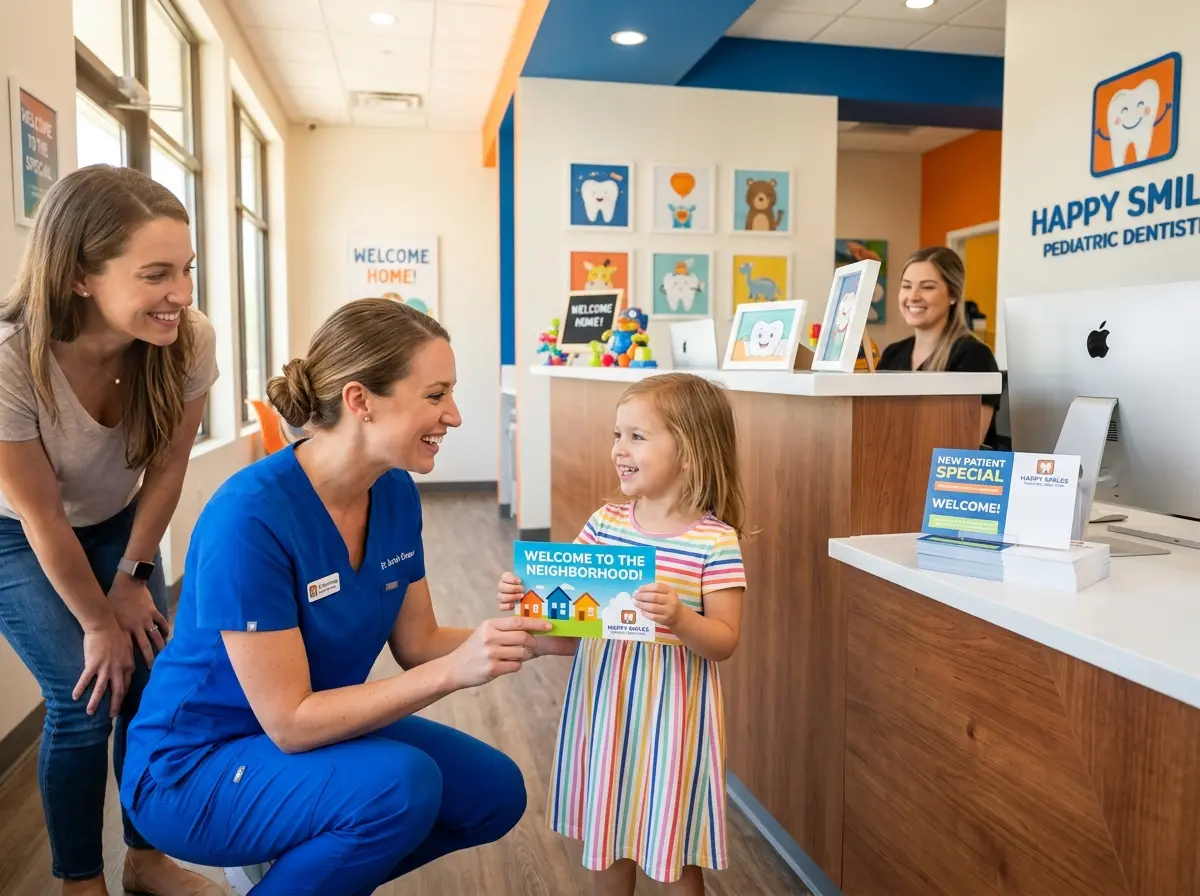
When "Welcome to the Neighborhood" Actually Works
Most marketing advice for dentists sounds something like this: post on Instagram, run Google ads, collect reviews, repeat until exhausted. And while that advice isn't wrong, it tends to overlook one of the oldest — and most reliably effective — tricks in the local business playbook: catching people right when they need you most.
That's exactly what Dr. Priya Mehta, a pediatric dentist in suburban Columbus, Ohio, figured out. Instead of shouting into the void of social media feeds, she decided to show up — literally — at the doorsteps of families who had just moved into the area. The result? A 30% practice growth in a single year, fueled largely by a targeted "New Mover" direct mail campaign. No dancing reels. No paid influencers. Just smart, well-timed outreach to the right people at the right moment.
If you're a dentist (or honestly, any local business owner) who has ever wondered whether direct mail is dead, buckle up. It is very much alive — and it might be the most underrated growth lever you're not pulling.
The New Mover Opportunity: Why Timing Is Everything
The Psychology Behind the "New Mover" Window
When a family moves to a new area, they don't just need boxes unpacked — they need an entirely new roster of service providers. A new pediatrician. A new mechanic. A new hairdresser. And yes, a new dentist. Research from the American Moving and Storage Association estimates that over 40 million Americans move each year, and studies on consumer behavior consistently show that new movers are five times more likely to become long-term loyal customers than the average prospect. They're not comparison-shopping out of boredom; they're actively looking for someone to trust.
This is the golden window — typically the first 30 to 90 days after a move — where a well-timed, thoughtful piece of mail doesn't feel like junk. It feels like a helpful hand extended by the neighborhood. Dr. Mehta understood this instinctively. "Families moving into the area don't have a dentist yet," she explained. "I'm not trying to steal a patient from someone else. I'm just making sure I'm the first friendly face they think of."
How Dr. Mehta Built Her Campaign
Dr. Mehta partnered with a new mover data service — there are several reputable ones, including Valassis, Moving Targets, and New Mover Marketing — that provided weekly or monthly lists of households that had recently moved within a defined radius of her practice. She then designed a mailer that was warm, visually appealing, and unmistakably useful.
The mailer included a brief, friendly introduction to her practice and team, a clear offer (a free first exam and x-rays for new patients), a QR code linking to her online booking page, and a small magnet with her office hours and phone number attached. That last detail matters more than you'd think — a magnet lives on a refrigerator for months. A flyer lives in a recycling bin for minutes.
She mailed consistently — not once, but on a rolling monthly basis — so that families who moved in at any point during the year received outreach within their critical decision window. Over 12 months, her new patient numbers climbed steadily, and by year's end, she'd grown her active patient base by nearly a third.
The Economics of Direct Mail (Spoiler: They're Better Than You Think)
Direct mail gets a bad reputation because people associate it with the avalanche of pizza coupons and credit card offers that nobody asked for. But targeted direct mail — sent to a specific, curated audience at a specific moment — performs very differently. The Data & Marketing Association reports that targeted direct mail achieves response rates of 4.4% to 9%, compared to email marketing's average of around 0.12%. For a pediatric dental practice, even a handful of new family patients per month — each potentially representing years of recurring visits — makes the math work comfortably.
Dr. Mehta estimated spending roughly $1,500 to $2,000 per month on her new mover campaign, including design, printing, postage, and data. With average lifetime patient value well into the thousands of dollars, it didn't take many conversions to make the investment worthwhile. She was cash-flow positive on the campaign within the first few months.
Making Sure Your Phone Is Ready When the Mailer Works
The Leaky Bucket Problem in Direct Mail Campaigns
Here's the part of the story that doesn't get told enough: direct mail campaigns fail not because the mail doesn't work, but because the business isn't ready to handle the response. A parent receives Dr. Mehta's mailer on a Tuesday evening. She's intrigued. She picks up the phone — and gets voicemail. She moves on. The mailer did its job. The phone dropped the ball.
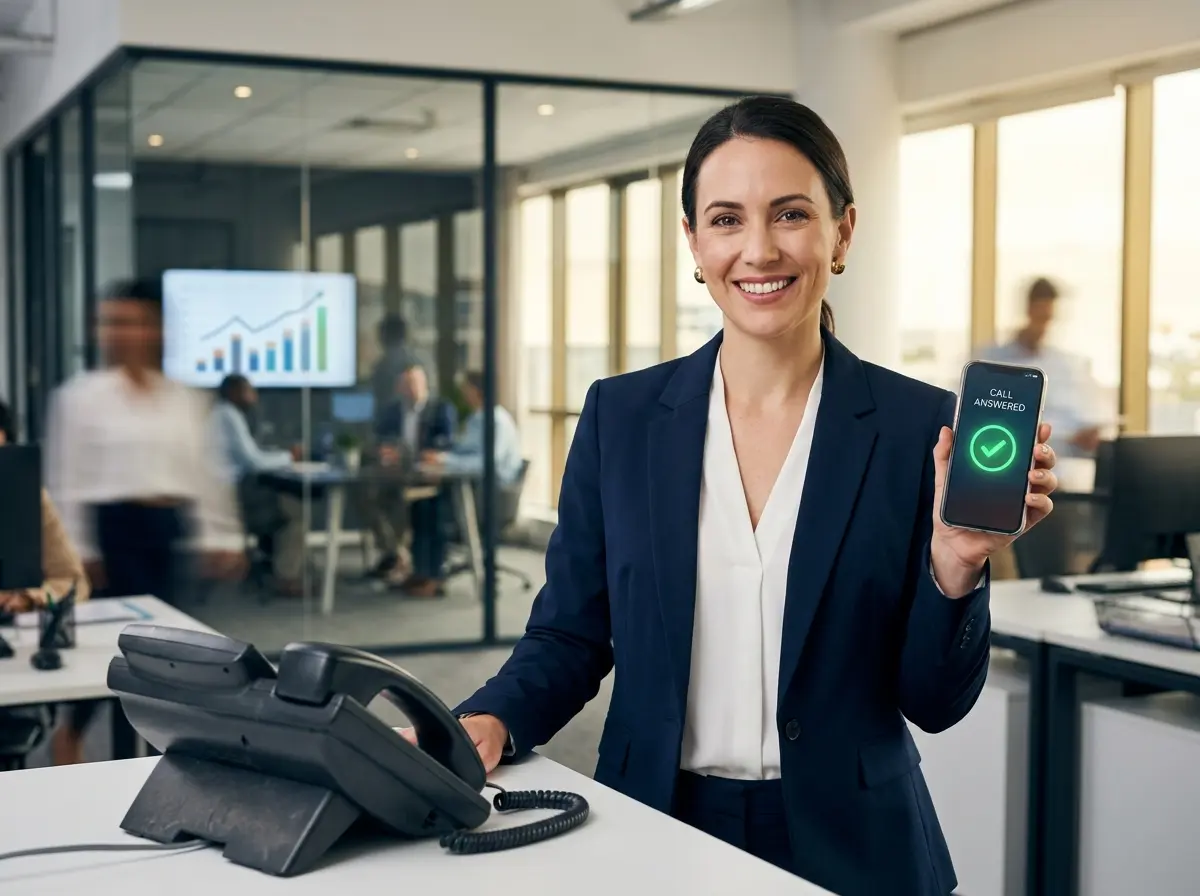
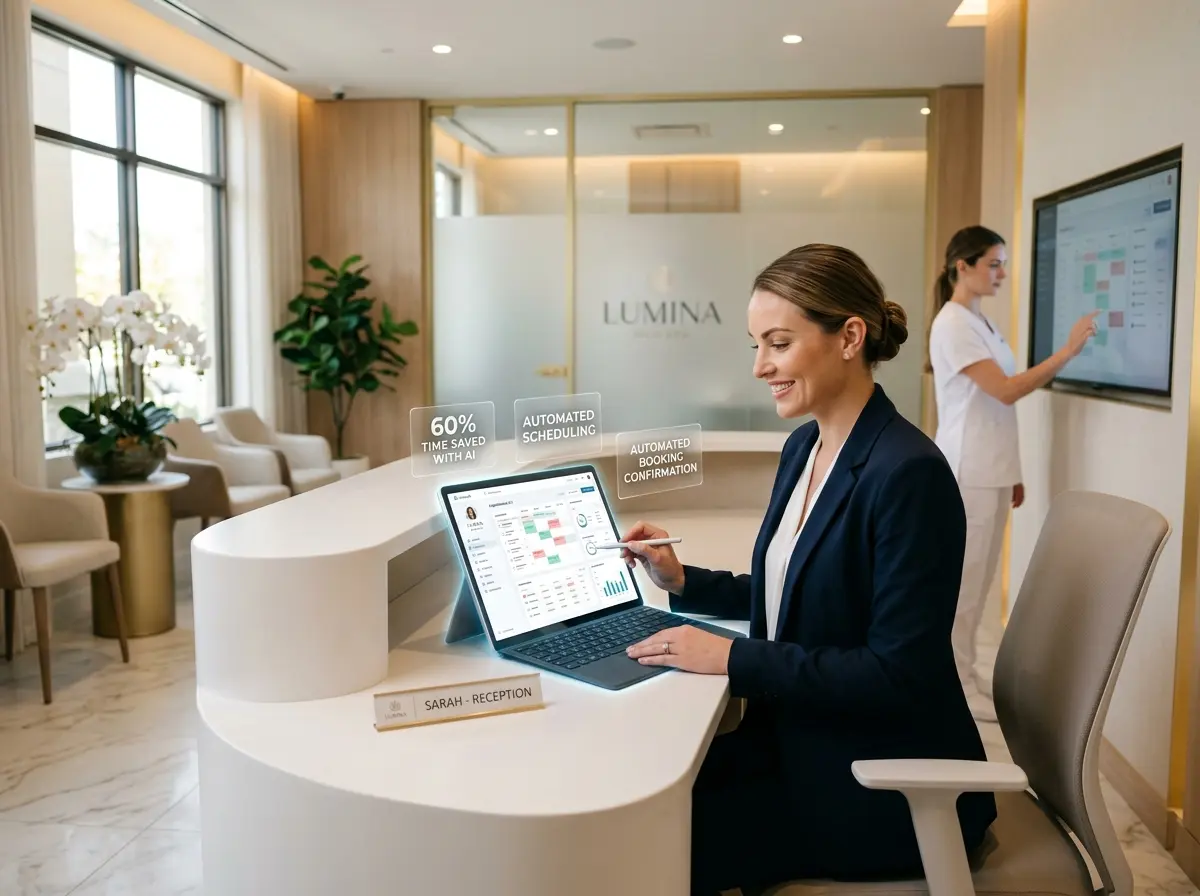
This is where Stella, the AI robot employee and phone receptionist, becomes relevant for any local business running outreach campaigns like this one. Stella answers every incoming call — at 7 p.m. on a Tuesday, at 8 a.m. on a Saturday, whenever — with the same warmth and knowledge as a trained front desk team member. She can answer questions about services, collect new patient intake information conversationally, and even help callers book or schedule — all without putting a single caller on hold or sending them to voicemail purgatory. For a dental office with a front desk team that's juggling check-ins, insurance verification, and anxious six-year-olds, having Stella handle overflow calls isn't a luxury. It's damage control for an otherwise excellent marketing campaign.
Designing a New Mover Mailer That Actually Gets a Response
What to Put On the Mailer (And What to Leave Off)
The biggest mistake businesses make with direct mail is treating it like a brochure. Nobody who just moved six boxes of kitchen appliances wants to read a paragraph about your practice philosophy. Your mailer needs to communicate one compelling offer, one clear call to action, and one easy way to respond — full stop.
For a pediatric dental practice, that might look like: "New to [City]? We'd love to meet your family — first visit is on us." Simple. Warm. Specific. The design should be bright, friendly, and include real photos of your team or office if possible. Stock photography of suspiciously happy people in dental chairs fools no one. Authenticity builds trust faster, even in a 4x6 mailer.
On the response side, make it frictionless. Include a phone number, a QR code to online booking, and if budget allows, that refrigerator magnet. The goal is to remove every possible barrier between "I'm interested" and "appointment booked."
Building a Follow-Up System That Doesn't Rely on Memory
A single mailer is a conversation starter, not a closer. Research consistently shows that marketing response rates improve significantly with multiple touchpoints — sometimes by as much as 300% by the third or fourth impression. Consider a simple two-to-three touch sequence: an initial mailer at move-in, a follow-up postcard two to three weeks later, and a final "last chance" offer at the 60-day mark. This isn't being pushy — it's being persistent in a world where inboxes, feeds, and counter tops are all competing for the same eyeballs.
Track which households responded and at which touch, so you can refine the sequence over time. Most new mover data services can help you manage this systematically, and your investment compounds as you learn what works in your specific market.
Combining Direct Mail with Digital for Maximum Impact
Direct mail and digital marketing are not competitors — they're teammates. A strategy called direct mail retargeting allows you to match your mailed list to online audiences, so the same households that receive your mailer also see your ads on social media or Google. This reinforces your message across channels without requiring them to all perform independently. Dr. Mehta layered a modest Facebook and Instagram campaign targeting new movers in her zip codes on top of her physical mailer, and she credits that combination with accelerating response rates beyond what either channel achieved alone.
Even something as simple as ensuring your Google Business Profile is fully optimized — correct hours, current photos, recent reviews — means that when a new mover receives your mailer and Googles your name to verify you're legitimate, they find a polished, trustworthy result waiting for them. That credibility check happens more often than most business owners realize.
Quick Reminder About Stella
Stella is an AI robot employee and phone receptionist built for businesses like yours — whether you have a physical location where she greets customers as a friendly in-store kiosk, or you simply need a reliable, professional voice answering your phones 24/7. She handles calls, answers questions, collects intake information, manages contacts through a built-in CRM, and never calls in sick. At $99/month with no upfront hardware costs, she's the staff member your marketing campaigns have been waiting for.
Putting It All Together: Your Action Plan
Dr. Mehta's 30% growth story isn't magic — it's methodology. She identified a high-intent audience (new movers), reached them at the optimal moment (within 30 to 90 days of arrival), made a compelling and specific offer, and ensured her practice was ready to convert that interest into booked appointments. That's a repeatable playbook for virtually any local business.
Here's where to start:
- Research new mover data providers in your area — Moving Targets, Valassis, and USPS's Every Door Direct Mail (EDDM) are all worth exploring depending on your targeting needs and budget.
- Design a focused mailer with one clear offer, one call to action, and contact information that's impossible to miss. Consider adding a magnet or other leave-behind.
- Plan a multi-touch sequence rather than a single send — two to three mailers over 60 days will dramatically outperform a one-and-done approach.
- Ensure your phone and booking systems are ready before your first mailer drops. The campaign is only as strong as what happens when someone responds.
- Layer in digital retargeting where budget allows, and make sure your Google Business Profile is current and compelling.
The families moving into your community right now don't have a dentist, a gym, a favorite restaurant, or a trusted mechanic yet. They're looking. The question is simply whether you show up — or whether your competitor does first. With a well-executed new mover campaign, the answer to that question is entirely within your control.