The Estimate That Cost Them the Job (And How to Fix It)
Here's a scenario that plays out thousands of times a day across the roofing industry: A homeowner's roof takes a beating from a hailstorm. They pick up the phone, call three roofing companies, and whoever follows up fastest — with the clearest, most professional process — gets the job. The other two companies? They leave a voicemail, promise to "get someone out there," and then wonder why their close rate hovers somewhere around "disappointing."
The roofing business is brutally competitive. Margins are tight, seasonality is real, and homeowners are increasingly savvy about getting multiple bids. So when one roofing company in the Midwest managed to double its conversion rate not by slashing prices or ramping up advertising spend, but simply by changing how it handled its estimate process, it's worth paying attention.
The secret? Speed, professionalism, and a streamlined intake process that made customers feel taken care of before anyone ever climbed a ladder. Let's break down exactly what they did — and how you can apply the same thinking to your roofing (or any service) business.
What Was Broken in the Old Estimate Process
The Black Hole Between "Call" and "Callback"
The company's old process looked like this: customer calls in, leaves a message or speaks to whoever happened to be available, waits for someone to schedule an estimate, and then waits some more. Meanwhile, the homeowner has already talked to a competitor who answered on the second ring, collected their information on the spot, and had a crew scheduled before dinner.
According to a study by Lead Response Management, businesses that follow up with leads within five minutes are 100 times more likely to connect with that prospect than those who wait 30 minutes. In roofing — where a single job can be worth thousands of dollars — every hour of delay is a very expensive nap.
The problem wasn't that the company lacked skilled roofers or competitive pricing. It was that the front end of their customer journey was essentially a leaky bucket. Leads were pouring in and draining right back out.
Missing Information, Missed Opportunities
Another culprit was the intake process itself. When customers did get through, whoever answered the phone would jot down a name, maybe an address, and a vague description of the problem on a sticky note that had a 50/50 chance of making it to the estimator. The result? Estimators showed up without context, customers had to repeat themselves, and the whole experience felt, to put it charitably, disorganized.
Homeowners considering a multi-thousand-dollar roofing project want to feel confident they're hiring professionals. If the process of scheduling an estimate feels chaotic, they start wondering what the actual job site will look like. First impressions aren't just about logos and truck wraps — they're about how smoothly your process works from the first interaction onward.
The Fix: Treating Intake Like It Matters
The company made two pivotal changes. First, they committed to answering every inbound call — not just during business hours, not just when someone wasn't on another line, but every single call. Second, they standardized what information they collected upfront: property address, type of damage, preferred appointment windows, insurance status, and contact preferences. Estimators now arrived with full context, customers felt heard, and the experience immediately felt more professional — before anyone set foot on a roof.
How Technology Closed the Gap
Automating the Intake Without Losing the Human Touch
Answering every call sounds great in theory. In practice, roofing companies are running crews, managing suppliers, handling permits, and doing approximately forty other things at once. Hiring a full-time receptionist to sit by the phone is expensive, and frankly, one person still can't answer two calls simultaneously during a post-storm rush when the phone is ringing off the hook.
This is exactly where Stella becomes genuinely useful for service businesses like roofing companies. Stella is an AI phone receptionist — and for businesses with a physical location, she also operates as an in-store kiosk — that handles inbound calls with the same business knowledge a trained staff member would have. She can collect customer intake information conversationally during a phone call, answer questions about your services and availability, and even manage scheduling workflows, all without putting a caller on hold or sending them to voicemail purgatory. Her built-in CRM captures everything she collects, complete with AI-generated customer profiles, custom fields, and tags that make sure no lead gets lost on a sticky note ever again. For a roofing company trying to capture every storm-season lead, that's not a small thing.
Rebuilding the Estimate Process from the Ground Up
Speed as a Competitive Advantage
Once the company committed to faster, more consistent intake, they restructured their estimate scheduling around one core principle: get a time on the calendar before the customer hangs up. This sounds obvious, but most service businesses treat scheduling as something that happens later, after someone checks availability, checks with the crew, checks the weather forecast, and checks their horoscope. By the time they call back, the customer has already booked with someone else.
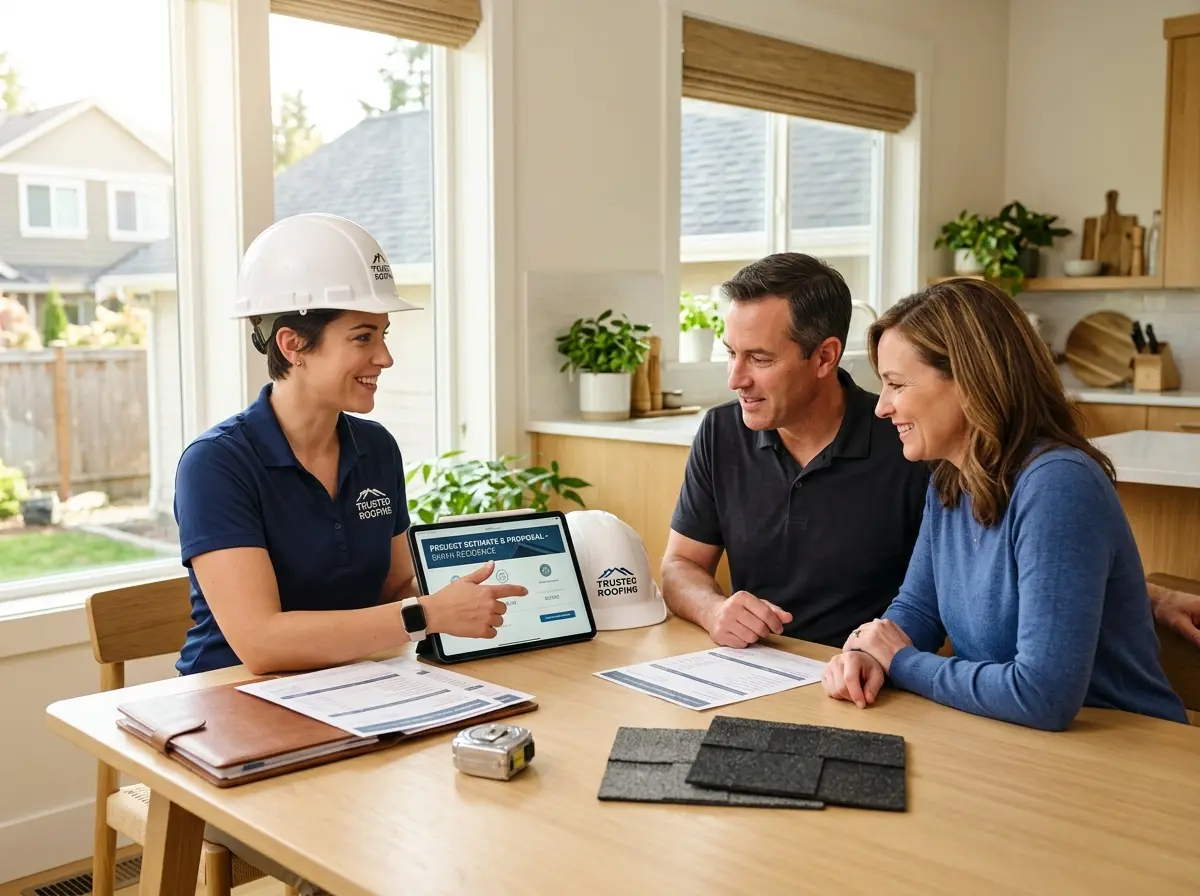
The company implemented defined estimate windows — morning, afternoon, and weekend slots — and empowered whoever handled the intake call (human or AI) to book directly into those windows without a second approval step. Conversion improved almost immediately. Customers who walked away from the call with a confirmed appointment were far more likely to follow through than those who were promised a callback.
The Follow-Up System That Sealed the Deal
Scheduling the estimate is only half the battle. The company also built a structured follow-up sequence that kicked in after the estimator's visit. Within 24 hours, the customer received a professional written summary of the estimate, a clear explanation of next steps, and a personal outreach from the sales team — not a generic automated email that reads like it was written by someone who has never seen a roof.
The psychology here is simple: people buy from businesses they trust, and trust is built through consistent, professional communication. The company that sends a thoughtful follow-up the same evening as the estimate is going to beat the one that mails a paper quote four days later, every single time.
Training the Team on the New Process
Technology and systems only go so far if the humans using them aren't aligned. The company held a half-day training with their estimators and office staff to walk through the new intake form, the scheduling expectations, and the follow-up timeline. They role-played difficult customer scenarios, clarified who owned each step, and established clear accountability. Within 60 days, their estimate-to-signed-contract conversion rate had doubled.
The investment? A few hours of internal training, some process documentation, and a commitment to answering the phone. No new advertising. No price cuts. Just a better process executed consistently.
Quick Reminder About Stella
Stella is an AI robot employee and phone receptionist that works 24/7, never misses a call, and collects customer information with the consistency your sticky-note system never could. She handles inbound calls for any type of business — roofing companies included — and greets customers in person as a kiosk for businesses with a physical location. At $99/month with no upfront hardware costs, she's probably less expensive than the leads you're currently losing to voicemail.
Your Next Steps Toward a Better Estimate Process
If there's one takeaway from this story, it's that your estimate process is a sales tool — and most businesses aren't treating it like one. Here's a practical checklist to start improving yours this week:
- Audit your current intake process. How are calls being answered right now? What information is being collected? How long does it take to confirm an appointment?
- Standardize your intake form. Every inbound lead should answer the same core questions. Build a simple form and make sure everyone — human or AI — uses it.
- Eliminate the callback gap. If you can't answer every call immediately, find a solution that can. The five-minute follow-up window is not a suggestion.
- Get a time on the calendar before the call ends. Pre-defined estimate windows make this easy. Stop treating scheduling as an afterthought.
- Build a post-estimate follow-up sequence. At minimum: a written summary within 24 hours and a personal outreach from someone on your team.
- Train your people on the process. Document it, walk through it, and hold everyone accountable to it.
The roofing company in this story didn't discover some secret marketing formula. They fixed what was already broken. Their leads were there. Their pricing was competitive. Their work was solid. The only thing standing between them and a dramatically higher close rate was a sloppy front-end process that made customers feel uncertain at exactly the moment they needed to feel confident.
Your business may not be in roofing. But if customers are calling you, requesting estimates or consultations, and not converting at the rate you'd like — the diagnosis is probably the same. Fix the front door. Answer the phone. Make it easy to say yes. The rest tends to follow.