Why Your Salon and the Bridal Shop Down the Street Should Already Be Best Friends
Let's be honest: if you own a salon and there's a bridal boutique within a five-mile radius that you haven't partnered with yet, you're leaving money on the table. Not a little money — we're talking about one of the most reliably lucrative customer segments in the beauty industry, handed off to your competitors on a silver platter every weekend while you wonder why Tuesday is slow.
Brides are not casual customers. They book hair and makeup trials, bridal party styling sessions, pre-wedding blowouts, and post-honeymoon trims. They come in groups, they tip well, and they tell everyone about the vendors who made their day magical. A single bridal referral from a local boutique isn't just one client — it's a wedding party, a mother of the bride, two future bridesmaids who liked your work, and a Knot review that brings in three more inquiries by Monday morning.
A revenue-sharing referral partnership between your salon and a local bridal shop formalizes what should be a natural relationship and gives both businesses a financial incentive to actively promote each other. Here's how to build one that actually works — not just a "hey, tell your customers about us" arrangement that fizzles out in six weeks.
Building the Foundation of a Referral Partnership That Lasts
Finding the Right Bridal Shop Partner
Not every bridal shop is the right fit, and jumping into a partnership with the first one who returns your email is how you end up with mismatched clientele and awkward conversations. Look for a boutique that serves a similar customer demographic — if your salon is known for high-end editorial styling, you want a partner who sells designer gowns, not the discount warehouse on the highway that charges $199 for alterations.
Do your homework before reaching out. Visit their shop as a customer, check their Google and Yelp reviews, browse their Instagram, and pay attention to how their staff treats walk-ins. You're essentially vetting a business partner, and the quality of their customer experience will reflect on your salon the moment you start trading referrals. A bad experience at their shop becomes a bad experience associated with your recommendation — and brides have very long memories.
Structuring the Revenue-Sharing Agreement
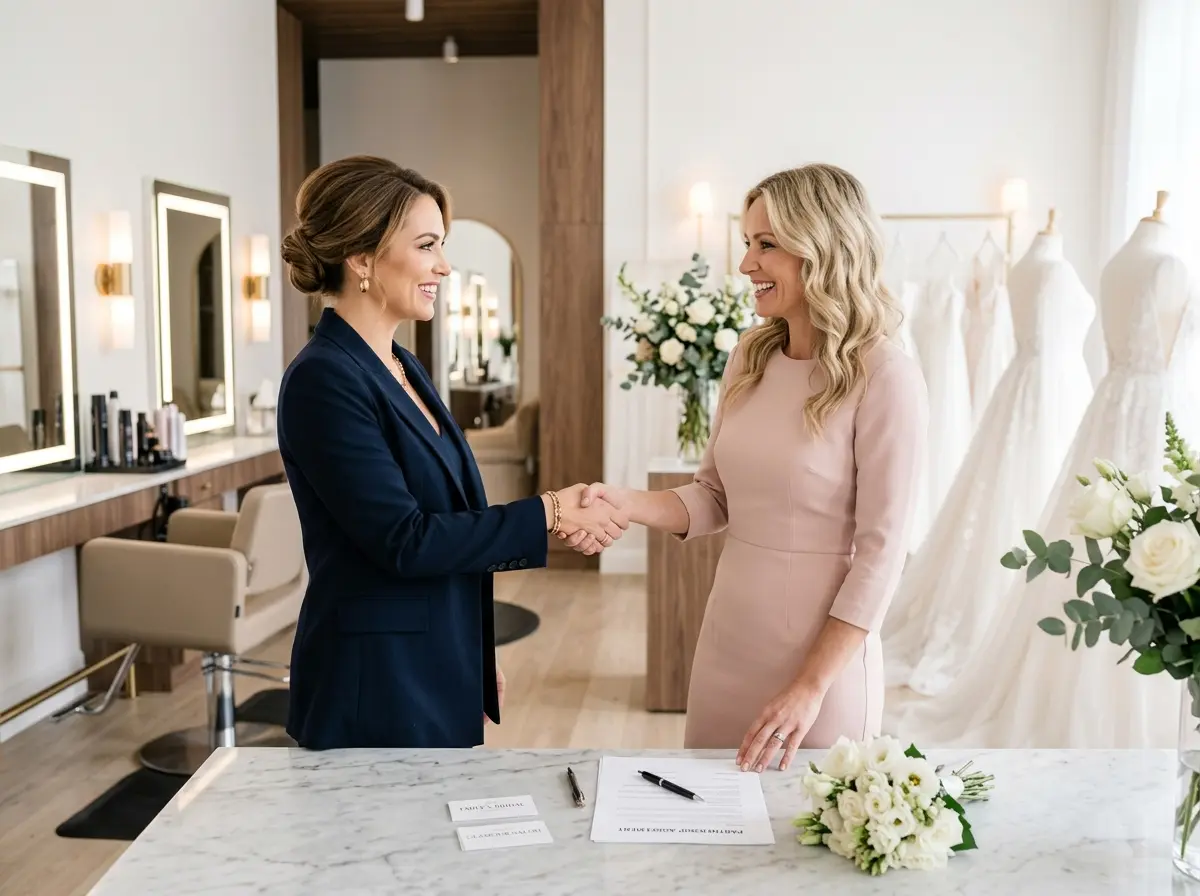
This is where most informal partnerships fall apart: nobody writes anything down. A handshake deal is great for a neighborhood barbecue, but terrible for a business relationship where money is changing hands. Put your agreement in writing — nothing fancy, just a clear, signed document that outlines the terms.
A typical revenue-sharing structure for a salon-bridal shop referral program looks something like this:
- Flat referral fee: One business pays the other a set amount (e.g., $25–$75) for each referred customer who makes a purchase or books a service.
- Percentage of sale: A commission-style arrangement, typically 5–15% of the referred customer's first transaction or total package.
- Reciprocal exchange: Both parties agree to refer customers to each other at no cost, relying on mutual volume rather than direct payment — simpler, but harder to track.
- Tiered bonuses: Standard referral fees with bonuses for hitting monthly or quarterly thresholds (great for keeping both parties motivated).
For most salon-bridal shop partnerships, a flat referral fee or a percentage model with quarterly settlement payments tends to work best. It's clean, it's trackable, and it gives both parties a real reason to actively promote the partnership rather than mentioning it as an afterthought.
Creating a Tracking System That Doesn't Drive You Crazy
You can't pay out referrals you can't track, and "I think she mentioned your name when she came in" is not a tracking system. Decide upfront how referrals will be identified and recorded. Common approaches include unique referral codes tied to each business, a simple paper referral card given to customers by the referring party, or a shared Google Sheet that both businesses update when a referral converts.
Whatever system you choose, make sure it's low-friction for the customer. If a bride has to remember a code, fill out a form, and present a card to three different people just to be counted as a referral, she's not going to bother — and you'll lose attribution on sales you actually earned.
Using Smart Tools to Keep the Partnership Running Smoothly
Let Technology Handle the Logistics You Don't Have Time For
Running a referral partnership on top of an active salon means you're managing bookings, staff schedules, walk-in traffic, and now a whole new layer of customer intake and follow-up. This is where having the right tools in place stops being a luxury and starts being a lifeline.
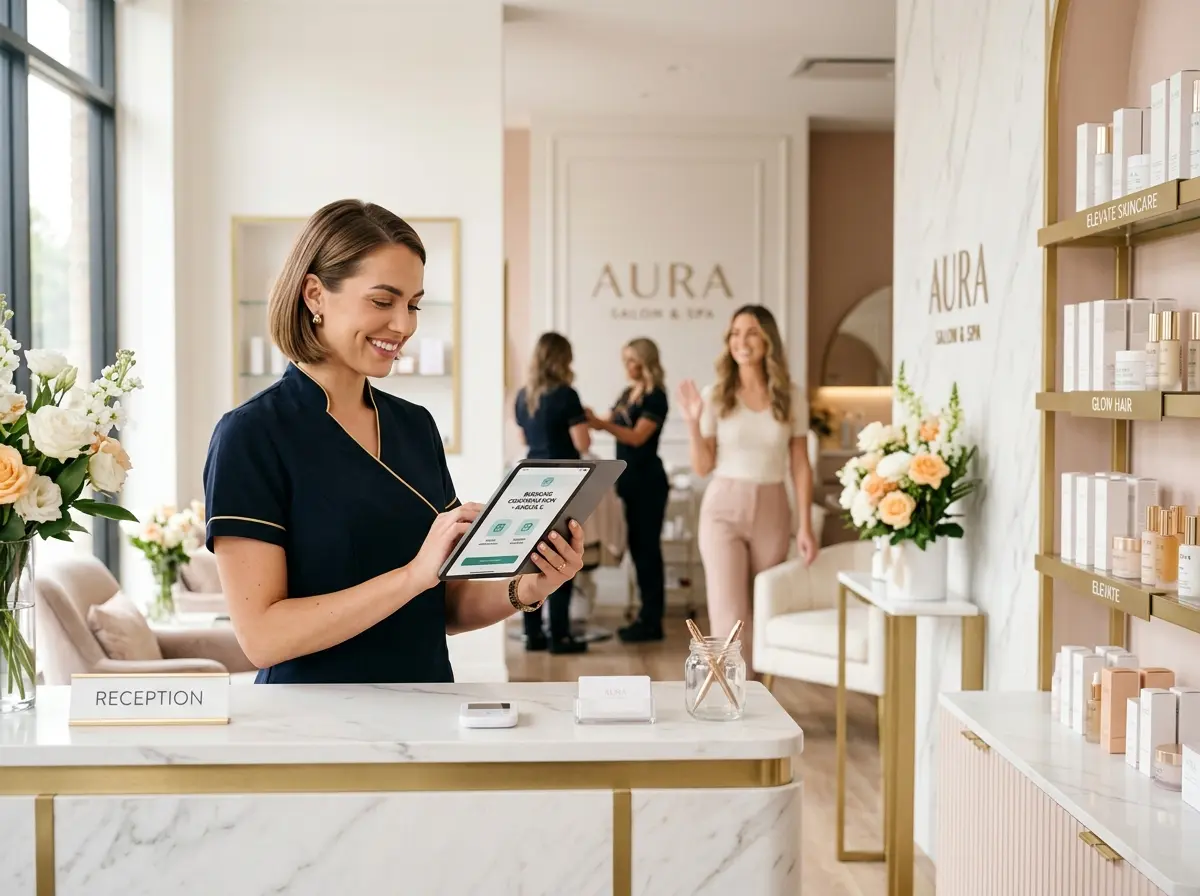
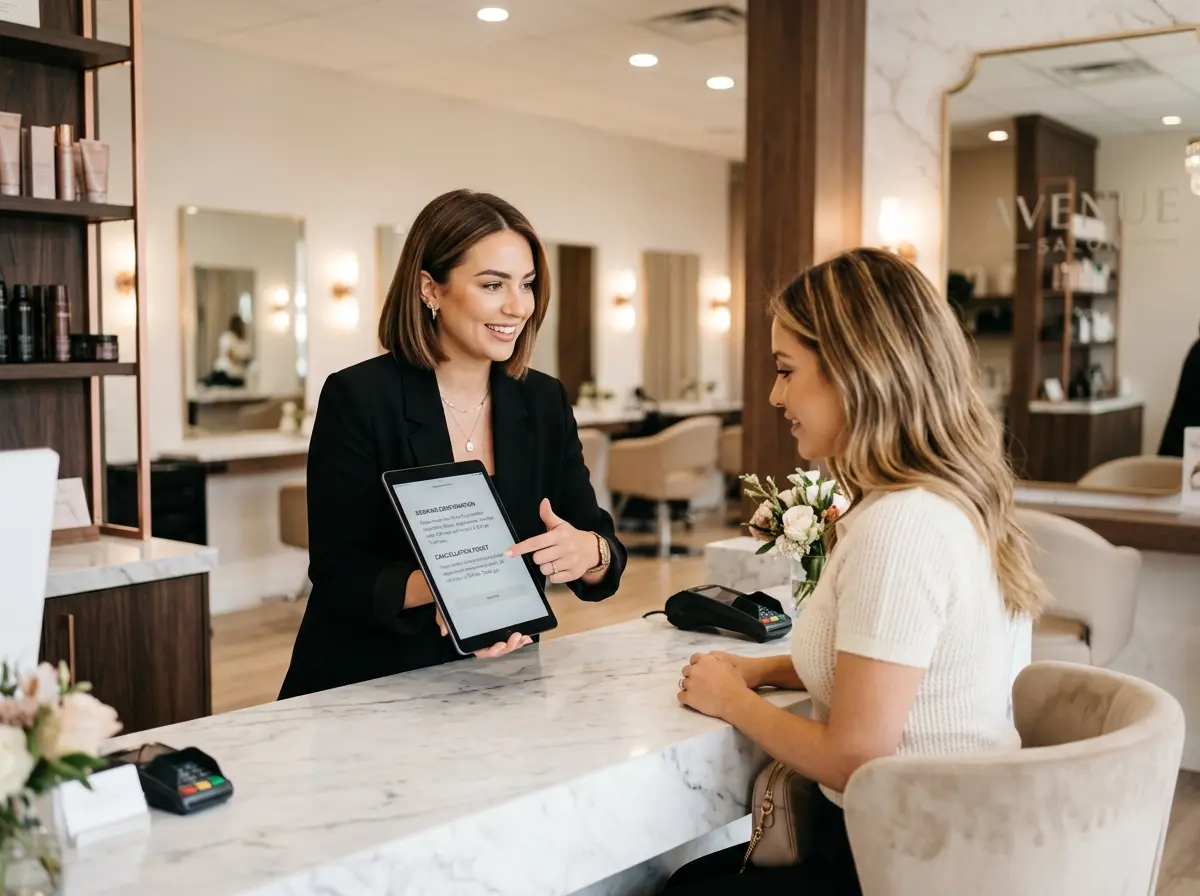
Stella, the AI robot employee and phone receptionist, can handle a surprising amount of the operational lift that comes with managing a referral program. When a bride referred by your partner boutique walks into the salon, Stella greets her proactively, asks how she heard about you, and logs that information directly into her built-in CRM — no sticky notes, no "remind me to add that later." Her intake forms can capture referral source, wedding date, party size, and service preferences during the initial phone inquiry or at the in-store kiosk, giving you clean data without adding to your front desk's workload. For a salon juggling bridal bookings, walk-in traffic, and referral tracking all at once, having a receptionist who never forgets to ask the right questions is genuinely useful.
Making the Partnership Mutually Beneficial and Actually Exciting
Creating Co-Branded Promotions That Drive Real Traffic
A referral fee is a good incentive. A co-branded bridal package is a conversation starter. Work with your bridal shop partner to create something neither of you could offer alone — a "Complete Bride" experience that includes a gown consultation discount bundled with a complimentary hair trial at your salon, for example. Package deals give brides a reason to choose both of you over competitors and give both businesses a marketing story worth posting about.
Consider running joint promotions around peak bridal seasons (spring and fall are your heavy hitters) and tying them to real deadlines — "Book your gown fitting and complimentary hair consultation before March 31st." Urgency works. Vague ongoing promotions do not.
Keeping the Relationship Warm Between Referrals
The fastest way to kill a referral partnership is neglect. If the only time you contact your bridal shop partner is to settle a quarterly payment, don't be surprised when they start sending brides to the salon that sent them a gift basket and checked in last month. Treat this like any important business relationship: schedule quarterly check-ins, share data about what's working, celebrate milestones together, and occasionally send something thoughtful their way — a referral of your own, a shout-out on social media, or a simple thank-you note when a big booking comes through.
The salons that build lasting partnerships with bridal boutiques aren't necessarily the most talented — they're the most consistent. Consistent follow-through, consistent communication, and consistent results are what turn a trial arrangement into a multi-year revenue stream.
Expanding the Network Over Time
Once your salon-bridal shop partnership is generating reliable referrals, resist the urge to stop there. The bridal industry is an ecosystem — florists, photographers, caterers, venue coordinators, and makeup artists are all in regular contact with the same brides you want to reach. A well-run referral partnership with one boutique gives you credibility and a template you can replicate with complementary vendors across the local wedding market.
Start small, prove the model works, document your results, and then approach your next potential partner with actual data instead of just enthusiasm. "We ran a referral program with Bliss Bridal for eight months and it generated 34 new bridal bookings" is a much more compelling pitch than "I think this could be really great for both of us."
A Quick Reminder About Stella
Stella is an AI robot employee and phone receptionist designed for businesses like salons — she greets customers in-store, answers calls 24/7, captures referral and intake information through conversational forms, and keeps your CRM updated without adding to your team's workload. At $99/month with no upfront hardware costs, she's the kind of staff member who never calls in sick during bridal season, which is honestly the most useful quality anyone can have in April.
Your Next Steps Start This Week
A revenue-sharing referral partnership between your salon and a local bridal shop is one of the most practical, high-return marketing moves available to you — and it requires zero ad spend to get started. The brides are already in your city, already shopping for gowns, and already looking for a salon they can trust. The only question is whether they're going to find you through a partner who's actively sending them your way, or stumble across you on page two of a Google search.
Here's what to do this week: identify two or three bridal boutiques in your area that serve a similar clientele, visit them as a customer to assess fit, and prepare a short, professional pitch that outlines a simple referral fee structure and a tracking method. Keep it clean, keep it mutual, and put it in writing. Then check in monthly, celebrate the wins, and build from there.
The wedding industry generates over $70 billion annually in the United States. Your salon doesn't need a significant slice of that number to have a very good year — it just needs a consistent referral stream from one good partner who's already in the room when a bride says "and I still need to find a stylist."
Go introduce yourself.