Introduction: The Art of Helping Customers Spend More (Without Being That Guy)
Let's be honest — no one goes into the auto service business to be a pushy salesperson. You got into this industry because you know cars, you love solving problems, and you take genuine pride in keeping people's vehicles safe and road-ready. And yet, here you are, leaving money on the table every single day because your service advisors aren't consistently recommending the services your customers actually need.
Here's the uncomfortable truth: the average repair order ticket leaves 20–30% of potential revenue untouched — not because customers wouldn't pay for additional services, but because nobody asked, nobody explained the value, or the timing just felt off. That's not a sales problem. That's a communication problem. And the good news is, it's completely fixable.
Ethically increasing your average ticket size isn't about manipulation or pressure tactics. It's about building trust, educating your customers, and making sure that every person who walks through your door leaves with a vehicle that's genuinely better than when it arrived — and a clear understanding of what comes next. When done right, upselling in auto service isn't sleazy. It's a service.
So buckle up (pun absolutely intended), because we're about to break down exactly how your service advisors can boost ticket size on every visit — ethically, professionally, and without making anyone feel like they just wandered into a timeshare presentation.
The Foundation: Building Trust Before Building Tickets
You can't sell to someone who doesn't trust you. This is especially true in auto service, where customers often feel vulnerable — they don't know what they don't know, and they're acutely aware of that fact. Your service advisors are the frontline of that trust relationship, and how they show up in the first five minutes of a customer interaction can make or break the entire visit.
Master the Walkaround and the Welcome
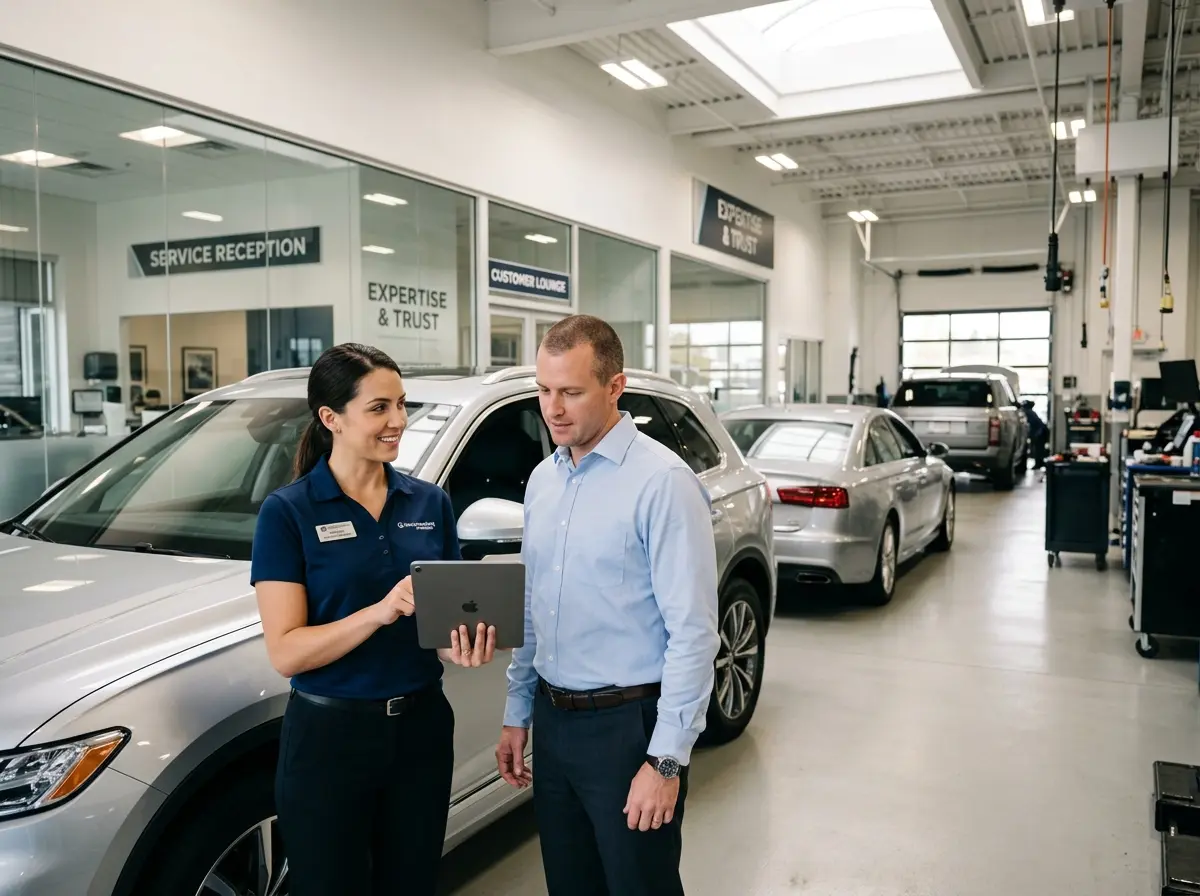
A professional multi-point inspection isn't just a liability shield — it's a trust-building tool. Train your advisors to walk the lot with the customer when possible, ask questions about the vehicle's history, and listen actively. Phrases like "When did you last notice that?" or "Has it been pulling to one side?" signal to the customer that your team is paying attention to their specific situation, not just running through a checklist. Customers who feel heard are dramatically more receptive to additional recommendations.
The walkaround also creates natural, organic opportunities to flag concerns — a cracked belt, low tire tread, a leaking gasket — without it feeling like an ambush at the register. Show them the problem in person whenever possible. A picture (or better yet, the actual worn part) is worth a thousand words and a thousand objections.
Speak Human, Not Mechanic
One of the most underrated skills in auto service advising is translation. Your technicians speak fluent car. Your customers, largely, do not. When a service advisor rattles off "your serpentine belt is showing significant glazing and the tensioner has excessive play," most customers hear white noise followed by a dollar sign. Train your advisors to translate technical findings into plain-language consequences: "Your belt is starting to wear out. If it snaps — which can happen without warning — your car stops moving. We can take care of it today for $X, or you can risk a tow bill and a much bigger headache down the road."
Consequence-based communication is not fear-mongering. It's education. Customers deserve to understand what they're approving and what they're deferring, and that clarity almost always leads to better decisions — for them and for your revenue.
Leveraging Technology to Support Your Advisors
Even your best service advisor can't be everywhere at once — and that's where smart technology can quietly do a lot of the heavy lifting before the conversation even starts.
How Stella Fits Into the Auto Shop Experience
Stella, the AI robot employee and phone receptionist, can greet customers as they arrive and engage them with information about current service specials, maintenance packages, or seasonal promotions — before a human advisor ever steps in. That warm-up conversation means customers walk into the service write-up already thinking about value, not just their minimum required repair. On the phones, Stella handles incoming calls 24/7, answers questions about services and pricing, collects customer intake information, and ensures no lead goes to voicemail limbo. Her built-in CRM even logs customer details and generates AI-powered profiles, so your advisors walk into each interaction already knowing the customer's history — a subtle but powerful advantage when it comes to making personalized, relevant recommendations.
The Recommendation Framework: Making Every Suggestion Land
There's a big difference between a service advisor who recommends everything on the inspection sheet and one who strategically prioritizes, explains, and closes. The best advisors aren't order-takers or high-pressure closers — they're trusted consultants. Here's how to train your team to operate at that level.
Use the Tiered Presentation Method
Instead of presenting a laundry list of recommended services and watching the customer's eyes glaze over, train your advisors to tier their recommendations into three buckets: urgent (safety or reliability risk), soon (within the next 30–60 days), and plan for it (maintenance coming up in the next few months). This structure does several important things at once. It removes overwhelm. It demonstrates expertise. And it gives the customer a clear roadmap rather than a panic-inducing list of problems.
When customers understand what's critical versus what can wait, they're more likely to approve the urgent work immediately and return for the rest — which means you're not just increasing today's ticket, you're building a loyal, returning customer base.
Use Vehicle History to Personalize Every Recommendation
If you're not tracking customer and vehicle history in a CRM, you're essentially starting from scratch on every visit. That's exhausting for your team and impersonal for your customers. When a service advisor can pull up a customer's record and say, "Hey, we replaced your front brakes about 18 months ago — let's take a look at the rears today since they tend to wear around the same interval," that feels like concierge service. It's specific, it's relevant, and it's hard to say no to because it clearly comes from a place of genuine attention rather than a generic upsell script.
Train for the Soft Close, Not the Hard Sell
The close doesn't have to be a confrontation. In fact, it shouldn't be. Advisors who ask open, assumptive questions get better results: "Would you like us to go ahead and take care of the cabin filter while we have it in today?" or "Since we're already under the car, should we knock out that brake fluid flush?" These aren't pressure tactics — they're logical, convenient suggestions framed around the customer's time and interest. Pair that with a clear explanation of cost and benefit, and you've created a sales moment that feels more like helpful advice than a pitch.
According to industry data, shops that implement structured service advisor training see an average ticket increase of 15–25% within the first 90 days — without adding a single new customer. That's the power of better communication, not more foot traffic.
Quick Reminder About Stella
Stella is an AI robot employee and phone receptionist designed to work alongside your team — greeting customers in person at your shop, answering calls around the clock, promoting your services and specials, and managing customer information through her built-in CRM. At just $99/month with no upfront hardware costs, she's one of the most affordable ways to make your shop look and operate like a well-oiled machine — which, given your industry, seems appropriate.
Conclusion: Small Changes, Big Tickets, Happy Customers
Increasing your average repair order isn't about squeezing customers — it's about serving them better. When your service advisors are trained to build trust early, communicate clearly, present recommendations in a structured and logical way, and use vehicle history to personalize every interaction, the result is a win all the way around. Customers leave with safer, better-maintained vehicles. Your advisors feel like professionals instead of salespeople. And your shop's revenue grows without adding a single extra car to the bay.
Here are your actionable next steps to get started:
- Audit your current process. Sit in on a few write-up conversations this week and identify where recommendations are being skipped or poorly communicated.
- Implement the tiered recommendation framework. Urgent, soon, plan for it — print it out, train your team, and make it a standard part of every customer interaction.
- Invest in your CRM. If you're not tracking vehicle history and customer preferences, start now. Personalization is your single biggest lever for trust and ticket growth.
- Consider what technology can handle before the human conversation starts. Tools like Stella can prime your customers with promotions, handle intake, and ensure no call or walk-in ever gets ignored.
- Train continuously. The best service advisors aren't born — they're coached. Make role-playing and feedback a regular part of your shop culture, not a one-time event.
The difference between a $250 ticket and a $400 ticket often comes down to one well-placed, well-worded recommendation. Multiply that across every vehicle you see in a month, and you're not talking about marginal improvement — you're talking about a fundamentally more profitable shop. And you didn't have to pressure anyone to get there. That's not upselling. That's just doing your job really, really well.