Introduction: Because "How Was Your Visit?" Deserves a Better Answer Than Silence
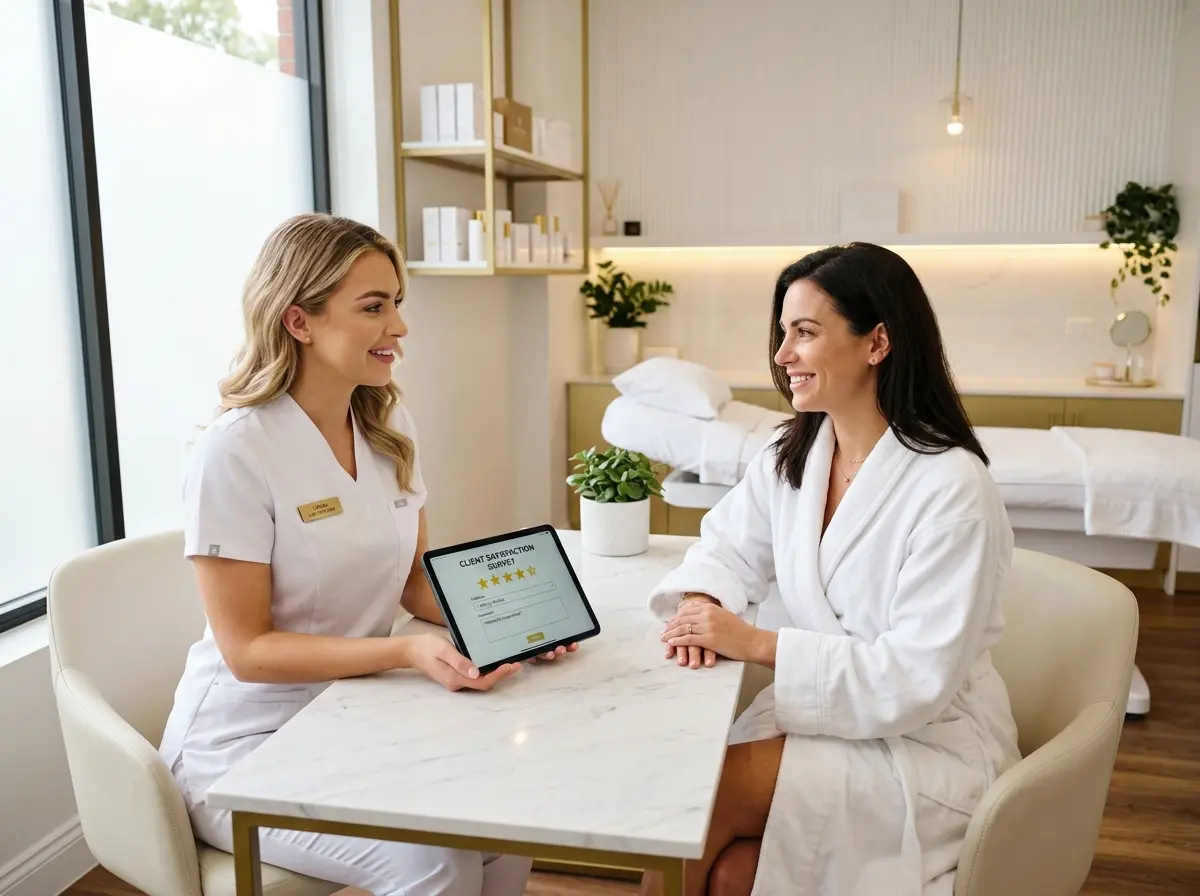
Let's be honest — most client feedback surveys are a formality. A checkbox exercise. A digital shrug disguised as genuine interest. You send it, three people fill it out, one of them is furious about the parking, and the other two just clicked five stars to make the email go away. Meanwhile, you have no idea why half your clients haven't booked a follow-up appointment, or why your most popular treatment suddenly stopped converting into repeat visits.
For med spa owners, this is a particularly costly blind spot. Your clients are making personal, often emotional decisions about their appearance and wellness. The gap between a one-time visitor and a loyal, high-value client is real — and it's almost always bridged (or burned) by how well you understand what they actually experienced. A well-designed feedback survey doesn't just collect opinions; it tells you who's at risk of leaving, who's ready to spend more, and what you should be offering next.
This post walks through exactly how to build a client feedback survey that does real work — identifying upsell opportunities, flagging churn before it happens, and giving your med spa actionable intelligence instead of a meaningless star rating.
Building a Survey That Actually Tells You Something Useful
Start With Outcomes, Not Opinions
The most common mistake in client feedback surveys is asking clients how they felt without connecting those feelings to what they're likely to do next. "Was your aesthetician friendly?" is nice to know. But "How confident are you that this treatment delivered the results you were hoping for?" is the kind of question that predicts a rebooking — or the lack of one.
Structure your survey around three core outcomes: satisfaction with results, likelihood to return, and openness to additional services. Every question you include should tie back to one of these three pillars. If it doesn't, cut it. Client attention is finite, and a bloated survey is abandoned survey.
Ask Questions That Surface Upsell Readiness
Here's where most med spas leave money on the table. A client who just had a hydrafacial and rated it 9 out of 10 is not just a happy customer — she's a warm lead for a chemical peel, a collagen booster add-on, or a personalized skincare package. But you'll never know that unless you ask the right follow-up questions.
Consider including questions like:
- "Are there any skin concerns you feel weren't fully addressed during your visit?"
- "Which of the following areas would you most like to focus on in future treatments?" (with a curated list of your services)
- "Would you be interested in a complimentary consultation to discuss a personalized treatment plan?"
These aren't pushy — they're invitations. Clients who are happy and engaged will opt in. Those who aren't ready will decline. Either way, you've learned something valuable and created a natural opening for your team to follow up.
Use Conditional Logic to Go Deeper Where It Counts
A one-size-fits-all survey treats a first-time visitor the same as a client who's been coming in for two years. That's a missed opportunity. Conditional logic — available in most modern survey tools — lets you route clients to different questions based on their previous responses.
For example, if a client indicates they were not fully satisfied with their results, the survey should immediately branch into questions that help you understand why: Was it the treatment itself? The consultation? The aftercare instructions? This gives you triage data before you've even picked up the phone to follow up. If a client says they are satisfied and would recommend you, that's your cue to ask if they'd like to hear about your referral program or membership options. Smart branching turns a flat survey into a dynamic conversation.
How Automation Can Handle the Heavy Lifting
Send Surveys at the Right Moment — Without Thinking About It
Timing is everything with post-visit surveys. Send one too soon and you catch clients while they're still driving home. Wait too long and the experience has faded. For most med spa treatments, a 24-to-48-hour window hits the sweet spot — results are starting to show, and the experience is still fresh.
Automating this process through your CRM or scheduling software ensures it actually happens consistently, not just when someone remembers. And consistent data is infinitely more useful than sporadic data. Set up trigger-based emails or SMS messages that go out automatically after each appointment type, and you've essentially created a passive intelligence system that runs in the background while your team focuses on clients in the room.
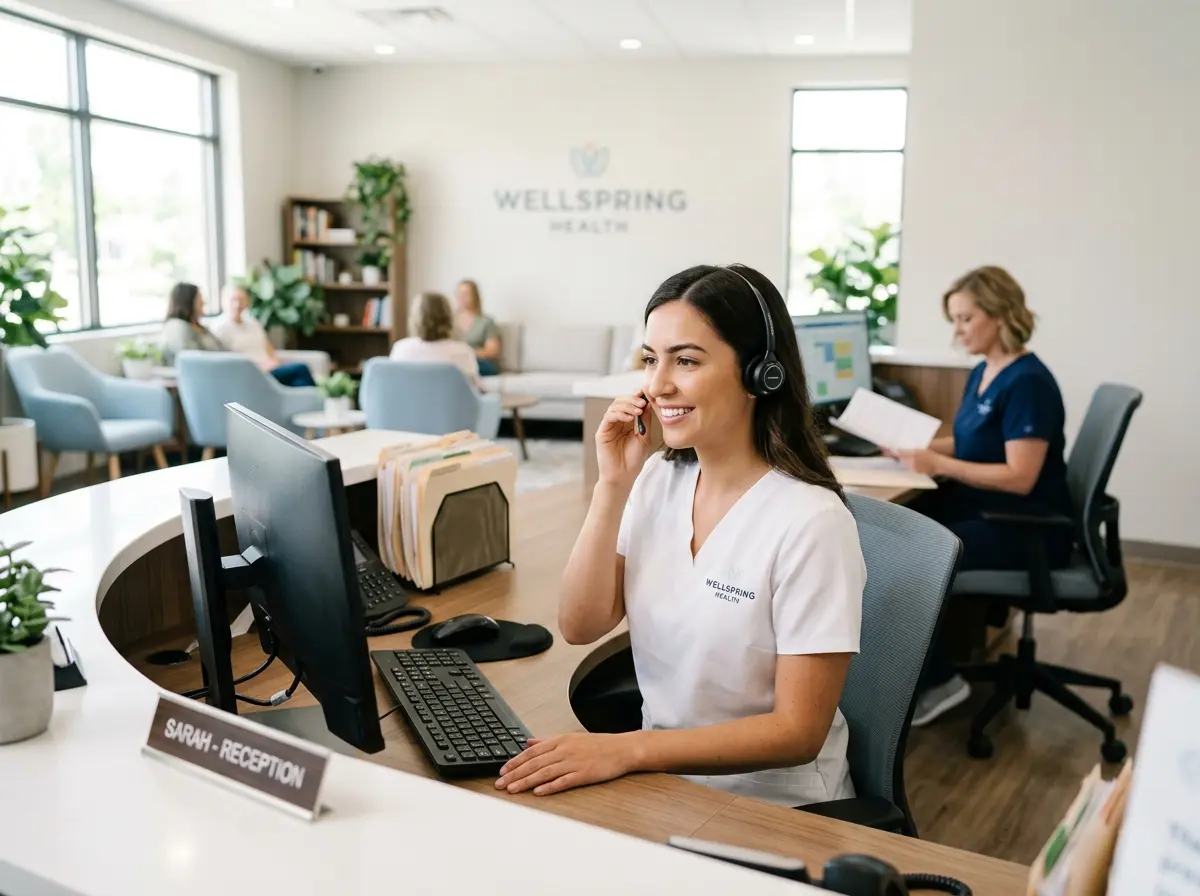
This is also where Stella can quietly make a big difference. As an AI robot employee and phone receptionist, Stella can greet clients as they arrive at your med spa, proactively engage them about their visit, and even collect intake information through conversational forms — building out client profiles in her built-in CRM before the appointment even begins. After the appointment, that same CRM can flag clients for follow-up, making your survey outreach smarter and more targeted from the start. Her phone answering capabilities also mean that when a client calls with a question after receiving their survey, someone is always there to respond — even at 9pm on a Tuesday.
Turning Survey Responses Into a Churn Prevention System
Define What a "At-Risk" Client Looks Like
Churn in a med spa doesn't usually announce itself. Clients don't call to cancel their relationship with you — they just quietly stop booking. Which means you need to define early warning signals before the silence sets in. Survey data is one of your best tools for this.
An at-risk client profile might look like: a satisfaction score below 7 out of 10, no specific interest in future services, and a visit frequency that's already dropped compared to their previous pattern. When your survey results flag someone who checks all three boxes, that's not a statistic — that's a person your team should be reaching out to within 48 hours. A personalized call, a small gesture (a complimentary add-on at their next visit, for instance), or even a handwritten note can turn that around. The key is catching it early, while there's still a relationship to save.
Create a Simple Scoring System to Prioritize Follow-Up
You don't need a data science degree to build a basic client health score. Assign point values to key survey responses — satisfaction rating, likelihood to rebook, interest in additional services — and add them up for each respondent. Clients who score above a certain threshold are candidates for upsell outreach. Those who score below it need a retention call. Everything in the middle gets a standard follow-up sequence.
This kind of tiered system lets your team focus their energy where it matters most, instead of treating every survey response with the same level of urgency (or, more commonly, letting them pile up unanswered in a spreadsheet somewhere). Even a rough scoring model, implemented consistently, is dramatically better than gut instinct alone.
Close the Loop Every Single Time
The fastest way to destroy the goodwill your survey creates is to never act on what clients tell you. If someone takes three minutes to explain that they felt rushed during their consultation, and they never hear back from you, they haven't just had a bad experience — they've had a bad experience and confirmed that you don't actually care about their feedback.
Build a process for closing the loop: who reviews responses, who follows up, and within what timeframe. For negative feedback, a personal call from a manager or lead aesthetician within 24 hours is worth more than any discount you could offer. For positive feedback, a thank-you message with a soft mention of a relevant service or loyalty program keeps the momentum going. Closing the loop isn't just good manners — it's good business.
A Quick Reminder About Stella
Stella is an AI robot employee and phone receptionist built for businesses like yours. She greets clients at your front desk, answers calls around the clock, manages client intake through conversational forms, and keeps your CRM updated — all for $99 a month with no upfront hardware costs. Whether you're running a busy med spa or a solo aesthetics practice, she's the kind of front-of-house presence that never calls in sick and never puts a client on hold indefinitely.
Conclusion: Your Next Steps Start With One Good Question
A feedback survey that actually earns its place in your business isn't complicated — but it does require intention. Start by auditing whatever you're currently sending (or not sending). Ask yourself: does each question connect to a business outcome? Does it help you identify who's ready to spend more, and who's about to walk? If the answer is no, it's time for a redesign.
Here's a simple action plan to get started:
- Draft a 6-to-8 question survey focused on results, likelihood to return, and openness to additional services.
- Add conditional logic so dissatisfied clients get deeper follow-up questions, and satisfied clients get a soft upsell or referral prompt.
- Automate delivery at the 24-to-48-hour post-visit mark using your existing booking or CRM system.
- Build a simple scoring model to sort responses into upsell-ready, neutral, and at-risk categories.
- Assign ownership of follow-up for each category, with clear timelines and talking points.
Done consistently, this system will surface opportunities you're currently missing and catch clients before they quietly disappear. Your survey won't save every relationship — but it will save enough of them to make a measurable difference in your revenue and your retention rate. And that, ultimately, is worth a lot more than a spreadsheet full of five-star ratings that nobody reads.