Your Reviews Are Basically Your Online Reputation — So Why Leave Them to Chance?
Let's be honest: most happy customers don't leave reviews. They enjoy your service, go home, and get on with their lives. Meanwhile, the one person whose sandwich had too much mustard? They're already typing a three-paragraph essay on Google. Welcome to the completely unfair world of online reviews.
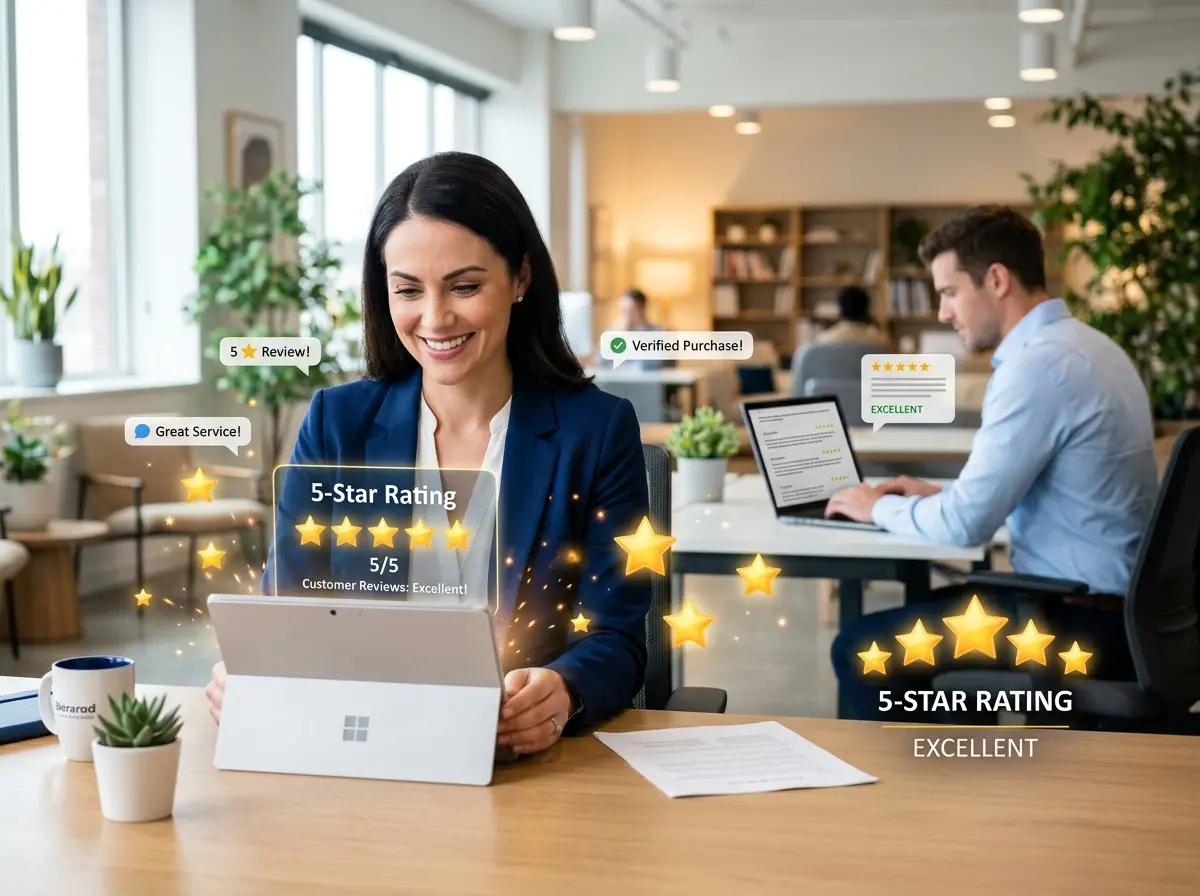
Here's the uncomfortable truth: 93% of consumers say online reviews impact their purchasing decisions, and businesses with a strong review profile consistently outperform their competition in local search rankings. A steady stream of 5-star reviews isn't vanity — it's a legitimate business growth strategy. The problem is that most service businesses don't have a system for generating reviews. They rely on hope, and hope, as we all know, is not a business strategy.
The good news? Building a review generation system that actually works isn't complicated. It just requires a little intention, the right timing, and a process you can repeat consistently. This guide will walk you through exactly how to do that — without begging, bribing, or bothering your customers into submission.
The Foundation: Knowing When and How to Ask
Most businesses that struggle with reviews aren't failing because their customers are unhappy — they're failing because they're either not asking at all, or they're asking at completely the wrong moment. Timing and delivery are everything when it comes to review requests, and getting this right is the single most impactful thing you can do.
Strike While the Iron Is Hot
The best time to ask for a review is immediately after a positive experience — not three days later when your customer has mentally moved on to worrying about their taxes. For service businesses, this means training your team (or your systems) to recognize the moment of peak satisfaction and act on it quickly. A customer who just had a great massage, left a clean car appointment, or finished a productive consultation with your law firm is at their most enthusiastic. That window closes fast.
In-person, this might look like a staff member saying: "We're so glad you enjoyed your visit — if you have a moment, a quick Google review would mean the world to us." It's direct, friendly, and human. Don't overthink it. People generally like to help businesses they've had good experiences with — they just need a nudge.
Make It Ridiculously Easy
Friction is the enemy of follow-through. If asking a customer to leave a review involves them Googling your business name, navigating to the right platform, clicking through three menus, and then staring at a blank text box wondering what to write — most of them won't do it. Your job is to remove every possible obstacle between their goodwill and your Google listing.
Practical ways to reduce friction include:
- Creating a short, direct link to your Google review page and sharing it via text or email immediately after service
- Using a QR code at your front desk, on receipts, or on a small table tent in your waiting area
- Including a one-click review link in your automated follow-up emails or SMS messages
- Telling customers which platform matters most to you — don't make them choose between Google, Yelp, and Facebook
Diversify Your Ask Strategy
Not every customer will respond to the same approach. Some people are happy to leave a review when asked in person. Others prefer a follow-up text. A smaller group will respond to an email. A well-rounded review generation system uses multiple touchpoints without being obnoxious about it. A reasonable sequence might be: a verbal ask at the point of service, followed by a text message within an hour, followed by a single follow-up email if no action was taken. Two to three touchpoints is assertive. Seven is harassment. Know the difference.
Automating the Follow-Up Without Losing the Human Touch
Here's where many business owners get stuck: they know they should be following up with customers after service, but they're busy running an actual business. Manually sending review requests is the kind of task that feels manageable until Tuesday gets busy and suddenly it's been three weeks and you've asked exactly nobody.
Let Technology Do the Heavy Lifting
This is where tools like Stella — the AI robot employee and phone receptionist — can quietly become one of your most valuable assets. Stella greets customers at your physical location, answers phone calls 24/7, and collects customer information through conversational intake forms during calls, at the kiosk, or on the web. That information flows directly into her built-in CRM, where you can tag customers, add notes, and track interactions over time. With the right setup, that data becomes the foundation of your automated follow-up sequences — including review requests sent at exactly the right moment after a visit or service call. She handles the data collection so your team doesn't have to, which means your follow-up list is always current and your review requests actually go out.
Responding to Reviews: The Underrated Half of the Equation
Generating reviews is only half the job. How you respond to those reviews — both the glowing ones and the painful ones — sends a loud signal to every potential customer reading your profile. And yes, they are reading your responses. According to BrightLocal, 97% of consumers who read reviews also read business responses. Your review responses are public-facing content, so treat them that way.
Responding to Positive Reviews
Yes, you should respond to your positive reviews — not with a generic "Thanks for the kind words!" copy-pasted 200 times, but with brief, personalized acknowledgment that shows a real human being read what they wrote. Reference something specific from their review. Use their name if it's visible. Keep it short, warm, and genuine. This practice builds loyalty with existing customers and signals to potential customers that you actually care about the people you serve. It also doesn't hurt your local SEO, so there's really no downside here.
Responding to Negative Reviews (Without Making It Worse)
Negative reviews are uncomfortable, but they are also an opportunity dressed in terrible packaging. A well-crafted response to a bad review can actually increase consumer trust — because it shows you take feedback seriously and handle problems like a professional rather than a person who just discovered all-caps on their keyboard.
The formula is straightforward: acknowledge the experience without being defensive, apologize for the inconvenience, and offer to make it right offline. Do not argue. Do not explain at length why the customer is wrong. Do not cc your lawyer. Take a breath, be human, and move the conversation to a private channel where it can actually be resolved. Prospective customers aren't necessarily put off by a bad review — they're put off by a business owner who responds badly to one.
Quick Reminder About Stella
Stella is an AI robot employee and phone receptionist that works both as an in-store kiosk and a 24/7 phone answering solution for businesses of all types — retail, restaurants, salons, medical offices, service providers, and more. She greets customers, answers questions, promotes your offerings, collects contact information, and manages it all through a built-in CRM. At just $99/month with no upfront hardware costs, she's the kind of employee who's always on time, never calls in sick, and definitely doesn't need to be reminded to smile.
Putting It All Together: Your 5-Star Review System in Action
A functional review generation system doesn't have to be elaborate. It just has to be consistent. The businesses that dominate their local review profiles aren't doing anything magical — they've simply made the ask a repeatable part of their customer experience rather than an afterthought.
Here's what a simple, effective system looks like in practice:
- Train your team to make a verbal review request at the close of every positive interaction — keep it natural, not scripted to the point of awkwardness.
- Collect customer contact information at every touchpoint — in-store, on the phone, or via web — so you have a way to follow up.
- Send an automated follow-up within 30–60 minutes of service with a direct, one-click link to your preferred review platform.
- Set up a single follow-up reminder for customers who haven't acted within 24–48 hours. One reminder. Not five.
- Respond to every review — positive or negative — within 24 hours. Yes, every single one.
- Track your results monthly and adjust your messaging, timing, or ask strategy based on what's actually working.
The businesses winning on Google reviews right now aren't doing so because they got lucky with a few enthusiastic customers. They built a system, they work it consistently, and they treat every customer interaction as an opportunity — not just to deliver great service, but to earn the public proof that they did. Start building yours today, and in six months, you'll wonder why you ever left it to chance.