Your Front Desk Is Leaving Money on the Table (Literally)
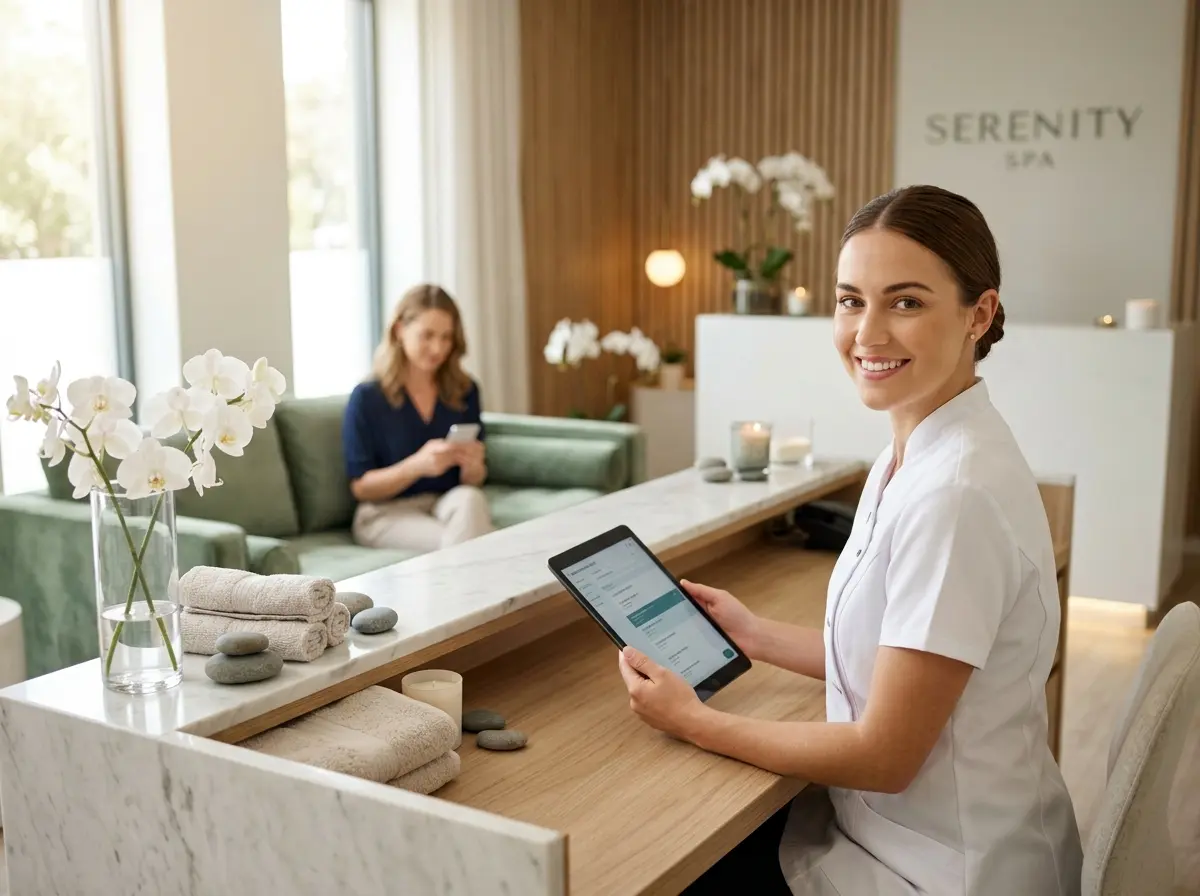
Picture this: a client books a standard 60-minute Swedish massage. She checks in, gets her robe, enjoys her service, pays, and leaves. Simple enough. But somewhere between "Welcome, how are you today?" and "That'll be $90," your front desk team missed three opportunities to make her experience better — and your revenue higher. No upsell on the aromatherapy add-on. No mention of the hot stone upgrade. Not a peep about the seasonal facial package running through the end of the month.
Upselling in a spa setting isn't about being pushy or salesy. It's about helping clients get more of what they came for — relaxation, results, and that blissful feeling of being well taken care of. Done right, it feels like genuine hospitality, not a used car lot. The problem is that most front desk teams either weren't trained on how to upsell, feel uncomfortable doing it, or are simply too busy juggling check-ins, phone calls, and scheduling to consistently work it into the conversation.
Good news: this is a very fixable problem. Below you'll find practical scripts, proven strategies, and a few tools (including one that never forgets to mention the aromatherapy upgrade) to help your team upsell with confidence and class.
The Art of the Spa Upsell: Strategies That Actually Work
Make It Feel Like a Recommendation, Not a Sales Pitch
The number one reason front desk staff avoid upselling is that it feels awkward. They don't want to come across as commission-hungry or desperate. The fix is simple: reframe upselling as a client service skill, not a sales skill. Your team isn't pitching — they're advising. There's a meaningful difference between "Would you like to add anything to your service today?" (weak, easily dismissed) and "Based on what you mentioned about tension in your shoulders, a lot of our clients find that adding a hot stone enhancement makes a huge difference — it's only $25 more and it really targets that area." The second approach shows attentiveness, makes the recommendation feel personalized, and gives the client a concrete reason to say yes.
Train your team to listen during check-in. A client who mentions she's been stressed at work is practically handing you an opening for an aromatherapy add-on. Someone who mentions dry skin in the winter is a prime candidate for a hydrating body scrub. The information is there — your team just needs to be trained to act on it.
Use Timing Strategically
Timing matters enormously in a spa environment. There are three natural upsell windows in every client visit: before the service (at check-in), between services (if applicable), and after the service (during checkout). Most spas only try to upsell at checkout, which is actually the weakest moment — the client's wallet is already open and they're in "wrapping up" mode, not "treat myself" mode.
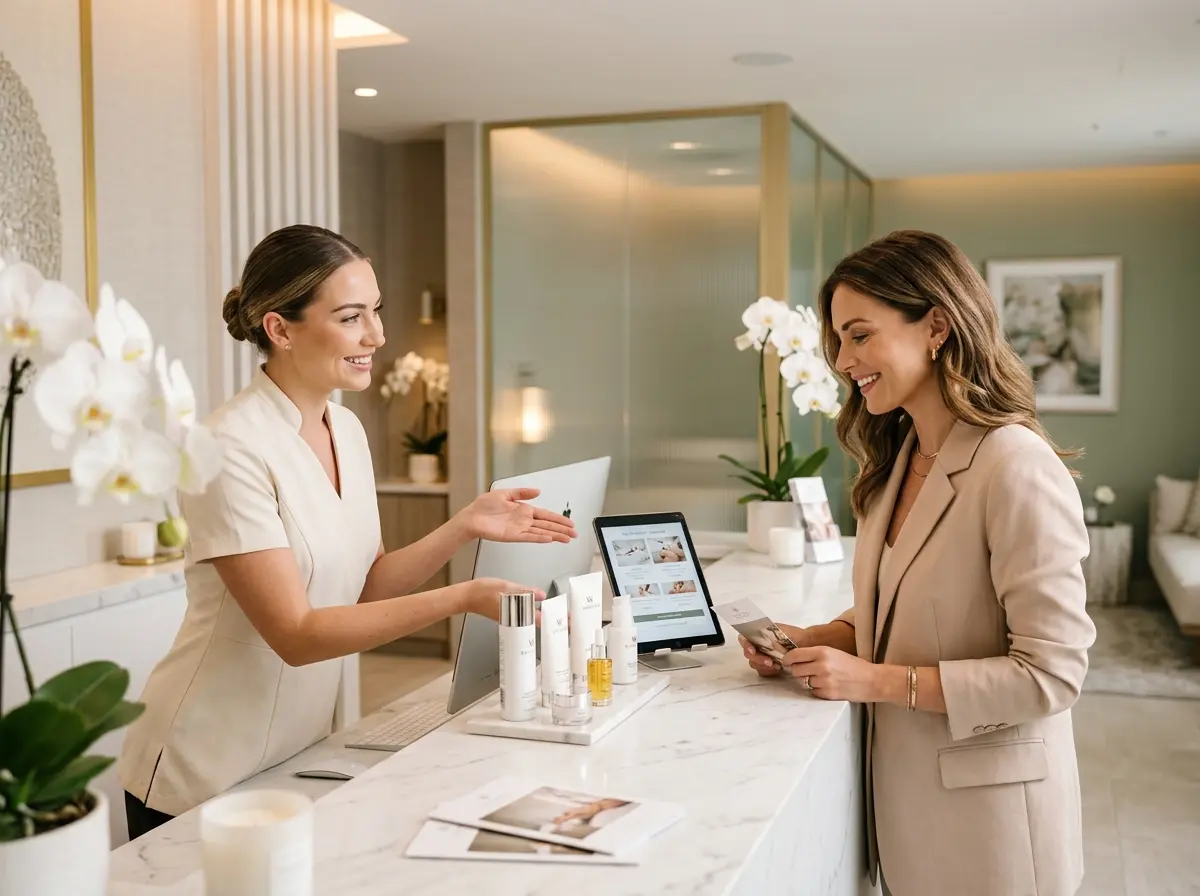
Check-in is your golden window. The client is excited, anticipating relaxation, and emotionally primed to say yes to things that sound indulgent. That's when your team should warmly mention add-ons with genuine enthusiasm — not as an afterthought, but as part of the intake process. A smooth script sounds something like: "Before I get you settled, I just want to mention we have a really popular scalp massage add-on this month that pairs beautifully with your facial — would you like to include it?" Casual. Warm. Effective.
Bundle and Highlight, Don't Just List
Menus and service lists are not upselling tools — they're reference documents. If your front desk strategy is handing someone a laminated sheet and hoping they spontaneously upgrade themselves, you're leaving the heavy lifting to a piece of paper. Instead, train your team to highlight specific services verbally, and when possible, bundle them into easy-to-say-yes-to packages.
Bundles work because they shift the client's mental frame from "Should I spend more?" to "Which one is right for me?" A $150 "Stress Relief Bundle" that combines a 60-minute massage, aromatherapy add-on, and a neck and scalp treatment feels like a curated experience — not an upsell. Research in behavioral economics consistently shows that customers are more likely to upgrade when options are presented as packages rather than à la carte additions. Give your bundles great names, brief descriptions, and train your team to mention them by name with a brief, enthusiastic pitch.
Let Your Technology Do Some of the Talking
The Upsell That Never Gets Tired or Forgets
Even the best-trained front desk team has off days. They get slammed with check-ins, someone calls with a complicated booking question right as a client walks in, and suddenly the aromatherapy upsell script goes right out the window. That's not a people problem — it's a capacity problem. And it's exactly where Stella, the AI robot receptionist and in-store kiosk, quietly earns her keep.
For spas with a physical location, Stella stands inside the space and proactively engages clients — mentioning current promotions, seasonal add-ons, and package deals with the kind of consistent enthusiasm that human staff simply can't maintain across every single interaction, every single day. She never forgets to mention the hot stone upgrade. She never skips the bundle pitch because she's stressed about the lobby queue. And for clients calling to book an appointment, she handles those calls 24/7 as an AI phone receptionist, weaving in relevant service highlights and promotions during the conversation. Your upsell strategy stops being dependent on whether your front desk is having a good day — and that's a meaningful business advantage.
Scripts Your Team Can Actually Use
The Check-In Upsell Script
Keep it warm, brief, and specific. Here's a template your team can adapt:
"Hi [Name], welcome back! While I'm getting you checked in — we have a really lovely add-on this month, a warm bamboo massage enhancement that pairs perfectly with your deep tissue service. A lot of our regulars have been loving it. It's just $30 and takes about 15 extra minutes. Would you like to include that today?"
A few things to notice about this script: it uses the client's name, it references what they already booked (showing attentiveness), it gives social proof ("a lot of our regulars"), it names the price clearly, and it ends with a direct question. Vague offers get vague responses. Specific, confident recommendations get bookings.
Handling Hesitation Gracefully
Not every client will say yes immediately, and your team needs to be ready to respond to hesitation without awkwardness. If a client says "Maybe not today," the wrong response is to immediately back off with "No worries at all!" — which signals that the recommendation wasn't that important anyway. A better response: "Totally, no pressure at all — I'll just leave a note in your file so we can mention it again next time you're in." This keeps the door open, reinforces that you pay attention to their preferences, and plants a seed for the next visit. It's low-pressure and client-centered, which is exactly the energy a spa environment demands.
Post-Service Retail and Rebooking Upsell
The post-service window is often underutilized because front desk teams treat it as pure transaction — collect payment, schedule next appointment, goodbye. But a client who just had a phenomenal experience is emotionally receptive and genuinely open to taking that experience home with them. This is the moment to mention the product your esthetician used during the facial, the essential oil that was in the diffuser, or the body butter that made her skin feel incredible. The key is a warm handoff from the treatment provider: therapists should briefly mention one product they used and why they loved it for the client's specific needs. That gives your front desk a conversation starter that doesn't feel random.
Pair the retail mention with a rebooking offer: "We're running a deal this month where if you book your next appointment today, you get 10% off any retail purchase. Would you like to lock in a date?" That's a double upsell — a retail product and a committed future appointment — wrapped in a single, natural sentence. Not bad for 15 seconds of conversation.
Quick Reminder About Stella
Stella is an AI robot employee and phone receptionist built for businesses exactly like yours — she greets clients in person at her kiosk, answers every phone call around the clock, and promotes your services and specials without missing a beat. At just $99/month with no upfront hardware costs, she works alongside your human team to make sure upsell opportunities never fall through the cracks, whether a client is standing in your lobby or calling to book at 9pm on a Sunday.
Start Turning Greetings Into Revenue
Upselling in a spa isn't a dirty word — it's how you fund better equipment, higher staff wages, and a better client experience overall. The strategies above aren't about squeezing more money out of your clients; they're about making sure every client knows what's available and has the chance to say yes to something that genuinely enhances their visit.
Here's where to start this week:
- Audit your check-in process. Is your team consistently mentioning add-ons? If not, what's getting in the way?
- Write two or three signature upsell scripts tailored to your most popular services and train your team to use them.
- Create at least one bundle that packages a popular service with one or two add-ons at an attractive price point.
- Establish a handoff protocol between treatment providers and front desk so post-service retail recommendations feel seamless, not scripted.
- Look at your phone interactions. Are callers hearing about your current specials? If your front desk is too busy to consistently mention them, that's a gap worth filling.
Your clients are already walking in ready to relax and spend. All your team needs to do is give them a great reason to say yes to a little more. With the right scripts, the right timing, and the right support systems in place, that's a very achievable ask — even on a busy Saturday afternoon.