Your Lobby Shouldn't Feel Like a DMV
Building a Smarter Check-In Process
Start With Pre-Arrival Digital Check-In
The single most effective way to reduce lobby congestion is to move check-in out of the lobby entirely. Pre-arrival digital check-in allows patients to complete their intake paperwork, verify insurance information, and confirm appointment details before they ever walk through your door. Studies have shown that practices using digital pre-arrival check-in can reduce in-office check-in time by up to 70%, turning a 10-minute desk interaction into a simple ID verification and co-pay collection.
Deploy Self-Service Kiosks for In-Office Arrivals
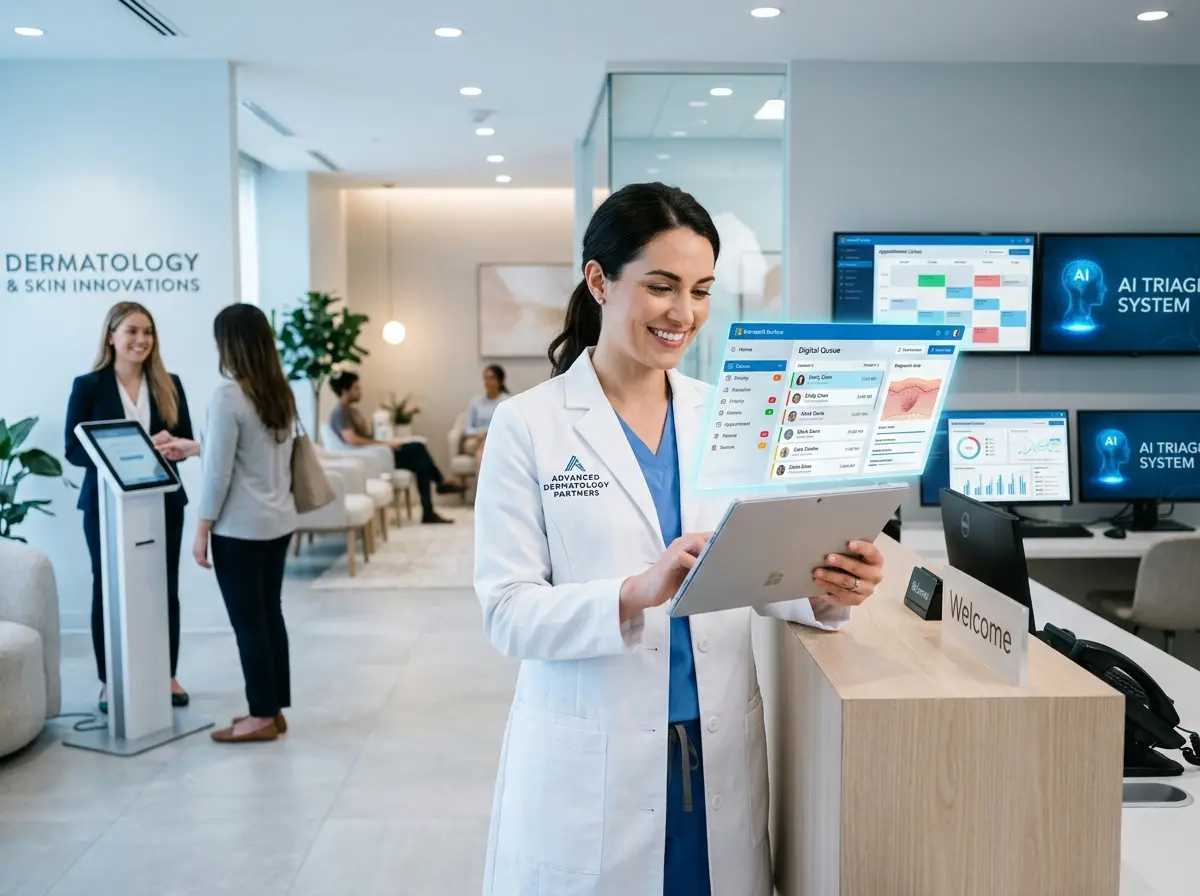
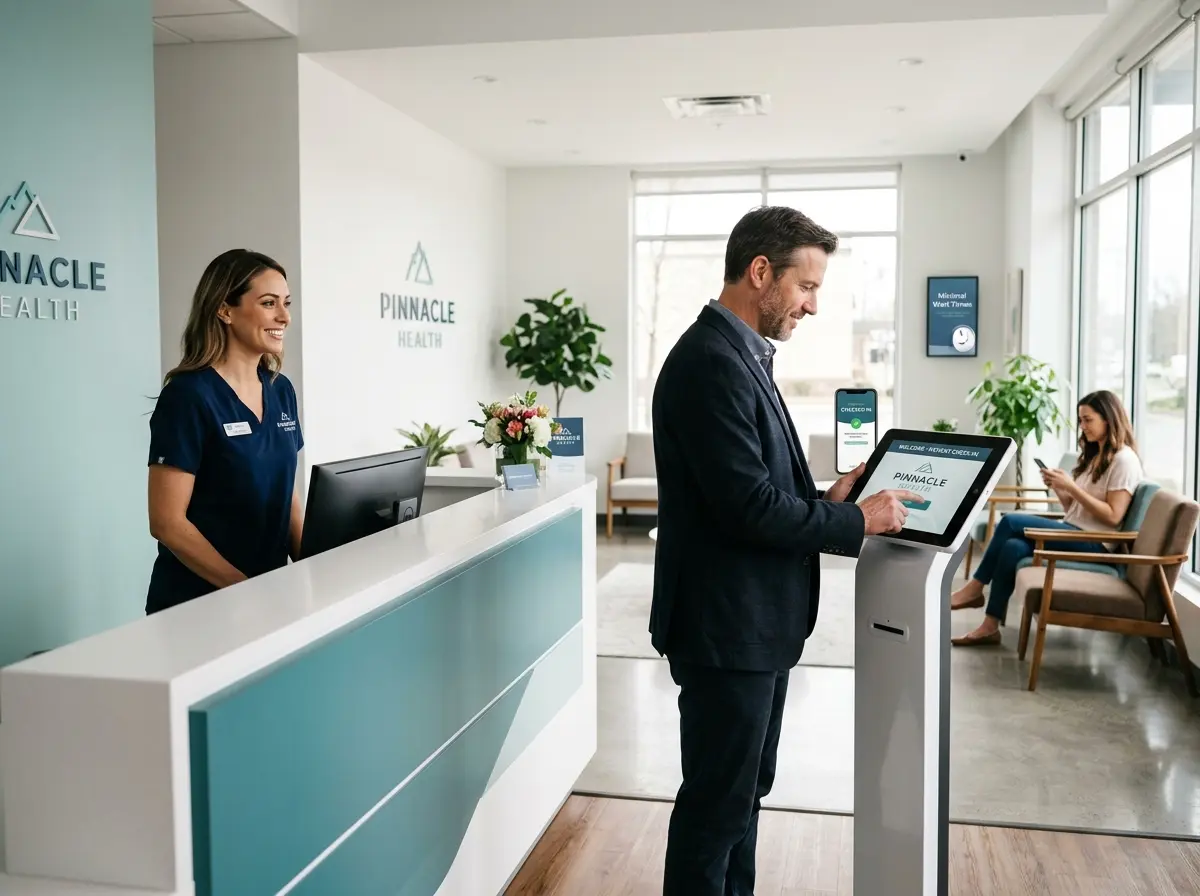
Modern kiosks can integrate directly with your EHR system to update patient records in real time, flag incomplete insurance information for staff follow-up, and even collect co-payments via card reader. Beyond the efficiency gains, patients often prefer self-service options for tasks like verifying personal information — it feels more private than reciting your date of birth across a reception desk to a room full of strangers. According to a 2022 survey by Accenture, 60% of patients expressed interest in using self-service check-in tools, with the number climbing even higher among patients under 45.
Integrate Your Systems So Nothing Falls Through the Cracks
How AI-Powered Front Desk Tools Can Help
Covering the Gaps Automation Leaves Behind
This is where Stella fits in naturally. Stella is an AI robot employee and phone receptionist that can handle incoming calls 24/7 — answering questions about office hours, services, policies, and appointment prep without putting anyone on hold. For your physical office, her kiosk presence can greet arriving patients, provide directions, answer common pre-appointment questions, and keep the lobby experience feeling attended to even when your staff is occupied. Stella also collects patient information through conversational intake forms and stores everything in a built-in CRM — so nothing gets lost between a phone call and an appointment. It's not a replacement for your clinical team; it's a pressure valve for your front desk.
Reducing Perceived Wait Time — Because Perception Is Reality
Keep Patients Informed and Engaged While They Wait
Train Your Staff to Use the Technology Confidently
Use Data to Continuously Optimize Your Flow
A Quick Reminder About Stella
Stella is an AI robot employee and phone receptionist built for businesses exactly like yours. She greets patients in person at her kiosk, answers calls around the clock, collects intake information, manages contacts through a built-in CRM, and promotes your services — all for $99/month with no upfront hardware costs. She doesn't call in sick, doesn't put patients on hold to help someone else, and never has a bad Monday morning.
Your Lobby Can Be Better Than a DMV — It Can Actually Be Good
- Audit your current check-in process — time how long it actually takes, start to finish, and identify the biggest pain points.
- Contact your EHR or practice management vendor to ask about pre-arrival digital check-in and kiosk integration options.
- Evaluate a virtual waiting room tool if you don't already have one — SMS-based queue updates are low-cost and high-impact.
- Plan your staff training before any rollout, not after.
- Consider Stella for phone coverage and in-lobby support so your front desk staff can focus on the patients standing right in front of them.