If "Members Get More" Is Just a Tagline, You've Already Lost
Here's a hard truth: most gym members don't feel like they're getting more. They feel like they're paying for access to equipment they could find at any Planet Fitness for $10 a month. If your premium pricing strategy relies on the assumption that people will just trust that you're worth it, you're operating on hope — and hope, unfortunately, doesn't pay the rent on your squat racks.
The good news? Building a genuinely premium member experience isn't about spending a fortune on marble countertops or hiring a DJ for the weight room. It's about creating a consistent, layered experience where members feel recognized, rewarded, and frankly a little smug about their gym choice. Done right, premium pricing becomes a non-issue — because the value is obvious, the loyalty is real, and the referrals write themselves.
This guide walks you through the practical framework for building a "Members Get More" experience that actually justifies what you're charging — and keeps your members renewing without a guilt spiral every billing cycle.
The Foundation: Tiered Value That Members Can Actually Feel
The biggest mistake gym owners make with premium pricing is treating it as a math problem instead of a perception problem. Yes, your costs are higher. Yes, your equipment is better. But members don't renew because of your amortized equipment costs — they renew because of how your gym makes them feel. Tiered value structures are how you engineer that feeling deliberately.
Design Membership Tiers With Clear, Tangible Differences
Vague tier names like "Basic," "Plus," and "Elite" mean nothing unless the differences between them are immediately obvious and genuinely desirable. Your premium tier needs to offer things people actually want — not just more of what they didn't fully use in the standard tier.
Think about what your most loyal, highest-spending members actually value: priority class booking windows, dedicated locker assignments, guest passes, nutrition consultations, or access to recovery amenities like saunas or massage guns. These are the kinds of perks that make someone feel like a member rather than a paying stranger. The goal is to make premium members feel like insiders — because psychologically, exclusivity is a powerful retention tool.
Communicate the Value Constantly (Don't Assume They Notice)
You could have the best membership perks in the city and still lose members because they simply forgot what they were paying for. This is more common than you'd think. Life gets busy, people go on autopilot, and suddenly they're canceling a membership they barely remember signing up for.
Counter this with proactive value communication. Send monthly "Here's what you have access to" emails. Post signage near premium amenities reminding members that this is included in their plan. Train your front desk staff to reference perks in casual conversation. The more often a member consciously registers the value they're receiving, the stickier their membership becomes. Perceived value is real value — never underestimate it.
The Experience Layer: Where Technology Meets the Human Touch
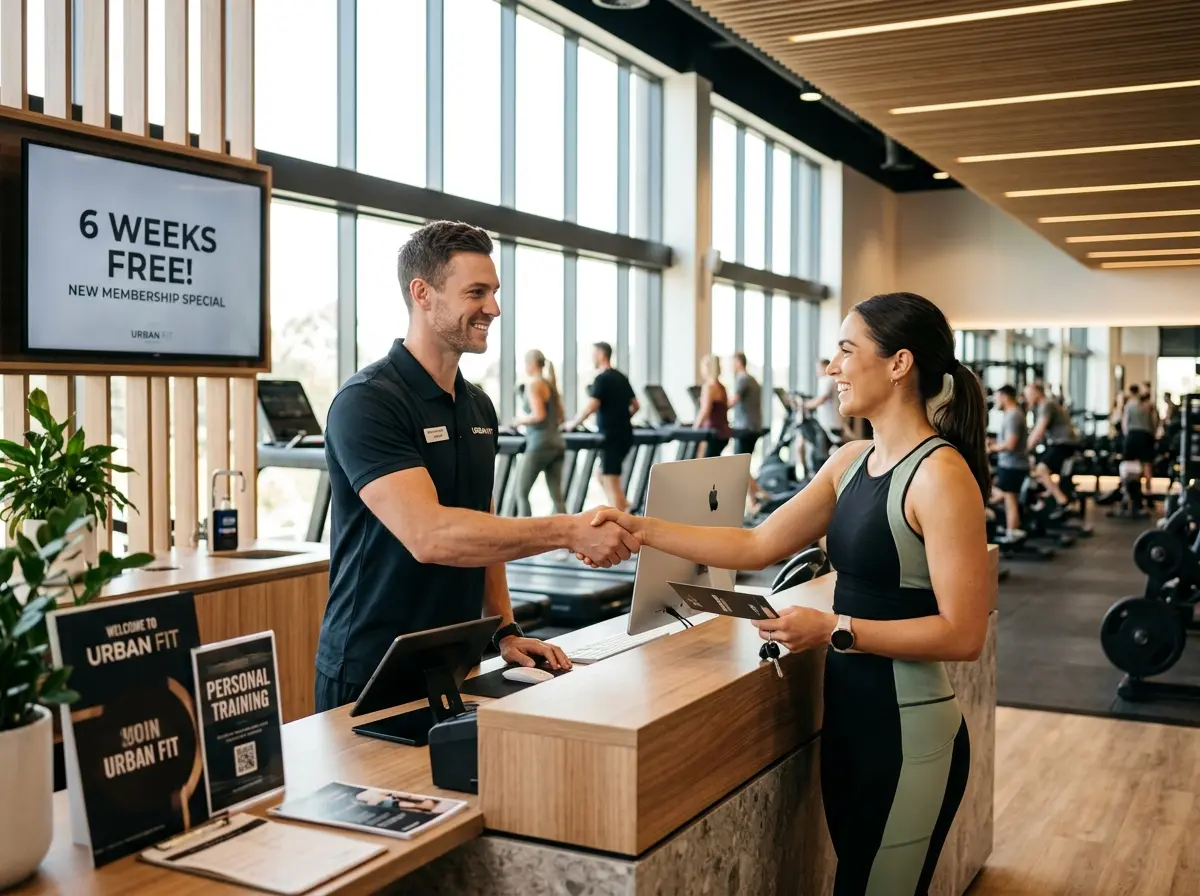
Premium gyms don't just offer better equipment — they offer a better experience from the moment a prospect thinks about joining. That includes how you answer the phone at 9pm on a Tuesday, how you greet a walk-in who's never been there before, and how efficiently you handle member questions without making them feel like an inconvenience.
Let Smart Tools Handle the Friction Points
This is where Stella, the AI robot employee and phone receptionist, can genuinely move the needle for gym owners. In-person, Stella stands at your entrance as a friendly kiosk, greeting every walk-in proactively, answering questions about membership tiers, class schedules, promotions, and policies — without pulling your actual staff away from what they do best. She doesn't have off days, doesn't get flustered during peak hours, and never gives someone outdated pricing because she forgot about last week's promo.
On the phone side, Stella answers calls 24/7 with the same knowledge she uses in person, handles intake through conversational forms, and can forward calls to human staff when the situation genuinely calls for it. For gyms specifically, this means a prospective member calling at midnight to ask about day passes or family plans gets a real, helpful answer — not voicemail. And those captured leads go straight into Stella's built-in CRM, complete with AI-generated contact profiles, so your team can follow up with context instead of starting from scratch.
Retention Strategies That Actually Work (Beyond the Loyalty Punch Card)
Retention is where premium pricing either proves itself or collapses. If your churn rate is high, no amount of clever tier naming will fix your revenue problem. The gyms that successfully charge premium rates and keep members long-term are doing a few specific things that most operators overlook.
Build Milestone Moments Into the Member Journey
People stay where they feel progress and belonging. Building milestone moments — whether that's a congratulations message at the 90-day mark, a small gift at the one-year anniversary, or a "founding member" designation for early joiners — creates emotional anchors that make leaving feel like a loss rather than just a billing change.
Map out your member journey from day one through year two. Identify the natural drop-off points (typically around weeks 6-8 and again at the 6-month mark) and design specific interventions for those windows. A personal check-in from a coach, an invitation to a members-only event, or even a simple "we noticed you haven't been in — everything okay?" message can save a membership that was quietly drifting toward cancellation. These moments don't need to be expensive; they need to be genuine.
Create Community, Not Just Clientele
The gyms with the best retention numbers aren't just facilities — they're communities. Members who have friends at your gym, who recognize the coaches by name, who feel like regulars rather than transactions, are dramatically less likely to cancel. According to industry research, members with a social connection to their gym are up to 40% more likely to stay past the 12-month mark.
You can cultivate this intentionally. Host quarterly members-only events — a fitness challenge, a social night, a charity workout. Create a private online group where members share wins and hold each other accountable. Encourage your coaches to learn names and remember details. These things scale with culture, not budget, and they're the difference between a gym people attend and a gym people belong to.
Use Data to Personalize the Premium Experience
Premium members expect to be known. If someone has been attending your HIIT classes every Monday for eight months and you have no idea who they are, that's a missed opportunity — and a vulnerability. Use your CRM and check-in data to identify your most engaged members and treat them accordingly. Recognize them. Recommend the next logical service for their goals. Let them know about new offerings before the general public does.
Personalization at scale sounds complicated, but even small gestures — a coach mentioning a member's recent PR, a front desk associate asking about their marathon training — create the feeling of being seen. And in a world of impersonal, transactional gym experiences, being seen is a premium perk in itself.
A Quick Reminder About Stella
Stella is an AI robot employee and phone receptionist built for businesses like yours. She greets in-store visitors as a friendly kiosk presence, answers phone calls around the clock, promotes your offers, handles intake, and manages contacts through a built-in CRM — all for $99/month with no upfront hardware costs. She's the front-of-house consistency most gyms wish they had but can never quite staff for.
Start Building the Experience Your Pricing Deserves
Premium pricing for gyms is absolutely justifiable — but only when the experience backs it up at every touchpoint. The framework is straightforward even if the execution takes intention: build tiers with tangible, desirable differences; communicate that value consistently; use smart tools to eliminate friction; and invest in retention strategies that make members feel like they belong somewhere worth staying.
Here's your action plan to start this week:
- Audit your current membership tiers. Are the differences between them genuinely compelling, or are they just price points with different names? Identify one or two perks you could add to your premium tier that would make existing members brag about it.
- Map your member journey. Identify the 6-week and 6-month drop-off windows and design at least one proactive touchpoint for each.
- Evaluate your first impression. Walk through your front door as if you're a prospect and note every friction point — slow responses, unanswered questions, untrained staff moments. Then fix them.
- Start collecting better data. If you're not capturing member preferences, goals, and visit patterns, you're flying blind on personalization.
The gym that charges more and keeps members longer isn't the one with the fanciest equipment — it's the one that makes people feel like they made the right choice every single time they walk through the door. Build that experience deliberately, and your premium pricing will stop feeling like a hard sell and start feeling like an obvious yes.