Your Patients Are Doing the Exercises Wrong (And You're Not There to Stop Them)
Picture this: you spend 45 minutes with a patient, carefully walk them through their home exercise program, demonstrate proper form, answer every question, and send them home with a printed sheet of instructions. A week later, they come back with zero progress — or worse, a new complaint. Why? Because somewhere between your clinic and their living room, "keep your core engaged" became "just sort of flop around on the floor and hope for the best."
This is the dirty little secret of physical therapy: most patients do their home exercises incorrectly, inconsistently, or not at all. Studies suggest that anywhere from 50% to 65% of physical therapy patients are non-adherent to their home exercise programs. That's not a patient problem — it's a delivery problem. And telehealth supervision is the fix your clinic has been sleeping on.
If you haven't already built a telehealth option for home exercise supervision into your practice, this article is your nudge. Consider it a gentle, professional nudge — delivered with just enough sarcasm to make sure you actually remember it.
The Real Cost of Unsupervised Home Exercises
Poor Adherence Isn't Just a Patient Problem — It's a Revenue Problem
When patients don't follow through on their home programs, they don't get better as fast. When they don't get better as fast, their outcomes suffer. When their outcomes suffer, they either come in for more visits (which sounds good until you realize it's often inefficient use of clinical time), plateau prematurely, or quietly disappear from your schedule entirely. Meanwhile, your reviews on Google reflect results that could have been better with just a little more oversight.
The financial ripple effect is real. Slower patient progress means longer episode-of-care durations that don't always translate into proportionally higher revenue. It can also affect your outcomes data, which increasingly matters for value-based care contracts and referral relationships with physicians and specialists.
The Liability and Clinical Risk You're Quietly Accepting
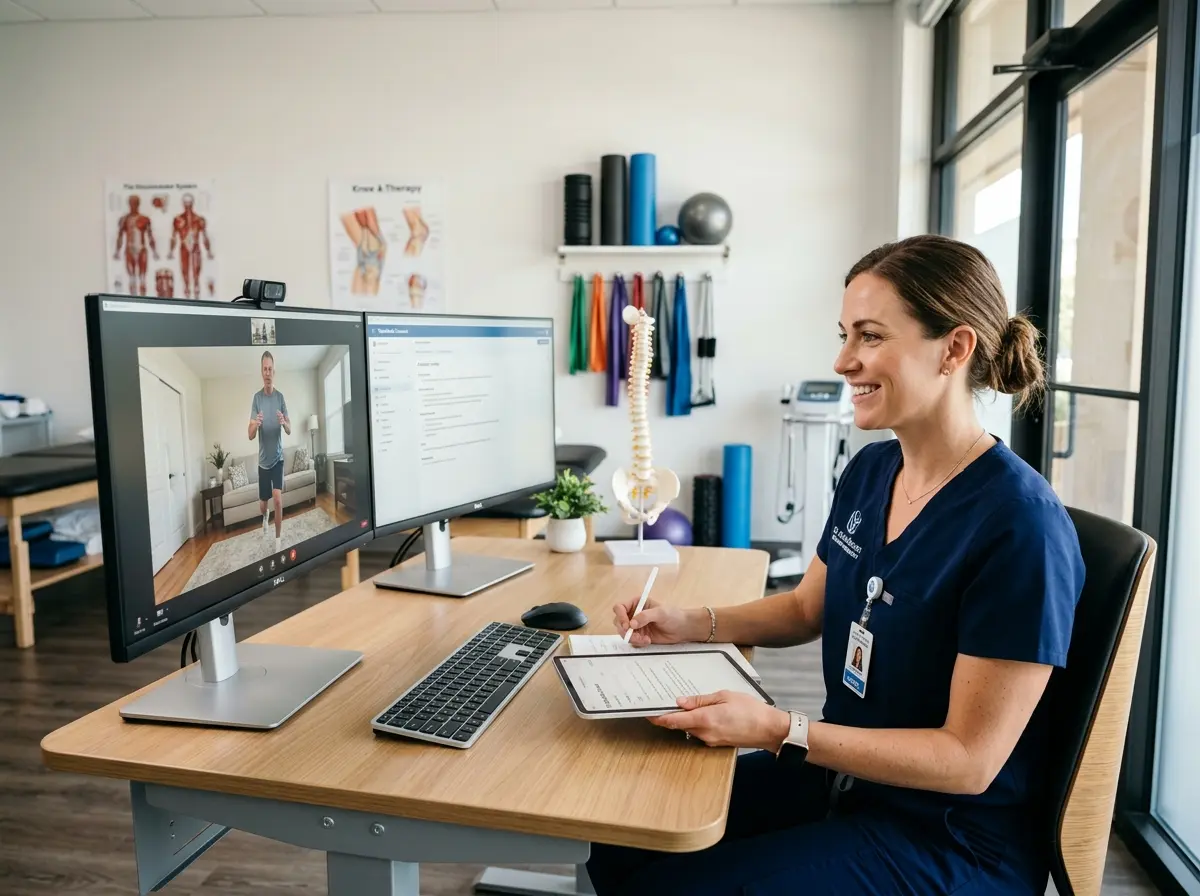
Here's an uncomfortable truth: when a patient performs an unsupervised exercise incorrectly and re-injures themselves, the first question anyone asks is whether they were properly educated. A telehealth check-in creates a documented touchpoint that demonstrates clinical oversight. It's not just good practice — it's good risk management. Real-time video supervision gives you the ability to catch a dangerous movement pattern before it becomes a setback, a complaint, or something worse.
What Patients Actually Want (Whether They Know It or Not)
Patients today expect convenience. They're used to telehealth from their primary care physicians, their therapists, and their dermatologists. Offering virtual supervision sessions signals that your clinic is modern, accessible, and genuinely invested in their recovery — not just in the hours they happen to be sitting on your treatment table. It also removes one of the biggest barriers to follow-through: the friction of "I'll just try to remember what they showed me." A brief, scheduled video check-in turns vague intentions into accountable action.
Building Your Telehealth Supervision Program Without Losing Your Mind
Start Simple: The 15-Minute Check-In Model
You don't need a complex telehealth infrastructure to get started. The most effective model for home exercise supervision is deceptively simple: a scheduled 15-minute video session, once or twice per week, where a therapist or trained tech watches the patient perform two or three key exercises and provides real-time cueing. That's it. No elaborate platform, no lengthy intake forms (the second time around), no billing mystery. Platforms like SimplePractice, WebPT, or even a HIPAA-compliant video tool layered onto your existing system can handle this without much friction.
The key is to position these sessions as a standard part of your care pathway — not an optional add-on that patients can politely decline. Build it into your plan of care documentation, discuss it in the initial evaluation, and frame it as a clinical service, not a favor.
Billing Realities: Yes, You Can Get Paid for This
One of the most common reasons clinics haven't pulled the trigger on telehealth supervision is billing uncertainty. Fair enough — physical therapy telehealth reimbursement has had more plot twists than a prime-time drama. But the landscape has improved considerably since the pandemic-era expansions. Many commercial payers now reimburse for telehealth PT services, and several states have enacted permanent parity laws. CPT codes like 97110 (therapeutic exercise) and 97530 (therapeutic activities) can often be billed via telehealth when performed under live supervision. Check your payer contracts, consult with a billing specialist, and don't assume the answer is no until you've actually looked it up.
How Stella Can Help Keep Your Clinic Running While You Focus on Care
Less Front Desk Chaos, More Clinical Focus
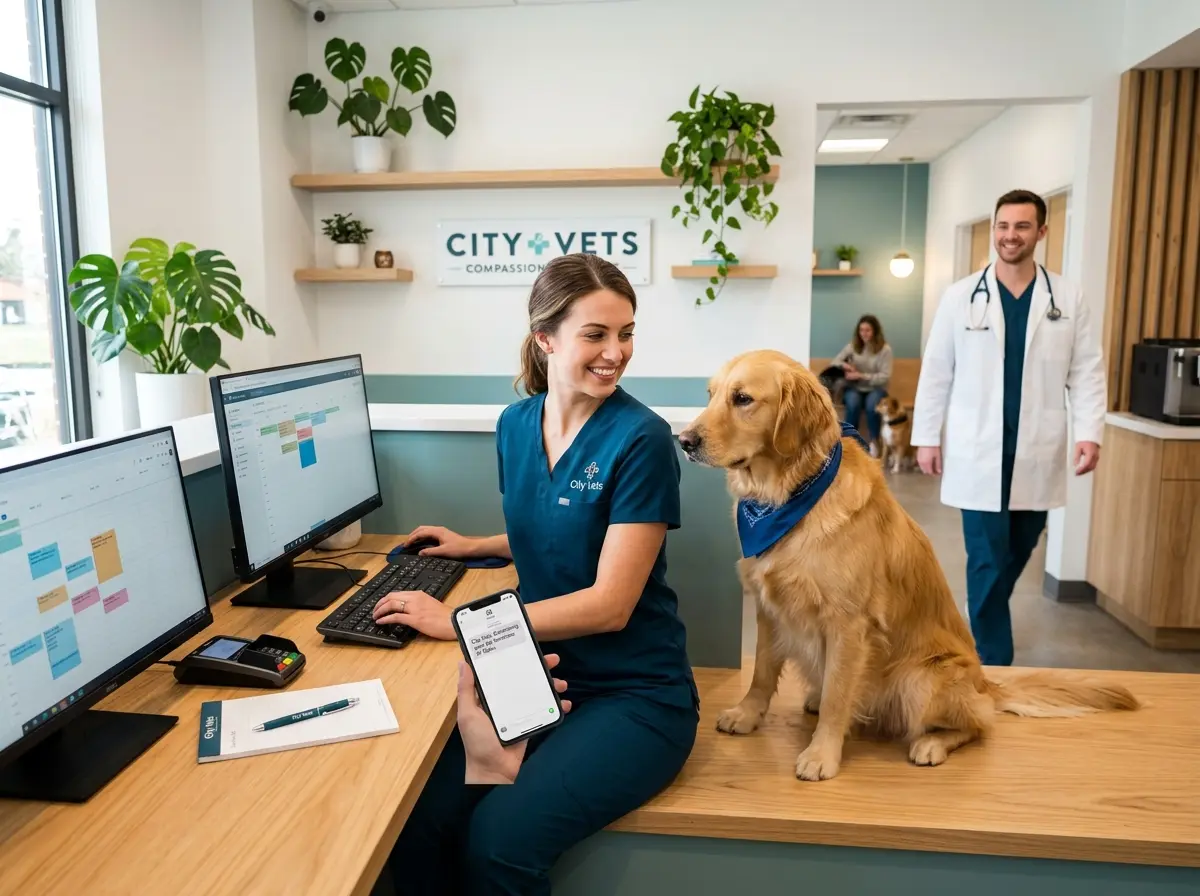
Adding telehealth to your clinic isn't just a clinical shift — it's an operational one. More appointment types mean more scheduling complexity, more patient questions ("Wait, is this visit in-person or virtual?"), and more administrative load on your front desk staff. This is exactly where Stella, the AI robot employee and phone receptionist, earns her keep. She handles incoming calls 24/7, answers common questions about your services and scheduling, and can even collect patient intake information through conversational forms — so your staff isn't buried in logistics when they should be focused on patient care.
For your physical location, Stella stands at the front of your clinic as a friendly, always-available kiosk presence — greeting patients, explaining your telehealth options to curious newcomers, and keeping the front desk from becoming a bottleneck during busy check-in periods. She's the front-of-house professional who never calls in sick and never looks frazzled when three people walk in at once.
Making Telehealth Supervision a Competitive Advantage
Differentiate Your Clinic in a Crowded Market
Most physical therapy clinics in your area probably offer the same core services: manual therapy, therapeutic exercise, modalities, maybe dry needling. Telehealth supervision is still uncommon enough that it can genuinely set you apart. Lead with it in your marketing. Put it on your website. Train your front desk staff to mention it during new patient calls. When physicians are deciding where to refer their patients, "we supervise home exercises via telehealth to ensure compliance and faster outcomes" is a memorable differentiator that translates directly into clinical results they can observe.
Use Outcomes Data to Fuel Your Referral Relationships
Here's where the long game gets interesting. When you implement supervised home exercise programs — even partially via telehealth — your outcomes data improves. Faster recovery times, better functional scores at discharge, lower re-injury rates. That data becomes a marketing asset. Share it with your referring physicians. Build a one-page outcomes summary that you send quarterly to your top referral sources. "Our telehealth-supervised patients achieve discharge goals 20% faster" is not a claim most clinics can make. You can be one of the ones who can.
Don't Forget the Patient Experience Ripple Effect
Patients who feel supervised and supported are patients who complete their plans of care, refer their friends and family, and leave glowing reviews. The word-of-mouth value of a patient who says "my PT actually checked in on me at home to make sure I was doing everything right" is genuinely priceless. In a world where most healthcare interactions feel transactional and rushed, that level of attentiveness is remembered — and talked about. Your Google rating will thank you.
Quick Reminder About Stella
Stella is an AI robot employee and phone receptionist designed to help businesses like yours run smoother without adding headcount. For your clinic, she can greet patients at the kiosk, answer calls around the clock, explain your telehealth offerings, and manage intake information — all for just $99 per month with no upfront hardware costs. She's not a replacement for your clinical team; she's the front-of-house support that makes sure your clinical team can actually do their jobs.
It's Time to Stop Crossing Your Fingers and Start Supervising
The home exercise program as a passive handout is a relic. Your patients deserve better, your outcomes data deserves better, and frankly, your clinic's reputation deserves better. Telehealth supervision isn't a trend — it's a clinical and business strategy that addresses one of the most persistent problems in outpatient physical therapy, and it's more accessible to implement than most clinic owners realize.
Here's your action plan to get started:
- Audit your current home exercise program compliance rates. Talk to your therapists honestly. How many patients are actually doing the work correctly at home? The answer will motivate you.
- Choose a HIPAA-compliant telehealth platform that integrates with your existing EMR or scheduling system. Most have free trials.
- Design a simple telehealth supervision protocol — start with a 15-minute check-in model for your most complex or high-risk cases, then expand from there.
- Verify your payer contracts for telehealth reimbursement eligibility before you build your pricing structure.
- Train your front desk and clinical staff on how to present telehealth supervision as a standard clinical offering — not an upsell, but a standard of care.
- Market it. Website, referral letters, social media. Tell people you do this. They'll care.
Your patients are at home right now, doing a half-hearted version of their exercises with questionable form. You have the tools, the expertise, and now the roadmap to change that. The only thing left is deciding that your clinic is ready to be better than the average handout-and-hope approach. We think you are.