The Call You Missed Was the Job You Lost
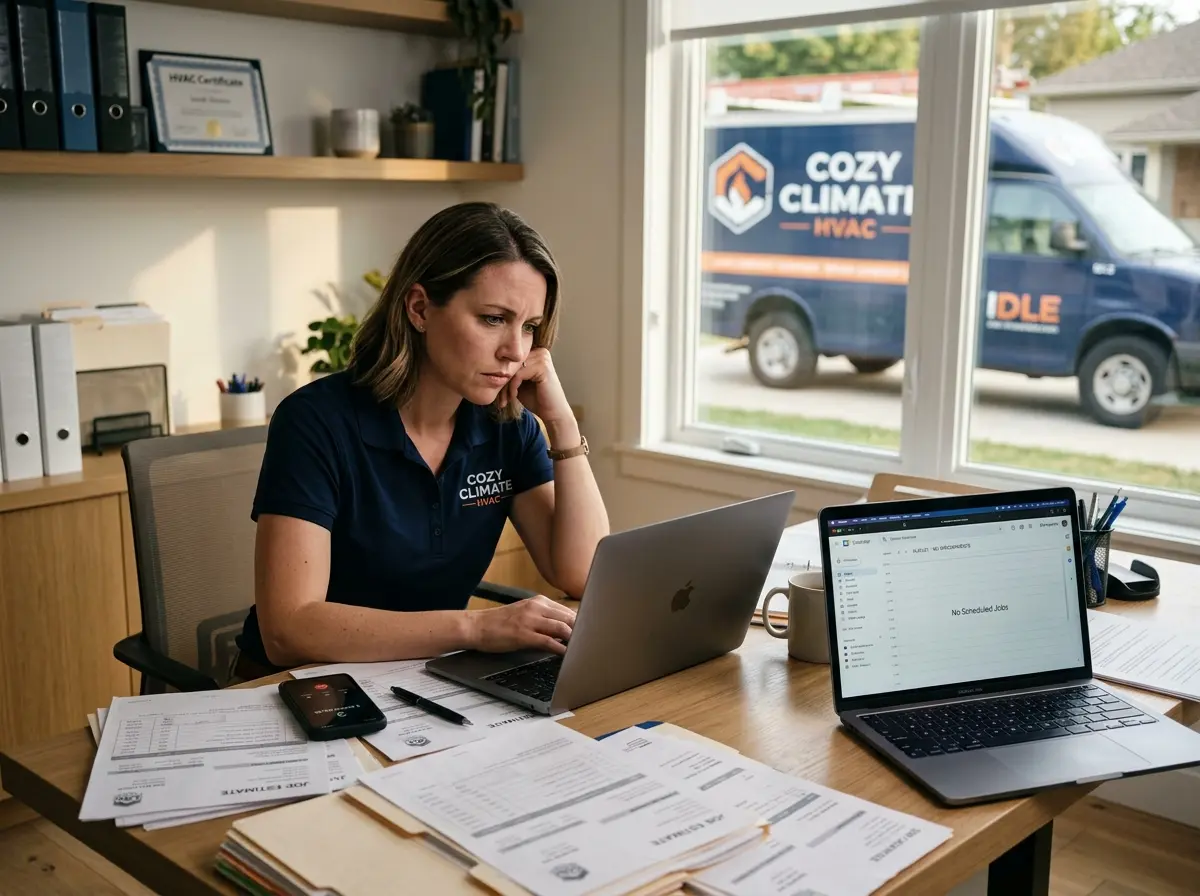
Let's paint a picture. A homeowner's AC unit decides to give up the ghost on a Friday afternoon in August. They're sweating, they're frustrated, and they're ready to hand their credit card to whoever picks up the phone first. They call your HVAC company. It rings. And rings. And then — voicemail. So they hang up and call your competitor, who answers, books the job, and sends a tech out by Saturday morning.
You never even knew the call came in.
This scenario plays out dozens of times a week for HVAC businesses across the country, and the painful part is that it has nothing to do with your technicians' skill, your equipment quality, or even your pricing. You lost that job before a single wrench was lifted. The problem isn't your service — it's your systems. Specifically, how your business handles (or mishandles) incoming communication when your team is busy doing what HVAC teams do: being out in the field, elbow-deep in ductwork.
The good news? This is an entirely solvable problem. Let's talk about where the leaks are — and how to seal them.
Where HVAC Companies Bleed Leads Without Realizing It
The Missed Call Problem Is Worse Than You Think
Here's a sobering stat: nearly 85% of callers who don't reach a business on the first try will not call back. They move on. In the HVAC world, where customers are often in urgent, uncomfortable situations, that number might as well be 100%. Nobody with a broken furnace in January is going to leave a voicemail and patiently wait two hours for a callback. They want help now, and they'll find it.
Most HVAC businesses are staffed lean by design. Your office manager is juggling scheduling, dispatch, invoicing, and three other calls simultaneously. Your techs are on job sites. You, the owner, are probably doing all of the above plus sales estimates and vendor calls. Nobody has time to babysit the phone — and yet, the phone is where your revenue walks in the door.
After-Hours Calls Are a Gold Mine You're Leaving Buried
HVAC emergencies don't respect business hours. A water heater doesn't wait until Monday morning. An AC compressor doesn't check the clock before failing on a holiday weekend. And yet, most small and mid-sized HVAC companies essentially go dark after 5 PM. Their phones roll to a generic voicemail, their website has no live chat, and the customer who called at 8 PM on a Sunday has already booked with a competitor by 8:15.
Offering even a basic after-hours response capability — something that acknowledges the customer, gathers their information, and communicates clearly about next steps — can dramatically increase your job capture rate during off-hours. You don't need to staff someone overnight. You just need a system that doesn't make your customers feel like they've called a void.
Slow Response Times Kill Conversions
Even when calls do get answered or messages do get left, slow follow-up is a silent killer. Studies consistently show that the odds of converting a lead drop by over 80% if you wait longer than five minutes to respond. Five minutes. For a busy HVAC office, five minutes might as well be a fantasy — but for your potential customer, it's the difference between loyalty and abandonment. Speed is a competitive advantage in this industry, and right now, most companies are leaving it on the table.
How Smarter Communication Tools Can Close the Gap
Stop Making Your Customers Wait — Automate the First Touch
The fastest way to stop losing jobs before the truck rolls is to ensure that every incoming call gets a real, intelligent response — not a generic voicemail prompt. This is exactly where Stella, an AI robot employee and phone receptionist, steps in. Stella answers calls 24/7, speaks naturally with callers about your services, collects customer information through conversational intake forms, and can forward calls to your human staff based on conditions you configure — like call urgency or service type. She also logs voicemails with AI-generated summaries and sends push notifications to managers, so nothing slips through the cracks at 9 PM on a Tuesday.
Stella also comes with a built-in CRM that automatically builds customer profiles from those interactions — complete with custom fields, tags, and notes — so your team always has context when they follow up. For HVAC companies that deal with repeat customers, seasonal maintenance contracts, and multi-unit properties, that kind of organized customer history is genuinely invaluable.
Operational Habits That Cost You Jobs Before You Even Know It
Your Intake Process Is Probably a Mess
Ask yourself honestly: when a new customer calls, what actually happens? Does someone answer, gather their name, address, issue description, unit type, and preferred appointment window — all while staying pleasant and professional? Or does whoever picks up grab a sticky note, promise to call back, and then get pulled into something else before that actually happens?
Inconsistent intake is one of the biggest operational leaks in HVAC businesses. When customer information is incomplete, dispatching becomes inefficient, techs show up underprepared, and follow-up billing gets delayed. Every one of those friction points costs you time and money. Building a standardized intake process — whether through trained staff, a digital form, or an AI-powered system that handles it conversationally — is one of the highest-ROI improvements you can make to your operation.
Your Online Presence Is Doing Less Work Than Your Lowest-Energy Employee
If someone lands on your website at midnight with an HVAC emergency, what do they find? A phone number that goes to voicemail and a contact form that promises a response "within 1-2 business days"? That's not a website — that's a polite way of saying goodbye to a customer.
Your digital presence should be actively working to capture leads even when your team isn't available. That means clear calls-to-action, service area information, pricing transparency where possible, and ideally some kind of live or automated chat or inquiry option. Customers in 2024 expect to be able to get at least basic information and initiate a booking request at any hour. If your website can't do that, your competitors' websites will do it for you — in the worst possible way.
You're Not Following Up With Estimates You've Already Sent
This one hurts. You sent the estimate. The customer seemed interested. And then... silence. So you moved on, because you're busy. But research suggests that 80% of sales require five or more follow-up contacts before a deal closes, and most HVAC businesses follow up once — maybe twice — before giving up. A simple, structured follow-up sequence for open estimates could realistically recover 20-30% of jobs you currently assume are lost. That's not marketing spend. That's just using what you already have.
Quick Reminder About Stella
Stella is an AI robot employee and phone receptionist built for businesses like yours — available 24/7, never sick, never distracted, and always professional. She answers calls, collects customer information, promotes your services, and keeps your CRM up to date without any intervention from your team. At $99/month with no upfront hardware costs, she's the kind of employee that actually shows up every single day.
Stop Losing Jobs You Should Have Won
The HVAC business is competitive, and every missed call, slow response, or incomplete intake form is a small hole in the bottom of your revenue bucket. None of these problems are complicated in isolation — but together, they add up to a meaningful chunk of annual revenue walking straight to your competitors.
Here are the practical steps worth taking this week:
- Audit your call handling. Have a friend call your business at 7 PM and report back what happens. You might be unpleasantly surprised.
- Standardize your intake process. Build a simple checklist or form that captures everything a dispatcher needs — every time, from every call.
- Set up an after-hours response system. Whether it's an AI phone receptionist, an answering service, or a well-configured voicemail with a guaranteed callback window, communicate to after-hours callers that you've heard them and you're coming.
- Build a follow-up sequence for open estimates. Even a two-touch automated email reminder can recover jobs you've mentally written off.
- Update your website to capture leads at any hour. Make it easy for visitors to request a callback or get basic service information without needing a human on the other end.
Your technicians are good. Your service is solid. Don't let a ringing phone or an empty voicemail box be the reason a customer never gets to find that out. Fix the front door, and the rest of the business gets a whole lot easier.