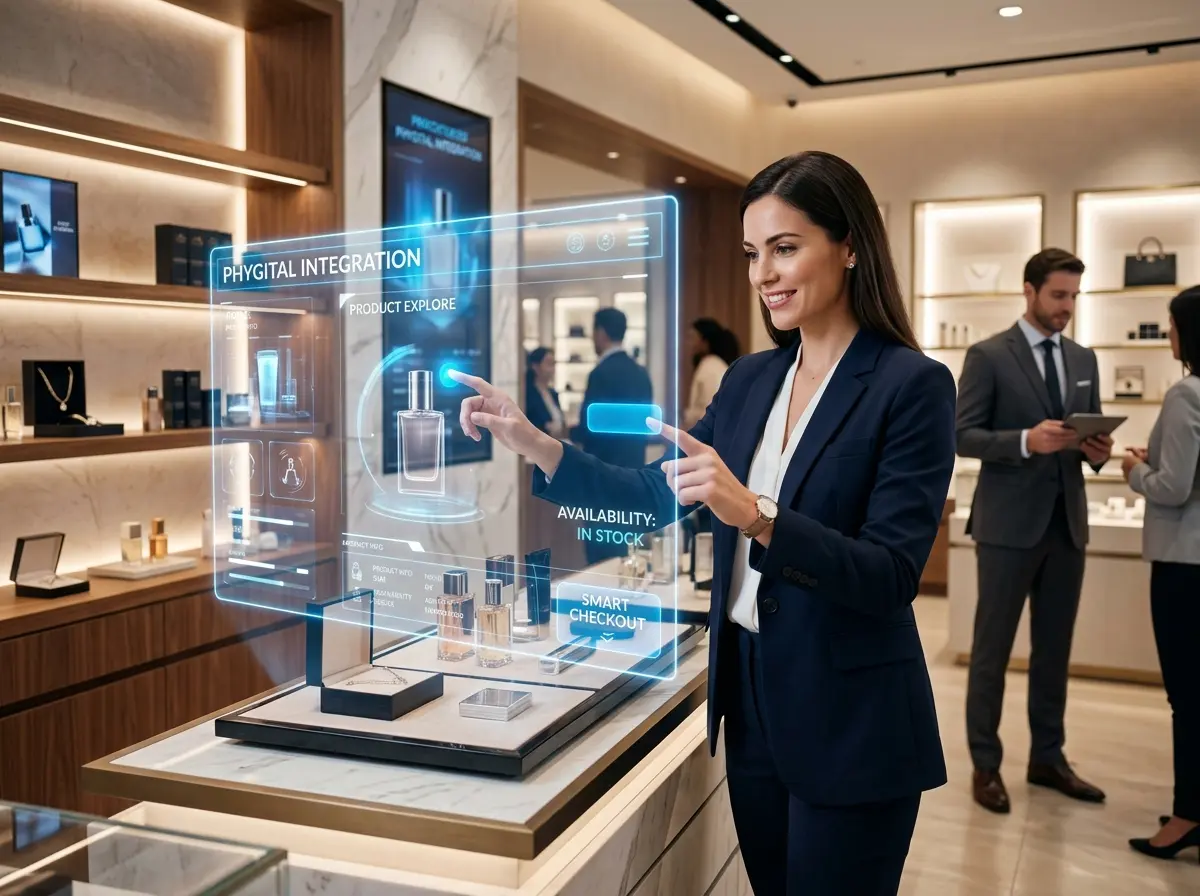
Welcome to the Era Where "Click and Mortar" Isn't Just a Cute Phrase
Let's be honest — if you're still treating your physical store and your digital presence as two completely separate entities, you might as well be running two businesses with two personalities who refuse to speak to each other at family dinners. The modern customer doesn't think in channels. They think in experiences. They might discover you on Instagram, research you on your website, call you to ask one oddly specific question, and then walk through your front door expecting everything to feel seamless. No pressure.
Welcome to the world of phygital retail — where the physical and digital don't just coexist, they actively collaborate. The businesses winning right now aren't the ones with the flashiest app or the nicest storefront. They're the ones who've figured out how to make both work together like a well-rehearsed duet. And the good news? You don't need an enterprise budget or a team of Silicon Valley engineers to get there. You just need the right strategy — and maybe a few clever tools.
In this post, we're breaking down what the phygital future actually looks like in practice, why it matters more than ever for brick-and-mortar and hybrid retailers, and how you can start building a blended experience that keeps customers coming back — both in person and online.
Understanding the Phygital Shift (And Why Your Customers Already Expect It)
The Customer Journey Is No Longer Linear
Remember when a customer would see an ad, walk into your store, and buy something? Those were simpler times. Today, the average customer touchpoint journey involves six to eight interactions before a purchase decision is made — and those touchpoints are scattered across physical and digital environments in no particular order. A customer might walk past your store, scan a QR code in your window, browse your site at midnight, call you the next morning, and finally come in that afternoon. Each one of those moments is an opportunity to impress them — or lose them.
The phygital model acknowledges this reality and designs intentionally around it. Rather than asking "how do we get people into the store?" or "how do we drive online traffic?", phygital thinking asks "how do we create one consistent, connected experience regardless of where the customer is?"
What "Phygital" Actually Looks Like in the Real World
You've probably already encountered phygital experiences as a consumer without realizing it had a name. Consider the following scenarios that are now table stakes in modern retail:
- Buy Online, Pick Up In Store (BOPIS): Seamlessly bridges digital purchasing with physical fulfillment. Retailers offering BOPIS see customers spend an average of 23% more when they come in for pickup.
- In-store QR codes that link to product reviews, how-to videos, or loyalty program sign-ups.
- Interactive kiosks that let customers browse inventory, check pricing, or get personalized recommendations without waiting for a staff member.
- Consistent digital communication — from your website chat to your phone system — that reflects the same voice, values, and knowledge as your in-store team.
The thread connecting all of these? They reduce friction. Every time a customer hits a wall — an unanswered question, a long wait, a disconnected experience — you risk losing them. Phygital design is fundamentally about eliminating those walls.
Why Small and Mid-Sized Businesses Can't Afford to Ignore This
There's a tempting narrative that phygital retail is a big-box, big-budget game. It isn't. In fact, smaller businesses have a distinct advantage: agility. You can implement changes quickly, personalize interactions genuinely, and create experiences that large chains simply can't replicate at scale. The barrier isn't budget anymore — it's awareness and action. Customers of every spending level now expect digital convenience married to human warmth, and the businesses that deliver both will earn their loyalty in ways that no discount ever could.
How the Right Tools Bridge the Gap Between Your Front Door and Your Website
Your In-Store and Phone Experience Needs a Consistent Voice
One of the most overlooked gaps in the phygital experience is the inconsistency between how a business presents itself online versus in person — and especially over the phone. Your website might be polished and informative, but if a customer calls and gets a busy signal, is put on hold indefinitely, or speaks to someone who isn't sure about current promotions, the illusion shatters instantly.
This is exactly where Stella, an AI robot employee and phone receptionist, makes a genuinely compelling case for herself. For businesses with a physical location, Stella stands inside the store as a human-sized interactive kiosk, proactively greeting customers, answering product questions, promoting current deals, and even upselling related items — all without pulling your human staff away from higher-value tasks. For phone interactions, she answers calls 24/7 with the same business knowledge she uses in person, collects customer information through conversational intake forms, and can forward calls to staff based on configurable conditions. Her built-in CRM means every interaction — whether it happened at the kiosk, over the phone, or through the web — is captured, tagged, and summarized with AI-generated profiles, giving you a unified view of your customer relationships across every touchpoint. At $99/month with no upfront hardware costs, she's the kind of tool that makes the phygital gap a lot easier to close.
Designing a Phygital Strategy That Actually Works
Start With the Customer Journey, Not the Technology
The most common mistake businesses make when going phygital is starting with a tool and working backward. They buy a digital sign or install a chatbot and then wonder why nothing feels cohesive. The right approach is the reverse: map your customer's actual journey first. Where do they discover you? What questions do they have before visiting? What happens when they arrive? What do they need after the purchase?
Once you have a clear picture of that journey, you can identify the friction points — the moments where customers drop off, get confused, or feel underserved — and design targeted solutions for each one. Technology should solve specific problems in the journey, not be sprinkled on top hoping something sticks.
Create Continuity Across Every Channel
Continuity is the secret sauce of a great phygital experience. Your branding, tone, product information, promotions, and policies should be consistent whether a customer encounters you on Google, your website, social media, your storefront, or over the phone. This sounds obvious, but it requires deliberate systems. A few practical ways to build that continuity:
- Sync your in-store promotions with your website and social channels in real time — don't let customers find deals online that your staff doesn't know about.
- Use a centralized CRM or customer database so that any team member (or tool) can pull up a customer's history and preferences instantly.
- Ensure your phone communication — whether human or AI — is briefed on current offerings, seasonal changes, and policy updates as they happen.
- Train staff to reference digital resources fluently — if a customer asks about a product they saw on your website, your team should know exactly what they're talking about.
Measure the Phygital Experience, Not Just the Channels Separately
Most businesses measure their digital metrics (website traffic, online conversions, social engagement) completely separately from their physical metrics (foot traffic, in-store sales, average transaction value). This siloed reporting gives you an incomplete — and often misleading — picture. A customer might research online and buy in store, and if you're only measuring the in-store sale, you'll undervalue your digital investment. If you're only counting online conversions, you'll miss the influence of your physical presence entirely.
Push toward unified reporting wherever possible. Look at customer lifetime value across all channels, track how digital engagement influences in-store behavior, and pay attention to the moments where customers switch from one channel to another. That's where the most valuable insights live — and where your biggest opportunities for improvement are hiding.
A Quick Reminder About Stella
Stella is an AI robot employee and phone receptionist built for businesses of all sizes and industries — from retail shops and restaurants to medical offices and law firms. She greets customers in person, handles phone calls around the clock, promotes your offerings, and keeps your customer data organized through a built-in CRM — all for $99/month with no upfront hardware costs. She's easy to set up, never calls in sick, and genuinely enjoys talking about your business. Your customers will notice the difference.
Your Next Steps Toward a Truly Blended Business
The phygital future isn't coming — it's already here, and your customers are already living in it. The question is whether your business is meeting them where they are or making them work harder than they should to do business with you.
Here's a simple action plan to get started:
- Audit your current customer journey. Walk through every touchpoint from discovery to post-purchase. Where are the gaps between your digital and physical experience?
- Identify your top three friction points. Where do customers most often get stuck, confused, or underserved? Start solving for those specifically.
- Unify your communication. Make sure your branding, promotions, and product knowledge are consistent across your storefront, website, social media, and phone system.
- Invest in tools that work across channels. Look for solutions that bridge the in-store and digital divide rather than deepening the divide further.
- Start measuring holistically. Break down the walls between your digital and physical reporting and look at the full customer picture.
The businesses that thrive in the next decade will be the ones that stop thinking about "online" and "offline" as separate strategies and start thinking about one seamless experience with multiple access points. It's not about being everywhere — it's about being consistent everywhere. Start there, and the future starts looking a lot less intimidating — and a lot more like an opportunity.