So Someone Gave You Their Email Address — Now What?
Congratulations! A real human being voluntarily handed over their email address to your business. In today's digital landscape, that's roughly equivalent to someone giving you their home address and saying, "Yes, please send me things." It's a moment of trust — and if you respond by sending them one generic "Thanks for signing up!" message and then ghosting them for three weeks, you've officially squandered it.
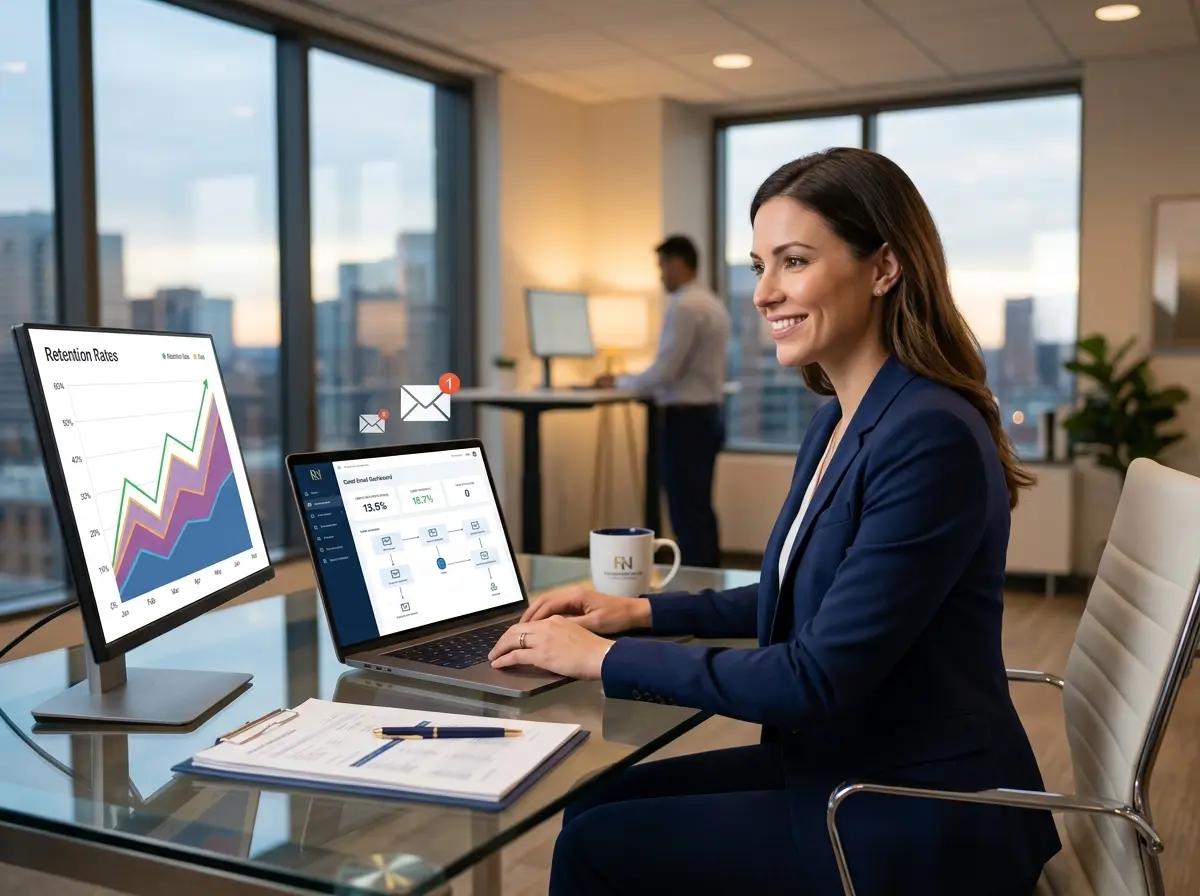
Here's the reality: the first few days after someone subscribes to your email list are the most important. According to various email marketing studies, welcome emails generate up to 4x more opens and 5x more clicks than standard promotional emails. That window of engagement is golden, and most retail businesses either ignore it entirely or treat it like an afterthought.
A well-crafted welcome email series doesn't have to be complicated. You don't need a marketing degree, a team of copywriters, or some enterprise-level automation platform. You need a clear strategy, a few well-timed emails, and a genuine desire to make your new subscriber feel like they made a great decision. This guide will walk you through exactly how to do that — practically, effectively, and without making your new subscribers want to hit "unsubscribe" before they even finish reading.
Building Your Welcome Series From the Ground Up
How Many Emails Do You Actually Need?
Short answer: three to five. Long answer: still three to five, but let's talk about why. A single welcome email is better than nothing, but it puts enormous pressure on one message to do everything — introduce your brand, deliver on any signup incentive, build trust, and drive action. Spreading that work across a short series gives each email a focused job, and it keeps your brand top-of-mind during that critical first week when interest is highest.
A simple, effective structure for retail businesses looks something like this: Email 1 delivers on your promise (the discount, the freebie, the exclusive content — whatever got them to subscribe) and warmly introduces your brand. Email 2 tells your story and builds connection. Email 3 showcases your best-selling products or most popular services. Email 4 (optional but recommended) handles social proof — reviews, testimonials, or a "customers love this" spotlight. Email 5 (optional) delivers a second-chance offer or a soft urgency nudge if they haven't made a purchase yet.
Timing Is Everything (But Don't Be Creepy About It)
There's a fine line between "helpfully timely" and "are you watching me?" Your first email should arrive immediately — within minutes of signup. After that, space things out thoughtfully. A good rule of thumb is to send Email 2 one day after the first, Email 3 two to three days later, and any remaining emails every two to three days thereafter. The whole series should wrap up within about ten days to two weeks.
Avoid the temptation to dump all five emails in the first 48 hours just because you're excited. Your new subscriber has a life. They also have other emails. Give them room to breathe, and they're far more likely to actually read what you send.
Subject Lines: The Bouncer at the Door
It doesn't matter how brilliant your email content is if nobody opens it. Your subject line is the bouncer — it decides who gets in. For welcome emails specifically, clarity beats cleverness. A subject line like "Here's your 15% off — welcome to the family!" will almost always outperform something vague like "Something special is waiting for you…" People want to know what they're getting before they click. Use their first name when you have it, keep it under 50 characters for mobile readability, and for the love of all things good, avoid ALL CAPS and excessive exclamation points!!!
Tools and Tech That Make Your Life Easier
Email Platforms Worth Your Time
You don't need to build your welcome series in a spreadsheet and send emails one by one (please tell us you're not doing that). Platforms like Mailchimp, Klaviyo, and ActiveCampaign all offer automation tools that let you set up a welcome sequence once and let it run indefinitely. Klaviyo is particularly popular with retail and e-commerce businesses because of its robust segmentation and integration with most point-of-sale and online store platforms. Mailchimp is a solid, user-friendly starting point if you're just getting into email marketing. Choose the one that fits your budget and technical comfort level — and then actually use it.
How Stella Fits Into Your Customer Engagement Strategy
Email is a powerful tool, but it's one piece of a larger customer experience puzzle. If you're running a physical retail location, Stella — the AI robot employee and phone receptionist — can be a natural on-site extension of the same welcoming energy you're building in your email series. Positioned inside your store, Stella proactively greets customers, answers questions about products and promotions, and can even help collect customer information through conversational intake forms — which means more subscribers for that welcome series you just built.
On the phone side, Stella answers calls 24/7 with the same knowledge she uses in person, so when a new subscriber calls after reading one of your emails, they're met with the same consistent, informed, professional experience. Her built-in CRM also lets you manage customer contacts with custom tags and AI-generated profiles — helpful for keeping your email list organized and your customer data clean. It's the kind of seamless experience that turns first-time subscribers into loyal regulars.
Writing Emails That Actually Get Read (And Acted On)
Nail Your Brand Voice and Keep It Consistent
Your welcome series is often the first extended conversation a customer has with your brand in writing. This is your chance to establish a voice — and stick to it. Are you warm and neighborly? Sharp and sophisticated? Fun and a little irreverent? Whatever it is, make sure every email in the series sounds like it came from the same person. Inconsistency in tone is one of those subtle things that makes subscribers feel slightly uneasy without being able to put their finger on why.
Write like a human being, not a press release. Use "you" and "we" liberally. Avoid jargon. If you sell handmade candles, you don't need to describe your products as "artisanal olfactory experiences crafted with sustainable sourcing methodologies." You just sell really good candles. Say that.
Every Email Needs One Clear Call to Action
One of the most common email marketing mistakes is asking subscribers to do too many things at once. Visit the website. Follow on Instagram. Leave a review. Use the discount code. Join the loyalty program. That's not an email — that's a to-do list, and nobody asked for one of those.
Each email in your welcome series should have one primary call to action. In Email 1, it's to use the welcome discount. In Email 2, it might be to read your brand story page or follow you on social media. In Email 3, it's to shop a curated collection. One job per email. Make the button or link obvious, and make sure it leads somewhere useful and functional — not a 404 page, not a homepage with no clear direction.
Personalization Beyond "Hey [First Name]"
Personalization in email marketing has come a long way beyond inserting someone's first name into a subject line (though yes, still do that). Modern email platforms let you segment your welcome series based on how someone subscribed — did they sign up in-store, through your website, or during a specific promotion? Tailor the first email accordingly. Someone who signed up at your checkout counter has a different context than someone who found you through a Google search at midnight.
You can also personalize based on what they expressed interest in during signup. If your intake form asked whether they're shopping for themselves or as gifts, use that. If you know they came in during a seasonal sale, reference it. Small touches of relevance go a long way toward making an email feel like a message rather than a mass broadcast.
Quick Reminder About Stella
Stella is an AI robot employee and phone receptionist designed to help businesses of all sizes — retail shops, service providers, restaurants, and more — deliver a consistent, professional customer experience. She stands inside your physical location to engage and assist walk-in customers, and she answers phone calls around the clock so no lead or question ever goes unanswered. At just $99/month with no upfront hardware costs, she's one of the more surprisingly affordable upgrades a growing business can make.
Your Next Steps Toward a Welcome Series That Works
You now have everything you need to stop leaving money on the table with a nonexistent (or embarrassingly thin) welcome email strategy. Here's how to move from reading to doing:
- Choose your email platform if you don't already have one — Klaviyo for retail-focused automation, Mailchimp for simplicity and budget-friendliness.
- Map out your series — decide on three to five emails, assign each one a single purpose, and sketch out the timing.
- Write the emails — start with Email 1 (deliver the incentive, warm welcome, brand intro) and work your way through. Keep each one focused, human, and on-brand.
- Set up automation — build the sequence in your platform, test it by subscribing yourself, and fix anything that looks off.
- Review and optimize — after a few weeks, check your open rates, click rates, and conversion data. Adjust subject lines, CTAs, or timing based on what the numbers tell you.
A great welcome series doesn't just make a good first impression — it builds the foundation for a long-term customer relationship. And in retail, long-term customer relationships are the whole game. You've already done the hard part of getting someone to subscribe. Now show them it was worth it.