Your Phone Is Ringing. Is It Booking Appointments — or Just Wasting Everyone's Time?
Let's be honest: most medical spas spend a fortune on marketing to get the phone ringing, and then fumble the call. A potential client who just saw your Botox special on Instagram calls in, gets put on hold for four minutes, and books with your competitor down the street instead. Congratulations — you just paid to advertise for someone else.
The good news is that a well-crafted phone script can turn your front desk from a bottleneck into a booking machine. Not a robotic, read-from-a-card script that makes callers feel like they're talking to a DMV employee — but a natural, conversational guide that leads potential clients through a smooth, confidence-building experience that ends with an appointment on the books.
Whether your phone is answered by a human receptionist, an AI assistant, or some combination of the two, the script behind the conversation is what makes or breaks the call. Here's how to write one that actually works.
The Anatomy of a High-Converting Phone Script
A great medical spa phone script isn't just a greeting and a calendar link. It has structure, intention, and a healthy respect for the fact that your caller is a real human being who could just as easily close the tab — or in this case, hang up. Every line should serve a purpose.
Start With a Warm, Professional Greeting That Sets the Tone
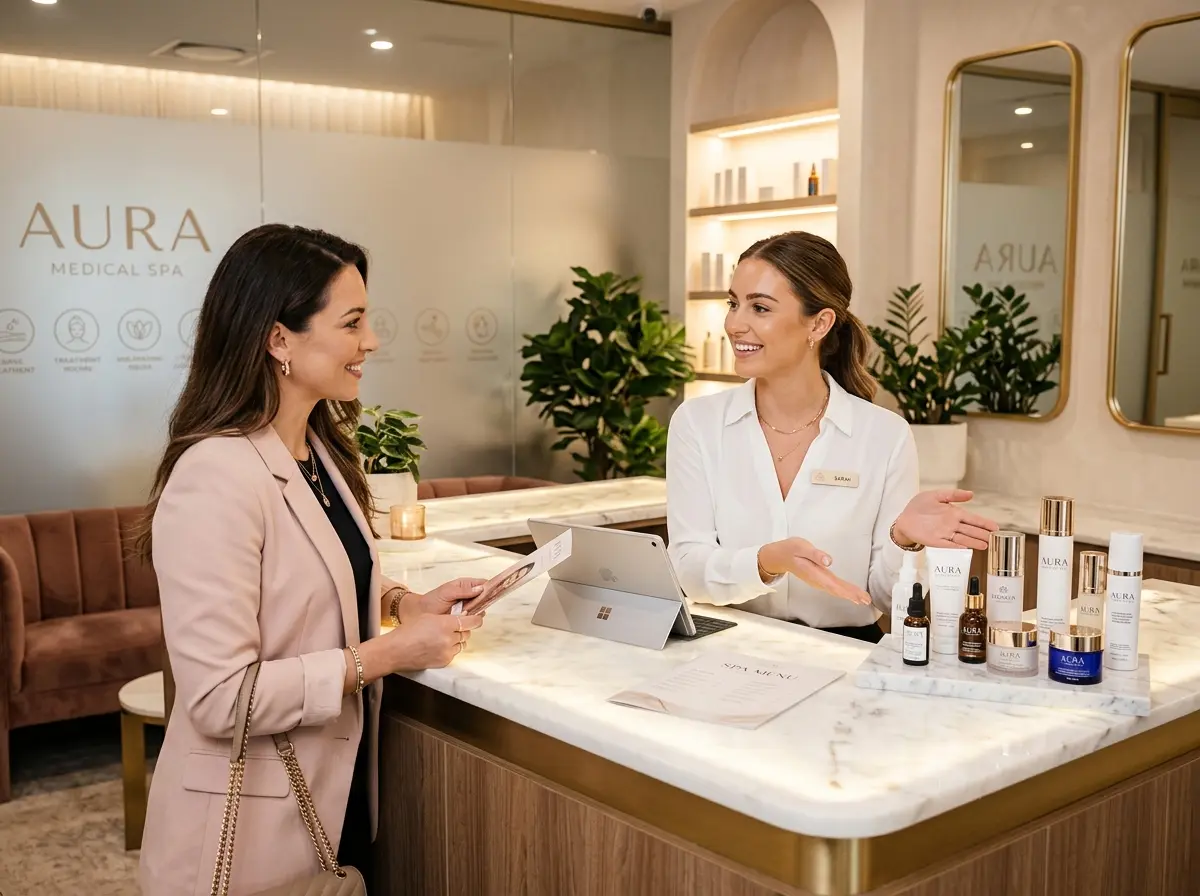
First impressions happen fast — we're talking within seconds. Your greeting should immediately communicate three things: who they've reached, that you're glad they called, and that you're ready to help. Something like:
"Thank you for calling Radiance Medical Spa! This is [Name]. How can I help you today?"
Simple, right? Yet countless spas answer with a rushed, mumbled business name and a distracted-sounding "hold please." That's not a greeting — that's a rejection. Your opening line is a micro-moment of trust-building, and it costs you nothing to get it right.
Avoid overly formal language that sounds stiff, and skip the corporate jargon. Medical spas are in the business of making people feel good — your phone manner should reflect that from the very first word.
Qualify the Caller and Understand Their Goal
After the greeting, your script should guide staff to ask a few light qualifying questions. Not an interrogation — just enough to understand what the caller is looking for so you can recommend the right service and the right appointment slot.
For example: "Have you visited us before, or would this be your first time?" is a simple question that tells you a lot. First-time callers may need a bit more reassurance and information before they commit. Returning clients often just need availability confirmed.
From there, follow up with something like: "What were you thinking about today — are you interested in a specific treatment, or would you like me to walk you through some of our options?" This opens the door to a natural, consultative conversation rather than a transactional exchange. It also sets the stage for upselling — which we'll get to in a moment.
Handle Objections Before They Derail the Booking
Price questions, concerns about downtime, uncertainty about whether a treatment is right for them — these are the speed bumps that stop bookings cold if your staff isn't prepared. Your script should include ready-made responses to the most common objections your spa encounters.
For pricing objections, a confident, non-defensive response goes a long way: "Our treatments start at $X, and we also offer package pricing that can bring the cost down significantly. A lot of our clients find the package option pays for itself after just two visits." That's not pushy — that's helpful. There's a difference, and your callers can feel it.
Build a short objection-handling section into your script that covers price, time commitment, first-time nervousness, and safety questions. Review and update it quarterly as new questions emerge from real calls.
Where Technology Can Take the Load Off Your Front Desk
Here's a fun reality check: even with the world's best phone script, a human receptionist can only be in one place at a time. They take breaks. They get overwhelmed during busy periods. They occasionally have bad days and let it show. And when the phone rings at 8 PM on a Tuesday, they're definitely not answering it.
Let AI Handle the After-Hours (and the In-Between Hours)
Stella, the AI robot employee and phone receptionist, is built for exactly this situation. She can answer calls 24/7 using the same knowledge and conversational approach your best receptionist would use — including following a custom phone script tailored to your spa. She can collect client intake information through conversational forms, qualify callers, promote your current specials, and forward calls to human staff when the situation calls for it.
Stella also comes with a built-in CRM that captures caller details, generates AI-powered contact profiles, and lets you tag and segment clients — so you're not just answering calls, you're building a database of warm leads and repeat customers every time the phone rings. For a medical spa juggling consultations, treatments, and follow-ups, that kind of organized client data is genuinely priceless. If you also have a physical location, she's available as a friendly, human-sized in-store kiosk that greets walk-ins and engages them proactively while your staff focuses on treatments.
Closing the Call and Locking In the Appointment
This is where a lot of otherwise decent phone interactions fall apart. The caller is interested, they've gotten their questions answered, and then… the receptionist asks an open-ended question like "So do you want to maybe schedule something?" That wishy-washy energy is contagious. The caller picks it up and suddenly they're "thinking about it" instead of booked.
Use an Assumptive Close — It's Not Pushy, It's Confident
Train your staff (and script your AI) to use assumptive language when moving toward the booking. Instead of "Would you like to make an appointment?", try "Let me check availability for you — are mornings or afternoons generally better for you?" You've assumed they want to book and moved straight to logistics. This subtle shift dramatically increases conversion rates.
According to industry data, practices and spas that use structured phone scripts with assumptive closing techniques convert inquiry calls at rates 30–40% higher than those with no scripted framework. That's not a trivial difference — that's the gap between a slow month and a full calendar.
Confirm, Recap, and Set Expectations
Once the appointment is locked in, the script isn't over. A strong close includes a verbal confirmation of the details — date, time, treatment, location — followed by a brief overview of what the client should expect. "We'll send you a confirmation text with everything you need. Plan to arrive about 10 minutes early so we can get your intake form completed — and if you have any questions before then, don't hesitate to call us back."
This small step reduces no-shows, builds anticipation, and signals professionalism. Clients who feel well-prepared and well-informed are more likely to show up, more likely to leave a positive review, and more likely to rebook. That's not just a phone script tip — it's a long-term retention strategy baked into a 30-second closing routine.
Don't Forget the Upsell Opportunity
The end of a booking call is a genuinely good moment to mention a complementary service, an upcoming promotion, or a membership program — because the client is already in a "yes" mindset. Keep it brief and non-pressuring: "One thing I should mention — we're running a special on our HydraFacial add-on through the end of the month. A lot of clients pair it with [their booked treatment] and love the results. Would you like me to add that on?" Some will say no. Plenty will say yes. Either way, you only had to ask once.
Quick Reminder About Stella
Stella is an AI robot employee and phone receptionist that answers calls around the clock, follows your custom scripts, collects intake information, manages client contacts through a built-in CRM, and greets in-person visitors at your kiosk — all for $99/month with no upfront hardware costs. She's the teammate who never calls in sick, never puts a caller on hold to chat with a coworker, and never forgets to mention the monthly special.
Your Next Steps Toward a Calendar That Books Itself
Writing a better phone script isn't a massive project — it's an afternoon of intentional work that pays dividends for months. Start by auditing your current calls. Listen to recordings if you have them. Identify where callers disengage, where staff stumbles, and where bookings fall through. Then build your script around fixing those specific moments.
Here's a simple action plan to get you started:
- Draft a greeting that's warm, professional, and consistent across every call.
- Write qualifying questions that help staff understand the caller's needs quickly.
- Build an objection-handling section covering price, time, and first-timer hesitation.
- Script an assumptive close that moves naturally from conversation to confirmed appointment.
- Add a confirmation and upsell line to finish every call strong.
- Test it, refine it, and train your team on it — then audit it again in 90 days.
Your phone is one of the highest-converting tools in your entire business — if you treat it that way. A strong script, well-executed, turns curious callers into loyal clients. And if you want that script running 24 hours a day without a single sick day or scheduling conflict, it might be time to meet Stella.