Your Store Sells Gear. Your Community Needs More Than That.
Here's a hard truth: anyone can buy a tennis racket on Amazon in about 45 seconds. So if your sporting goods store is just selling tennis rackets, you're already losing. The businesses that thrive — the ones that survive economic downturns, big-box competition, and the relentless gravitational pull of online shopping — are the ones that become places people actually want to go. Not just to buy things, but to belong to something.
The good news? Sporting goods stores are uniquely positioned to become exactly that kind of place. Sports bring people together. Fitness creates community. And your store already sits at the intersection of both. You just need to be intentional about it. This guide will walk you through practical, proven strategies to transform your retail space from a product shelf into a genuine community hub — and in the process, build the kind of customer loyalty that no two-day shipping policy can replicate.
Building the Foundation: Events, Experiences, and Partnerships
Host Events That Go Beyond the Sale
The fastest way to build community is to give people a reason to show up even when they're not shopping. Consider hosting free or low-cost events that align with the sports and activities your store supports. A running store can organize weekly group runs that depart from the front door. A store focused on outdoor gear can host gear swap nights, trail planning sessions, or survival skills workshops. A shop that sells team sports equipment can run youth clinics on weekends.
These events do something magical: they associate your store with a feeling rather than a transaction. Customers who sweat through a Saturday morning run together, then walk back into your store for water and a browse, aren't just shoppers anymore — they're regulars. According to research from Retail Dive, experiential retail strategies can increase customer spending by up to 40% compared to purely transactional shopping experiences. That's not nothing.
Partner with Local Teams, Schools, and Clubs
You don't have to build your community from scratch. It's already out there — in the form of local rec leagues, school athletic programs, hiking clubs, yoga studios, and cycling groups. The key is to position your store as their home base.
Reach out to local coaches and offer team discounts in exchange for a mention in their newsletter or a sign in the dugout. Sponsor a youth soccer league and host their end-of-season celebration in your parking lot. Partner with a local gym to cross-promote each other's services. These relationships cost relatively little and return enormous goodwill — plus you get access to entire networks of potential customers who trust the people referring them to you.
Create a Loyalty Program Worth Talking About
Generic punch cards are fine. A loyalty program that actually builds community is better. Think beyond discounts and consider what your best customers actually care about: early access to new gear, invitations to exclusive events, recognition on your social media, or a vote in deciding what products you stock next. When customers feel like insiders, they become advocates. And advocates do your marketing for free.
Using Technology to Keep the Community Warm
Let Smart Tools Handle the Logistics So You Can Focus on People
Building community is fundamentally a human endeavor. It takes genuine conversation, presence, and warmth. But the logistics of running a store — answering repetitive questions, greeting walk-ins, managing phone calls, tracking customer info — can quietly consume every hour you planned to spend on the good stuff. That's where smart technology earns its keep.
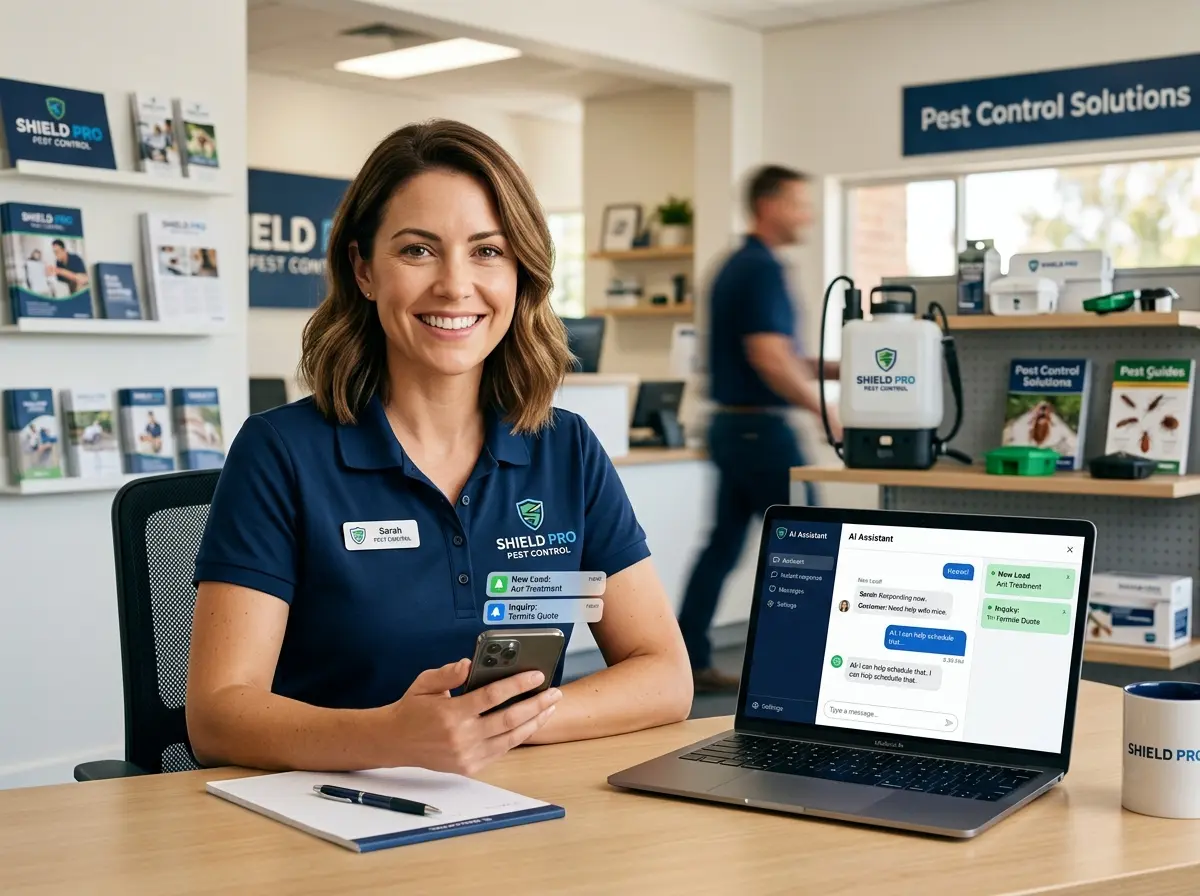
Stella, the AI robot employee and phone receptionist, is one example worth considering. As an in-store kiosk, she stands inside your shop and proactively greets customers, answers questions about products, services, hours, and promotions, and even upsells or cross-sells relevant gear — all without pulling your staff away from real relationship-building moments. On the phone side, Stella answers calls 24/7, handles routine inquiries, and forwards calls to human staff when the situation calls for it. She also captures customer information through conversational intake forms and stores it in a built-in CRM — so you always know who your customers are, what they've asked about, and how to follow up meaningfully. At $99/month with no upfront hardware costs, it's a practical way to stay professional and responsive without burning out your team.
Creating a Physical Space That Invites People to Stay
Design for Dwell Time, Not Just Transactions
Walk into the average sporting goods store and it feels like a warehouse with better lighting. Products on racks, signs pointing to departments, registers near the exit. Functional, sure — but not exactly the kind of place that makes you want to linger. If you want your store to feel like a community hub, it needs to actually feel like one physically.
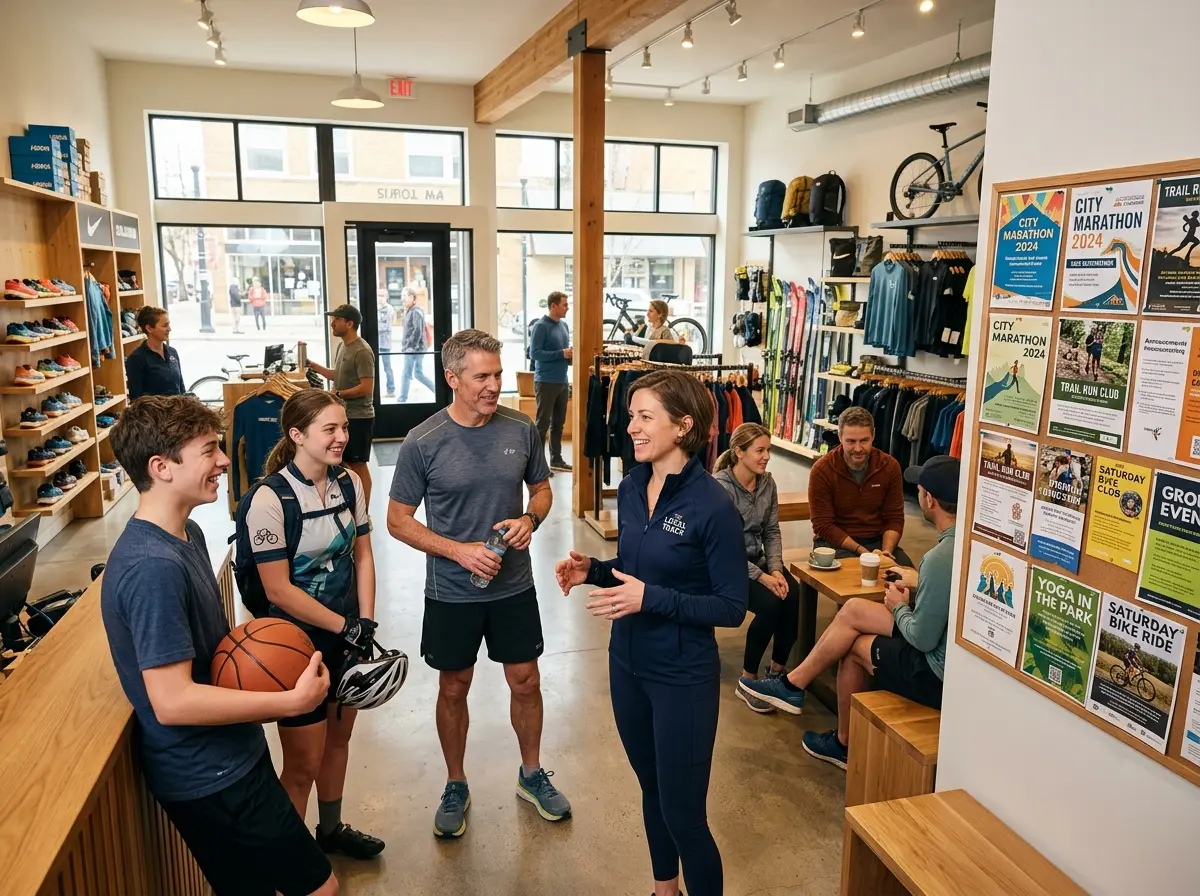
Consider carving out a dedicated community corner: a bulletin board with local event flyers, a small seating area where regulars can chat, a TV showing local game highlights or trail cams from nearby hiking spots. Create a "local legends" wall that celebrates community athletes — youth teams, weekend warriors, age-group competitors. Display real photos of real customers using your gear. These small design choices signal to every person who walks in that this place is for them, not just for their wallet.
Make Your Staff Ambassadors, Not Just Associates
Your team is your most powerful community-building asset. Train them not just on product knowledge, but on asking genuine questions: "What are you training for?" or "Are you part of any local clubs we should know about?" Encourage staff to participate in the events you host. When customers see your employees at the group run on Saturday morning, it dissolves the transactional barrier completely. You're not a store anymore — you're a crew.
Invest in ongoing staff education, too. A team member who can knowledgeably discuss the difference between trail running shoes and road runners, explain the mechanics of a proper bike fit, or recommend the right base layer for a winter backpacking trip isn't just helpful — they're invaluable. That level of expertise is the one thing no online retailer can replicate at scale.
Dedicate Space for Gear Demo and Try-Before-You-Buy Experiences
If your square footage allows, create dedicated demo zones. A small putting mat for golf equipment, a treadmill for testing running shoes, a climbing wall section, or an archery lane. Experiential retail isn't just for massive chains — smaller stores can create scaled-down versions that still deliver the "wow" moment that keeps people coming back and talking about your shop to their friends. The experience itself becomes shareable content in an age when word-of-mouth has gone digital.
Quick Reminder About Stella
Stella is an AI robot employee and phone receptionist designed to help business owners like you stay present with customers without dropping the operational ball. She greets walk-ins, promotes deals, answers questions in-store, and handles phone calls around the clock — all for a flat $99/month subscription with no hardware costs upfront. If you're building a community hub, she's the kind of always-on support that keeps the experience consistent even on your busiest days.
Start Small, Think Long-Term, and Show Up Consistently
Building a community hub doesn't happen in a weekend. It's a long game, and that's actually great news — because most of your competitors aren't willing to play it. Here's how to get started without overwhelming yourself:
- Pick one event to host in the next 30 days. Keep it simple. A group walk, a gear swap, a free skills clinic. Promote it in-store, on social media, and through any local partnerships you already have.
- Identify two or three local organizations to contact this week. A school, a rec league, a fitness studio. Introduce yourself and explore what a mutually beneficial relationship might look like.
- Make one physical change to your store layout that signals community — even if it's just a bulletin board or a "local athletes" photo wall.
- Audit how your store handles customer interactions — both in-person and by phone. Are customers being greeted promptly? Are calls being answered professionally? Are you capturing customer data in any organized way? If the answer to any of these is "not really," that's your next priority.
The sporting goods stores that will still be standing in ten years won't just be the ones with the best inventory or the lowest prices. They'll be the ones where people feel like they belong — where the owner knows their name, where their teammates shop, where they trained for their first 5K, and where they celebrated finishing it. That's a business model no algorithm can disrupt.
So get out from behind the counter, open your doors a little wider, and start building something that matters. The gear practically sells itself once people love the place it comes from.