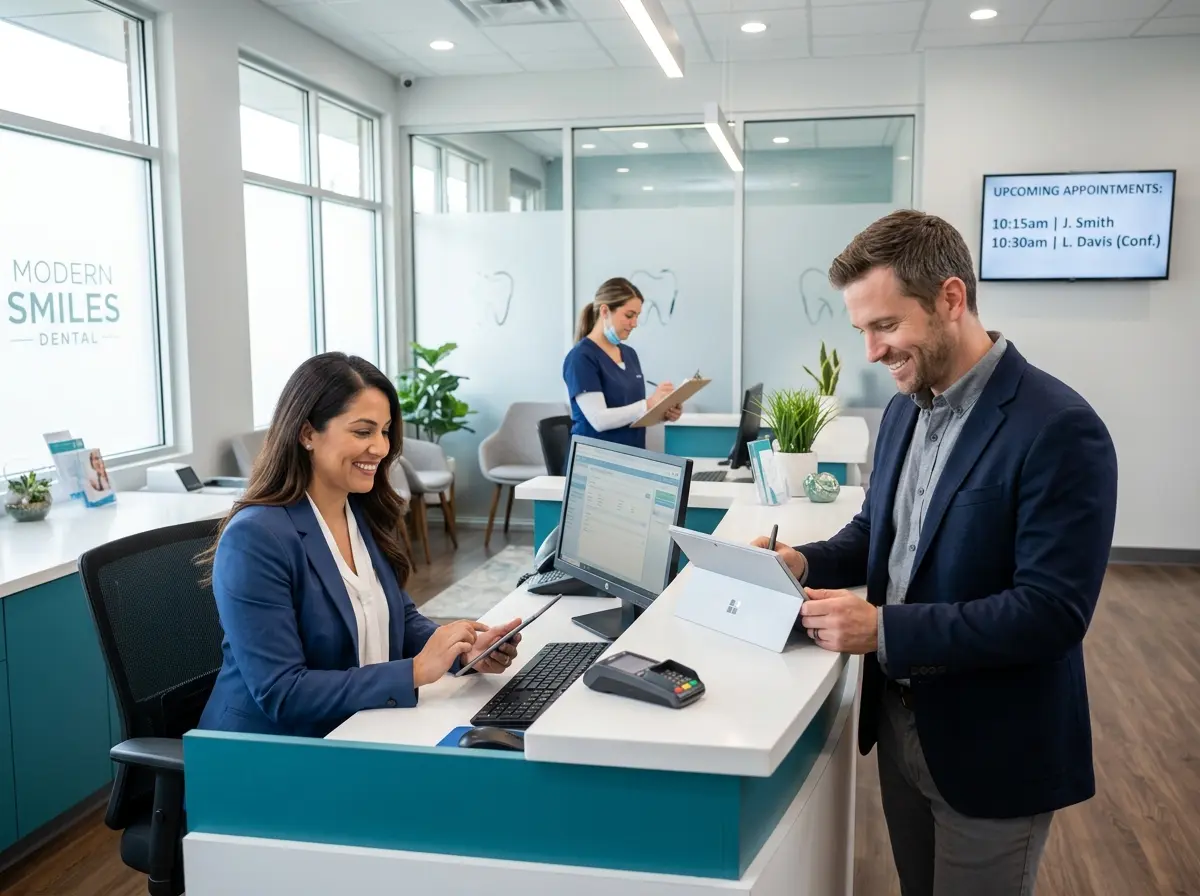
Is Your Front Desk Working For You — Or Against You?
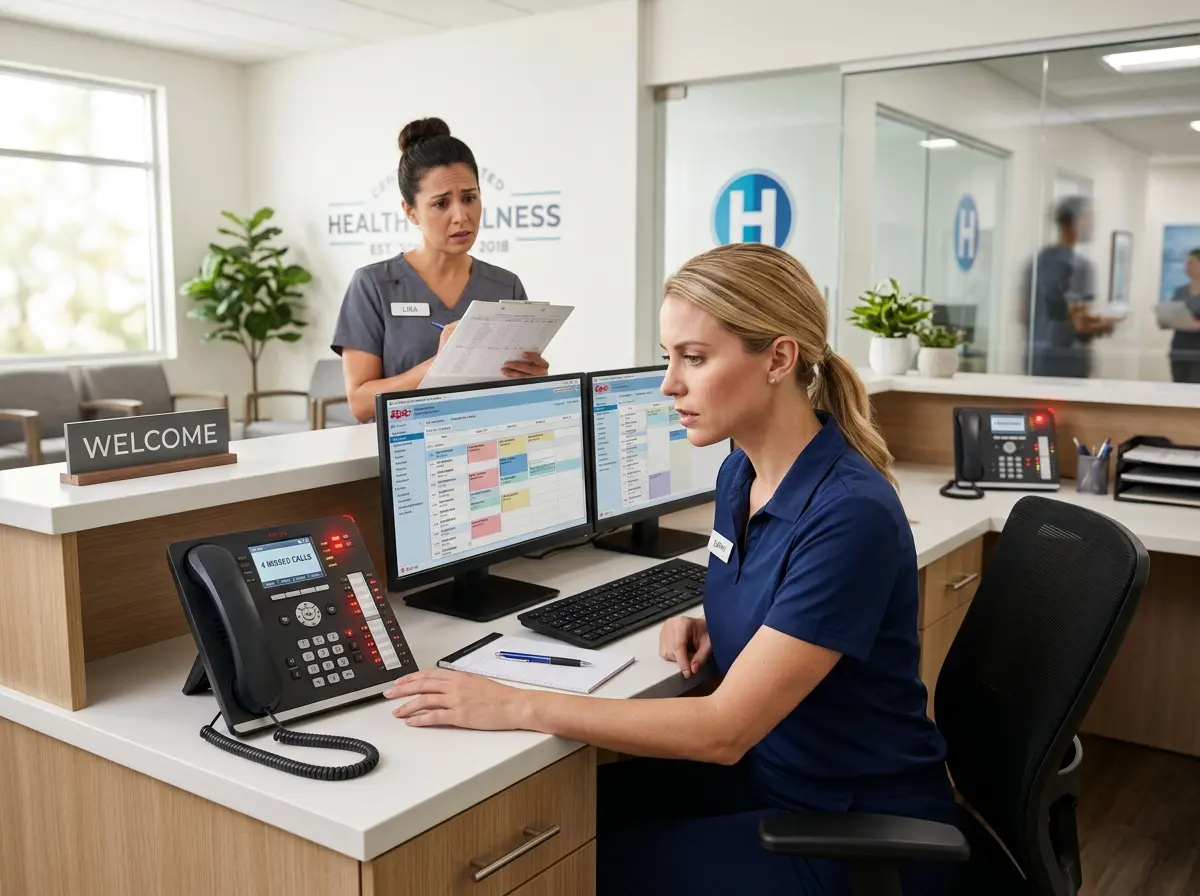
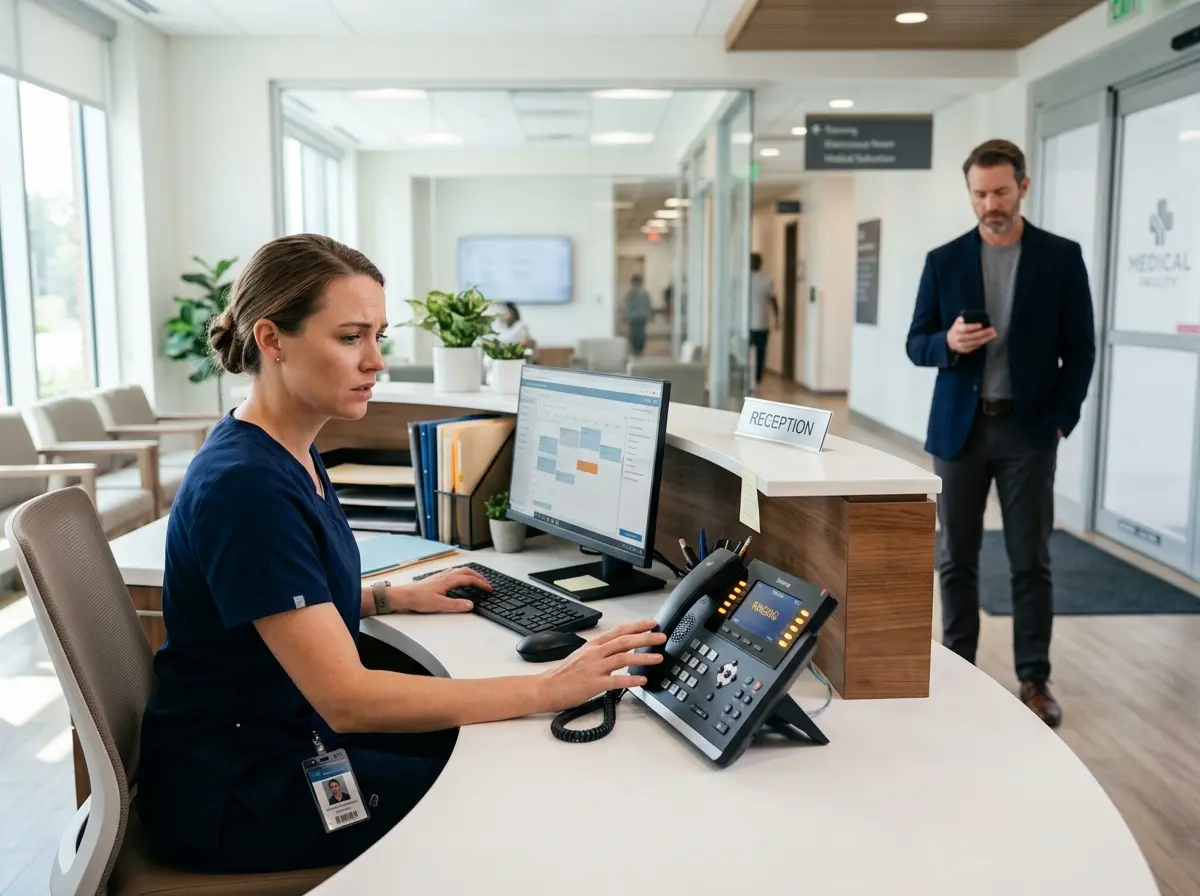
Let's paint a familiar picture: A new patient calls your dental office on a Tuesday afternoon. Your receptionist is checking in a walk-in, the phone rings four times, goes to voicemail, and that potential new patient — who was already nervous about making the appointment in the first place — hangs up and Googles the next dentist on the list. Meanwhile, your schedule has a gaping hole next Thursday that no one filled, and your no-show rate is quietly eating into your monthly revenue like, well, untreated tooth decay.
Sound familiar? You're not alone. According to the American Dental Association, no-show rates in dental practices average between 5% and 10%, with some practices seeing rates as high as 20%. Every missed appointment isn't just an empty chair — it's lost revenue, wasted staff time, and a scheduling puzzle that puts pressure on your entire day. And the problem often starts before the patient even walks through the door, with clunky intake processes that frustrate patients and overwhelm front desk staff.
The good news? Streamlining new patient intake and reducing no-shows doesn't require a complete overhaul of your practice. It requires smarter systems, proactive communication, and a front desk that can actually keep up. Let's break it down.
Fixing the First Impression: Rethinking New Patient Intake
The intake process is your patient's first real experience with your practice — and first impressions in dentistry matter enormously. People are already a little (or a lot) anxious about dental visits. If your intake process adds friction, confusion, or a long hold time to that anxiety, you've already started the relationship on the wrong foot.
Ditch the Paper Avalanche
If your new patient intake still involves a clipboard, three carbon-copy forms, and a pen that barely works, it's time to evolve. Digital intake forms — whether completed online before the appointment or through a kiosk in your waiting area — dramatically reduce the administrative burden on your front desk staff and collect better, more legible data. Patients can fill out their medical history, insurance information, and consent forms from their couch the night before, which means less time in the waiting room and a smoother handoff to the clinical team.
Practices that implement digital pre-visit intake report measurable improvements in patient satisfaction scores and a significant reduction in appointment processing time. Patients arrive prepared, staff arrive informed, and everyone's blood pressure is a little lower. That's a win across the board.
Ask the Right Questions — Conversationally
One of the underrated improvements you can make to intake is simply changing how you collect information. Long, clinical questionnaires feel impersonal and exhausting. When intake feels more like a conversation — whether over the phone or through a guided digital experience — patients are more likely to provide complete, accurate information. This matters clinically (incomplete health histories create real risks) and operationally (incomplete insurance info creates billing nightmares).
Train your front desk staff to walk through intake questions conversationally rather than robotically reading from a form. Better yet, use technology that can do this automatically, collecting patient information in a natural, friendly dialogue that doesn't feel like filing taxes.
Set Expectations Before Day One
New patients who know exactly what to expect — what to bring, how long the appointment will take, what the first visit covers, where to park — are more likely to show up and less likely to cancel out of uncertainty or anxiety. Send a detailed confirmation email or text after booking that covers all of this. Include a short video walkthrough of your office if you really want to impress people. Familiarity reduces anxiety, and reduced anxiety reduces no-shows. It's not rocket science, but it does require intentionality.
How Technology (Including a Little AI Help) Can Do the Heavy Lifting
Your front desk team is talented, but they are also human — which means they can only handle one phone call at a time, they take lunch breaks, and they occasionally have bad days. Technology exists precisely to fill the gaps that human capacity creates, and dental practices that leverage it well run smoother, more profitable operations.
Let AI Handle the Phones and Intake Simultaneously
Stella, the AI robot employee and phone receptionist, is particularly well-suited for dental offices juggling a busy front desk and a steady stream of incoming calls. She answers phone calls 24/7 — including after hours when potential new patients are finally brave enough to make that appointment — and can walk callers through a conversational intake process, collecting patient information that flows directly into her built-in CRM. For practices with a physical location, she can also greet patients at the kiosk in the waiting area, answer common questions about services and insurance, and handle intake forms on-site. No hold music, no voicemail purgatory, no missed opportunities.
Stella's CRM features custom fields, tags, AI-generated patient profiles, and push notifications to staff — so your team always has context before picking up where she left off. The result is an intake experience that feels seamless to the patient and generates zero extra work for your receptionist.
Reducing No-Shows: A Strategy That Actually Works
Reducing no-shows is not about punishing patients with fees (though a clear cancellation policy doesn't hurt). It's about building a system of touchpoints that keep the appointment top of mind, remove barriers to attendance, and make it genuinely easy for patients to reschedule when life happens — rather than just not showing up.
Build a Multi-Touch Reminder System
A single reminder the day before is no longer enough. The gold standard for appointment reminders now involves multiple touchpoints across multiple channels. A confirmation text or email immediately after booking, a reminder one week out, another three days before, and a final nudge the morning of the appointment — this cadence has been shown to reduce no-show rates by as much as 30% to 50% in healthcare settings.
Critically, each reminder should make it dead simple to confirm, reschedule, or cancel with a single tap. The harder you make it to reschedule, the more likely a patient is to simply ghost you. Give them an easy out, and you'll often get your chair filled by someone else from your waitlist instead of sitting with an empty slot and a frustrated hygienist.
Create a Waitlist That Actually Works
Most practices have a cancellation list, but very few manage it proactively. Your waitlist should be a living document — organized by patient availability, procedure type, and insurance — so that when a cancellation opens up, you can fill it in minutes rather than hours. Pair this with a text-based notification to waitlist patients and watch your last-minute cancellation losses shrink considerably. Patients who get a coveted earlier appointment? They're grateful. They show up. They refer their friends. It's a cycle worth investing in.
Address the Anxiety Elephant in the Room
Dental anxiety is one of the most commonly cited reasons for no-shows and last-minute cancellations. Practices that acknowledge this openly — and do something about it — retain more patients. Consider including a brief note in your appointment confirmations that normalizes dental anxiety and outlines what your practice does to make visits comfortable. Sedation options, a gentle approach, noise-canceling headphones, Netflix in the treatment room — whatever your differentiators are, lead with them in your communications. A patient who remembers that your office has warm blankets and a TV on the ceiling is a patient who shows up.
A Quick Reminder About Stella
Stella is an AI robot employee and phone receptionist built for businesses like yours. She answers calls around the clock, engages walk-ins at her in-office kiosk, handles intake conversationally, manages your CRM, and never calls in sick. At $99/month with no upfront hardware costs, she's one of the more straightforward staffing decisions you'll make this year.
Your Next Steps Start Today
Streamlining new patient intake and reducing no-shows isn't a single project with a finish line — it's an ongoing commitment to removing friction from your patient experience. But the practices that invest in getting this right don't just see better revenue numbers. They see higher patient satisfaction, stronger referrals, and a front desk team that isn't constantly overwhelmed and on the verge of quitting.
Here's where to start:
- Audit your current intake process — time how long it takes from first call to completed intake form, and identify every point of friction.
- Implement digital pre-visit intake forms — if you haven't already, this is the single highest-impact change you can make immediately.
- Build a multi-touch reminder system — automate it so it runs without your staff lifting a finger.
- Revive your waitlist strategy — organize it properly and automate notifications so cancellations get filled fast.
- Evaluate your after-hours phone coverage — if new patients are reaching voicemail after 5 PM, you're leaving appointments on the table.
Your chairs are valuable. Your patients' time is valuable. Your staff's energy is valuable. A few strategic upgrades to your intake and communication systems protect all three — and give your practice the professional, responsive presence that keeps patients coming back and sending their friends.
Now go fill that Thursday slot.