Introduction: Because You Deserve to Actually Sleep
Let's be honest — you didn't start your business so you could be awake at 2 a.m. wondering if that voicemail from a potential customer was important. And yet, here we are. Leads don't exactly follow business hours, and neither do the people trying to reach you. Every missed call, every unanswered inquiry, every "I'll just try someone else" moment is money walking quietly out the door while you're catching up on well-deserved rest.
The good news? Automated scheduling and AI-powered tools have made it entirely possible to capture, qualify, and nurture leads around the clock — without cloning yourself or hiring a team that works vampire hours. The even better news is that setting this up isn't nearly as complicated as it sounds. In this post, we'll walk through exactly how to build a lead-capture system that keeps working long after you've powered down for the night.
Whether you run a salon, a law firm, a restaurant, or a one-person consulting shop, the principles are the same: automate the repetitive touchpoints, stay responsive at all hours, and let technology do the heavy lifting so your human team can focus on what actually requires a human.
Building the Foundation: What Automated Lead Capture Actually Means
It's Not Just a Contact Form Anymore
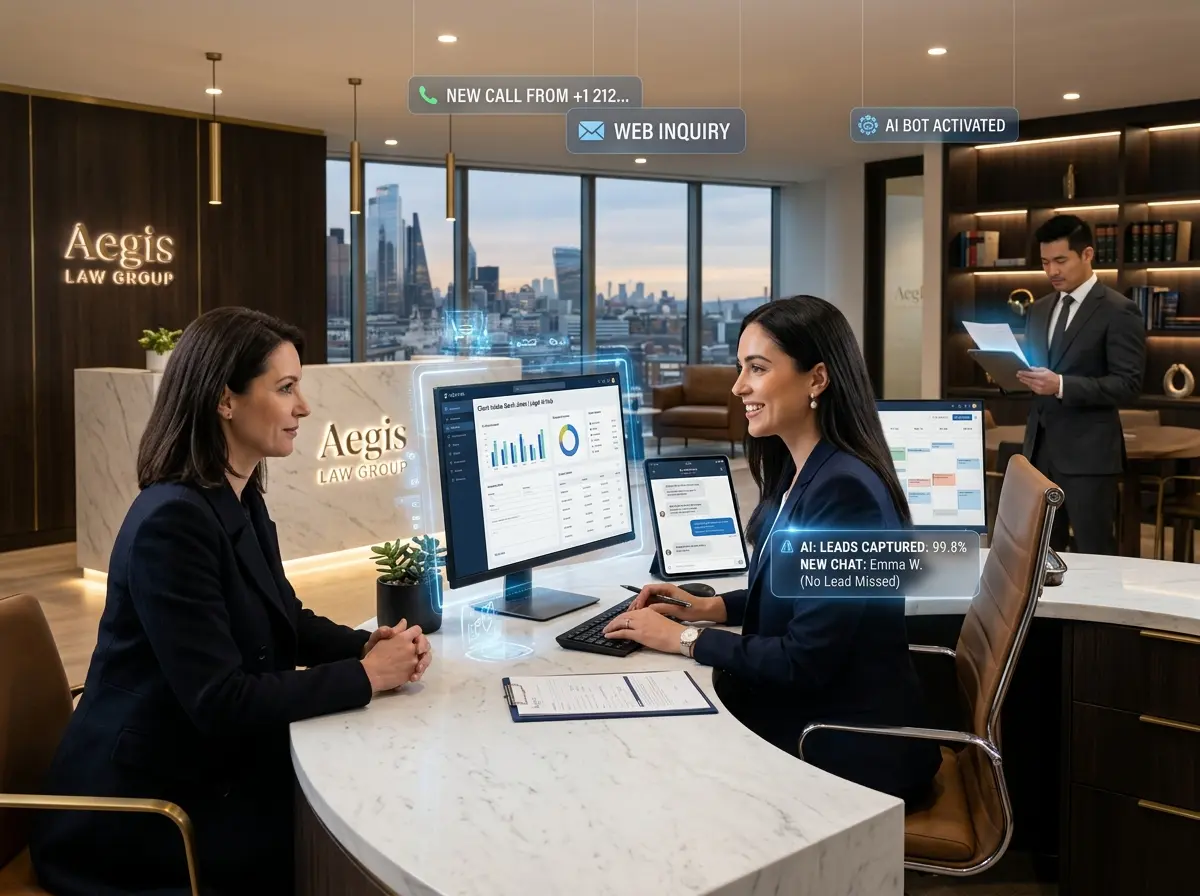
When most people hear "automated lead capture," they picture a dusty web form that emails them a spreadsheet. That's a good start, but we're living in a more sophisticated era now. True automated lead capture means a customer can reach you through any channel — phone, web, in-person kiosk, or chat — and get an immediate, intelligent response that collects their information, answers their questions, and moves them further down the funnel. No waiting. No voicemail black holes. No "we'll get back to you in 1-3 business days" energy.
According to research by Lead Connect, 78% of customers buy from the business that responds to them first. That stat should make every business owner sit up straight. Speed of response isn't just a nice-to-have — it's often the deciding factor between winning and losing a customer. Automated systems eliminate response lag entirely, which is exactly the kind of competitive edge that compounds over time.
Mapping Your Lead Entry Points
Before you automate anything, you need to know where your leads are actually coming from. Start by auditing your current touchpoints. Are potential customers calling your main line? Filling out a form on your website? Walking into your location and talking to whoever happens to be free? Each of these is an opportunity — and each one is a potential gap if it's not properly handled.
Once you've mapped your entry points, you can start building automated responses for each one. Your phone line gets an AI receptionist. Your website gets a conversational intake form. Your physical location gets a proactive greeter that never takes a lunch break. The goal is to ensure that no matter how a customer tries to reach you, they get an immediate, helpful, on-brand response that captures their information and keeps them engaged.
Qualifying Leads Automatically — Without Interrogating Anyone
Not all leads are created equal, and one of the smartest things you can do is build qualification logic into your automated intake process. This doesn't mean bombarding someone with 20 questions the moment they say hello. It means designing conversational flows that naturally collect useful information — what service they're interested in, their timeline, their budget range, their preferred contact method — so that by the time a lead reaches your team, you already know if they're worth pursuing and how to approach them.
A well-designed intake form or AI-driven conversation can do this elegantly. Think of it as your best salesperson running point — except this one never has a bad day and works every hour of every day.
Tools That Do the Work While You Don't
How Stella Fits Into Your Lead-Capture Strategy
Stella is a friendly AI robot employee and phone receptionist designed to handle exactly this kind of around-the-clock engagement. For businesses with a physical location, she operates as a human-sized kiosk that proactively greets customers, promotes current deals, answers product and service questions, and collects customer information through natural conversation — all without pulling your staff away from their actual work. For any business, including online-only operations and solopreneurs, she answers phone calls 24/7 with the same depth of knowledge she'd use in person.
What makes Stella particularly useful for lead capture is her built-in CRM and intake forms. When she collects customer information — whether through a phone call, the kiosk, or a web interaction — that data flows directly into a organized contact management system with custom fields, tags, notes, and AI-generated profiles. You wake up in the morning with a clean list of qualified leads, complete with context, rather than a pile of sticky notes and fragmented voicemails. At $99/month with no upfront hardware costs, she's a remarkably affordable way to ensure no lead slips through the cracks while you're off the clock.
Scheduling Systems That Actually Convert
Online Booking as a Lead Magnet
If your business involves appointments — and that covers a staggering range of industries, from medical offices to auto shops to fitness studios — then online booking isn't optional anymore, it's expected. More importantly, it's one of the highest-converting lead capture tools available. When someone can book an appointment at 10 p.m. on a Tuesday without waiting for your office to open, you've just removed every barrier between their intent and your calendar.
Platforms like Acuity Scheduling, Calendly, and industry-specific tools make it easy to set up booking flows that collect intake information, send automated confirmations, fire off reminders, and even follow up after the appointment. Pair this with a tool that can answer questions about your services in real time — by phone or in person — and you've created a seamless journey from "I'm curious" to "I'm booked" without a single human touchpoint required.
Automation Sequences That Nurture Leads Over Time
Capturing a lead is only the beginning. The real magic happens in the follow-up, and this is where most small businesses drop the ball entirely. Someone fills out a form, gets a generic confirmation email, and then... silence. Days pass. They forget about you. They find someone else.
Automated nurture sequences solve this. Using tools like Mailchimp, ActiveCampaign, or even a well-configured CRM, you can build email and SMS sequences that check in with leads, share relevant content, highlight promotions, and invite them to take the next step — all triggered automatically based on their behavior. Did they book a consultation but not show up? There's a sequence for that. Did they browse your pricing page three times without converting? There's a sequence for that too. The system works while you sleep, and it does so with a level of consistency your human team simply cannot match.
Setting Up Smart Triggers and Conditional Logic
The difference between a mediocre automation setup and a genuinely powerful one comes down to conditional logic. Rather than blasting every lead with the same message, smart systems send different follow-ups based on what someone actually did. A lead who attended a free consultation should get a different email than one who never showed up. A customer who asked about your premium service tier deserves a different pitch than one who was price-shopping your entry-level option.
Setting this up takes a bit of upfront effort, but the payoff is substantial. Most modern CRM and email platforms offer drag-and-drop automation builders that make this accessible even without a technical background. Invest an afternoon building these flows and they'll run quietly in the background for months — or years — without needing much attention.
Quick Reminder About Stella
Stella is an AI robot employee and phone receptionist that works around the clock — greeting customers at your physical location, answering calls for any type of business, collecting lead information through intake forms, and organizing everything in a built-in CRM. She's available for just $99/month with no hardware costs and virtually no ramp-up time. If you're building out a lead-capture strategy and you want the phone and in-person channels covered without adding headcount, she's worth a serious look.
Conclusion: Build It Once, Benefit While You Sleep
The businesses winning the lead-generation game right now aren't necessarily the ones with the biggest teams or the largest budgets. They're the ones who've built systems that work continuously — capturing interest, qualifying prospects, scheduling appointments, and following up without requiring constant human supervision. The technology to do all of this is available, affordable, and genuinely not that hard to implement.
Here's your actionable starting point:
- Audit your current lead entry points. Where are people trying to reach you, and what happens when they do? Identify the gaps.
- Set up automated intake at every touchpoint. Phone, web, and in-person should all have a reliable, intelligent first response that captures information.
- Add online booking if your business involves appointments. Make it easy for leads to commit at any hour.
- Build at least one nurture sequence. Even a simple 3-email follow-up after a new inquiry will dramatically outperform doing nothing.
- Add conditional logic over time. As your system matures, make it smarter by sending different messages to different types of leads.
You worked hard to build your business. Now let your systems work hard for you — even when you're sound asleep and entirely unavailable. That's not laziness. That's leverage.