Introduction: Stop Leaving Money on the Table (Your Intake Form Is Basically a Treasure Map)
Let's be honest — most med spas put a lot of thought into their intake forms. You've got questions about skin type, treatment history, allergies, concerns, goals, and maybe even a few lifestyle questions thrown in for good measure. And then what happens to all that information? It gets filed away, maybe glanced at briefly before a treatment, and then... forgotten. Meanwhile, your clients are walking out the door without the additional services they actually need — and would happily pay for — simply because nobody connected the dots.
Here's the thing: your intake form isn't just a liability shield or a pre-treatment checklist. It's a goldmine of personalization data that, when used strategically, can dramatically increase your average ticket value, boost client retention, and make every customer feel like you truly see them. And in a competitive med spa market where clients have options, that feeling is everything.
This post breaks down exactly how to turn those intake form answers into smart, personalized upsell recommendations — the kind that don't feel pushy, because they're genuinely relevant. Let's dig in.
Reading Between the Lines: What Intake Answers Actually Tell You
Skin Concerns Are Upsell Invitations in Disguise
When a client checks "uneven skin tone" on your intake form, they're not just answering a question — they're telling you exactly what keeps them up at night (or at least what they're hoping to fix before their cousin's wedding). That answer is a direct roadmap to services like chemical peels, laser treatments, or a medical-grade brightening facial. The same logic applies across the board: "fine lines and wrinkles" opens the door to neurotoxin consultations and microneedling; "acne scarring" practically writes the pitch for a resurfacing treatment package.
The key is to build a simple internal framework — a matrix, if you will — that maps common intake concerns to the services and products you offer. Train your front desk and treatment providers to reference this before or after a session, not just during. A client who came in for a hydrafacial but flagged hyperpigmentation in her intake form is a warm lead for an IPL consultation. She already told you she's interested. You just have to bring it up.
Lifestyle and Frequency Data Can Predict Buying Behavior
Questions like "How often do you get facials?" or "Are you currently using any prescription skincare?" reveal a client's sophistication level and willingness to invest. A client who answers "once a month" and "yes, I use tretinoin" is a very different conversation than someone who's never had a professional treatment before. The first client is primed for advanced services, package upgrades, and professional-grade retail recommendations. The second needs education, trust-building, and a lower-commitment entry point — perhaps a starter package that leads naturally into longer-term treatment plans.
This isn't manipulation; it's meeting your clients where they are. And when your recommendations align with where someone actually is in their skincare journey, they're far more likely to say yes — and come back.
Goals vs. Budget: Finding the Sweet Spot
If your intake form asks about treatment goals (and it absolutely should), you're sitting on information that lets you tailor upsell conversations with surgical precision. A client who says her goal is "to look refreshed and natural" is probably not your candidate for an aggressive combination treatment pitch on day one. But a client who writes "I want dramatic, visible results as quickly as possible"? That person is practically asking you to recommend your premium package. Factor in any budget-range questions, and you can match aspiration with investment in a way that feels like a concierge experience rather than a sales transaction.
Let Technology Do the Heavy Lifting
Automate the Connection Between Intake Data and Recommendations
Manually cross-referencing intake answers with service menus is noble, but let's be real — it's also inconsistent, time-consuming, and heavily dependent on whoever happens to be working that day. This is exactly where smart technology can step in and make sure nothing falls through the cracks.
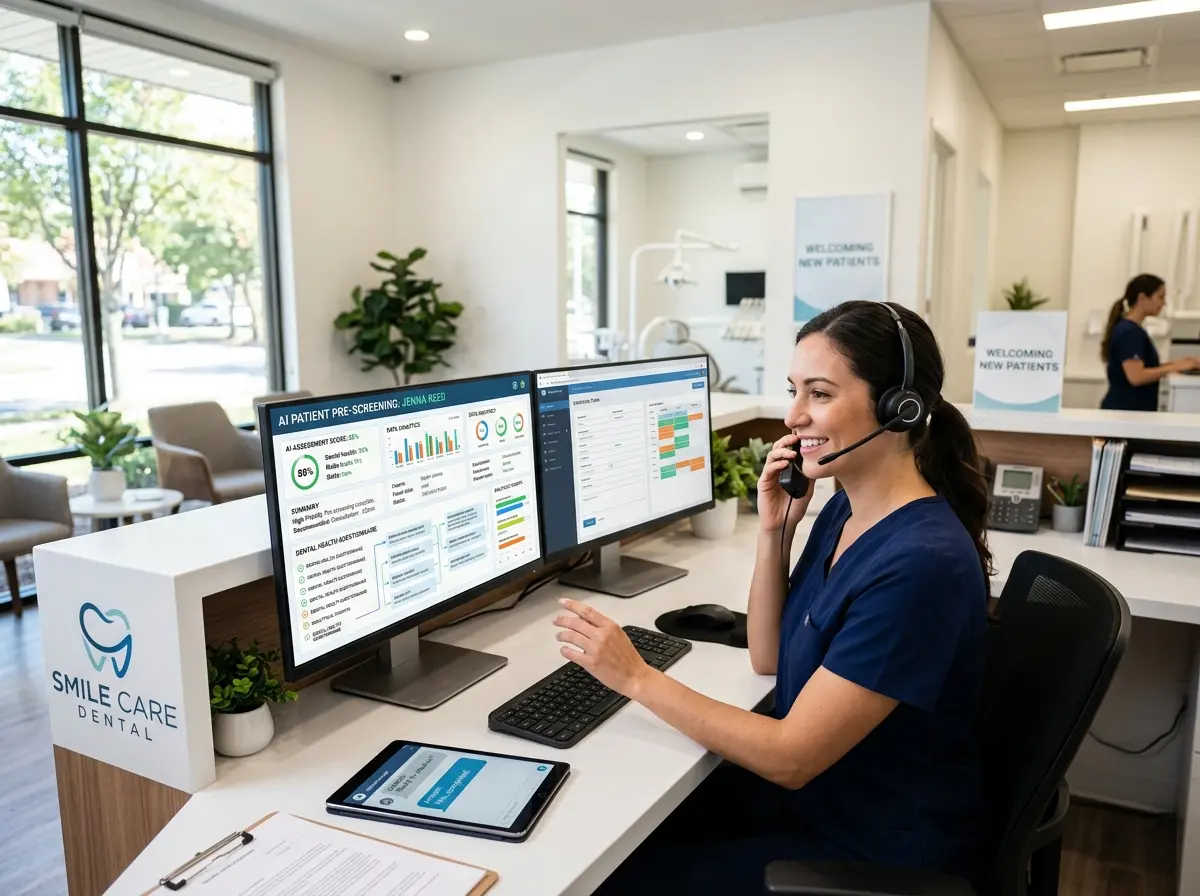
Stella, the AI robot employee and phone receptionist, is built to handle precisely this kind of personalized, data-informed interaction. Whether she's greeting clients at your in-store kiosk or answering the phone when someone calls to book, Stella can collect intake information conversationally — no clipboards, no awkward silences — and use that information to make relevant, natural upsell recommendations in real time. Her built-in CRM stores intake answers in custom fields, applies tags based on client responses, and generates AI-powered client profiles that give your team a clear picture of who they're working with before the appointment even begins. That means every touchpoint, from the initial call to the follow-up, can be personalized based on what the client actually told you.
Turning Insights Into Revenue: Practical Upsell Strategies
Create Service Bundles Mapped to Common Concern Clusters
Most clients don't walk in with just one concern. The person worried about crow's feet is usually also thinking about skin texture. The client dealing with rosacea often has sensitivity-related concerns that open the door to calming treatment add-ons. By analyzing your intake data across your client base, you'll likely notice clusters of concerns that appear together frequently. Build service bundles around those clusters, price them attractively, and make them easy to recommend in the moment.
For example, a "Glow & Smooth" bundle that combines a brightening peel with a microdermabrasion treatment makes perfect sense for someone who checked both "dullness" and "rough texture" on their intake form. When that recommendation is presented as thoughtfully curated for their specific needs — because it is — the upsell doesn't feel like an upsell. It feels like great advice from someone who actually listened.
Train Your Team to Reference Intake Answers Out Loud
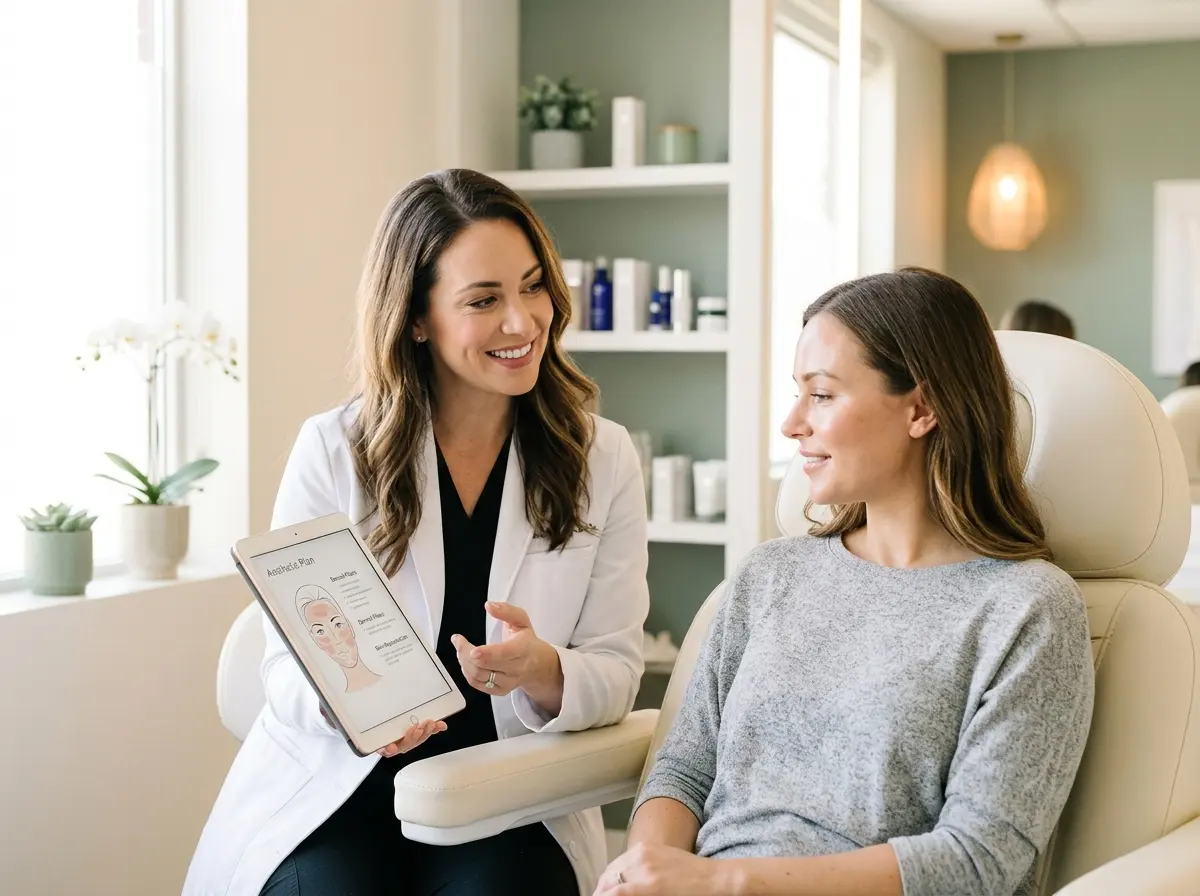
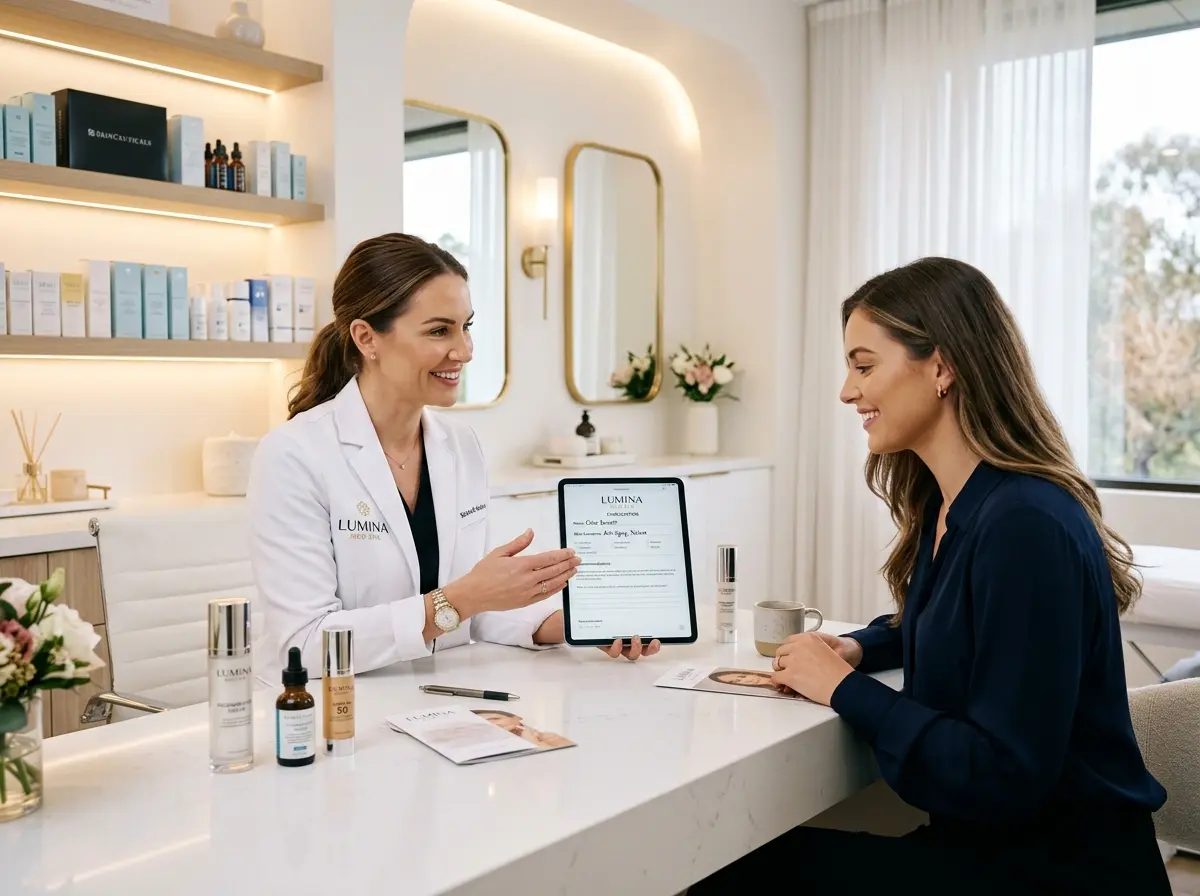
One of the most effective (and underused) personalization techniques is simply saying the quiet part out loud. When your esthetician says, "I noticed you mentioned you're dealing with hormonal breakouts — I'd love to talk to you about a treatment add-on that specifically targets that," something clicks for the client. They feel heard. They feel like they're in the right place. And they're dramatically more receptive to the recommendation that follows.
This requires two things: first, that your team actually reads the intake form before the appointment (revolutionary, we know), and second, that they're comfortable bridging from a client's stated concern to a specific service recommendation. Role-play this in team training. It gets easier fast, and the revenue lift is real. According to research from McKinsey, personalization can deliver five to eight times the ROI on marketing spend — and that principle applies just as powerfully to face-to-face service interactions.
Use Follow-Up Communication to Close the Loop
Not every upsell happens in the treatment room. Some clients need a little more time to think, which is completely fine — as long as you follow up. After an appointment, use the intake data you've collected to send genuinely personalized post-visit communication. If a client flagged interest in anti-aging treatments but didn't book anything additional, a follow-up message that references her stated goals and introduces a relevant service or promotional offer is far more effective than a generic "thanks for visiting!" email.
Better yet, build this into your CRM workflow so it happens automatically. Tag clients by concern during the intake process, and let your system trigger the right follow-up at the right time. The goal is to make every client feel like they have a dedicated skincare advisor on call — even when your actual staff is busy doing what they do best.
Quick Reminder About Stella
Stella is an AI robot employee and phone receptionist designed to help businesses like your med spa run smoother, smarter, and more profitably. She greets clients at your in-store kiosk, answers phone calls around the clock, collects intake information through natural conversation, and uses that data to recommend services and promotions — all for just $99 a month with no upfront hardware costs. She doesn't take breaks, doesn't have off days, and never forgets to mention your current promotion.
Conclusion: Your Intake Form Is Only as Valuable as What You Do With It
Here's your action plan. Start by auditing your existing intake form — make sure you're capturing skin concerns, treatment goals, current skincare habits, and frequency of professional treatments. If you're not asking those questions, add them. Then build your concern-to-service mapping matrix and make sure every member of your team knows how to use it. Train them to reference intake answers out loud during consultations, and build post-visit follow-up sequences triggered by intake tags in your CRM.
If you want to streamline the intake process itself and make sure those answers are actually captured, stored, and acted on — especially during phone bookings and walk-in interactions — explore how an AI-powered tool like Stella can handle the data collection and recommendation layer automatically, freeing your human team to focus on delivering exceptional treatments.
Your clients are already telling you what they need. The only question is whether you're listening — and doing something about it.