Running a Spa With Multiple Service Providers Is Either a Symphony or a Circus — Let's Aim for Symphony
If you manage a spa with more than one service provider, you already know the drill. There's the esthetician who only works Tuesdays and Thursdays, the massage therapist who takes a two-hour lunch (bless her), the nail tech with a loyal following that books her out three weeks in advance, and the new contractor who's still figuring out where you keep the extra towels. Now multiply that by a full appointment calendar, a ringing phone, and a front desk person who is somehow expected to do all of this while also smiling warmly at every walk-in. It's a lot.
The good news? Scheduling software designed for multi-provider environments can turn that beautiful chaos into something that actually runs like a business. The better news? When you pair it with the right front-of-house support tools, you might even get to enjoy a cup of coffee while it's still hot. Let's talk about how to make it happen.
Getting Your Scheduling Foundation Right
Choose Software Built for Multi-Provider Complexity
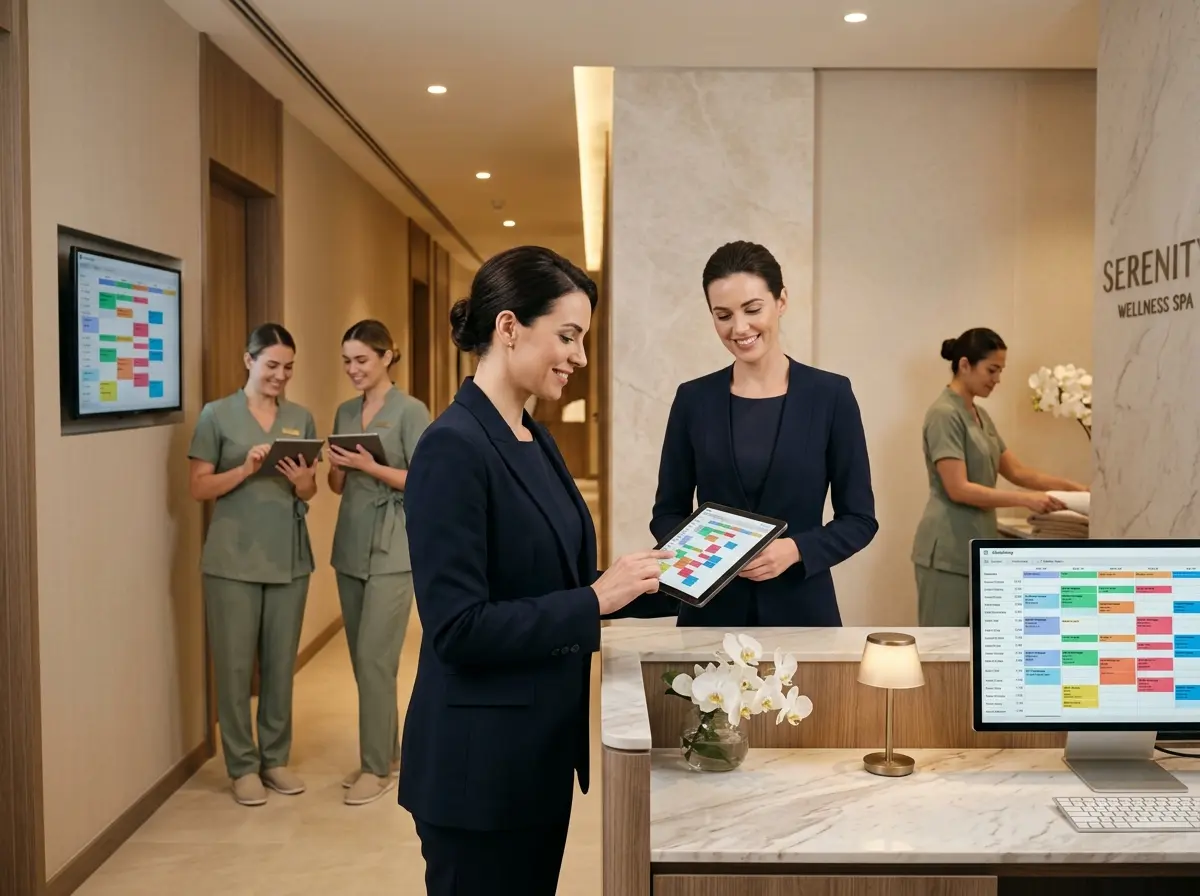
Not all scheduling software is created equal, and using a generic calendar tool to manage five service providers with different hours, service menus, and booking rules is the scheduling equivalent of using a butter knife to perform surgery. You need a platform built specifically for multi-provider service businesses — think Vagaro, Mindbody, Square Appointments, or Fresha. These tools let you set up individual provider profiles, assign services to specific providers, and configure unique availability windows for each person on your team.
When evaluating options, look for these non-negotiables:
- Per-provider scheduling rules — Each provider should have their own hours, break times, and bookable services configured independently.
- Buffer time settings — Automatically block time between appointments for cleanup, turnover, or that therapist who needs five minutes to mentally reset (no judgment).
- Service duration customization — A 60-minute massage and a 90-minute deep tissue shouldn't occupy the same booking slot. Configure durations per service, per provider.
- Real-time availability display — Both your staff and your clients should see live availability. No double-bookings. No awkward conversations.
According to a 2023 report by Zenoti, spas and salons that use automated scheduling software see an average reduction of 30% in scheduling errors and a measurable increase in client retention. That's not a rounding error — that's your Saturday afternoon back.
Set Up Provider Profiles Like You Mean It
Once you've chosen your platform, resist the urge to rush the setup. The time you invest in configuring provider profiles properly will save you hundreds of hours in manual corrections down the road. For each provider, you should define their working hours (including any seasonal or rotating schedules), their specific service offerings and associated durations, their commission structure if applicable, and any blocked times for recurring obligations like team meetings or continuing education.
If a provider is a contractor rather than an employee, make sure your software allows for contractor-specific settings — some platforms handle the distinction differently for reporting and payment purposes. Getting this right from the start keeps your books clean and your providers happy, which is basically the whole game.
Automate Confirmations, Reminders, and Rebooking
Manual appointment reminders are a part-time job disguised as a to-do list item. Most modern scheduling platforms let you automate confirmation emails, SMS reminders, and even post-appointment follow-ups asking clients to rebook. For a multi-provider spa, this is especially powerful because you can personalize messaging to include the specific provider's name, the service booked, and any pre-appointment instructions (arrive 10 minutes early, avoid caffeine before your facial, etc.).
Set your reminder cadence thoughtfully — a reminder 48 hours out gives clients time to reschedule if needed, while a second reminder 24 hours out reduces no-shows. Spas that implement automated reminders typically see no-show rates drop by 20–40%, according to industry benchmarks from Mindbody's wellness business reports. That's real revenue that was previously just walking out the door without so much as a goodbye.
Keeping the Front Desk From Becoming a Bottleneck
Let Technology Handle the Routine So Your Staff Can Handle the Exceptional
Here's a hard truth: if your front desk person is spending the majority of their day answering the same five questions about pricing, availability, and parking, you're paying a human to do a robot's job — and the robot would honestly do it better. Tools like Stella, an AI robot receptionist and in-store kiosk, are built exactly for this. Stella stands inside your spa and greets walk-ins proactively, answers questions about services, pricing, and promotions, and also handles incoming phone calls 24/7 with the same knowledge she uses in person.
For a multi-provider spa, this means a client can walk in, ask which providers specialize in hot stone massage, learn about current promotions, and get directed appropriately — all without pulling a staff member away from something more important. Stella also collects client information through conversational intake forms, which feeds directly into her built-in CRM. That means new client data doesn't live on a sticky note; it lives in a system with AI-generated profiles, custom tags, and manager notifications. At $99/month with no upfront hardware costs, it's the kind of front-desk upgrade that actually makes financial sense.
Managing Provider Performance and Client Relationships Over Time
Use Your Data to Make Smarter Staffing Decisions
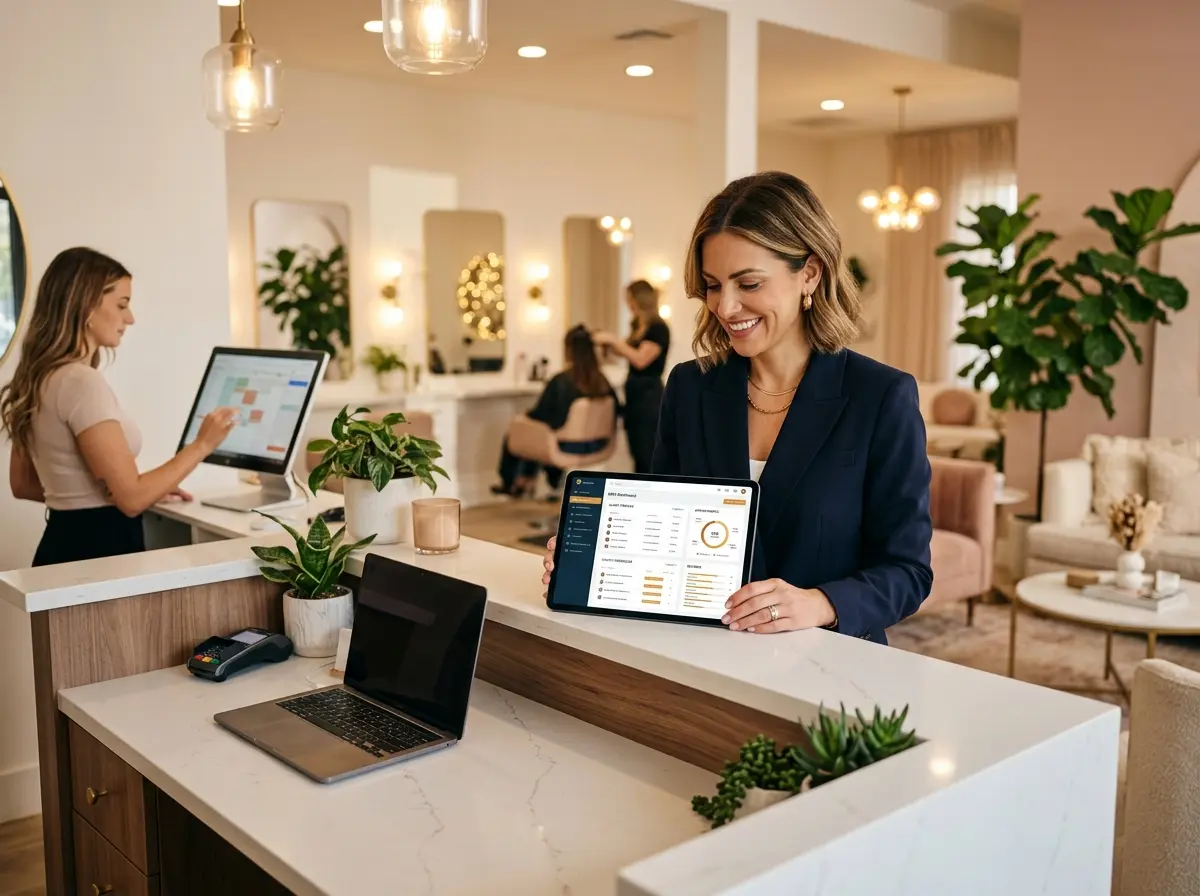
One of the underrated benefits of scheduling software is the reporting. Once your system has a few months of data, you can start making decisions based on reality rather than gut feeling. Which providers are consistently booked out? Which services have the longest gaps between appointments? Which time slots are chronically underperforming? These answers are sitting right there in your dashboard, patiently waiting for you to look.
Use booking data to identify your top-performing providers and make sure they have the schedule that reflects their value. Use gap analysis to spot underutilized hours and consider targeted promotions to fill them. If a particular service consistently underbooks on Mondays, that's useful information — maybe it's time for a Monday-specific discount, or maybe it's time to stop offering it on Mondays altogether. Data doesn't have opinions; it just tells you what's happening.
Build Client-Provider Relationships Through Smart Rebooking
In the spa industry, loyalty is often provider-specific before it's business-specific. Clients come back because they love their massage therapist, not just because they like your ambient lighting (though the lighting does help). Smart scheduling software lets you capture provider preferences at the booking level and prioritize that provider for rebooking reminders. This makes the client feel seen, reduces the mental effort of rebooking, and quietly deepens their attachment to your business.
Configure your system to send personalized rebooking prompts after a set number of days — for example, a reminder four weeks after a facial that "your esthetician has availability next week." This kind of thoughtful automation feels personal even when it's entirely hands-off on your end, which is exactly the kind of magic a well-run spa should be delivering.
Handle Cancellations and Last-Minute Changes Without Losing Your Mind
Cancellations happen. Providers call in sick. Clients reschedule at the last minute. The question isn't whether this will happen — it's how gracefully your system handles it when it does. Good scheduling software includes automated waitlist management, so when a slot opens up, it can notify waitlisted clients immediately without anyone on your team lifting a finger. This turns a potentially lost revenue slot into a filled appointment, often within minutes.
On the provider side, build your cancellation policy into the booking flow itself. Require a credit card at booking, clearly state your cancellation window (48 hours is industry standard), and let the software enforce it automatically. Removing the human element from awkward cancellation fee conversations is a gift to your staff and a necessary boundary for your business.
A Quick Reminder About Stella
Stella is an AI robot employee that works both as a physical in-store kiosk and a 24/7 phone receptionist — greeting clients, answering questions, promoting services, and collecting intake information without ever calling in sick or asking for a lunch break. She's available for $99/month with no hardware costs upfront, and she's built to integrate seamlessly into the kind of busy, multi-provider spa environment where every distraction costs you time and money. If your front desk is stretched thin, she's worth a serious look.
Start Small, Optimize Relentlessly, and Actually Enjoy Running Your Spa
Managing multiple service providers doesn't have to feel like air traffic control. With the right scheduling software, a well-configured provider setup, smart automation, and a front-of-house presence that doesn't require a benefits package, you can build an operation that runs smoothly even on your most chaotic days.
Here's your action plan to get started:
- Audit your current scheduling pain points. Where are the double-bookings, no-shows, and manual bottlenecks happening? Start there.
- Evaluate two or three multi-provider scheduling platforms against your specific provider count, service menu, and budget. Most offer free trials — use them.
- Set up provider profiles completely before going live. Hours, services, durations, buffers — all of it. Do it right the first time.
- Activate automated reminders and rebooking flows from day one. Don't wait until you're ready; you'll never feel ready.
- Review your booking data monthly. Look for patterns. Make one data-informed change per month and track the results.
Running a spa is a genuinely rewarding business — you're literally in the business of helping people relax. The irony of being stressed out by your own operations is not lost on anyone. The tools exist to fix it. Now go use them.