Introduction: Because "We Wipe Things Down Sometimes" Isn't a Strategy
Let's be honest — your nail salon is immaculate. Your autoclave is running like clockwork, your implements are sanitized between every single client, and your team could practically recite the state board's sanitation guidelines in their sleep. You are doing everything right. The only problem? Your clients have absolutely no idea.
In an era where customers Google restaurants before they eat, read Yelp reviews before they book, and can identify a UV-C sterilizer on sight, the bar for transparency has never been higher. And in the nail salon industry specifically, sanitation isn't just a regulatory checkbox — it's a genuine competitive advantage that most salon owners are leaving completely untapped. According to a 2022 survey by Mintel, cleanliness and hygiene are among the top three factors consumers consider when choosing a personal care service provider. That's not a footnote. That's your marketing strategy hiding in plain sight.
This post is your guide to turning your behind-the-scenes hygiene practices into a front-and-center confidence builder — for new clients, loyal regulars, and the skeptics who've had one too many questionable experiences elsewhere. Because a formal sanitation communication strategy isn't just nice to have. It's the difference between a client who books once and a client who books for life.
What a Sanitation Communication Strategy Actually Looks Like
It Starts With Making the Invisible Visible
Most salon owners assume that if clients see a clean environment, they'll feel confident. And while a spotless station definitely helps, it's not enough on its own. Clients aren't trained estheticians or cosmetologists — they may not recognize a hospital-grade disinfectant or understand the significance of an autoclave versus a UV sterilizer. Your job is to close that knowledge gap without turning every appointment into a science lecture.
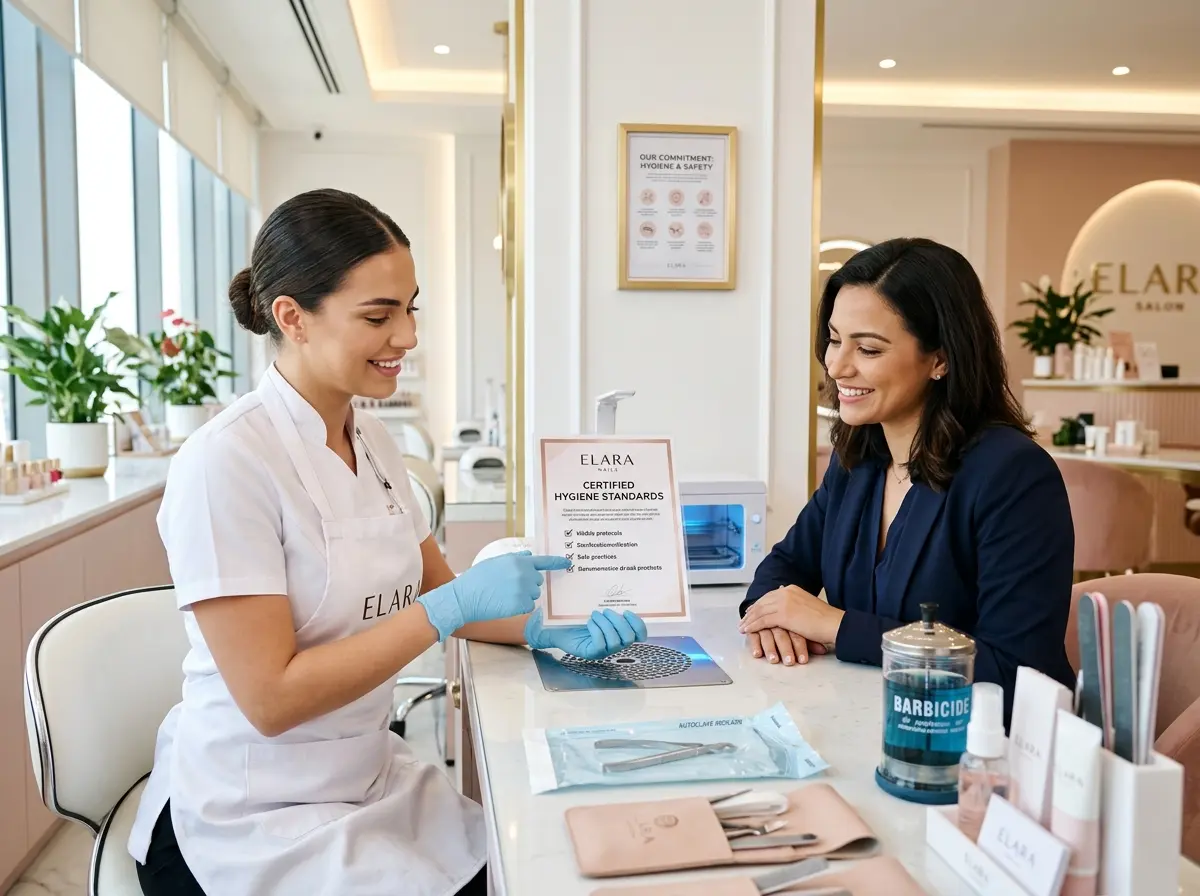
Think about simple, high-visibility cues: framed sanitation checklists posted near workstations, small table cards explaining your sterilization process, or even a brief laminated FAQ near the reception desk. These aren't just decorative — they signal to every client who walks through your door that sanitation is something you take seriously enough to talk about publicly. That kind of transparency builds trust faster than almost anything else you can do.
Put It in Writing — Everywhere
Your website, your booking confirmation emails, your Instagram captions, your Google Business profile — all of these are opportunities to communicate your sanitation standards, and most salons use exactly zero of them for this purpose. A dedicated "Our Standards" or "Your Safety" page on your website doesn't have to be long. Two or three paragraphs explaining what products you use, how implements are sterilized, and what single-use items you provide can meaningfully shift how a prospective client perceives your business before they ever walk in.
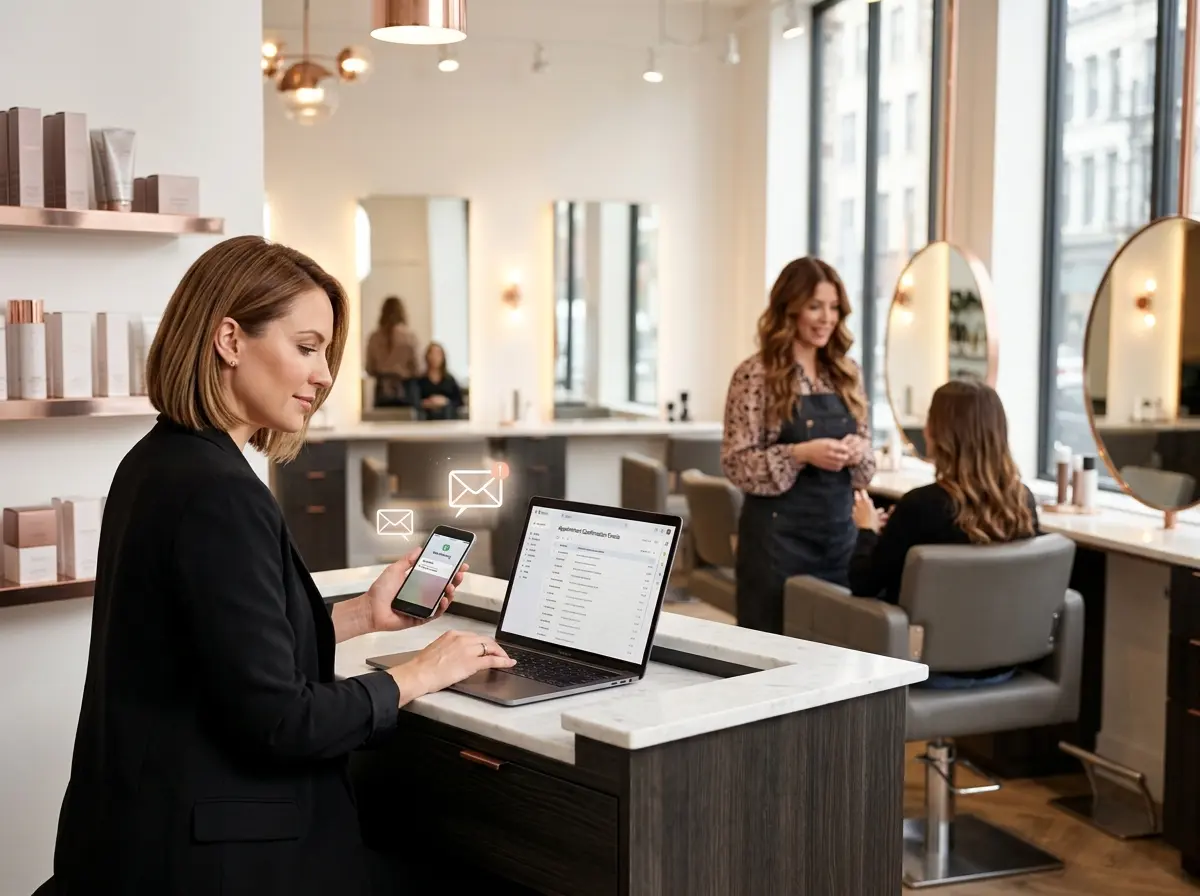
Booking confirmation emails are particularly underutilized. A single line like "We sterilize all metal implements in our autoclave between every client and use hospital-grade disinfectants on all surfaces" takes thirty seconds to write and sets a professional tone that competitors simply aren't matching. When clients arrive already confident in your standards, they're relaxed, they're engaged, and they're far more likely to become repeat customers.
Train Your Team to Talk About It Naturally
Here's where things get a little awkward for most salons: technicians are fantastic at their craft, but they're rarely trained to talk about sanitation in a way that feels natural rather than defensive. There's a big difference between a technician who says "Don't worry, everything's clean" in response to a client's raised eyebrow, and one who proactively says, "I just pulled these tools from the autoclave — we sterilize everything between clients." One sounds reactive. The other sounds professional.
Consider adding a simple sanitation script to your onboarding process for new hires and doing occasional refreshers with existing staff. It doesn't need to be robotic or scripted to the word — just a natural cadence of mentioning your processes at the right moments during a service. Clients notice. And they tell their friends.
How Technology Can Help You Communicate More Consistently
Automating the Message So Nothing Falls Through the Cracks
Even with the best intentions, communication consistency is hard when you're running a busy salon. Staff turnover, hectic peak hours, and the general chaos of managing a service business mean that your carefully crafted sanitation messaging sometimes just... doesn't get delivered. This is where a tool like Stella can quietly do a lot of heavy lifting.
Stella is an AI robot receptionist and in-store kiosk that greets clients, answers questions, and promotes your services — and she never has an off day. In a salon setting, she can proactively mention your sanitation standards to walk-in clients, answer common questions about what sterilization processes you use, and even highlight your hygiene protocols as part of a broader welcome experience. When a prospective client calls after hours wondering about your safety practices, Stella answers the phone with the same consistent, professional messaging your best receptionist would use at noon on a Tuesday. No dropped balls. No improvised answers. Just reliable, on-brand communication, around the clock.
Building Long-Term Client Confidence Beyond the First Visit
Make Sanitation Part of Your Brand Identity, Not an Afterthought
The salons that win long-term client loyalty aren't just the ones with the best nail art — they're the ones that make clients feel genuinely cared for. Sanitation communication, when done well, is an expression of that care. Consider weaving it into your brand narrative: your origin story, your mission statement, your social media voice. When hygiene standards become part of who you are as a business rather than a compliance requirement you tolerate, clients feel the difference.
Some salons have had remarkable success launching what amounts to a "transparency campaign" — posting short behind-the-scenes videos of their sterilization process on Instagram or TikTok. It sounds mundane, but these posts routinely outperform typical promotional content because they answer the questions clients are already quietly asking. In an industry where horror stories travel fast on social media, being the salon that voluntarily shows its work is a genuinely powerful differentiator.
Gather Feedback and Close the Loop
A sanitation communication strategy isn't a set-it-and-forget-it endeavor. You should be actively soliciting client feedback about whether they feel confident in your cleanliness standards — and adjusting accordingly. Post-appointment surveys, in-person conversations, and review monitoring can all reveal gaps between what you think you're communicating and what clients are actually receiving.
If multiple clients are leaving reviews that mention feeling impressed by your cleanliness, that's a signal to double down. If clients seem unaware of the lengths you go to, that's a signal to amplify your messaging. Treat your sanitation communication like any other business process: measure it, refine it, and make it better over time.
Leverage Reviews as Social Proof
When a happy client leaves a Google review mentioning how clean your salon is or how safe they felt, that review is doing marketing work you could never replicate with a paid ad. Encourage satisfied clients to mention their experience specifically — not just the nail art — by asking naturally at the end of a service: "If you loved your experience today, we'd really appreciate a review, especially if you felt comfortable with our safety standards." It's a gentle nudge that can generate the kind of authentic, trust-building content that turns fence-sitters into first-time bookings.
Quick Reminder About Stella
Stella is an AI robot employee and phone receptionist built for businesses exactly like yours — she greets clients in-store, answers calls 24/7, promotes your services, and communicates your standards consistently without ever needing a break or a refresher course. At just $99/month with no upfront hardware costs, she's one of the most practical tools a salon owner can add to their front-of-house experience. Whether you're looking to reduce staff interruptions, capture after-hours leads, or simply ensure every client interaction starts on the right note, Stella shows up ready to work.
Conclusion: Stop Keeping Your Best Feature a Secret
You've invested real time, money, and care into running a safe, clean salon. Your sanitation practices are genuinely impressive — and almost nobody outside your staff knows it. That ends now. A formal sanitation communication strategy doesn't require a marketing agency or a big budget. It requires intention, consistency, and the willingness to talk openly about what you're already doing.
Here's where to start this week:
- Audit your current touchpoints. Walk through your client journey — website, booking confirmation, in-store experience, follow-up — and identify where sanitation messaging is missing entirely.
- Write one piece of sanitation content. A paragraph for your website, a line in your booking confirmation email, or a simple table card for your stations. Just one. Then build from there.
- Brief your team. Have a five-minute conversation about how and when to naturally mention your processes during services.
- Ask for specific reviews. Encourage your next few happy clients to mention cleanliness and safety in their feedback.
- Consider tools that communicate for you. Whether it's automated emails, social content, or an AI receptionist like Stella, consistency is easier when technology shares the load.
Your clients are already making decisions based on perceived safety. The only question is whether those decisions are being shaped by your intentional messaging — or by silence. Fill the silence. Your business deserves the credit it's already earned.