From Chafing Dishes to Champagne Service: The Upsell Opportunity You're Leaving on the Table
Let's be honest — buffet catering is the workhorse of the catering world. It's efficient, scalable, and clients love it because it feels like a great deal. But here's the thing: while your team is hauling steam trays and refilling pasta stations, you might be walking past some serious revenue opportunities without even realizing it. The jump from buffet service to full-service, plated event catering isn't just a logistics upgrade — it's a potential doubling or tripling of your average contract value.
The challenge? Most catering companies don't have a clear, repeatable strategy for moving clients up the service ladder. They quote buffet, the client says yes, and everyone moves on. Meanwhile, that same client is planning a gala next spring and hiring a different caterer because they didn't know you offered white-glove service. That's not a client problem. That's a communication problem — and it's completely fixable.
This post is going to walk you through how to systematically upsell your catering services, convert buffet clients into full-service loyalists, and build the kind of revenue pipeline that makes your accountant do a little happy dance.
Understanding the Upsell Opportunity in Catering
Know Your Client's Event Calendar, Not Just Their Next Event
The single biggest mistake catering companies make is treating every booking as a one-time transaction. A corporate client who books a quarterly employee appreciation buffet almost certainly also hosts an annual holiday gala, board dinners, client appreciation events, and the occasional executive retreat. The buffet booking is the foot in the door — it's your audition. If you nail it (and you should), you've earned the right to have a bigger conversation.
Start asking better discovery questions during the initial consultation. Instead of just asking, "What's the event and how many guests?" try asking about their overall event calendar for the year. What other functions do they host? Are any of them more formal? Do they ever host clients or stakeholders where presentation really matters? You'll be surprised how often a simple question opens up an entirely new conversation — and an entirely new contract.
The Price Perception Gap — and How to Bridge It
Many clients default to buffet because they assume full-service catering is wildly out of budget. Sometimes that's true. But often, the price difference is smaller than they expect, especially when you factor in that full-service events typically have fewer guests, smaller venues, and a higher emphasis on experience over volume. A plated dinner for 50 executives can be more profitable than a buffet for 200 office workers.
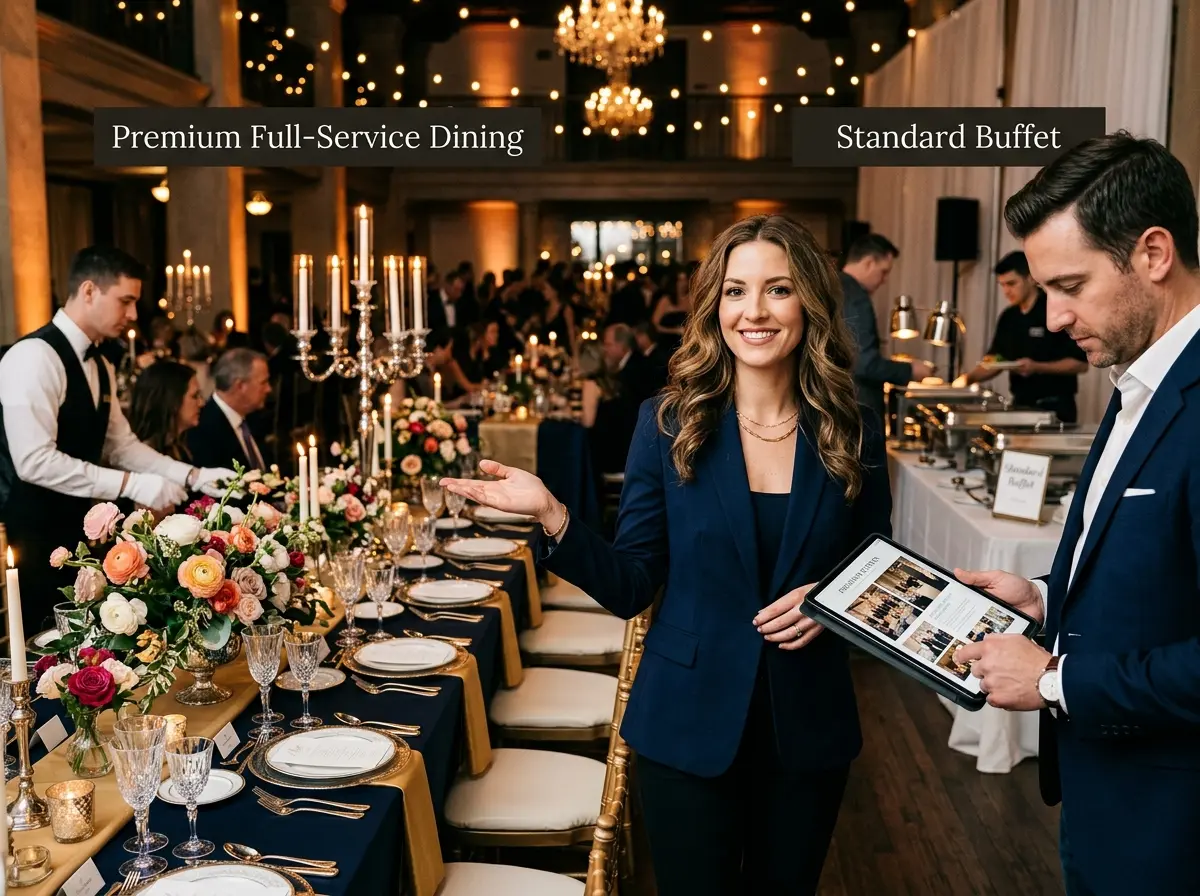
Build a simple comparison sheet that shows clients what they get at each service tier — not just in terms of food, but in terms of experience, presentation, staff, and event polish. When a client can see side-by-side that full-service adds staffed bars, personalized place settings, tableside service, and a dedicated event coordinator for a per-head increase that's reasonable in context, the conversation shifts. You're no longer selling "more expensive catering" — you're selling a completely different product that happens to serve food.
Tiered Packages Are Your Best Friend
If you don't already have clearly defined service tiers, stop everything and build them. Names matter here — calling your top tier "Platinum" or "Grand Affair" positions it aspirationally. Your buffet tier should feel solid and reliable, not like the "cheap option." Structure your packages so each tier includes natural add-ons that make the next level feel like an obvious step up rather than a luxury leap. Think: staffed carving stations as a buffet add-on, then butler-passed appetizers as a gateway into full-service territory, then fully plated and staffed events at the top.
Using Smart Systems to Identify and Convert Upsell Opportunities
Let Technology Do the Heavy Lifting
You can't personally follow up with every past client, track every event milestone, and remember which corporate contact mentioned a holiday party in passing six months ago. That's where smart systems — and smart tools — become non-negotiable for a growing catering operation.
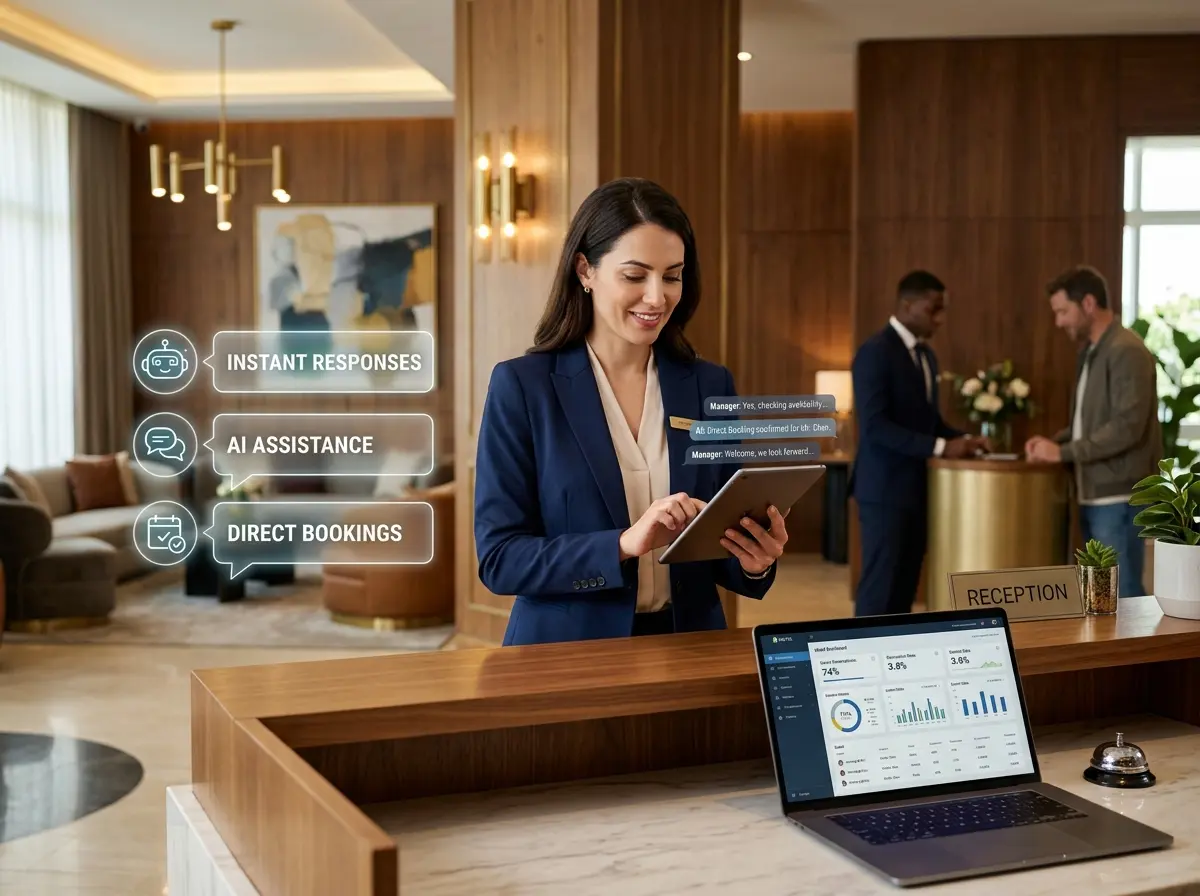
Stella, the AI robot employee and phone receptionist, is genuinely useful here. For catering companies with a physical location or showroom, Stella greets walk-in clients, answers questions about your service tiers, and proactively highlights your full-service offerings — even when your sales team is slammed with event prep. On the phone side, she answers calls 24/7, handles inquiries about packages and availability, and collects client information through conversational intake forms, feeding everything into a built-in CRM with custom fields, tags, and AI-generated client profiles. That means when a buffet client calls to re-book, Stella can surface their history and flag them as a candidate for an upsell conversation — no sticky notes required. It's like having a sales coordinator who never takes a day off and never forgets a follow-up.
The Practical Upsell Playbook for Catering Companies
Build an Upsell Touchpoint Into Every Event Lifecycle
Every catering event you execute has at least three natural moments where an upsell conversation fits organically: the initial inquiry, the post-event debrief, and the anniversary follow-up. Most catering companies nail none of them consistently.
During the initial inquiry, your sales process should always include a question about the client's broader event needs — not in a pushy way, but as genuine curiosity. At the post-event debrief (and yes, you should always do one, even briefly), ask how it went from their perspective and mention that you'd love to support any more formal events they have coming up. Then, three to six months later, follow up again. A simple, "Hey, we're booking Q4 events — did you have anything coming up where a more elevated experience might be the right fit?" is often all it takes. Most of your competitors aren't doing this. Which means the bar is refreshingly low.
Train Your On-Site Staff to Plant Seeds, Not Just Serve Food
Your event staff are on the ground, talking to guests and clients throughout every event. They are, whether you've formalized it or not, your most direct sales touchpoint. A well-trained catering captain who can confidently say, "We also do full-service plated events if you ever need something more formal — here's a card," has just done more sales work than most follow-up emails ever will.
This doesn't mean turning your servers into aggressive salespeople. It means giving your team language, cards, and confidence to mention your full service range when it comes up naturally — and it comes up more than you'd think. Guests at a corporate buffet are often event planners, office managers, or executives who have their own events to book. The catering staff they're impressed by at 12:30pm on a Tuesday might just be the reason they call your company for their fundraiser gala in November.
Use Social Proof Strategically
Nothing sells a full-service upgrade faster than showing what full-service actually looks like. Invest in professional photography at your high-end events (with client permission), build a portfolio on your website, and actively solicit testimonials that speak to the experience, not just the food. When a prospective buffet client sees a gallery of stunning plated dinners with candlelit tablescapes and uniformed serving staff, suddenly the upgrade doesn't feel like an abstract concept — it feels like something they want. Post these on social media regularly. Let the work do the talking, and let the talking generate the bookings.
Quick Reminder About Stella
Stella is an AI robot employee and phone receptionist built for businesses like yours — she handles walk-in clients at your location and answers calls around the clock with full knowledge of your services, packages, and promotions. At $99/month with no upfront hardware costs, she's the kind of team member that pays for herself remarkably fast, especially when she's quietly upselling your full-service packages to every client who calls after hours.
Turn Buffet Clients Into Your Best Full-Service Customers
The path from buffet to full-service isn't a giant leap — it's a series of intentional steps that most catering companies simply aren't taking. Start by understanding your clients' full event calendars, not just their next booking. Build clear, aspirationally named service tiers with logical upgrade paths. Train your staff to be ambient brand ambassadors. Create consistent upsell touchpoints at every stage of the event lifecycle. And use smart tools to track opportunities so nothing falls through the cracks.
Here's your action plan to get started this week:
- Audit your current packages. Do you have clearly defined tiers with distinct names, inclusions, and price points? If not, build them.
- Update your intake process. Add two or three discovery questions about the client's broader event needs to every initial inquiry.
- Create a post-event follow-up template. A simple email or call script that thanks clients and opens the door to future full-service bookings.
- Brief your event staff. Give them the language and materials to mention your full-service offerings naturally on-site.
- Invest in event photography. Build a visual portfolio that shows the full range of what you can do.
The buffet is a great place to start a client relationship. It's just a terrible place to end one. With the right strategy, every steam tray you set up today is a plated dinner you're setting up six months from now — at twice the margin. Time to get to work.