Introduction: Because "Good Enough" Isn't a Cleaning Standard
Running a home cleaning company sounds simple enough on paper — show up, clean the house, collect the check. But anyone who's actually done it knows the reality is closer to conducting an orchestra where half the musicians are in different zip codes, one forgot their violin, and a client is texting you about a missed baseboard in real time. Managing quality control across multiple cleaning teams is one of the most persistent headaches in this industry, and it only gets louder as you scale.
Here's the uncomfortable truth: your reputation doesn't live on your best day. It lives on your worst one. That one team that rushed through a kitchen because they were running behind, or the bathroom that got "cleaned" but somehow the mirror was never touched — that's the job the client remembers, the review they write, and the referral they don't give. According to a BrightLocal survey, 87% of consumers read online reviews for local businesses, and cleaning services are among the most review-sensitive industries out there.
The good news? Quality control across multiple teams is absolutely manageable — it just requires the right systems, the right culture, and yes, occasionally the right technology. This guide breaks it all down so you can stop putting out fires and start building a business that cleans up on consistency.
Building the Foundation: Standards, Training, and Accountability
Document Everything (Yes, Everything)
If your quality standards exist only inside your head, you don't actually have quality standards — you have preferences that your teams are supposed to somehow telepathically absorb. The first step to consistent quality across multiple crews is creating a written, visual, and repeatable standard operating procedure (SOP) for every type of job you offer.
This means detailed room-by-room checklists, not vague instructions like "clean the bathroom thoroughly." Your bathroom checklist should specify: scrub toilet bowl and exterior, wipe tank lid, clean mirror with streak-free solution, descale faucet hardware, mop floor in sections, replace toilet paper roll if under one-third full. The more specific, the better. When a new team member joins, they should be able to pick up that checklist and know exactly what "done" looks like.
Consider adding photo references to your SOPs — a before/after visual of a properly cleaned stovetop or a correctly made bed goes a long way. Tools like Google Drive, Notion, or industry-specific apps like Jobber or ZenMaid make it easy to store and share these documents across your entire workforce.
Onboarding That Actually Trains, Not Just Orients
There's a difference between showing someone around the supply closet and actually training them to your standard. Strong onboarding programs pair new hires with experienced team members for at least their first several jobs — not just the first one. Shadowing builds muscle memory and gives new cleaners a chance to ask questions in context, which is far more effective than a one-hour orientation and a handshake.
Build in practical assessments, too. Have a new hire complete a cleaning job independently while a supervisor or team lead does a walkthrough immediately afterward. Score it against your checklist. Give feedback on the spot. This catches bad habits before they become ingrained, and it signals to new employees that your standards are real — not just something printed on paper and forgotten.
Creating a Culture of Accountability Without Micromanaging
Accountability doesn't mean surveillance. It means your teams understand that quality is a shared value, not a manager's problem. One effective approach is to empower team leads to conduct their own post-job inspections before leaving a property. Give them a simple mobile-friendly checklist app and make them responsible for signing off on each job. When team leads own quality, it reinforces the standard at the ground level and takes pressure off you to be everywhere at once.
You might also consider a simple incentive structure tied to client satisfaction scores or low complaint rates. Even modest recognition — a monthly shoutout, a small bonus, a gift card — can go a long way in motivating teams to maintain high standards consistently. People do better work when they know it's noticed.
Leveraging Technology to Keep Things Running Smoothly
Tools That Actually Move the Needle
From scheduling software to GPS tracking to client communication platforms, there's no shortage of technology built for cleaning businesses. Apps like Jobber, HousecallPro, and ZenMaid offer job scheduling, team dispatch, client communication, and invoicing in one place. Pair these with a mobile inspection tool — even a well-built Google Form will do in a pinch — and you've got a lightweight quality tracking system that scales as you grow.
Client feedback loops are equally important. Automated post-job satisfaction surveys (sent via text or email within an hour of job completion) give you real-time data on how each team is performing. If Team B consistently scores lower on client satisfaction than Teams A and C, you've got a coaching opportunity — and you've got the data to back the conversation.
How Stella Can Support Your Cleaning Business
Here's a piece of the puzzle that many cleaning company owners overlook: the front-facing client experience. Quality control isn't just about what happens inside the house — it's also about how clients feel when they call to book, ask a question, or report a concern. Stella, an AI robot employee and phone receptionist, handles inbound calls 24/7, answers questions about your services, pricing, and availability, and collects new client information through conversational intake forms — all without pulling your team leads away from the field. Stella's built-in CRM also lets you track client contacts, add notes, and build profiles so your human staff always has context when a follow-up is needed. When your phone presence is as polished as your cleaning crews, the whole client experience holds together.
Monitoring, Feedback, and Continuous Improvement
Regular Quality Audits That Don't Kill Morale
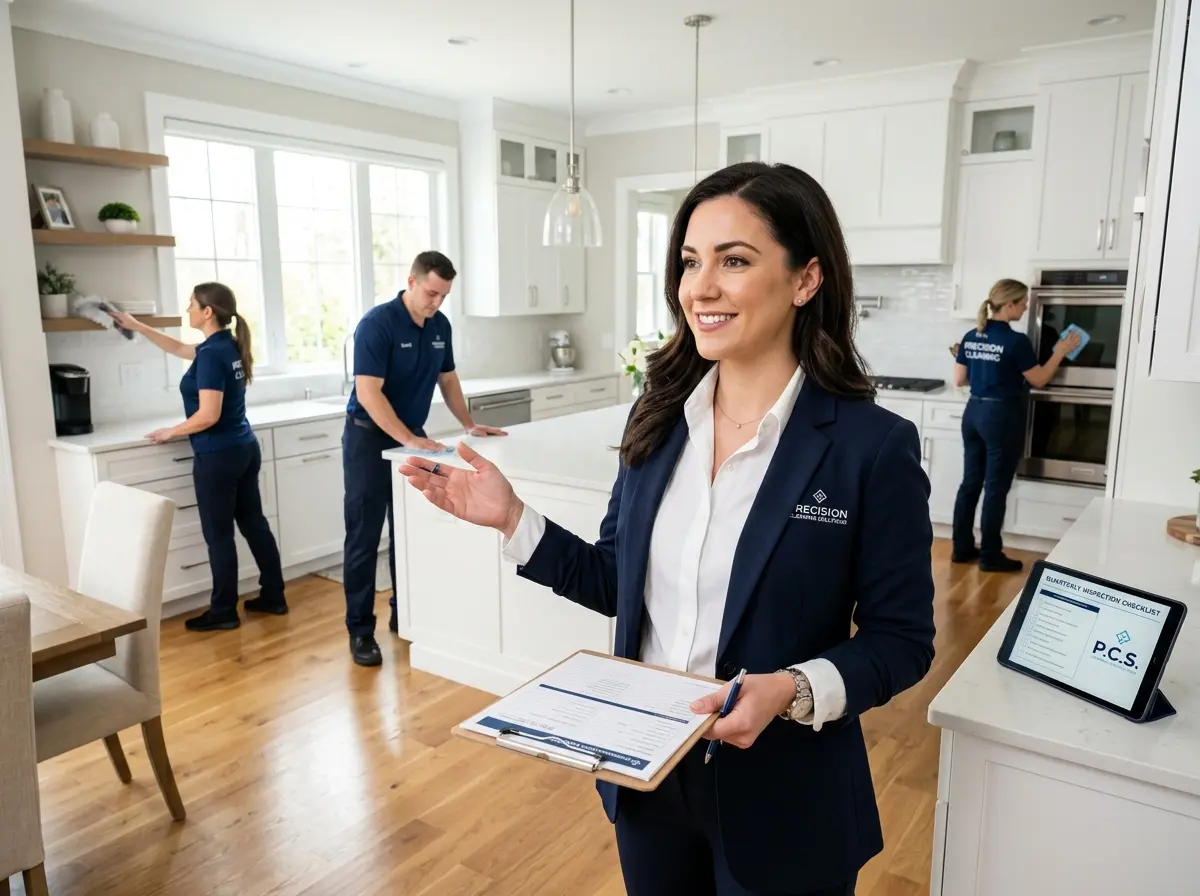
Surprise inspections have their place, but a culture built entirely on "gotcha" moments tends to breed anxiety rather than improvement. A more sustainable approach combines scheduled quarterly walkthroughs — where a manager joins a team on-site — with random spot checks conducted discreetly. The scheduled visits should feel collaborative, like a coaching session. The random ones provide an honest picture of day-to-day performance.
When you conduct an audit, document findings with photos and notes. Review results with team leads privately and constructively. Focus on patterns, not isolated incidents. If a team consistently rushes through kitchens, that's a training issue. If one cleaner repeatedly misses high-touch surfaces, that's a targeted coaching conversation. The data guides the response.
Client Feedback as a Quality Control Tool
Your clients are essentially doing quality control for you — the question is whether you're listening systematically. Beyond post-job surveys, consider following up personally with new clients after their first two or three appointments. A simple phone call or text saying "We want to make sure everything met your expectations" demonstrates that you care, catches issues before they become cancellations, and occasionally surfaces specific feedback that helps you improve your SOPs.
Negative reviews, as painful as they are, deserve a structured response process too. When a client leaves a critical review, respond promptly and professionally, acknowledge the concern, and describe the corrective action you took. Potential clients reading that exchange will respect your professionalism far more than a business with only glowing reviews and no evidence of how they handle problems.
Using Data to Drive Team Performance Reviews
Performance reviews for cleaning teams don't need to be formal sit-down events, but they do need to be regular and data-driven. Pull together each team's client satisfaction scores, complaint frequency, re-clean requests, and audit results on a monthly or quarterly basis. Use these numbers to have honest, specific conversations about what's working and what needs improvement.
High-performing teams should be recognized and, where possible, rewarded. Struggling teams need support, not just criticism — additional training, shadowing opportunities, or a temporary reduction in job load while skills are reinforced. When your team leads see that performance data leads to meaningful conversations and real support, the whole organization starts operating with more intention.
Quick Reminder About Stella
Stella is an AI robot employee and phone receptionist that answers calls around the clock, greets customers in-store, promotes your services, and collects client information — all for just $99/month with no upfront hardware costs. For a cleaning business juggling multiple teams in the field, having a reliable front-line presence handling phones and new client intake means one less thing slipping through the cracks. She doesn't call in sick, doesn't put clients on hold indefinitely, and always represents your business professionally.
Conclusion: Clean Systems Build Clean Results
Quality control across multiple cleaning teams isn't about perfection — it's about consistency. The businesses that build loyal client bases and sustainable growth in this industry are the ones that treat systems, training, and accountability as ongoing investments rather than one-time fixes. Here's where to start:
- This week: Audit your current SOPs. If they don't exist in written form, start building room-by-room checklists for your most common job types.
- This month: Implement a post-job client satisfaction survey and review your first month of data with your team leads.
- This quarter: Conduct a formal quality audit with at least two of your teams and use the results to refresh your training materials.
- Ongoing: Build recognition into your culture. Acknowledge teams that consistently perform well. Coach those who don't.
Managing quality at scale is genuinely hard work — but it's the work that separates the cleaning companies that plateau from the ones that grow. With the right standards, the right tools, and the right people holding each other accountable, you can build a business where every job feels like your best one. And that, ultimately, is the whole point.