The Call Nobody Makes (But Everybody Should)
You finished the job. Your crew did great work, the customer seemed happy, and now you're on to the next call, the next estimate, the next invoice. Who has time to circle back? You've got a business to run.
Here's the uncomfortable truth: most home services businesses never follow up after a job is done — and they're quietly losing thousands of dollars in repeat business, referrals, and five-star reviews as a result. The post-service check-in call is one of the simplest, highest-ROI moves in the home services playbook, and it's being left on the table by the vast majority of contractors, plumbers, landscapers, HVAC techs, cleaners, and everyone else who shows up, does the work, and disappears.
If you've ever wondered why some businesses seem to effortlessly generate glowing reviews and a steady stream of repeat customers while you're constantly chasing new leads — this is a big piece of that puzzle. Let's fix it.
Why the Post-Service Call Is a Gold Mine You're Ignoring
The Psychology of the Happy Customer
When a customer has just had a positive experience with your business, they are at peak goodwill. The job is fresh. The relief of having their leaky faucet fixed, their lawn looking pristine, or their HVAC humming again is still warm and fuzzy. This is exactly the moment when a quick, genuine check-in call turns a satisfied customer into a loyal one.
Research consistently shows that customers who feel personally acknowledged after a purchase or service are significantly more likely to return. According to a study by Bain & Company, increasing customer retention by just 5% can boost profits by anywhere from 25% to 95%. That's not a rounding error — that's a business transformation. And it starts with something as simple as picking up the phone and saying, "Hey, just wanted to make sure everything looked good after our visit."
The Review Opportunity You're Missing
Online reviews are the lifeblood of home services businesses. When someone needs a plumber or a pest control company, they're not calling their cousin anymore — they're Googling and scanning reviews. The problem is that happy customers rarely leave reviews on their own. They mean to. They just... don't get around to it.
A post-service call is a natural, non-pushy opportunity to ask. After confirming the customer is satisfied, a simple "We'd really appreciate it if you had a moment to leave us a quick review on Google" works remarkably well. You're not cold-asking a stranger — you're reminding a genuinely happy customer to do something they probably already intended to do. Conversion rates on review requests made during a live conversation are dramatically higher than those sent via automated email blasts that get ignored in the inbox abyss.
Catching Problems Before They Become Disasters
Not every post-service call will be sunshine and gratitude. Sometimes a customer has a concern they didn't mention in the moment — maybe they didn't want to seem difficult, or maybe an issue appeared after your team left. Without a follow-up, that concern festers. It turns into a negative review, a complaint to their neighbor, or a chargeback dispute.
A proactive check-in call gives you the chance to catch and resolve these issues privately, before they go public. Customers who have a complaint resolved quickly and personally are often more loyal than those who never had an issue at all. You turn a potential disaster into a demonstration of how seriously you take your work — and that's genuinely powerful.
Automating and Streamlining Your Follow-Up Process
Building a System That Actually Gets Done
The biggest reason post-service calls don't happen isn't laziness — it's that there's no system. When you're juggling scheduling, invoicing, supply orders, and fielding new inquiries, "call Mrs. Henderson to check on the deck installation" quietly falls off the list every single time.
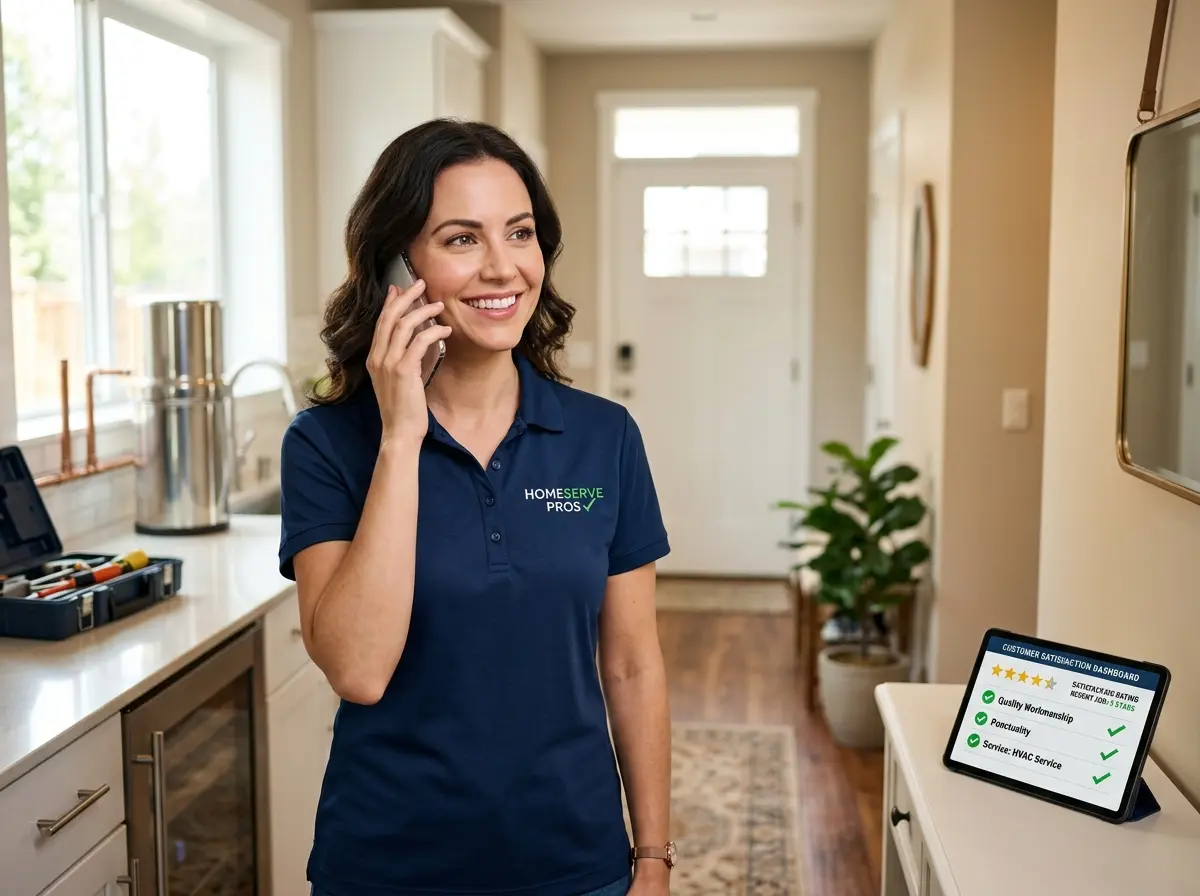
The fix is simple: make it a process, not a task. Designate a specific time window for follow-up calls — say, 24 to 48 hours after job completion. Use your CRM to tag completed jobs and flag them for a check-in. Assign the calls to a specific person. Script the opening so whoever makes the call doesn't have to improvise: "Hi, this is [Name] from [Company], I just wanted to follow up on the work we completed yesterday and make sure everything is looking great for you." That's it. From there, the conversation flows naturally.
How Stella Can Help Keep Things Running Smoothly
While your team is out in the field doing the actual work, Stella is holding down the fort on incoming calls — answering questions about your services, collecting customer information through conversational intake forms, and logging everything into her built-in CRM so nothing falls through the cracks. When your customer calls back after the follow-up to book their next service or ask a follow-up question, Stella handles it professionally, 24/7, without putting anyone on hold. Her CRM stores customer contact details, tags, notes, and AI-generated profiles, so your team always has context before making that check-in call. Less scrambling, more connecting.
What to Say and How to Say It
Structuring the Perfect Check-In Call
A post-service check-in call doesn't need to be long. In fact, keeping it short and genuine is part of what makes it effective. Here's a simple structure that works:
- Introduce yourself and reference the job — Be specific. "We were out on Tuesday to service your HVAC system" is more reassuring than a vague opener that sounds like a telemarketing call.
- Ask a direct, open-ended satisfaction question — "Is everything working well? Any concerns we can address for you?" Give them space to respond honestly.
- Listen and respond accordingly — If they're happy, move to the review request and, if appropriate, mention any upcoming services or maintenance they might benefit from. If they have a concern, address it immediately and with ownership.
- Close warmly — Thank them for their business, remind them you're always a call away, and leave them feeling like they chose the right company.
The whole call typically takes three to five minutes. That's a small investment for the loyalty and referrals it generates.
Turning Follow-Up Calls Into Upsell Opportunities
Done thoughtfully, a check-in call is also a natural moment to plant seeds for future services — without being pushy or salesy. If you just completed a roof inspection, mention your gutter cleaning service heading into fall. If you finished a deep clean, ask if they'd like to be put on a recurring schedule. You're not cold-pitching; you're having a natural conversation with someone who already trusts you.
This is sometimes called "soft upselling," and it converts remarkably well because the relationship has already been established. A customer who just had a great experience is far more receptive to hearing about your other offerings than a brand-new prospect who's still evaluating whether you're trustworthy.
Tracking Results and Refining Your Approach
Like any business process, your follow-up calls should be tracked and refined over time. Log the outcome of each call — satisfied, concern raised and resolved, review requested, additional service booked. Over a few months, you'll start to see patterns. Which services generate the most callbacks? Which customers tend to book again? Which scripts lead to more review conversions? This data is genuinely valuable, and collecting it doesn't require sophisticated software — a simple CRM note or spreadsheet will do the job to start.
A Quick Reminder About Stella
Stella is an AI robot employee and phone receptionist designed to help businesses run more smoothly — whether she's greeting customers in person at a physical location or answering calls around the clock for any type of business. At just $99/month with no upfront hardware costs, she's always on, always professional, and never calls in sick. For home services businesses managing a steady flow of customer communication, she's the kind of reliable front-line presence that keeps things moving even when you're knee-deep in a job site.
Stop Letting Happy Customers Walk Away Quietly
The post-service check-in call is not a revolutionary concept. It's just a consistently overlooked one. In an industry where word-of-mouth and online reputation can make or break your growth, a three-minute phone call placed 24 hours after a completed job is one of the best uses of your time — or your team's time — that you can find.
Here's how to get started this week:
- Identify the last 10 completed jobs in your records and make a check-in call to each one. Yes, even the older ones. Customers appreciate it regardless of timing.
- Write a simple call script and share it with whoever will be making calls going forward.
- Set up a CRM tag or field for "follow-up needed" so completed jobs are automatically flagged.
- Track your results — reviews generated, issues caught, upsells booked — and adjust from there.
The businesses that win long-term in home services aren't always the ones with the flashiest trucks or the biggest ad budgets. They're the ones that make their customers feel genuinely cared for — before, during, and after the job. A single phone call can do more for your reputation than a month of social media posts. Pick up the phone.