Why Your Current Loyalty Program Is Just a Punch Card With Delusions of Grandeur
Let's be honest. Most salon loyalty programs go something like this: a client gets a card, someone stamps it nine times, they get a free blowout, and then they lose the card in their purse somewhere between the parking lot and forever. Congratulations — you've successfully rewarded your most forgetful customers with nothing, and your loyal regulars never even asked for their card back.
The truth is, loyalty programs work exceptionally well — when they're designed to actually change behavior rather than just reward behavior that was already happening. There's a big difference between thanking someone for visiting and motivating someone to visit more often, spend more per visit, and refer their friends. The first is a nice gesture. The second is a growth strategy.
If you own a salon and you're ready to stop handing out punch cards like it's 2003, this post is for you. We're breaking down the loyalty program structures that genuinely shift client behavior, increase average ticket size, and build the kind of recurring revenue that makes your accountant actually smile.
The Psychology Behind Loyalty Programs That Work
Before you redesign your entire rewards system, it helps to understand why some programs create loyal clients for life while others collect dust on a counter display. The answer isn't complicated — it's human psychology. Specifically, three principles that behavioral economists have been talking about for decades.
The Endowed Progress Effect
Here's a fun fact: people are more motivated to complete a loyalty program if they feel like they've already started. A study published in the Journal of Consumer Research found that customers given a head start on a loyalty card — say, two stamps already filled in on a 10-stamp card — completed the program at a significantly higher rate than those starting from zero, even though the actual work required was identical.
For your salon, this means never launching a loyalty program at zero. Welcome new clients with a "bonus points" start, or enroll them at a small initial tier rather than the ground floor. It feels like a gift, and it immediately increases the psychological likelihood they'll continue.
Tiered Rewards vs. Flat Point Systems
A flat points system says, "Every dollar earns one point." A tiered system says, "You're currently Silver — and Gold is just two visits away." One of these creates urgency and identity. The other creates math homework.
Tiered loyalty programs tap into status psychology. Clients don't just want a discount — they want to feel like a VIP. When someone reaches your "Platinum" tier, they're not just saving money; they're a Platinum client. That identity becomes surprisingly sticky. Research from Bond Brand Loyalty suggests that members of tiered programs are 77% more likely to choose that brand over competitors once they've achieved a higher status level. Your clients aren't so different — they just want to feel seen and rewarded for their consistency.
Making Rewards Feel Attainable (and Worth It)
The biggest silent killer of loyalty programs is a reward that feels too far away. If a client needs to spend $1,500 to earn a free deep conditioning treatment, they'll mentally opt out before they even start. The sweet spot is structuring your program so that a meaningful reward is reachable within three to five visits. This keeps engagement high and gives clients a reason to book their next appointment before they leave your chair.
How to Actually Structure Your Salon Loyalty Program
Define the Behaviors You Want to Reward
Most salon loyalty programs only reward spend. But what about referrals? Rebooking before they leave? Trying a new service they've never booked? These are all behaviors worth incentivizing, and you can build them directly into your program structure. For example, a client who refers a friend earns bonus points. A client who books their next appointment before leaving earns a small immediate reward. A client who tries a color service for the first time gets a welcome-to-color bonus. Each of these moves creates habits — and habits are the foundation of long-term client retention.
Keep the Redemption Process Frictionless
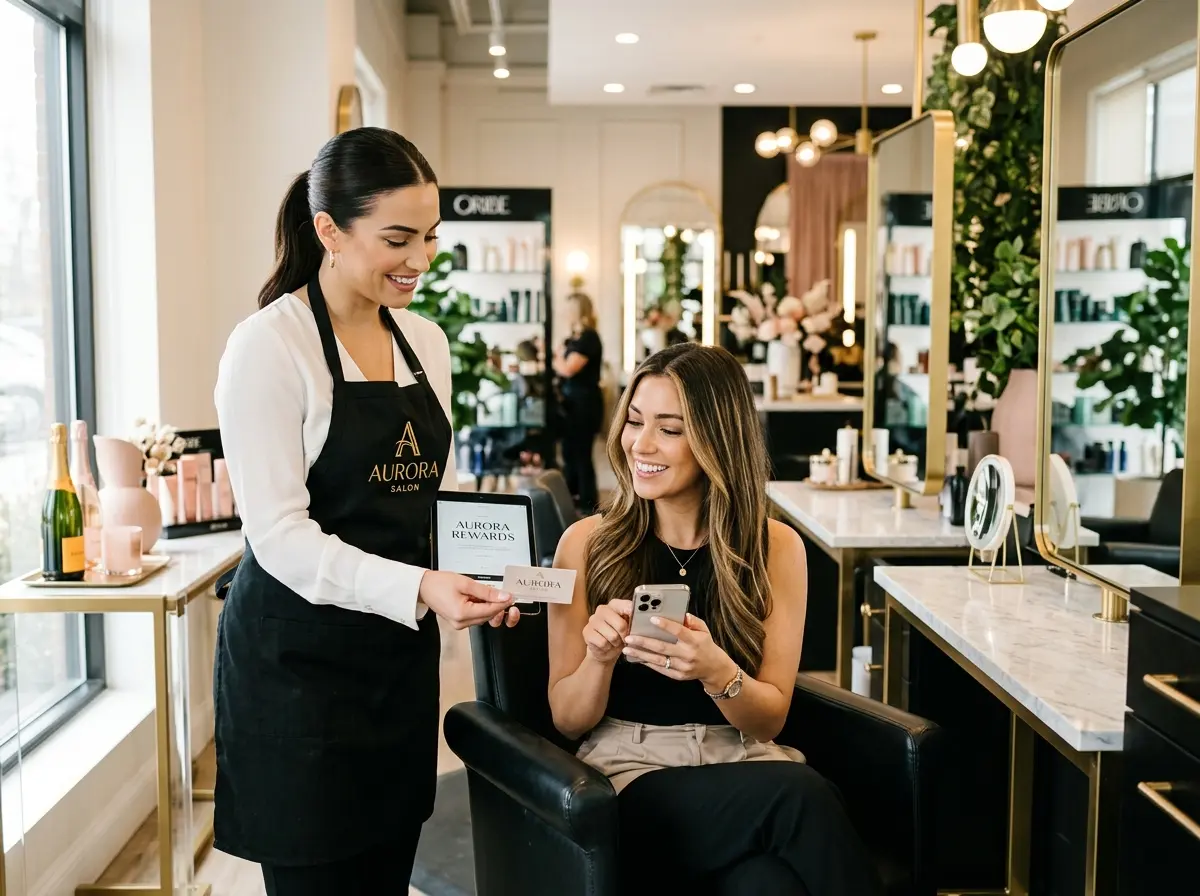
If your clients have to remember a card, log into a confusing app, or ask three different staff members how their points work, you've already lost. The redemption experience needs to be effortless. Clients should be able to ask at check-in or check-out and get an immediate, clear answer. Better yet, they should be reminded of their status without having to ask at all. This is where your front desk process — whether handled by a human or an AI — becomes critical. When the experience is smooth, clients actually use their rewards. When it's clunky, they ignore the program entirely and eventually forget it exists.
Automating the Experience So Nothing Falls Through the Cracks
You've designed a beautiful tiered loyalty program. You've thought through the psychology, the tiers, the reward values, the behaviors you want to reinforce. And then your receptionist gets slammed during a busy Saturday and forgets to mention the program to three new clients. That's not a people problem — that's a systems problem.
This is exactly where Stella becomes a genuinely useful tool for salon owners. As an AI robot kiosk standing inside your salon, Stella can greet every single client who walks in, proactively mention your loyalty program, and explain exactly how it works — without forgetting, without getting distracted, and without being pulled away to answer a phone call. She can also answer calls 24/7, so when a prospective client phones in to ask about your services or a current client calls to check their rewards balance, Stella handles it consistently and professionally every time. With her built-in CRM and conversational intake forms, client information is captured and organized automatically — meaning you always have an up-to-date view of who your top-tier clients are and who's close to earning their next reward.
Tracking What's Working (and Fixing What Isn't)
Metrics That Actually Matter
If you're not tracking your loyalty program's performance, you're essentially flying blind with a rewards budget. The metrics worth watching are straightforward: redemption rate (are clients actually using their rewards?), visit frequency (are loyalty members coming in more often than non-members?), and average ticket size (are they spending more per visit?). A well-run loyalty program should move all three of these numbers in the right direction. If redemption rates are low, your rewards may not be compelling enough or the process is too confusing. If visit frequency isn't changing, your reward threshold might be set too high.
Seasonal Adjustments and Limited-Time Bonuses
One of the most underused tactics in salon loyalty programs is the limited-time bonus. Running a double-points weekend during a slow week, offering bonus points for booking a new service during your off-peak season, or creating a "loyalty appreciation month" each year adds urgency and excitement to a program that might otherwise fade into the background. Clients who have been quietly accumulating points suddenly have a reason to pay attention and take action. These periodic activations also give you something worth communicating in your marketing — a reason to reach out via email or text that feels like a genuine benefit rather than a generic promotion.
Asking Clients Directly
Here's a radical idea: ask your clients what they actually want from a loyalty program. A simple survey — even just two or three questions sent by text after an appointment — can surface insights that no amount of data analysis will give you. Maybe your clients would rather have exclusive early access to new stylists than a discount. Maybe they'd love a birthday reward but don't care about tier status. You won't know until you ask, and the act of asking itself signals that you value their input, which is, ironically, its own form of loyalty-building.
A Quick Reminder About Stella
Stella is an AI robot employee and phone receptionist designed to help businesses like yours run more smoothly — greeting clients in person, answering phones around the clock, promoting your services and programs, and keeping your customer information organized through a built-in CRM. She works for $99 a month with no upfront hardware costs, and she never calls in sick on your busiest Saturday of the year.
Your Next Steps Start Today
A loyalty program that actually changes behavior isn't complicated — but it does require intention. Start by auditing what you're currently doing. Are you rewarding only spend, or are you incentivizing the behaviors that actually grow your business? Is your reward structure psychologically compelling, or is it just a math exercise your clients stopped caring about six months ago? Is the experience frictionless, or is it one more thing your front desk has to remember to explain?
From there, pick one structural change to implement in the next 30 days. Add a tiered structure if you don't have one. Introduce a referral bonus. Run a limited-time double-points promotion. Small, intentional improvements compound over time, and your clients will notice when the program feels like it was actually designed with them in mind.
Your loyalty program should be doing real work for your salon — not just sitting in someone's wallet, forgotten and slightly crumpled, waiting for a stamp that never comes.