So, You Want Your Clients to Do Your Marketing for You?
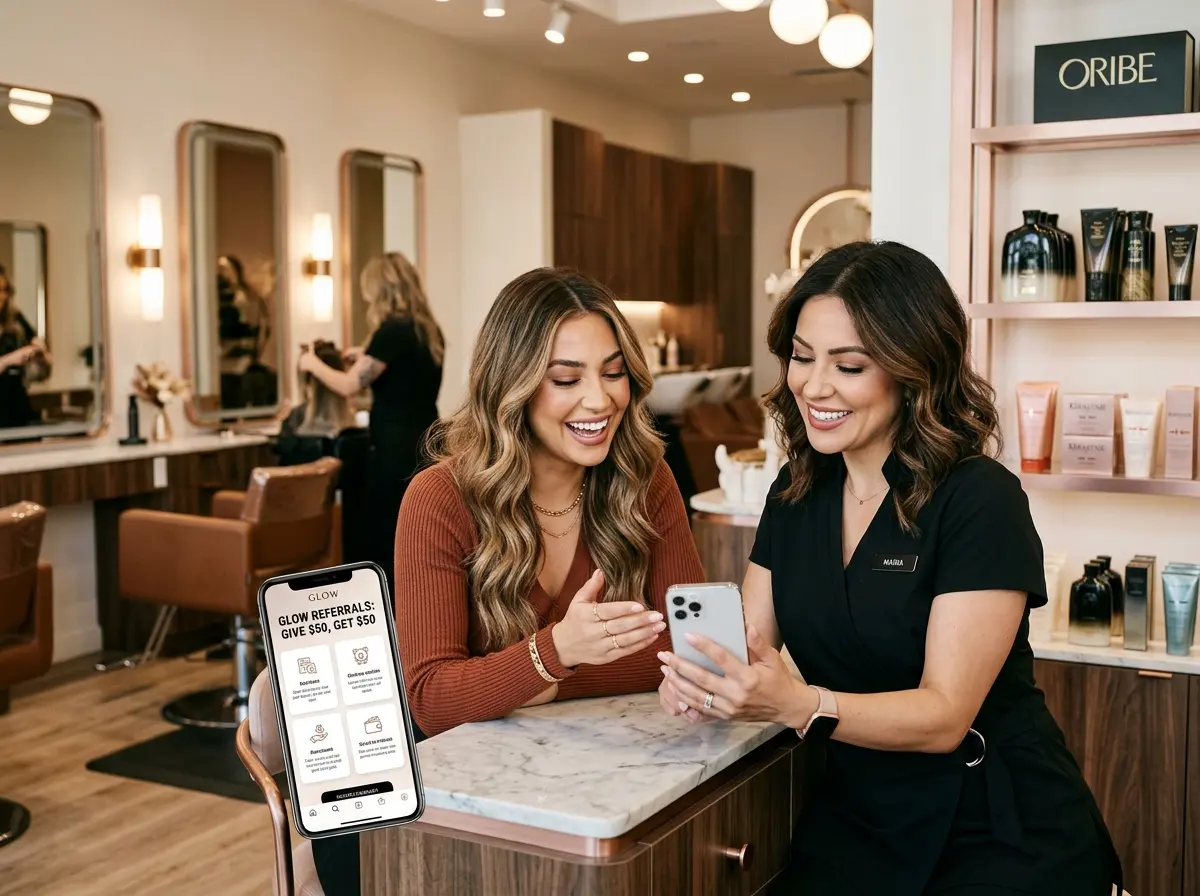
Smart. Brilliant, even. Because here's a little secret the marketing gurus won't tell you: your happiest clients are already talking about you. They're telling their coworkers about the balayage that changed their life. They're raving to their friends about the hot stone massage that finally fixed their shoulder. They're posting selfies in your salon chair. The question isn't whether your clients are referring people — it's whether you're capturing that momentum and giving it a little nudge.
A well-designed refer-a-friend campaign turns your existing clientele into a full-blown sales force. And unlike paid ads that disappear the moment you stop funding them, word-of-mouth referrals come pre-loaded with trust. According to Nielsen, 92% of consumers trust recommendations from people they know over any other form of advertising. So yes, your clients are more persuasive than your best Instagram reel. Humbling, but useful.
This guide walks you through how to build a referral program that actually works — not just a dusty punch card sitting at the front desk that everyone ignores. Let's get into it.
Building the Foundation of Your Referral Program
Define What Success Looks Like (Before You Launch Anything)
Before you design a single flyer or write a single text message, you need to know what you're actually trying to achieve. Are you trying to fill slow Tuesday slots? Grow your color clientele? Introduce a new service like lash extensions or dermaplaning? The more specific your goal, the more targeted — and effective — your campaign will be.
Set a realistic benchmark. If you currently see 80 clients per month and want to grow by 15%, that's 12 new clients. Knowing that number helps you decide how generous your rewards need to be, how long to run the campaign, and how aggressively to promote it. Vague goals produce vague results. Specific goals produce new bookings.
Choose Rewards That Actually Motivate People
Here's where a lot of salon and spa owners get it wrong: they offer rewards that they think are generous but that clients find underwhelming. A $5 discount on a $150 service? That's not an incentive — that's an insult wrapped in a coupon.
The sweet spot for most salons and spas is a reward that feels genuinely valuable to both the referrer and the new client. Consider a structure like this:
- Referrer gets: $20–$30 off their next service, a complimentary add-on (scalp massage, conditioning treatment, aromatherapy upgrade), or a free retail product.
- New client gets: 15–20% off their first visit, a complimentary mini-service, or a free consultation.
Two-sided rewards outperform one-sided ones consistently. When the new client also gets something, your existing client feels like they're doing their friend a favor rather than just earning points for themselves. That psychological shift matters enormously for conversion.
Keep the Mechanics Simple (Seriously, Simple)
If your referral program requires clients to download an app, create an account, enter a code, take a screenshot, and submit a form — you've already lost. Friction kills referral programs. The best ones are almost embarrassingly simple: mention a friend's name at booking, and both of you get rewarded. Done.
You can track referrals with a basic system: a custom promo code tied to each client, a simple intake question ("How did you hear about us?"), or even a handwritten referral card. The goal is to remove every possible barrier between your client thinking "I should tell Sarah about this place" and Sarah actually booking an appointment.
Promoting Your Campaign Without Being Annoying About It
Meet Clients Where They Already Are
You don't need a massive marketing budget to get the word out. You need to show up consistently in the places your clients already spend their time. That means a combination of in-person promotion, email, and social media — used strategically, not desperately.
In the salon or spa, train your staff to mention the referral program naturally during the appointment — not as a scripted pitch, but as a genuine conversation. "By the way, we just launched a referral program — if you have any friends who've been wanting to try us, you'd both get a little something." That's it. Easy, human, effective. Pair that with a tasteful display near the front desk and a short mention in your post-appointment follow-up email, and you've got a solid promotional ecosystem without spending a dime on ads.
This is also where Stella — an AI robot employee and phone receptionist — can give your campaign a quiet boost. Her in-store kiosk presence means she's greeting every client who walks in and can naturally work your referral promotion into conversation, making sure no one leaves without knowing about it. When clients call to book, Stella answers 24/7 and can mention the program during the call — consistently, professionally, and without ever forgetting. No more relying on a busy front desk to remember to mention the promotion during the Saturday rush.
Tracking, Measuring, and Actually Following Through
Track Every Referral Like It's Your Last One
A referral program without tracking is just a vibe. A charitable donation to chaos. You need to know which clients are sending referrals, how many new bookings are coming in because of the campaign, and what the actual revenue impact is — not just a gut feeling that "things seem busier."
Even a simple spreadsheet can work if you're just getting started. Track the referrer's name, the new client's name, the service booked, and whether the reward was issued. If you're using salon management software, most platforms have fields where you can log referral sources. The point is to create a paper trail so you can reward the right people promptly and evaluate the campaign's performance honestly.
Follow Up — And Mean It
One of the most common referral program failures is the awkward gap between a client referring someone and actually receiving their reward. If your client sent a friend who booked and completed a service two weeks ago, and they haven't heard a peep from you about their discount? They noticed. And they're quietly annoyed.
Build a follow-up process into your program from day one. This could be an automated email triggered when a referred client completes their first visit, a personal text from the front desk, or a note attached to the referrer's next booking. The speed and consistency of reward delivery directly impacts how enthusiastically your clients continue referring. Treat it like a promise, because that's exactly what it is.
Evaluate and Evolve the Program
Run your referral campaign for 60–90 days, then sit down and look at the numbers honestly. How many new clients came in? What was the average ticket value? Did the referred clients rebook? Did the reward structure feel right, or did it feel too cheap or too expensive?
Most successful referral programs go through at least one or two rounds of refinement before they hit their stride. Maybe you'll find that a free add-on service outperforms a dollar discount. Maybe you'll discover that text reminders drive more participation than email. These aren't failures — they're data points that make your next campaign smarter. Iterate, adjust, and keep going. The salons and spas with thriving referral programs didn't get there by running the same campaign once and calling it done.
A Quick Reminder About Stella
Stella is an AI robot employee and phone receptionist that works in-store as a friendly kiosk and answers calls around the clock for any business. She's available for just $99/month with no upfront hardware costs, and she's ready to greet your clients, promote your offers, and represent your salon or spa professionally — every single day, without a sick day in sight. If you're running a referral campaign and want to make sure every client hears about it, Stella makes sure that happens.
Your Next Steps Start Today
Running a refer-a-friend campaign doesn't require a big team, a complicated software platform, or a marketing degree. It requires clarity, a compelling reward, a simple process, and the follow-through to actually deliver on what you promised. That's it.
Start small if you need to. Pick one goal, design one simple reward structure, and promote it across your existing touchpoints for 60 days. Track what comes in. Follow up with your referrers promptly. Then look at the data and refine. You'll be surprised how quickly a well-executed referral program starts compounding — because referred clients tend to refer more clients, and suddenly your happiest customers are your most effective marketing channel.
Your clients already love you. It's time to give them a reason — and a gentle nudge — to shout it from the rooftops. Or at least text their best friend about it. In the beauty and wellness industry, that's basically the same thing.