When "Hold Please" Becomes Your Office's Unofficial Slogan
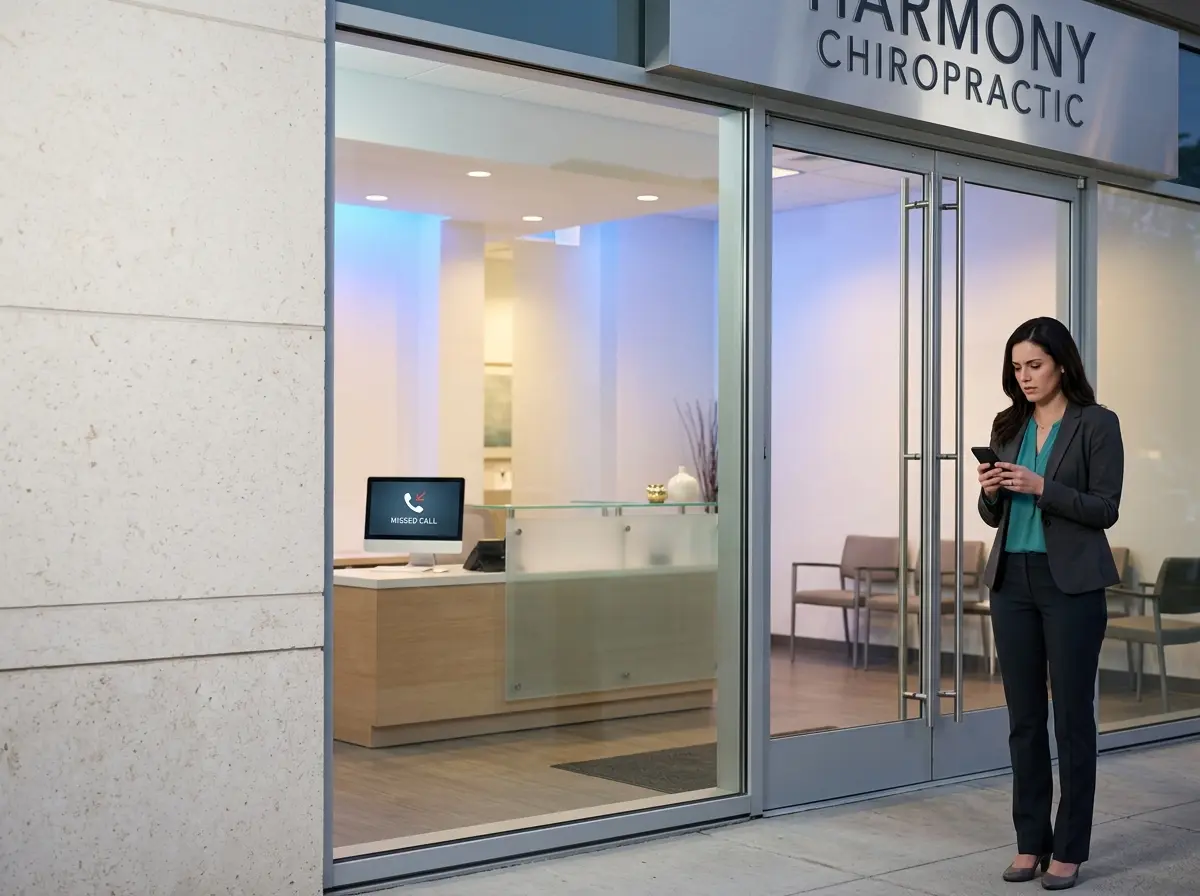
Picture this: It's a Monday morning at your chiropractic office. The phone is ringing off the hook, your front desk receptionist is checking in a patient, another patient is standing at the counter waiting to reschedule, and somewhere in the background, a new patient intake form is being filled out — incorrectly — for the third time this week. Meanwhile, three calls have already gone to voicemail, and at least one of those callers has already hung up and is Googling your competitor.
Sound familiar? If you're running a chiropractic practice, appointment scheduling chaos isn't just an inconvenience — it's a revenue leak. And the frustrating part is that it's entirely fixable. The problem isn't that your team isn't working hard enough. The problem is that scheduling, intake, and phone management have quietly become the most under-optimized part of most chiropractic businesses. This article breaks down exactly what's going wrong — and, more importantly, what you can do about it.
The Real Reasons Your Scheduling System Is Failing You
Before you blame your receptionist or your booking software, let's look at the actual root causes. Appointment scheduling dysfunction in chiropractic offices is almost never one problem — it's usually a cluster of overlapping issues that compound each other over time.
The Phone Is a Bottleneck You've Normalized
Here's a stat worth sitting with: according to a BrightLocal survey, 60% of small business customers prefer to book appointments by phone. That means your phone line is, for many patients, the front door to your practice. Now ask yourself honestly: how often does that front door go unanswered?
Most chiropractic offices operate with one front desk person juggling check-ins, check-outs, insurance questions, and incoming calls simultaneously. When a call comes in during a busy moment, it waits. When it waits too long, it goes to voicemail. When it goes to voicemail, a meaningful percentage of callers — especially new patients — simply don't leave a message. They move on. That's not a staffing failure; that's a structural failure. The phone cannot be a single point of failure for your patient acquisition pipeline.
New Patient Intake Is Eating Your Staff's Time
New patient intake is one of those processes that feels manageable until you actually add up the time. Collecting insurance information, health history, consent forms, and scheduling preferences — often repeated across phone calls, paper forms, and follow-up conversations — is remarkably inefficient. Staff end up doing data entry instead of serving patients who are physically in the office. And when intake data is incomplete or inconsistent, it creates downstream headaches with billing and records.
The fix isn't just going paperless (though that helps). It's rethinking when and how you collect information — ideally before the patient ever walks through the door, through a structured intake process that doesn't rely entirely on your front desk team to execute manually during peak hours.
Cancellations and No-Shows Are Treated as Inevitable
Chiropractic practices typically see no-show rates between 5% and 20% depending on the patient population and reminder systems in place. Many practice owners have mentally accepted this as just part of the business. It isn't. Every open slot that doesn't get filled — or doesn't get filled quickly — is lost revenue and a missed opportunity to help a patient who genuinely needs care.
The practices that significantly reduce no-shows tend to do two things well: they send timely, multi-channel reminders, and they have a fast, frictionless way for patients to reschedule rather than simply ghost. If rescheduling is harder than just not showing up, your patients will take the easier path every time.
How Technology — Done Right — Can Close the Gap
Automation That Feels Human
The word "automation" makes some healthcare providers nervous, and understandably so. Chiropractic is a relationship-based business. Patients come back because they trust you, feel heard, and experience real results. The last thing you want is for your practice to feel like it's run by a faceless algorithm.
But here's the distinction that matters: automating processes is not the same as depersonalizing care. Automating appointment reminders doesn't make your adjustments feel mechanical. Automating phone intake doesn't mean patients feel ignored. Done well, smart automation frees up your team to be more present, more attentive, and more genuinely helpful to the patients standing right in front of them.
This is where tools like Stella — an AI robot employee and phone receptionist — can genuinely change the dynamic for a chiropractic office. Stella answers phone calls 24/7, handles patient questions about services, hours, and policies, and can collect new patient information conversationally using built-in intake forms — all without putting another task on your receptionist's plate. Her built-in CRM also keeps patient contact information organized with custom fields, tags, and AI-generated profiles, so nothing falls through the cracks between a phone call and a first visit. For offices with a physical location, Stella also operates as a friendly, human-sized kiosk inside the practice — greeting patients, promoting services, and answering questions while your staff focuses on clinical care.
Building a Scheduling System That Actually Works
Technology alone won't fix a broken scheduling process — but a well-designed process, supported by the right tools, absolutely will. Here's how to think about rebuilding your scheduling workflow from the ground up.
Design Your Schedule Around Patient Flow, Not Just Availability
One of the most common scheduling mistakes in chiropractic is treating all appointment slots as equal. A new patient evaluation takes significantly longer than a follow-up adjustment. Grouping them poorly throughout the day creates bottlenecks, rushed visits, and a waiting room that starts to feel like a DMV branch office.
Consider designating specific windows for new patients versus established patients, and build buffer time into your schedule rather than trying to pack it to the edge. A slightly less full schedule that runs on time will generate better patient satisfaction scores — and more referrals — than a maximally booked schedule that consistently runs 20 minutes behind. Patients notice. They always notice.
Create a Frictionless Rescheduling Path
Your cancellation policy matters, but your rescheduling experience matters more. When a patient needs to cancel, the easiest possible next step should be rescheduling — not navigating a phone tree, not leaving a voicemail and hoping for a callback, not feeling guilty about calling during business hours. The more friction you add between "I need to cancel" and "I'm rebooked," the more patients fall out of your care altogether.
Offer multiple rescheduling channels: phone, text, online booking, and if you have a kiosk or AI presence in office, even in-person self-service. Send reminder messages that include a direct reschedule link. Make it idiot-proof — because patients aren't idiots, they're just busy people who will always take the path of least resistance.
Track What's Actually Happening
You cannot fix what you don't measure. Most practice management software gives you the data — appointment fill rates, no-show percentages, average days to next available appointment — but many practice owners never look at it systematically. Set a monthly review of your scheduling metrics. What's your no-show rate? What's your same-day cancellation rate? How many new patient calls came in last week, and how many were actually answered live? These numbers will tell you exactly where your process is breaking down, and they'll show you whether your changes are actually working.
Quick Reminder About Stella
Stella is an AI robot employee and phone receptionist built for businesses exactly like yours — available 24/7, never in a bad mood, and always ready to answer a call, greet a patient, or collect intake information without adding to your staff's workload. At just $99/month with no upfront hardware costs and a straightforward setup, she's one of the more practical technology investments available for a growing chiropractic practice.
Your Next Move Starts at the Front Desk
The appointment scheduling crisis in chiropractic offices is real, it's costing you patients and revenue, and it doesn't require a massive overhaul to fix. It requires honest assessment, a few structural changes, and the right tools to support your team rather than burden them further.
Here's what to do this week. First, pull your no-show and cancellation data from the last 90 days and look at it with fresh eyes. Second, mystery-call your own practice during a busy hour and see what happens. Third, map out your current new patient intake process from first phone call to first visit and identify every step that requires manual effort from your staff.
You'll probably find two or three obvious pressure points almost immediately. Fix those first. Add automated reminders if you haven't. Streamline your intake process. Make sure your phone is never the weak link in your patient acquisition chain. And if you want a receptionist who genuinely never takes a sick day, consider what an AI phone and in-office presence could do for your front desk — and your sanity.
Your patients came to you to feel better. Make sure their experience with your practice — from the first phone call to the follow-up appointment — reflects the quality of care you actually deliver.