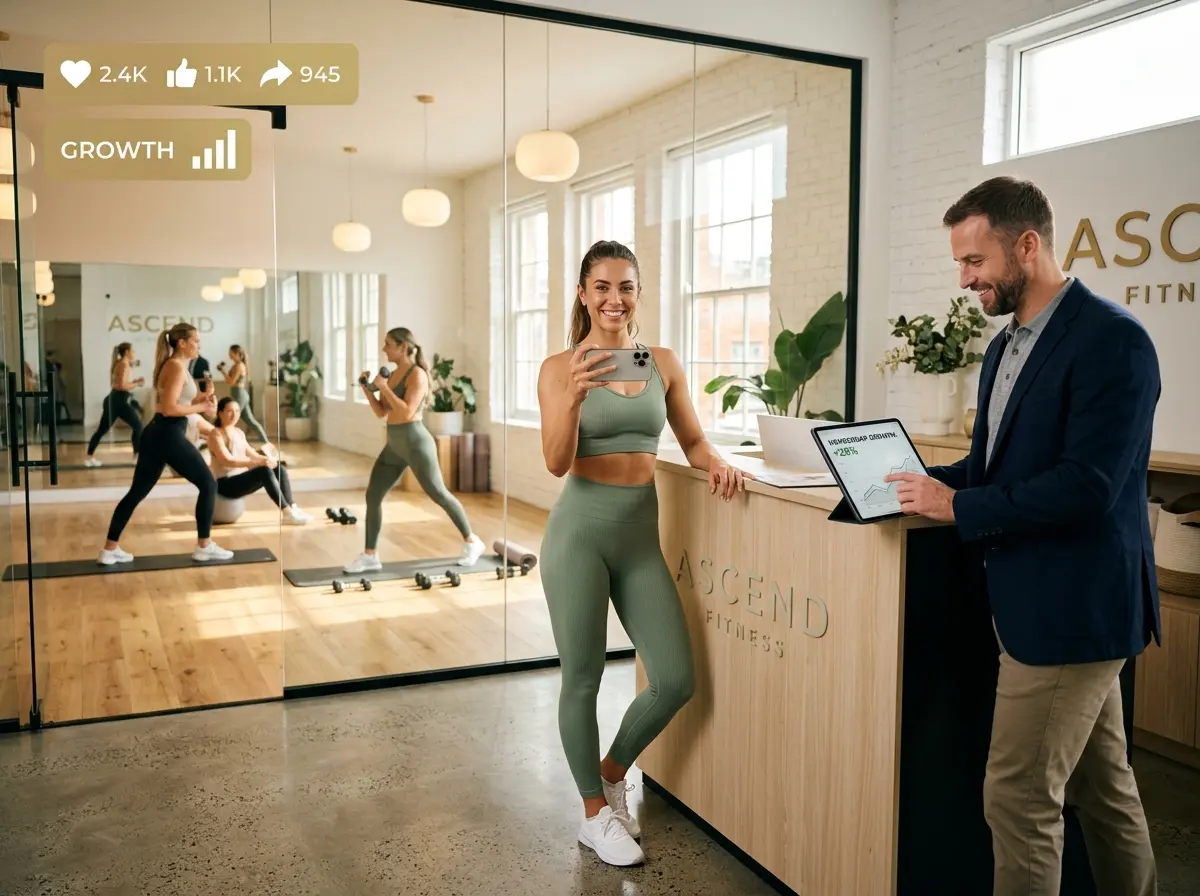
When "Going Viral" Gets Real: How One Fitness Studio Used Local Influencers to Fill Its Membership Roster
Let's be honest — when most gym owners hear the word "influencer," they picture some 22-year-old with a ring light, a protein shake sponsorship, and 2 million followers who live three states away. Not exactly your target demographic's trusted neighbor. But here's the thing: the influencer strategy that actually moves the needle for boutique fitness studios isn't about chasing celebrity reach. It's about finding the right local voices — the ones your potential members already trust — and giving them something worth talking about.
One boutique fitness studio did exactly that, and the results were hard to argue with: a measurable spike in new membership sign-ups, stronger community ties, and a waitlist for their signature classes. No, they didn't hire a Kardashian. They hired their yoga instructor's best friend and a popular running club leader with 4,000 Instagram followers. And it worked beautifully.
Here's how they pulled it off — and how you can too.
Building the Right Local Influencer Strategy
Stop Chasing Follower Counts and Start Chasing Trust
The fitness studio's first move was counterintuitive by most marketing standards: they ignored follower counts almost entirely. Instead, they focused on engagement rates and community credibility. A local running coach with 4,000 highly engaged followers who regularly comment, share, and show up to events is worth ten times more than a generic fitness influencer with 80,000 followers who couldn't find your studio on a map.
Studies consistently back this up. Micro-influencers (those with between 1,000 and 100,000 followers) typically boast engagement rates of 3–8%, compared to just 1–2% for macro-influencers. For a local business, that engagement translates directly into foot traffic — people who actually live nearby, actually have disposable income to spend on memberships, and actually care what their neighbor thinks about a fitness studio.
The studio identified three types of local influencers worth pursuing: community athletes, local wellness bloggers, and what they called "neighborhood connectors" — people who aren't fitness professionals but are deeply embedded in local social circles, like PTA organizers, book club leaders, and small business owners. Casting a slightly wider net beyond the obvious fitness crowd turned out to be one of their smartest moves.
Crafting an Offer They Couldn't (and Wouldn't Want to) Refuse
Here's where a lot of businesses stumble. They approach influencers with a clunky, transactional pitch: "Post about us and we'll give you a free month." Yawn. The studio took a different approach by designing a genuine experience worth talking about.
Each local influencer received a personalized, VIP-style invitation to a private "Founder's Experience" — a curated two-week trial that included one-on-one time with the head trainer, an invitation to a members-only social event, and a custom fitness plan. The experience was designed to be shareable, emotional, and community-oriented — not just a free gym pass.
The result? Influencers weren't just posting obligatory "thanks for the free stuff" content. They were genuinely enthusiastic, sharing stories, before-and-after reflections, and personal recommendations that resonated with their audiences because they were real. Authenticity, as it turns out, is still the most powerful marketing tool in existence — and it costs less than a billboard.
Tracking What Actually Matters
The studio didn't just cross their fingers and hope for the best. They set up simple but effective tracking: unique promo codes for each influencer, a dedicated landing page, and a short intake question during sign-up asking new members how they heard about the studio. This gave them clear data on which influencers drove actual conversions — not just likes or story views.
Within 60 days of launching the campaign, they attributed 38 new membership sign-ups directly to influencer referrals. Their cost per acquisition through this channel was significantly lower than their paid social ads — and the new members who came through influencer referrals had a notably higher 90-day retention rate. Community trust, it turns out, is also pretty good for member loyalty.
How Smart Tools Keep the Momentum Going
Don't Let Interested Prospects Fall Through the Cracks
Running a successful influencer campaign creates a fantastic problem: a surge of new inquiries, walk-ins, and phone calls — often at the exact moment your staff is teaching a class or helping someone at the front desk. This is where the wheels can fall off quickly. A potential member who can't get someone on the phone or feels ignored at the door is a membership you just lost, no matter how brilliant your influencer strategy was.
Stella, the AI robot employee and phone receptionist, is purpose-built for exactly this kind of moment. Her in-store kiosk presence means every walk-in is greeted immediately and professionally — she can answer questions about class schedules, membership tiers, and current promotions without pulling a staff member away from what they're doing. And when inquiries come in by phone after hours (because they will), Stella answers 24/7, collects prospect information through conversational intake forms, and logs everything into her built-in CRM with AI-generated contact profiles — so your team wakes up to organized, actionable leads rather than a voicemail graveyard. For a studio riding the wave of a successful campaign, that kind of operational backup isn't a luxury. It's a lifeline.
Turning One Campaign Into Long-Term Growth
Build Relationships, Not One-Off Transactions
The smartest thing the studio did after their initial campaign wasn't launching a second one — it was nurturing the relationships they'd already built. They created an informal "Studio Ambassador" group that included their most engaged influencers and top member advocates. This group received early access to new class formats, exclusive member appreciation events, and a small referral reward for every membership sign-up they drove.
This transformed a one-time campaign into an always-on word-of-mouth engine. The influencers felt valued and genuinely connected to the brand. Members who became ambassadors brought in their friends. And the studio's owner spent far less time and money on paid advertising than she had the previous year — because her community was doing a significant portion of the marketing for her.
The lesson here is simple but easy to overlook when you're caught up in campaign metrics: people are your most durable marketing asset. Treat them accordingly.
Repurpose and Amplify Influencer Content Strategically
One often-missed step in local influencer campaigns is content repurposing. The studio began asking influencers for permission to reshare their posts, stories, and testimonials across the studio's own channels — website, email newsletters, Google Business profile, and social media. This did two things simultaneously: it extended the life of every piece of influencer content far beyond its original posting, and it gave the studio's own channels a steady stream of authentic, third-party social proof.
They also created a short highlight reel of influencer testimonials and member reactions that played on the in-store screen near the front entrance — giving every new walk-in an immediate, visual confirmation that real people in their community loved this place. It's the local equivalent of a packed restaurant making you want a table. Nobody wants to be the only one not in on something good.
Measure, Refine, and Double Down on What Works
After the campaign, the studio conducted a simple debrief: which influencers drove the most sign-ups? Which content formats performed best — Reels, Stories, in-feed posts? Were there particular class types or promotions that resonated more strongly with referral audiences? This analysis informed their next campaign, where they doubled down on what worked and quietly retired what didn't.
Marketing without measurement is basically just expensive guessing. Fortunately, the data they needed wasn't complicated — it was already sitting in their promo code reports, intake forms, and CRM. The discipline of actually using that data is what separated this studio from competitors who ran similar campaigns with far less impressive results.
A Quick Reminder About Stella
Stella is an AI robot employee and phone receptionist designed to make sure no customer inquiry — walk-in or phone call — ever goes unanswered. She greets visitors in person at the kiosk, handles calls 24/7 with real business knowledge, and keeps your CRM organized with intake data and AI-generated contact profiles. At $99/month with no upfront hardware costs, she's the kind of team member who never calls in sick and never puts a prospect on hold indefinitely.
Your Next Steps: Putting This to Work for Your Studio
The local influencer playbook isn't complicated, but it does require intention. Here's a practical starting framework to get moving:
- Identify 5–10 local micro-influencers in your area — think community athletes, wellness enthusiasts, neighborhood connectors, and local group leaders. Prioritize engagement and trust over follower counts.
- Design an experience worth sharing — not just a free pass, but a curated, personal, community-oriented introduction to your studio that gives influencers something genuinely exciting to talk about.
- Set up simple tracking from day one — unique promo codes, a landing page, and an intake question at sign-up will give you clean data on what's actually driving results.
- Build an ambassador program after the initial campaign to keep your best advocates engaged, rewarded, and actively referring new members.
- Repurpose influencer content across your own channels to extend its shelf life and reinforce social proof at every touchpoint.
And while you're busy orchestrating all of this, make sure your operations can actually handle the influx of interest you're about to generate. There's nothing more frustrating than a brilliant marketing campaign undermined by an unanswered phone or a walk-in who felt ignored. The strategy works. Now go execute it — and make sure your studio is ready to convert every curious newcomer into a loyal, dues-paying member.